Understanding Roofing Insurance Cost: Coverage Types, Premiums, and Deductibles
Understanding roofing insurance cost requires evaluating two distinct financial components: the ongoing premium paid to maintain coverage and the out-of-pocket deductible required during a claim. As of 2026, these costs are primarily d...
Understanding roofing insurance cost requires evaluating two distinct financial components: the ongoing premium paid to maintain coverage and the out-of-pocket deductible required during a claim. As of 2026, these costs are primarily dictated by the roof's material, its age, and the specific valuation method—Replacement Cost Value (RCV) or Actual Cash Value (ACV)—defined in your policy.
Contents
The cost of insuring a roof is not a static figure; it is a dynamic calculation of risk. Insurance carriers view the roof as the most critical protective layer of a structure. Consequently, the "cost" to the homeowner manifests in monthly or annual premiums that fluctuate based on how likely the roof is to fail and how much it will cost the insurer to fix it. To fully grasp these expenses, one must look beyond the premium and understand the nuances of policy language, regional weather risks, and modern underwriting technologies.
The Dual Nature of Roofing Insurance Costs
When homeowners discuss roofing insurance costs, they are often referring to one of two things: the price of the insurance policy itself or the cost they must bear when a roof replacement is necessary.
Annual Premiums and Risk Rating
The premium is the amount you pay to keep your policy active. In 2026, insurers utilize advanced satellite imagery and AI-driven "roof scores" to determine this cost. If your roof is made of high-risk materials or is nearing the end of its functional life, your premium will reflect that increased risk. Conversely, installing a roof that meets high impact-resistance standards can lead to significant premium credits.
Deductibles: The Out-of-Pocket Expense
The deductible is the amount the policyholder must pay before the insurance company covers the remainder of a loss. Modern policies often feature "split deductibles." While you might have a flat $1,000 deductible for fire or theft, many insurers now mandate a percentage-based deductible for wind and hail damage. For a home insured for $400,000, a 2% wind/hail deductible means the homeowner must pay $8,000 out-of-pocket before insurance contributes a single dollar to a new roof.
Key Factors Influencing Your Premium in 2026
Several variables determine how much an insurer charges to cover a roof. Understanding these can help homeowners make strategic decisions to lower their long-term expenses.
1. Roof Age and Condition
As of 2026, many insurance carriers have implemented strict "age of roof" guidelines. Roofs older than 15 or 20 years (depending on the material) may be excluded from Replacement Cost coverage or may trigger a significant premium surcharge. Insurers view an aging roof as a "maintenance issue" rather than a "sudden peril" risk.
2. Material Durability
The material used for your roof is a primary driver of insurance costs.
- Asphalt Shingles: Common and affordable to install, but more susceptible to wind and hail damage, leading to moderate premiums.
- Metal Roofing: Often qualifies for premium discounts due to its fire resistance and durability, though the initial installation cost is higher.
- Tile and Slate: Extremely durable but expensive to repair. Insurance costs may be higher due to the specialized labor required for claims.
3. Geographical Location
Location is perhaps the most significant factor outside of the homeowner’s control. Properties in "Hail Alley" or hurricane-prone coastal regions face substantially higher roofing insurance costs. In 2026, climate-related data has forced insurers to recalibrate rates in these zones, often requiring higher deductibles to maintain any level of affordable premium.
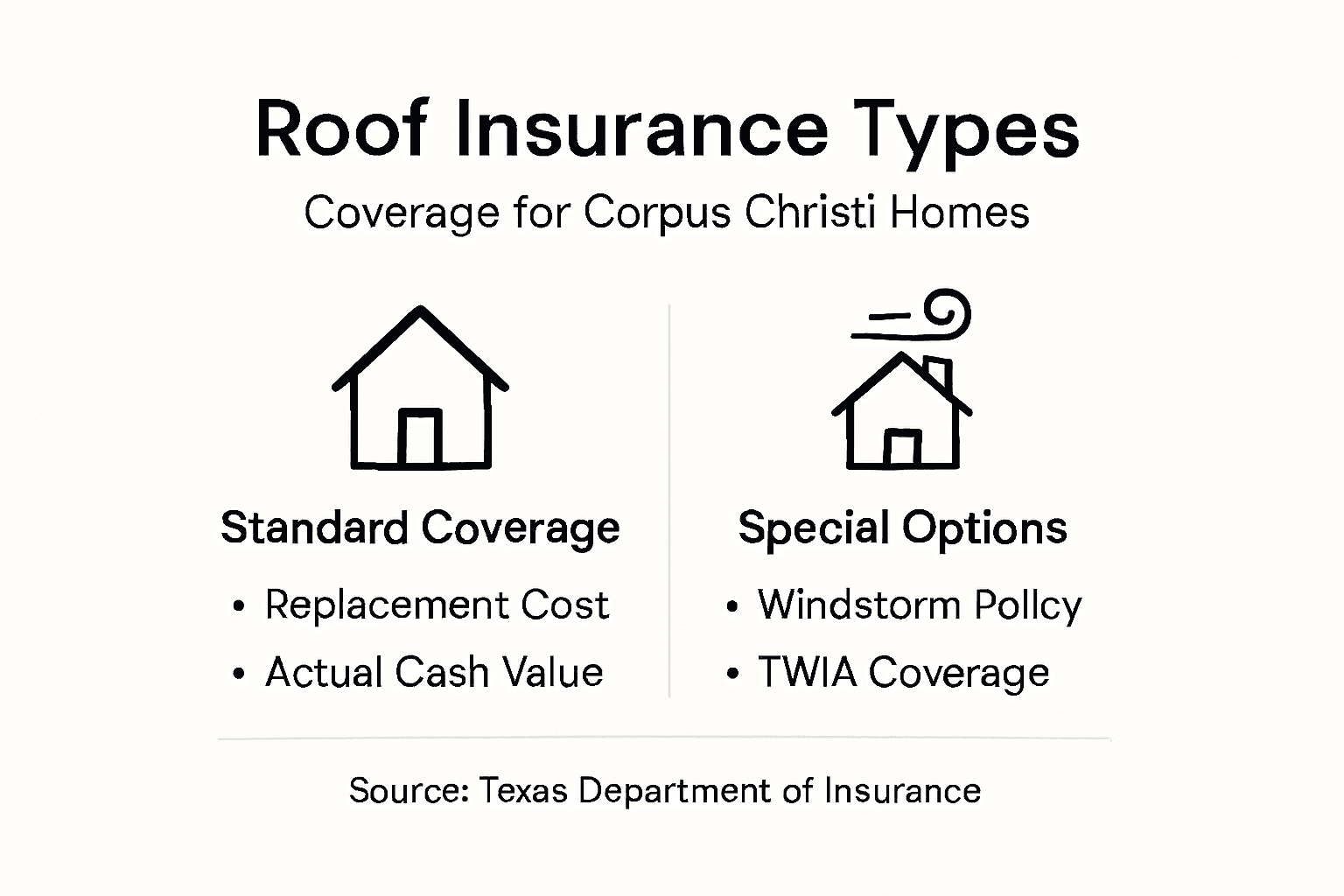
Replacement Cost Value (RCV) vs. Actual Cash Value (ACV)
The distinction between RCV and ACV is the single most important factor in understanding the potential cost of a roof claim.
Replacement Cost Value (RCV)
Under an RCV policy, the insurer pays the cost to replace the damaged roof with a new one of similar kind and quality at current 2026 market prices, minus your deductible. While RCV policies have higher premiums, they provide the most financial protection, ensuring the homeowner isn't forced to cover the gap caused by years of wear and tear.
Actual Cash Value (ACV)
An ACV policy pays only what the roof was worth at the time of the damage. This means the insurer calculates the replacement cost and then subtracts depreciation based on the roof's age. For an older roof, an ACV payout might only cover 30% to 50% of the actual replacement cost. Many insurers in 2026 have shifted older roofs to ACV automatically to limit their liability.
| Feature | Replacement Cost Value (RCV) | Actual Cash Value (ACV) |
|---|---|---|
| Premium Cost | Higher | Lower |
| Payout Calculation | Current market price for new materials | Depreciated value based on age |
| Out-of-Pocket Risk | Lower (Deductible only) | High (Deductible + Depreciation) |
| Best For | Newer roofs and full protection | Budget-conscious homeowners with older roofs |
| 2026 Trend | Increasingly difficult to get for roofs 15+ years | Becoming the standard for older asphalt roofs |
Additional Coverages Affecting Total Cost
Beyond the basic policy, several endorsements can alter the total "cost" of insuring a roof.
Ordinance or Law Coverage
Building codes evolve. If a storm destroys your roof and local 2026 regulations now require more expensive underlayment or specific bracing that wasn't there before, a standard policy might not cover those "upgrades." Ordinance or Law coverage pays for these mandated improvements, preventing the homeowner from paying thousands in unexpected code-compliance costs.
Cosmetic Damage Exclusion
A trend that has solidified in 2026 is the "cosmetic damage exclusion." This means that if hail dents a metal roof or stains a shingle roof but does not affect its ability to shed water, the insurance company may deny the claim. Opting out of this exclusion (where available) increases the premium but provides more comprehensive aesthetic protection.
How to Reduce Roofing Insurance Expenses
While some factors are fixed, homeowners can take proactive steps to mitigate their insurance costs.
- Install Impact-Resistant Shingles: Materials rated UL 2218 Class 4 are designed to withstand severe hail. Most insurers offer a premium discount for these materials, which can pay for itself within a few years.
- Regular Documentation: Keep records of professional roof inspections and minor repairs. Showing an insurer that a roof is well-maintained can sometimes prevent an automatic shift to ACV valuation.
- Bundle Policies: Combining home and auto insurance remains one of the most effective ways to reduce the total premium load.
- Increase Your Deductible: If you have an emergency fund capable of covering a $5,000 or $10,000 expense, increasing your wind/hail deductible can lead to dramatic annual premium savings.
Common Pitfalls in Roofing Insurance
Many homeowners misunderstand their coverage until a disaster strikes. One common error is assuming that "full coverage" means a free roof. In reality, every claim involves a deductible, and in 2026, the rise of "percentage deductibles" has caught many off guard.
Another pitfall is the failure to report a new roof. If you replace your roof out-of-pocket, you must notify your insurance agent. A new roof significantly lowers the risk for the insurer, often resulting in a premium reduction of 10% to 20%. Failing to report this means you are overpaying for your coverage.
For more information on standard insurance practices, the National Association of Insurance Commissioners (NAIC) provides resources on how homeowners policies are structured across different states. Additionally, the Insurance Institute for Business & Home Safety (IBHS) offers technical guidance on roof materials that qualify for insurance discounts.
Frequently Asked Questions
1. Does roofing insurance cover leaks caused by old age? No, insurance is designed to cover "sudden and accidental" damage, such as that caused by a fallen tree or a severe hailstorm. Leaks resulting from a lack of maintenance or general wear and tear are the homeowner's responsibility. Regular maintenance is required to ensure that valid claims aren't denied due to "contributory negligence."
2. Why did my premium go up even though I haven't filed a claim? In 2026, premiums are often adjusted based on regional risk. If your neighborhood experienced a high volume of catastrophic weather events, insurers may raise rates for the entire ZIP code to account for the increased likelihood of future payouts. Inflation in construction labor and material costs also drives these adjustments.
3. What is a "roof surfacing" endorsement? This is a specific policy limitation where the insurer agrees to pay for the roof's functional repair but limits the payout for the "surfacing" (the shingles or tiles) to Actual Cash Value, even if the rest of the home is covered under Replacement Cost. It is a way for insurers to lower their exposure to roofing claims.
4. How does a "percentage deductible" work for a roof? Instead of a flat dollar amount like $500, the deductible is calculated as a percentage of your home's total insured value. If your home is insured for $500,000 and you have a 1% deductible, you are responsible for the first $5,000 of any roofing claim.
5. Can I get a discount for a "cool roof"? Yes, in many jurisdictions, reflective "cool roofs" that reduce energy consumption may qualify for green building credits or insurance discounts, particularly in states with high fire risks, as these materials are often also highly fire-resistant.
Practical Recommendation
To accurately understand and manage your roofing insurance cost, perform an annual review of your policy’s Declarations Page. Specifically, look for the "Wind/Hail Deductible" and whether your roof is covered for "Replacement Cost" or "Actual Cash Value." If your roof is more than 10 years old and you are currently on an ACV policy, consider setting aside a dedicated "roof fund" to cover the inevitable gap between an insurance payout and the 2026 cost of a full replacement.
Image Gallery