Understanding What Stand-Alone Non-Owned Auto Insurance Actually Covers
Stand-alone non-owned auto insurance, often referred to as Hired and Non-Owned Auto (HNOA) coverage, provides liability protection for businesses when employees operate vehicles they do not own—such as personal cars—while conducting co...
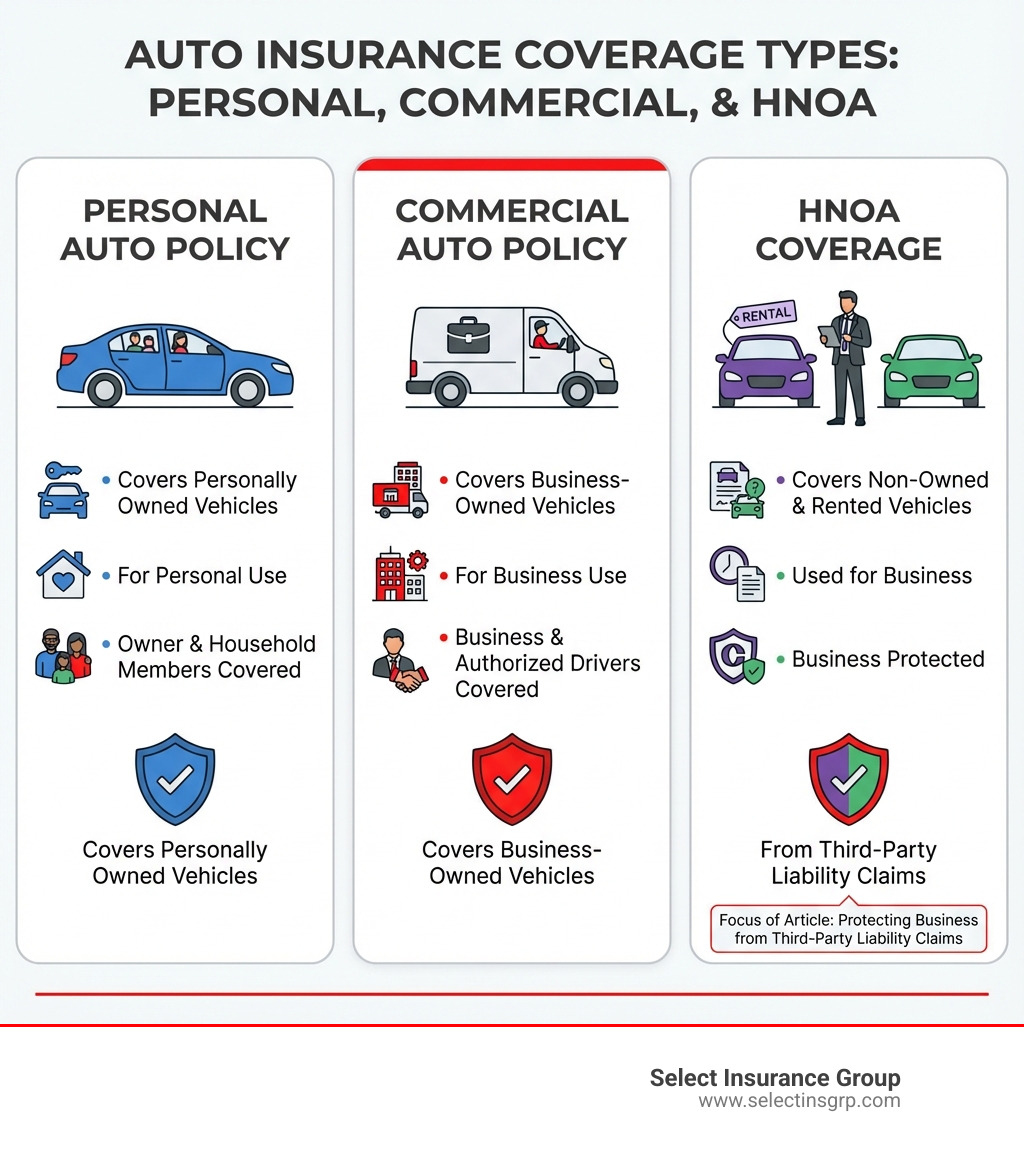
Stand-alone non-owned auto insurance, often referred to as Hired and Non-Owned Auto (HNOA) coverage, provides liability protection for businesses when employees operate vehicles they do not own—such as personal cars—while conducting company business. It covers third-party bodily injury and property damage claims resulting from these business-related errands, filling critical gaps left by personal auto policies.
Contents
The Fundamental Purpose of Non-Owned Auto Insurance
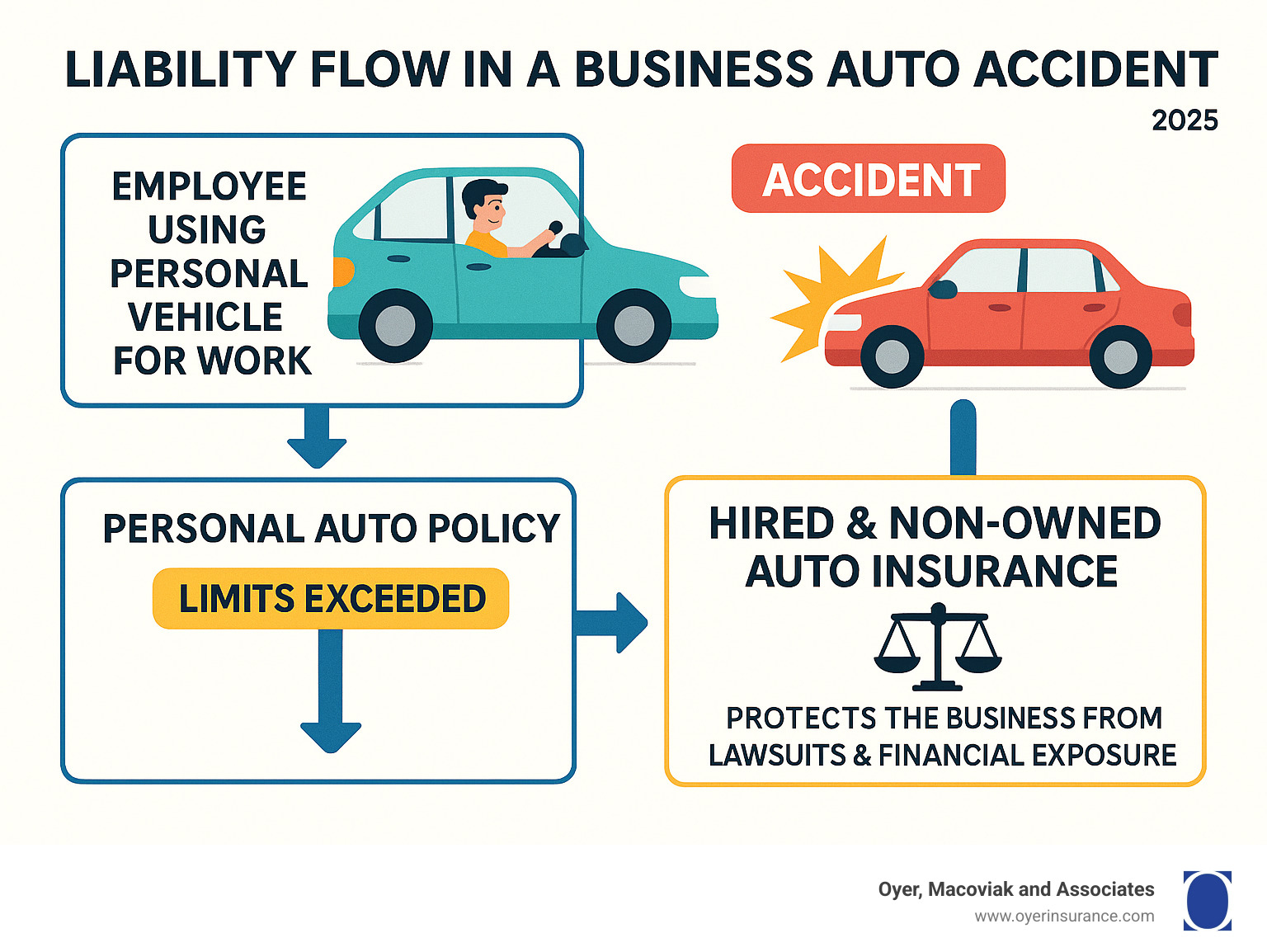
Many business owners operate under the mistaken belief that their commercial general liability (CGL) policy automatically covers all automotive risks. In reality, most CGL policies explicitly exclude accidents involving vehicles, particularly those not owned by the business entity. This creates a significant "coverage gap" known as vicarious liability.
Vicarious liability occurs when an employer is held legally responsible for the actions of an employee performed within the scope of their employment. If an employee uses their personal vehicle to run to the post office, pick up supplies, or attend a client meeting and causes an accident, the injured third party will likely sue both the driver and the employer. Without a dedicated non-owned auto policy, the business would be forced to defend itself and pay any resulting damages out of pocket.
Stand-alone non-owned auto insurance serves as a safeguard against this specific risk. It is designed to pay for the legal costs and settlements associated with such lawsuits. It does not provide coverage for the employee’s own vehicle damage, nor does it provide personal protection for the employee outside of their professional responsibilities.
Distinguishing Between "Hired" and "Non-Owned"
While often packaged together, these two terms refer to distinct operational realities. Understanding the difference is vital for accurate risk assessment.
- Non-Owned Auto: Refers to vehicles owned by employees, partners, or executive officers, but used for business purposes. This is the most common exposure for small to medium-sized businesses where staff members regularly use personal cars for work-related tasks.
- Hired Auto: Refers to vehicles that the business entity leases, hires, rents, or borrows. This category encompasses rental cars used by employees while traveling for business or moving trucks temporarily secured for company relocations.
A stand-alone policy—or a commercial auto endorsement—typically covers both. If you are specifically seeking "stand-alone" coverage, you are likely looking for a policy that functions independently of a full Business Owners Policy (BOP) or a fleet insurance policy, providing targeted protection for these specific exposures without requiring the business to insure vehicles it does not own.
What is Actually Covered (The Scope of Liability)
The primary benefit of this coverage is the protection of the company's balance sheet. Here is a breakdown of what the policy covers when an employee is driving a non-owned vehicle on company time:
- Third-Party Bodily Injury: If an employee hits a pedestrian or the occupants of another vehicle, the policy pays for the resulting medical bills, rehabilitation costs, and potential funeral expenses up to the policy limit.
- Third-Party Property Damage: This covers the repair or replacement costs for the other driver’s vehicle, as well as damage to stationary property such as fences, light poles, or buildings.
- Legal Defense Costs: Lawsuits involving automotive accidents are notoriously expensive. Even if the business is ultimately found not liable, the cost of hiring counsel and attending court proceedings can be ruinous. Non-owned auto insurance covers attorney fees, court costs, and settlement negotiations.
Critical Limitations and Exclusions
To effectively manage business risk, one must understand what this insurance does not cover. Misunderstanding these limits is the leading cause of denied claims in commercial insurance.
- Damage to the Employee’s Vehicle: If an employee crashes their own car while on a business errand, their personal auto insurance is primary. The company's non-owned policy will not pay for the repairs to the employee’s vehicle.
- The Driver’s Personal Liability: This insurance protects the business entity, not necessarily the individual employee. If the employee is sued personally, their own personal auto policy remains their primary defense.
- Intentional Acts or Crimes: Like almost all insurance contracts, this policy does not cover damages caused by criminal activity, such as driving under the influence or intentional vehicular assault.
- Unapproved Business Use: Coverage typically applies only when the driving is done in the "course and scope" of business. If an employee takes a personal detour while running a business errand, the insurer may argue that the activity was outside the scope of employment, potentially jeopardizing the claim.
Comparison: Personal vs. Commercial Coverage
| Feature | Personal Auto Policy | Non-Owned Auto Insurance |
|---|---|---|
| Primary Beneficiary | Individual Driver | The Business Entity |
| Coverage Scope | Personal/Commuting | Business-Related Tasks |
| Protects Against | Personal liability/vehicle damage | Vicarious liability lawsuits |
| Triggering Event | Use of covered vehicle | Employee acts for the business |
| Policyholder | Individual | Business Owner |
Best Practices for Risk Mitigation
Insurance is only one layer of a comprehensive risk management strategy. In 2026, as legal standards for corporate responsibility continue to evolve, simply holding a policy is often insufficient. Businesses should implement the following protocols:
- Monitor Employee Driving Records: Regularly request Motor Vehicle Reports (MVRs) for any employee who drives for work. If an employee has a history of reckless driving or numerous accidents, they should be prohibited from using their vehicle for company business.
- Establish Clear Business-Use Policies: Create a formal written document outlining what constitutes "company business." Prohibit employees from using personal vehicles for business errands unless absolutely necessary and approved by management.
- Verify Personal Insurance: Ensure that employees who drive for work maintain their own personal auto insurance with adequate liability limits. Most commercial policies require the employee’s policy to be primary, meaning the company's policy only kicks in as "excess" coverage once the employee’s limits are exhausted.
- Adopt a Formal Vehicle Use Policy: Require employees to sign a document acknowledging that they are responsible for their own vehicle maintenance and that they must inform the company if their driver’s license is suspended or revoked.
Frequently Asked Questions
Does non-owned auto insurance cover my employees if they are involved in an accident while commuting? No. Standard commuting between home and work is almost never considered "business use" under a non-owned auto policy. This exposure remains the responsibility of the employee’s personal auto insurance.
What if I don't have a business fleet? Do I still need this? Yes. Even a business with zero company-owned vehicles has significant exposure if employees use their own cars. The "non-owned" designation exists specifically for companies that do not have a commercial fleet but still require staff to drive for business purposes.
Is this coverage expensive? Generally, non-owned auto insurance is considered very affordable. Because the risk is secondary to the driver’s own personal policy, premiums are often significantly lower than those for full commercial fleet insurance. Costs vary based on the number of employees, the nature of the business, and the organization's location.
Can I add this to my existing Business Owners Policy? In many cases, yes. Many insurers offer "hired and non-owned" as a rider or endorsement to a standard BOP or General Liability policy. It is often more cost-effective to bundle it with your existing liability coverage than to purchase a stand-alone policy separately.
How does "vicarious liability" affect my business? Vicarious liability is the legal doctrine that makes an employer responsible for an employee’s actions. Because the employee is acting on the company's behalf when driving for work, the court views the employee’s negligence as the company’s negligence, exposing the business assets to litigation.
Final Recommendation
If your business requires employees to drive—even occasionally—to banks, post offices, supply stores, or client meetings, you are exposed to vicarious liability. Review your current Business Owners Policy or General Liability coverage to see if "Hired and Non-Owned Auto" is already included as an endorsement. If it is not, contact your insurance agent immediately to add this coverage. Prioritize verifying the MVRs of your employees and ensuring they maintain their own personal insurance as a prerequisite for performing business-related driving.
Image Gallery