Will Private Auto Insurance Cover a Government Vehicle?
A personal auto insurance policy almost never covers a government vehicle during official use, as standard personal policies explicitly exclude vehicles owned by government entities or employers. Coverage is typically provided instead...
A personal auto insurance policy almost never covers a government vehicle during official use, as standard personal policies explicitly exclude vehicles owned by government entities or employers. Coverage is typically provided instead by government self-insurance, commercial municipal policies, or specialized agency-specific risk management programs.
Contents
Navigating the intersection of personal auto insurance and government-owned vehicles requires an understanding of how standard insurance contracts define "ownership," "use," and "insured vehicles." When individuals—such as municipal employees, contracted workers, law enforcement officers, or federal personnel—step behind the wheel of a vehicle belonging to a city, county, state, or federal agency, complex questions regarding liability and physical damage protection arise. Clarifying these rules prevents dangerous coverage gaps that can leave drivers personally liable for catastrophic damages in the event of an accident.
Understanding Personal Auto Insurance Contract Boundaries
Standard personal auto insurance policies are meticulously drafted contracts designed to protect individuals and families driving personal, non-commercial passenger vehicles. The foundational architecture of these policies relies heavily on the concept of insurable interest and named exclusions.
The "Owned Auto" Definition and Regular Use Exclusions
Every personal auto insurance policy contains a section defining what constitutes an "insured auto." Typically, this includes vehicles listed on the declarations page, newly acquired vehicles, and temporary substitute vehicles. However, virtually all standard personal policies feature strict exclusions regarding vehicles that are:
- Owned by the insured but not listed on the policy.
- Furnished or available for the regular use of the insured or a family member by an employer or government entity.
- Used for commercial purposes, public livery, or conveyance of property for a fee.
Because a government vehicle is owned by a political subdivision and routinely furnished for an employee's regular use, it triggers these standard exclusions immediately. If an employee assumes their personal auto insurance follows them to any vehicle they drive, they labor under a critical misconception.
The Principle of Vicarious Liability and Sovereign Immunity
When a government vehicle is involved in a collision, questions of liability extend far beyond standard tort law. Government entities—ranging from local municipalities to federal agencies—operate under complex legal frameworks governed by sovereign immunity or specific statutory waivers, such as the Federal Tort Claims Act (FTCA) in the United States.
Vicarious liability generally dictates that an employer is responsible for the negligent acts of its employees committed within the scope of their employment. Because the government is the registered owner and principal employer, liability for accidents caused while operating a government vehicle generally falls upon the agency itself, not the personal assets of the individual driver, provided the driver was acting within their official duties.
How Government Fleet Insurance and Self-Insurance Operate
Unlike private citizens who purchase retail policies from commercial carriers, government entities manage vehicle risk through distinct institutional mechanisms. Understanding these mechanisms explains why private insurers refuse to touch government fleet exposures.
Self-Insurance Funds and Risk Pools
Many state, county, and municipal governments are simply too large to purchase traditional commercial insurance. Instead, they establish self-insurance funds or join intergovernmental risk-sharing pools.
- Self-Insurance: The government entity sets aside dedicated funds in its annual budget to pay for liability claims and vehicle repairs out-of-pocket.
- Risk Pools: Smaller municipalities often pool their resources together to create shared risk reserves, functioning similarly to mutual insurance companies but tailored specifically for public sector operations.
Under these structures, the government entity acts as its own insurer. The coverage terms, liability limits, and claims-handling procedures are dictated by local statutes, state administrative codes, and internal agency policies rather than a retail insurance contract.
Federal Vehicles and the Federal Tort Claims Act
Federal employees driving vehicles owned by agencies such as the United States Postal Service, the Department of the Interior, or the General Services Administration (GSA) operate under federal law. Under the FTCA, individuals driving federal vehicles within the scope of their employment are shielded from personal civil liability for property damage or bodily injury resulting from an accident.
The federal government substitutes itself as the defendant in any resulting litigation. Consequently, a personal auto insurance policy would be entirely extraneous and inapplicable to a federally owned vehicle being used for official government business.
| Insurance / Risk Type | Primary Funding Source | Typical Coverage Scope | Personal Policy Applicability |
|---|---|---|---|
| Personal Auto Policy | Private premiums paid by individual | Personal vehicles, occasional rentals | Zero coverage for government fleets |
| Municipal Risk Pool | Tax revenue / member contributions | City/county vehicles and public assets | Replaces personal insurance entirely |
| State Self-Insurance | State budgetary allocations | State agency fleets and official duties | None required for official operations |
| Federal Tort Coverage | U.S. Treasury (via FTCA) | Federal employees and GSA vehicles | Preempted by federal statute |
Scenarios Where Confusion Arises: Personal vs. Official Use
While the rule against private insurance covering government vehicles is clear for official duties, gray areas frequently confuse drivers. These exceptions usually involve mixed-use scenarios, unauthorized personal detours, or independent contractors.
Unauthorized Personal Use and "Frolic and Detour"
A major legal and financial exposure occurs when a government employee uses a government vehicle for unauthorized personal errands—often referred to in legal terms as a "frolic and detour."
- Official Scope: If an employee drives a postal truck to deliver mail and causes an accident, the agency bears responsibility.
- Personal Deviation: If the same employee drives the postal truck three towns over to visit a friend and causes an accident, the employee may be acting outside the scope of employment.
In such extreme deviations, the government entity may deny liability, arguing that the employee was not performing official duties. Concurrently, the employee's personal auto insurance will likely deny coverage because the vehicle is owned by a government entity and not listed on the personal policy. This leaves the driver exposed to severe uninsured liability, emphasizing the legal dangers of misusing public property.
Independent Contractors and Vendor Agreements
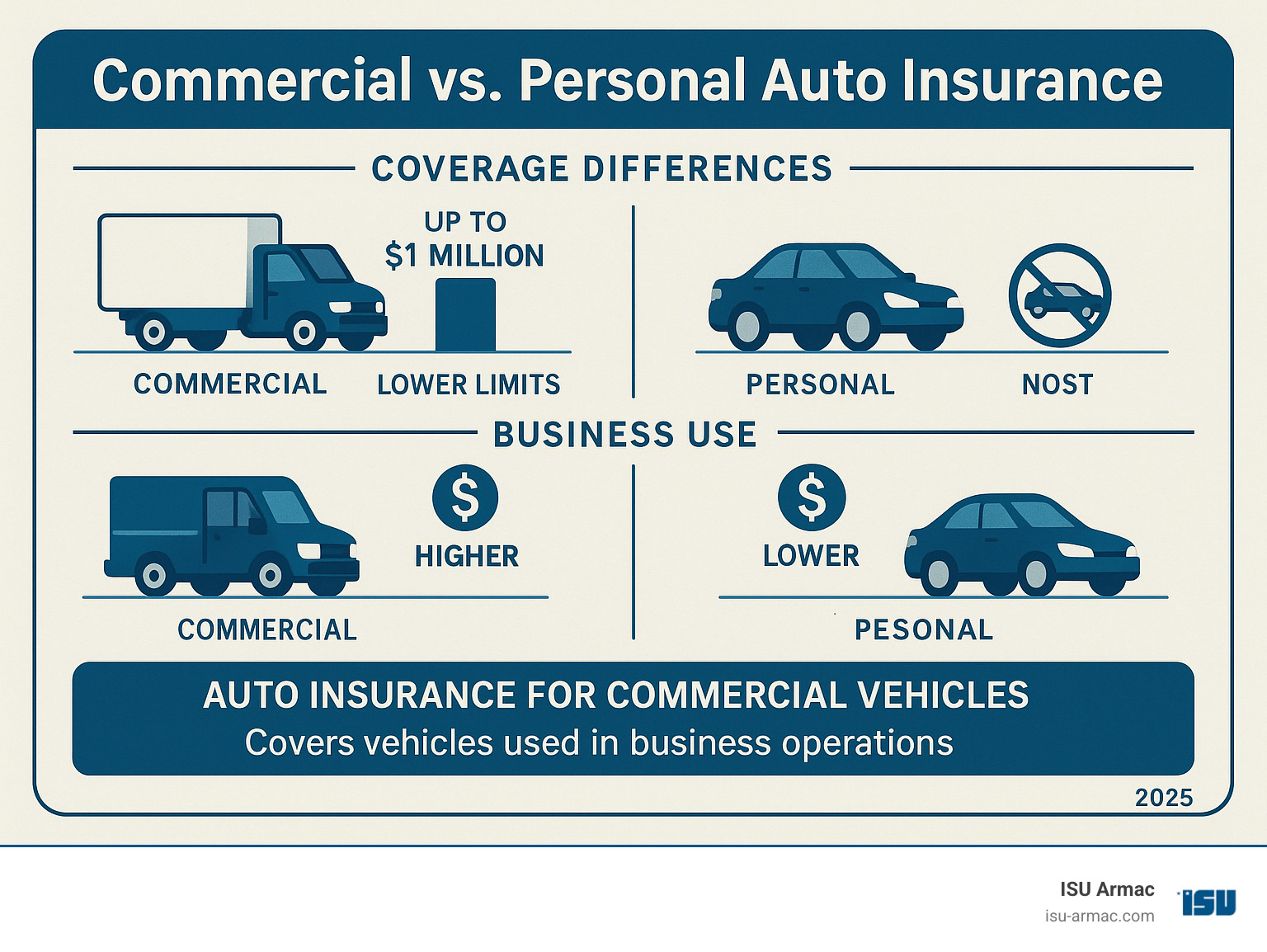
Governments frequently hire private contractors to perform public works, maintenance, or transportation services. If a contract stipulates that the contractor must provide their own vehicles, those vehicles are private property, even if they are painted with government insignia or used exclusively for public projects.
- In these instances, the contractor must carry commercial auto insurance.
- The private commercial policy—not government self-insurance—covers the vehicle.
- Contractors must ensure their commercial policies explicitly list municipal or government contractual endorsements to avoid coverage denials for business conducted on behalf of public entities.
What to Do If You Are Involved in an Accident in a Government Vehicle
The immediate aftermath of a collision involving a government vehicle differs significantly from a standard two-car private accident. Following the correct protocols ensures compliance with administrative law and protects all parties involved.
- Ensure Safety and Call Authorities: Prioritize medical safety and contact local law enforcement immediately to file an official police report. An independent police report is vital when public entities are involved.
- Do Not Admit Fault or Promise Personal Coverage: Never tell the other driver that your personal auto insurance will cover the damages. You do not possess the authority to bind a government risk pool or self-insurance fund.
- Collect Agency Identification: Obtain the specific government department name, agency identification number, supervisor contact information, and the vehicle's fleet management identifier.
- Notify the Agency Supervisor Immediately: Government fleets operate under strict reporting deadlines. Report the incident to the appropriate fleet manager or risk management office within the mandated timeframe.
- Cooperate with Official Investigators: State, municipal, or federal investigators will examine the accident to determine if the driver was acting within the scope of employment at the time of the collision.
Frequently Asked Questions
Does my personal auto insurance cover me if I rent a car for government business?
Renting a vehicle for official government travel typically involves distinct coverage rules. If you use a government-approved corporate travel card or rent through official government procurement contracts (such as the U.S. government car rental agreement), the rental agency agreement and government indemnification provisions usually apply. Personal auto insurance is generally unnecessary and secondary, but you should always verify your agency’s specific travel regulations before departure.
Can I add a government vehicle to my personal insurance policy?
No. Insurance companies require an insurable interest to write a policy. Because you do not legally own the government vehicle, you cannot insure it on a personal policy. Attempting to do so or misrepresenting vehicle ownership on an insurance application can be classified as material misrepresentation, leading to policy rescission or denial of claims.
What happens if a government vehicle hits my car?
If a government vehicle strikes your personal vehicle, you must file a claim directly with the responsible government entity’s risk management department, tort claims division, or self-insurance fund rather than filing through your own liability coverage. This process often requires submitting a formal administrative tort claim before you can initiate civil litigation.
Are volunteer drivers covered by government insurance?
Coverage for volunteers driving government vehicles depends entirely on local statutes and the specific authorization granted by the agency. If the volunteer is formally registered, acting under the direction of public officials, and performing authorized public duties, the government’s self-insurance or liability program typically extends to cover them. However, informal or unauthorized volunteering can trigger severe coverage gaps.
Next Steps and Risk Management Recommendations
For government employees and public sector contractors, relying on assumptions regarding auto insurance is a substantial financial risk. Always review your agency’s employee handbook, fleet management guidelines, and risk management protocols before operating any public vehicle. If you operate mixed fleets or hold independent contracts with public entities, consult with a licensed commercial insurance broker or legal counsel specializing in municipal law to ensure that all commercial liability endorsements and contractual protections are correctly established.
Image Gallery