Guidelines for Choosing Good Dog Food for Itchy Skin in 2026
Choosing the best dog food for itchy skin requires identifying whether the cause is a food allergy, an environmental sensitivity, or a compromised skin barrier. For 2026, veterinarians recommend starting with a strict elimination trial...
Choosing the best dog food for itchy skin requires identifying whether the cause is a food allergy, an environmental sensitivity, or a compromised skin barrier. For 2026, veterinarians recommend starting with a strict elimination trial using either a hydrolyzed protein diet or a novel protein source while prioritizing high levels of Omega-3 fatty acids to reduce systemic inflammation and support the dermal lipid barrier.
Contents
Understanding the Root Causes of Canine Pruritus
Before selecting a bag of food, it is essential to distinguish between the various reasons a dog might be scratching. Itchy skin, clinically known as pruritus, is a symptom, not a diagnosis. In the veterinary landscape of 2026, we categorize skin issues into three primary nutritional triggers: Adverse Food Reactions (AFR), Atopic Dermatitis (environmental allergies), and Nutritional Deficiencies.
Adverse Food Reactions occur when the dog’s immune system misidentifies a common protein—most often beef, chicken, dairy, or wheat—as a threat. This triggers an inflammatory response that manifests as red, itchy skin, chronic ear infections, or gastrointestinal upset. Unlike a seasonal allergy to pollen, food allergies persist year-round.
Conversely, Atopic Dermatitis is an allergic reaction to environmental factors like dust mites or grasses. While food cannot "cure" an environmental allergy, a diet rich in specific nutrients can strengthen the stratum corneum (the outermost layer of skin). A robust skin barrier prevents allergens from penetrating the skin, thereby reducing the overall "itch load" the dog experiences.
The Science of Protein Selection: Hydrolyzed vs. Novel
When a dog suffers from confirmed or suspected food allergies, the protein source is the most critical variable. By 2026, the two primary strategies for nutritional management are hydrolyzed diets and novel protein diets.
Hydrolyzed Protein Diets
Hydrolyzed diets are considered the "gold standard" for diagnosing and managing food-sensitive dogs. In these formulations, the protein (typically soy or chicken) undergoes a chemical process called hydrolysis. This process breaks the protein chains down into tiny fragments measured in Daltons.
Most intact proteins are between 15,000 and 40,000 Daltons. The canine immune system generally requires a protein to be at least 10,000 Daltons to recognize it and trigger an allergic response. Hydrolyzed diets break these proteins down to under 3,000 Daltons. Because the fragments are so small, they "sneak" past the immune system's receptors without triggering a reaction, providing the dog with necessary amino acids without the inflammatory cost.
Novel Protein Diets
A novel protein diet utilizes a protein source the dog has never been exposed to before. In 2026, common proteins like beef and chicken are so ubiquitous in commercial treats and kibble that "novel" now refers to more exotic sources such as venison, rabbit, kangaroo, or alligator.
The logic is simple: the immune system cannot be allergic to something it has never encountered. However, the success of a novel protein diet depends entirely on the purity of the manufacturing process. Cross-contamination in factories that process multiple types of meat is a common reason these diets fail in a commercial setting.
Essential Nutrients for Skin Barrier Support
Choosing a good dog food for itchy skin involves more than just removing allergens; it requires adding "skin-supportive" nutrients. Even if a dog does not have a food allergy, their skin health can be significantly improved by the following components:
- Omega-3 Fatty Acids (EPA and DHA): Found primarily in fish oil (menhaden, salmon, or sardine) and algae, these fatty acids are potent anti-inflammatories. They compete with arachidonic acid in the body, effectively turning down the "volume" of the inflammatory response in the skin. In 2026, therapeutic levels are much higher than those found in standard maintenance diets.
- Omega-6 Fatty Acids (Linoleic Acid): While often maligned as pro-inflammatory, linoleic acid is vital for the skin's lipid barrier. It helps "glue" skin cells together, preventing moisture loss (transepidermal water loss) and keeping the skin supple.
- Zinc and Biotin: Zinc is a cofactor for hundreds of enzymatic reactions, including those responsible for skin cell replication and collagen production. A deficiency often leads to crusty, scaling skin around the eyes and mouth.
- Microbiome Support (Prebiotics and Probiotics): The "gut-skin axis" is a major focus of veterinary research in 2026. A balanced gut microbiome regulates the immune system’s overall reactivity. Ingredients like beet pulp, chicory root, and specific strains like Lactobacillus acidophilus help maintain this balance.
The Elimination Trial: How to Switch Foods Safely
You cannot determine if a food is working if the dog is still receiving "contaminants." An elimination trial is a rigorous 8-to-12-week period where the dog eats nothing but the therapeutic food and water. This means no flavored heartworm preventatives, no rawhides, no table scraps, and no "human" medication hidden in cheese.
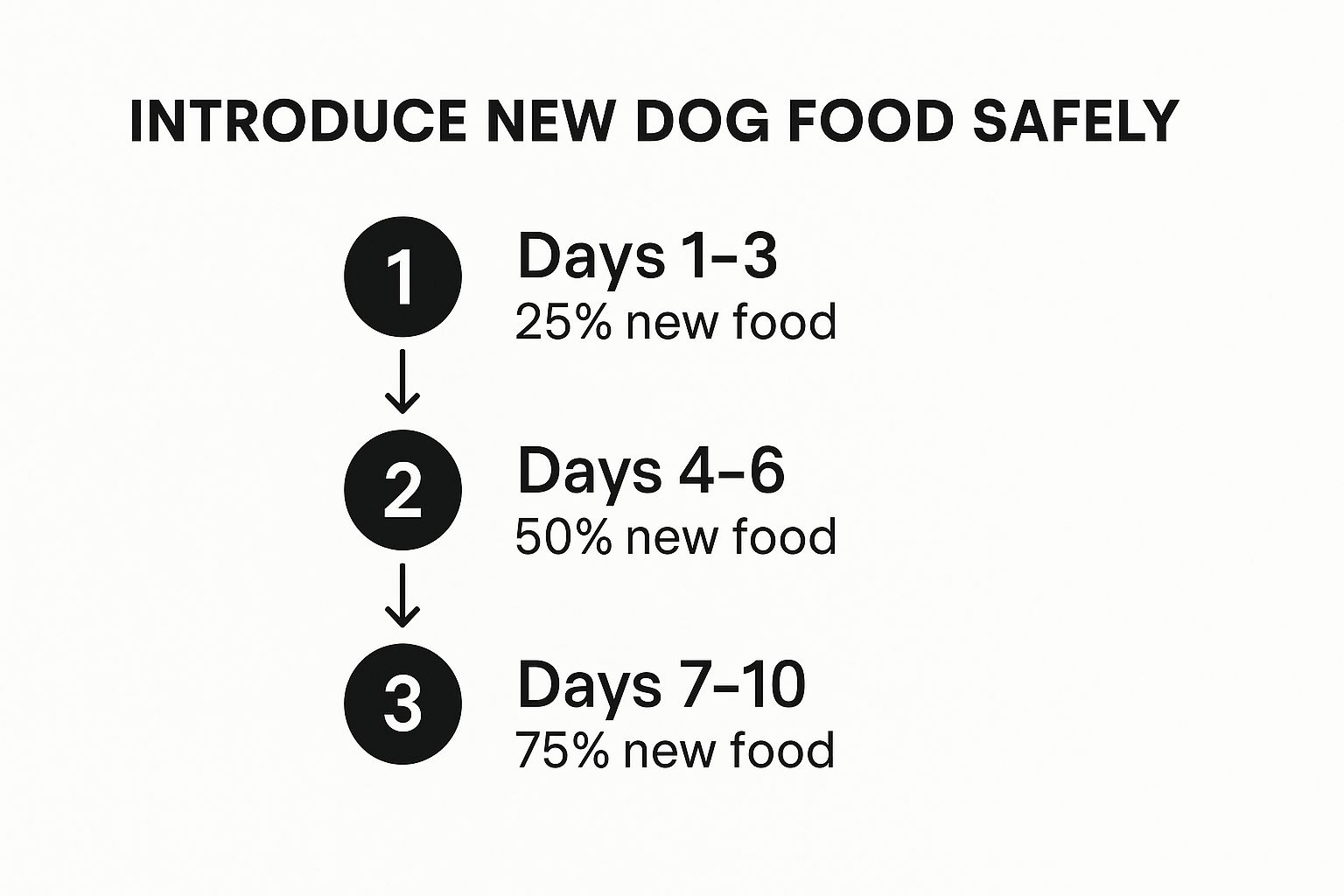
When transitioning to a new food for itchy skin, follow a 7-day gradual mix to avoid gastric upset:
- Days 1-2: 25% new food, 75% old food.
- Days 3-4: 50% new food, 50% old food.
- Days 5-6: 75% new food, 25% old food.
- Day 7: 100% new food.
Improvements in skin redness and itching are rarely immediate. It takes approximately 3 to 4 weeks for the skin cells to turn over and for the systemic inflammation to subside. Most veterinarians do not evaluate the success of a diet change until the 10-week mark.
Comparison of Diet Strategies for Itchy Skin
| Diet Type | Primary Mechanism | Best For | Pros | Cons |
|---|---|---|---|---|
| Hydrolyzed | Proteins broken down to <3,000 Daltons | Diagnostic trials and severe allergies | Lowest risk of reaction; highly digestible | Expensive; often requires a prescription |
| Novel Protein | Uses rare proteins (Kangaroo, Rabbit) | Long-term management of known allergies | Very palatable; more "natural" ingredients | Risk of cross-contamination in OTC brands |
| Limited Ingredient (LID) | Minimal components; single protein/carb | Mild sensitivities or "clean" eating | Easier to find in retail stores; affordable | May still contain hidden allergens or "natural flavors" |
| Skin Support (High Omega) | Fortified with EPA, DHA, and Zinc | Environmental allergies (Atopy) | Improves coat shine and barrier function | Does not address the source of a food allergy |
Common Mistakes When Choosing "Itch-Relief" Foods
A frequent error is assuming that "grain-free" is synonymous with "hypoallergenic." While some dogs are sensitive to wheat or corn, veterinary data through 2026 consistently shows that animal proteins (meat) are far more likely to be the culprit than grains. Replacing grains with peas or lentils does not help a dog that is allergic to chicken.
Another mistake is relying on "Over-the-Counter" (OTC) limited ingredient diets for a dog with a severe, medically diagnosed allergy. Independent studies have often found trace amounts of unlisted proteins in retail-level foods because the machinery is not cleaned as rigorously as it is for prescription-grade diets. For a highly sensitive dog, even a trace amount of beef protein can restart the itching cycle.
Finally, do not overlook the carbohydrate source. While protein is the usual suspect, some dogs react to the starches used to bind kibble. Potatoes, sweet potatoes, and tapioca are common alternatives, but they should be used consistently. If a dog is on a "Fish and Potato" diet, they should not be given "Chicken and Sweet Potato" treats.
Professional Advice Limitation
This guide provides nutritional information for educational purposes and reflects common veterinary practices in 2026. Chronic skin conditions can lead to secondary bacterial or yeast infections that require medical intervention. Always consult with a licensed veterinarian or a board-certified veterinary dermatologist before beginning a restrictive elimination diet or administering high-dose supplements.
Frequently Asked Questions
How long does it take for dog food to help itchy skin?
Visible improvement typically takes 6 to 12 weeks. The skin requires time to shed old, inflamed cells and generate new ones supported by the improved nutrition. While some reduction in redness might be seen in 21 days, a full assessment of a diet's efficacy cannot be made before the two-month mark.
Is grain-free food better for dogs with itchy skin?
Not necessarily. Most canine food allergies are reactions to animal proteins like beef, chicken, or dairy. Grain-free diets only help if the dog has a specific, rare sensitivity to grains like wheat or corn. In many cases, grain-free foods simply substitute one carbohydrate for another without addressing the underlying protein allergy.
Can I just add fish oil to my dog's current food?
While adding fish oil provides beneficial Omega-3s, it may not be enough if the base food contains an ingredient the dog is allergic to. Supplements can support the skin barrier, but they cannot neutralize an active immune response to a trigger protein. Furthermore, adding too much oil can lead to calorie imbalances or pancreatitis.
What is the "itch threshold"?
The itch threshold is the concept that multiple small irritants (e.g., a few fleas, some pollen, and a mild food sensitivity) add up to cause scratching. By choosing a food that removes the nutritional irritant, you may lower the dog's total "itch load" enough that they stop scratching, even if their environmental allergies persist.
Why does my dog's skin get worse during a food change?
If the transition is too fast, the dog may experience a "detox" period or, more likely, a gastrointestinal upset that stresses the immune system. However, if the itching increases significantly, it is possible the dog is allergic to the "novel" protein or a filler in the new food.
Practical Recommendation
For the best results, start by consulting your veterinarian to rule out parasites (fleas/mites) and infections. If a food allergy is suspected, transition your dog to a prescription hydrolyzed protein diet for a minimum of 10 weeks. Use this time as a "clean slate." If the itching subsides, you can then choose to stay on that diet or systematically introduce single "novel" proteins to identify which ones your dog can safely tolerate.
Image Gallery