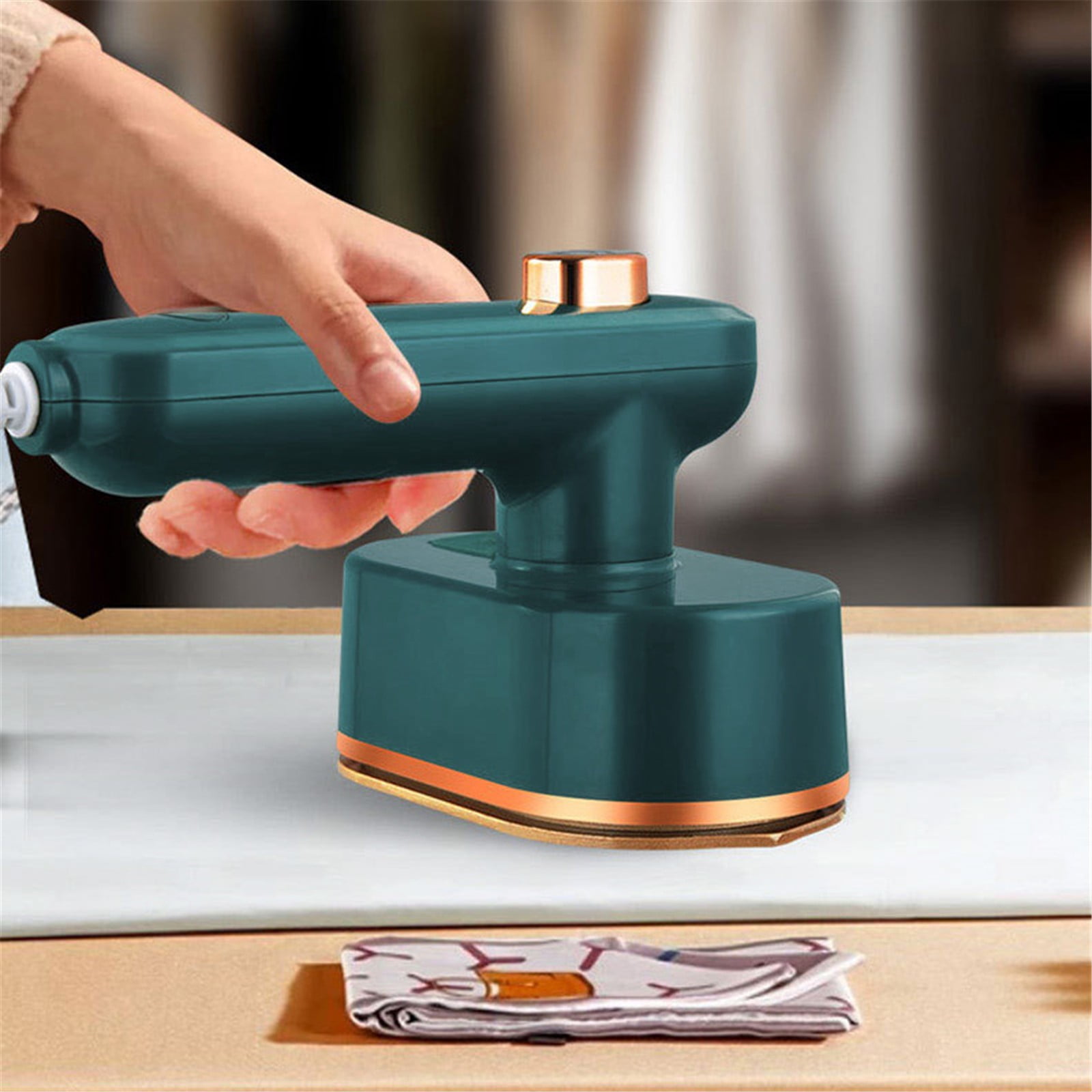
Choosing the Best Travel Size Steamer: A Comprehensive 2026 Guide to Wrinkle-Free Travel
Finding the best travel size steamer in 2026 requires balancing portability with power. The ideal choice features dual-voltage compatibility for international use, a heat-up time under 30 seconds, and a leak-proof design. Top-rated mod...
Finding the best travel size steamer in 2026 requires balancing portability with power. The ideal choice features dual-voltage compatibility for international use, a heat-up time under 30 seconds, and a leak-proof design. Top-rated models like the Jiffy ESTEAM and Rowenta Pure Pop currently lead the market in reliability and performance.
Contents
Travelers often face the dilemma of crushed clothes after hours in a suitcase. While hotel irons are an option, they are frequently unreliable, dirty, or potentially damaging to delicate fabrics. A dedicated travel steamer offers a gentle, effective way to refresh garments, remove odors, and eliminate wrinkles without the need for an ironing board. In this guide, we analyze the technical specifications, performance metrics, and practical considerations for selecting the highest-quality steaming solutions available this year.
Essential Features of a High-Performance Travel Steamer
When evaluating travel steamers, several technical factors determine whether a device is a helpful tool or a bulky hindrance. By 2026 standards, a "best-in-class" device must meet specific benchmarks in power efficiency and ergonomic design.
Power and Heating Velocity
The effectiveness of a steamer is largely dictated by its wattage. Most portable units range from 800 to 1,200 watts. Higher wattage generally correlates with a faster "ready-to-use" time and a more consistent flow of steam. For those traveling for business or formal events, a unit that reaches operating temperature in 25 seconds or less is considered the industry standard for efficiency.
Water Reservoir and Runtime
The size of the water tank affects both the weight of the device and how many garments you can steam before refilling.
- Compact Models: Typically hold 100ml to 150ml, providing 7–10 minutes of continuous steam. This is usually sufficient for one suit or two shirts.
- Extended Capacity Models: Hold 200ml to 250ml, offering up to 15 minutes of steam. These are better for those traveling with linen or heavy cotton fabrics that require more moisture to relax.
Dual-Voltage Capabilities
For international travelers, dual-voltage (110-120V / 220-240V) functionality is the most critical feature. Without it, using a North American steamer in Europe or Asia requires a heavy-duty power converter, as a simple plug adapter will not prevent the heating element from burning out. Many modern travel steamers in 2026 now include a manual switch or internal auto-sensing circuitry to handle global power grids.
Top 5 Travel Size Steamers Examined for 2026
Based on durability, steam output density, and user feedback, the following models represent the pinnacle of portable garment care.
1. Jiffy Steamer ESTEAM: The Professional's Choice
The Jiffy ESTEAM remains a titan in the industry due to its rugged construction and industrial-grade heating element. Unlike cheaper plastic models, the ESTEAM uses a specialized internal reservoir that produces a high volume of steam without the use of a mechanical pump.
- Pros: Extremely durable, no moving parts to break, large water capacity.
- Cons: Slightly bulkier than "folding" models, no auto-shutoff feature.
2. Rowenta Pure Pop: The Style and Speed Leader
Rowenta has pivoted toward ultra-slim designs with the Pure Pop series. This device is shaped like a flattened cylinder, making it the easiest to pack in a carry-on side pocket. It features a reversible pad system for lint removal and delicate fabric protection.
- Pros: Heats in 15 seconds, ultra-portable, vibrant aesthetic options.
- Cons: Small water tank requires frequent refills.
3. Steamery Cirrus 3: The Luxury Hybrid
The Stockholm-based Steamery brand has perfected the "Iron-Steamer" hybrid. The Cirrus 3 features a heated front plate that mimics an iron’s behavior, allowing you to press collars and cuffs while steaming the rest of the garment.
- Pros: Premium build quality, dual functionality, elegant design.
- Cons: High price point, lacks dual-voltage in some regional versions.
4. Conair ExtremeSteam Handheld: The Feature-Rich Option
The ExtremeSteam series utilizes "Dual Heat Technology," which creates a drier, hotter steam that penetrates heavier fabrics like wool and denim more effectively than standard units.
- Pros: Multiple steam settings, built-in creaser, affordable.
- Cons: Slightly heavier than competitors.
5. Hilife Portable Steamer: The Best Value
A favorite for casual travelers, the Hilife provides a long-reaching power cord and a surprisingly powerful steam flow for its price bracket. It is a "boiler-style" steamer, meaning it is simple to operate and easy to clean.
- Pros: Highly affordable, large transparent tank, lightweight.
- Cons: Must be kept upright to avoid spitting water.
Technical Comparison Table
| Model | Wattage | Weight (lbs) | Tank Capacity | Dual Voltage? | Heat-Up Time |
|---|---|---|---|---|---|
| Jiffy ESTEAM | 600W | 1.8 lbs | 8 oz (236ml) | No (Regional) | 120 Seconds |
| Rowenta Pure Pop | 1150W | 1.5 lbs | 2.4 oz (70ml) | Yes (Selected) | 15 Seconds |
| Steamery Cirrus 3 | 1000W | 1.7 lbs | 3.0 oz (90ml) | No | 25 Seconds |
| Conair ExtremeSteam | 1110W | 2.0 lbs | 7.3 oz (215ml) | No | 40 Seconds |
| Hilife Portable | 700W | 1.1 lbs | 8.1 oz (240ml) | No | 100 Seconds |
The Science of Steaming: Why it Works Better for Travel
Steaming works by relaxing the intermolecular bonds in fabric fibers (primarily hydrogen bonds). When heat and moisture are applied simultaneously, these bonds loosen, allowing gravity to pull the fabric back into its original, flat state.
For travelers, steaming is safer than ironing because the device never actually touches the fabric (unless using a hybrid model). This prevents "shining" on dark fabrics and accidental scorch marks on synthetics like polyester or acetate. Furthermore, steam at 212°F (100°C) acts as a natural sanitizer, killing many bacteria and removing the "suitcase smell" that can cling to clothes after long flights.
Maintaining Your Travel Steamer
To ensure your device lasts through 2026 and beyond, proper maintenance is required, especially regarding mineral buildup.
- Use Distilled Water: Tap water contains calcium and magnesium. When boiled, these minerals leave "scale" behind, which can eventually clog the steam vents or cause the unit to "spit" brown water onto your clothes.
- The Decalcification Process: If you must use tap water, clean the unit every 10–20 uses by running a 50/50 mix of distilled white vinegar and water through a full steam cycle, followed by two cycles of plain water.
- Storage: Always empty the water tank completely before packing the unit. Stagnant water can lead to mold growth or internal corrosion during storage.
Troubleshooting Common Issues
- Spitting Water: This usually happens if the unit is tilted too far forward or if the water is overfilled. Ensure you stay below the "MAX" line.
- No Steam Production: Check for mineral clogs in the nozzle. Using a small pin to clear the holes (while the unit is unplugged and cool) often resolves the issue.
- Weak Steam Output: This is often a sign of internal scaling. Perform a vinegar flush to restore the heating element's efficiency.
Frequently Asked Questions
Can I take a garment steamer in my carry-on luggage?
Yes, the TSA and most international aviation authorities allow garment steamers in both carry-on and checked luggage. Since they do not contain pressurized gas or large batteries, they are generally considered safe. However, ensure the water tank is completely empty to comply with liquid restrictions if the tank is not removable.
Does a travel steamer work on silk and lace?
Steamers are actually the preferred method for delicate fabrics like silk, lace, and chiffon. Because there is no hot metal plate making contact with the garment, the risk of melting or burning the fibers is significantly reduced. Always keep the steamer head at least an inch away from extremely delicate items.
Is wattage or steam flow rate more important?
While wattage indicates how much power the device uses, the steam flow rate (measured in grams per minute) tells you how much moisture is actually hitting your clothes. For travel, a flow rate of 15g/min to 25g/min is ideal. High wattage often leads to a higher flow rate, but design efficiency also plays a role.
Why do I need a dual-voltage steamer for Europe?
Outlets in North America provide 110V-120V, while Europe and much of the world provide 220V-240V. A standard US steamer plugged into a European outlet without a voltage converter will receive double the power it is designed for, causing it to overheat and fail instantly. A dual-voltage steamer has internal components designed to handle both levels safely.
Can a steamer replace a dry cleaner's press?
A travel steamer is excellent for removing wrinkles and refreshing garments, but it cannot create crisp "pressed" lines, such as the sharp crease on tuxedo trousers. For those specific needs, a hybrid steamer with a heated soleplate or a traditional iron is necessary.
Final Recommendation for 2026 Travelers
For the frequent international flyer, the Rowenta Pure Pop offers the best balance of speed and portability, provided you don't mind refilling the tank for larger loads. However, if you prioritize longevity and professional-grade steam volume, the Jiffy ESTEAM remains the most reliable investment for 2026. Whichever model you choose, always pair it with a small bottle of distilled water to ensure your clothes—and your device—remain in pristine condition throughout your journey.
Image Gallery