Which Granite Countertop Style Wins for Your Kitchen?
The winning granite countertop style for your kitchen depends on balancing your aesthetic preference with your lifestyle needs. While polished, veined granite remains the standard for timeless luxury and ease of maintenance, leathered...
The winning granite countertop style for your kitchen depends on balancing your aesthetic preference with your lifestyle needs. While polished, veined granite remains the standard for timeless luxury and ease of maintenance, leathered finishes in dark, moody tones have become the 2026 favorite for homeowners seeking a tactile, modern, and fingerprint-resistant surface.
Contents
Granite has reclaimed its position as the premier luxury surfacing material in 2026. After years of quartz dominance, the market has shifted back toward the authenticity, heat resistance, and unique geological "story" that only natural stone provides. However, choosing the right "style" involves more than just picking a color. It requires an understanding of pattern movement, surface texture, edge profiles, and how these variables interact with your kitchen’s lighting and cabinetry.
Understanding Granite Patterns: Speckled vs. Veined vs. Solid
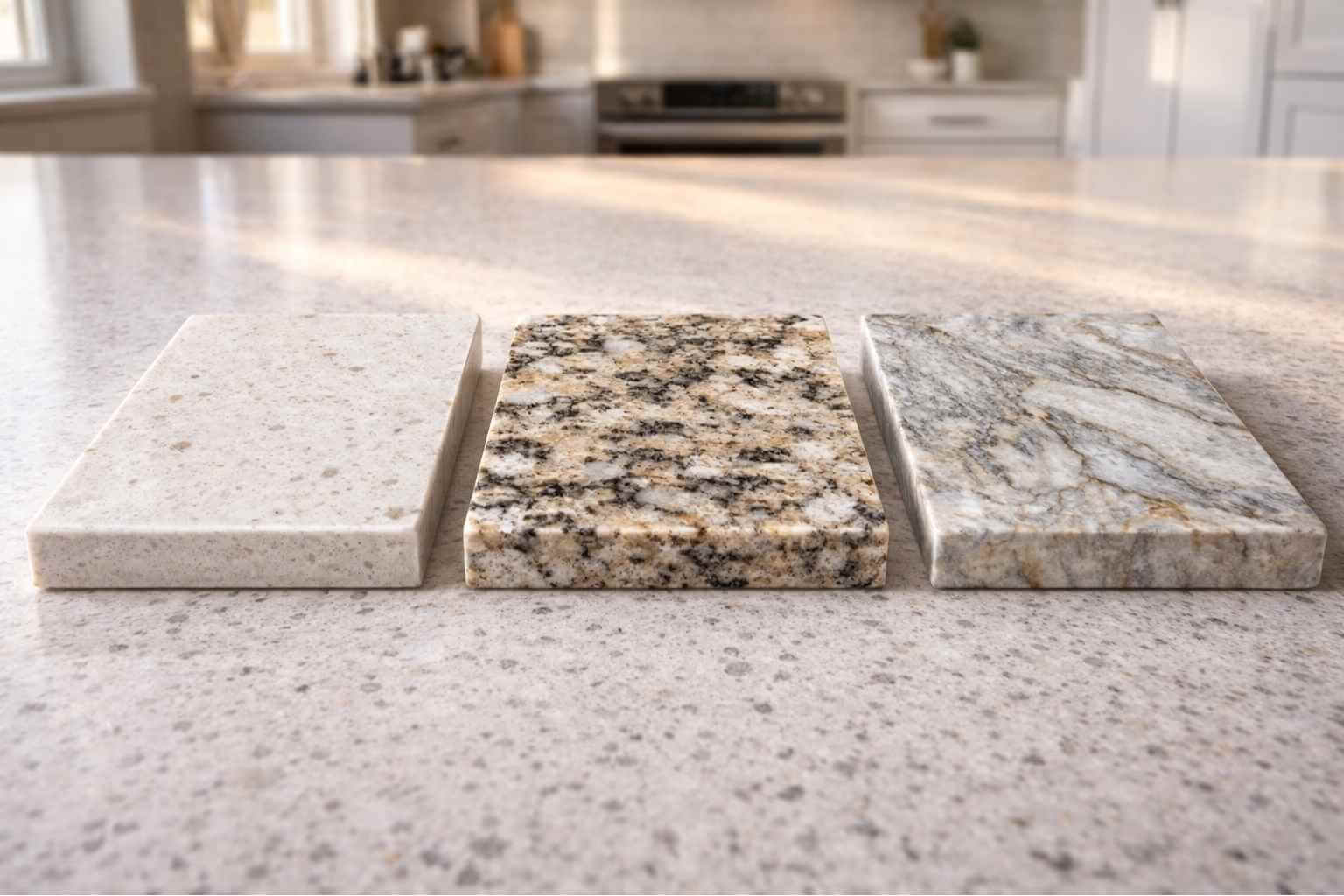
The visual impact of your countertop is largely defined by its pattern, which is a direct result of how the stone formed millions of years ago. In the 2026 design landscape, the "win" is often determined by how well the pattern fits the scale of the room.
Speckled Granite
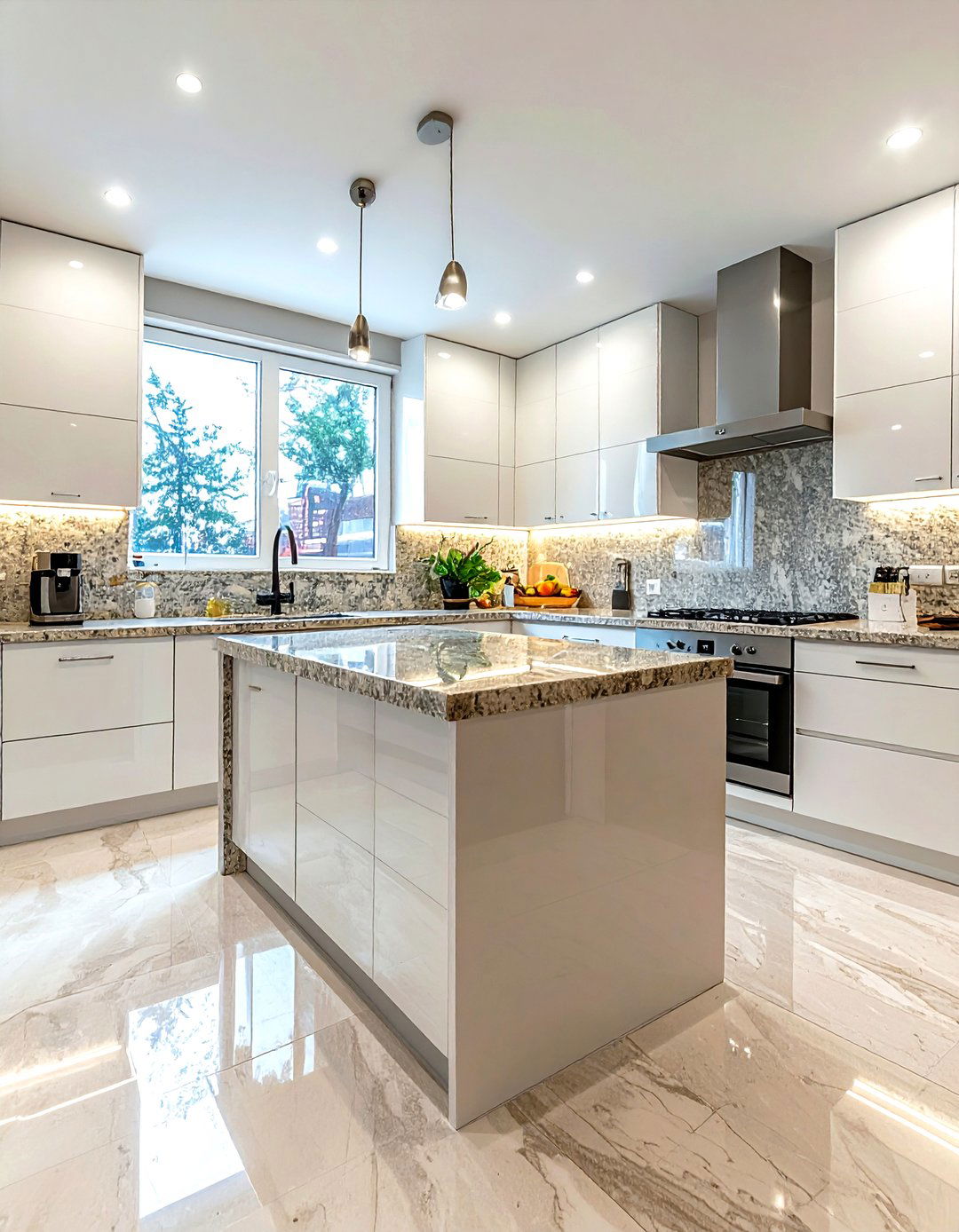
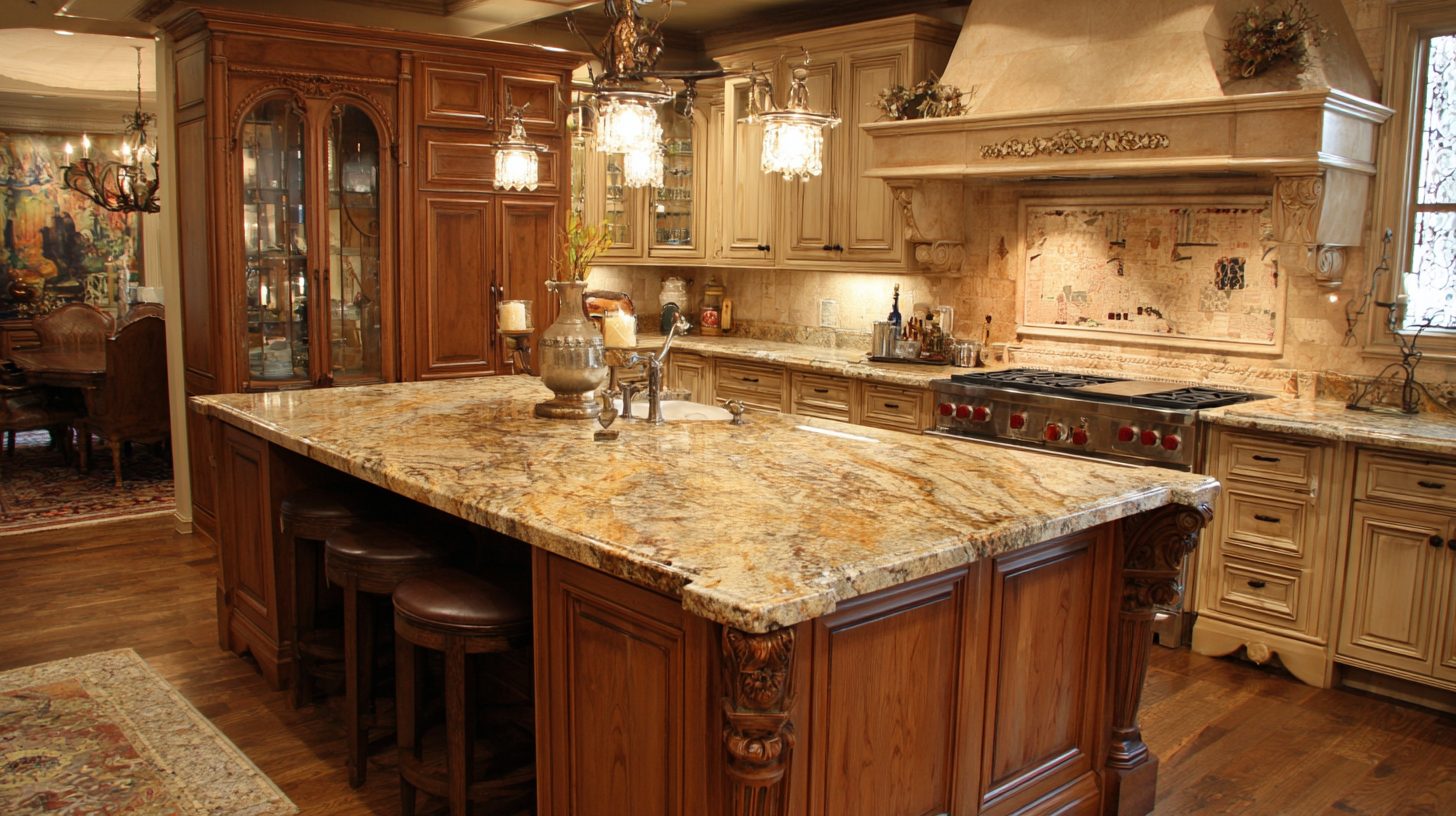
Speckled granite is the most traditional style, characterized by a consistent distribution of small mineral crystals (usually quartz, feldspar, and mica). This style is often classified as a "low-movement" stone. Its primary advantage is camouflage; the busy, uniform pattern is exceptionally good at hiding crumbs, dust, and minor surface debris. For high-traffic family kitchens where perfection isn't always possible, speckled styles like Santa Cecilia or New Venetian Gold remain practical winners.
Veined Granite
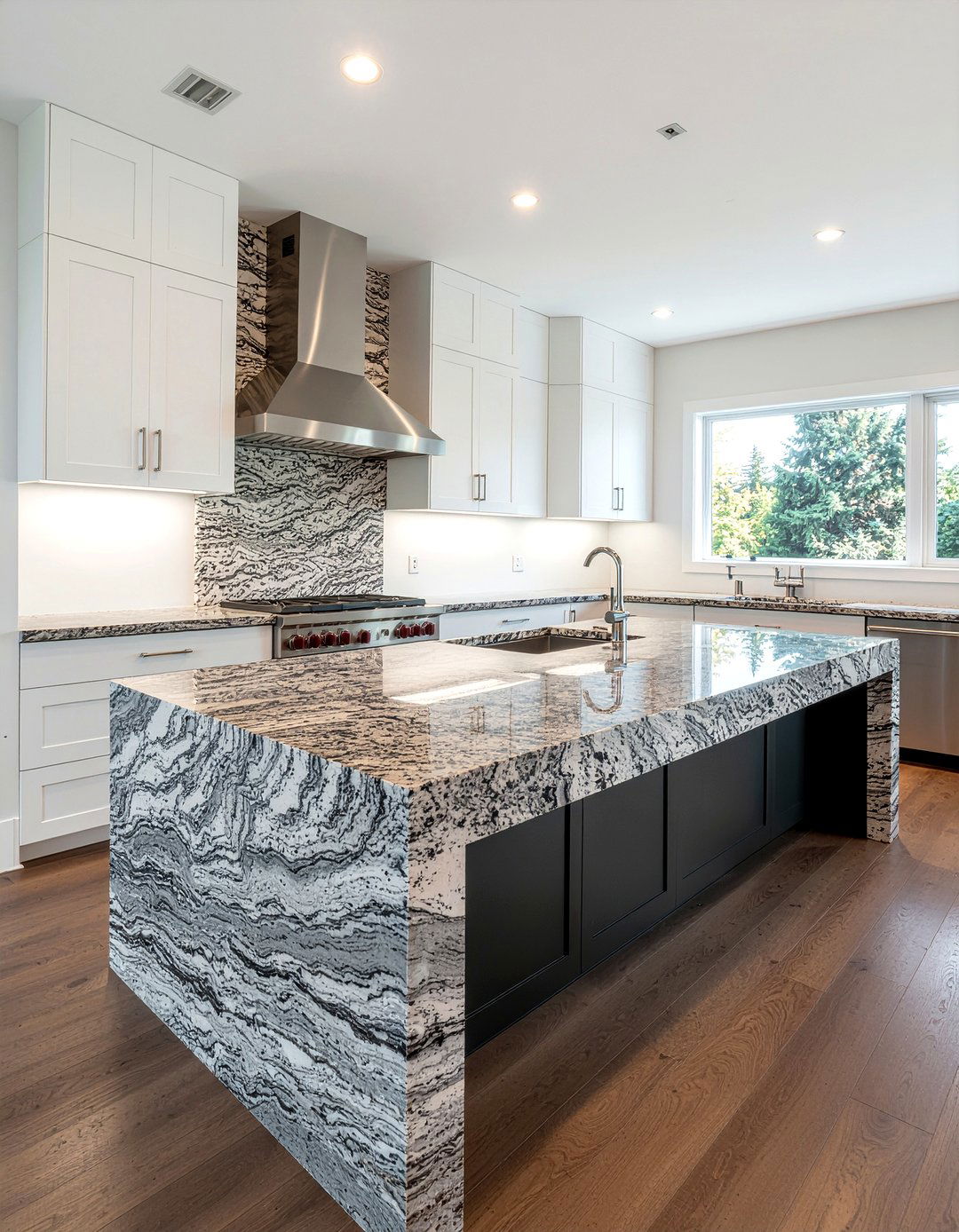
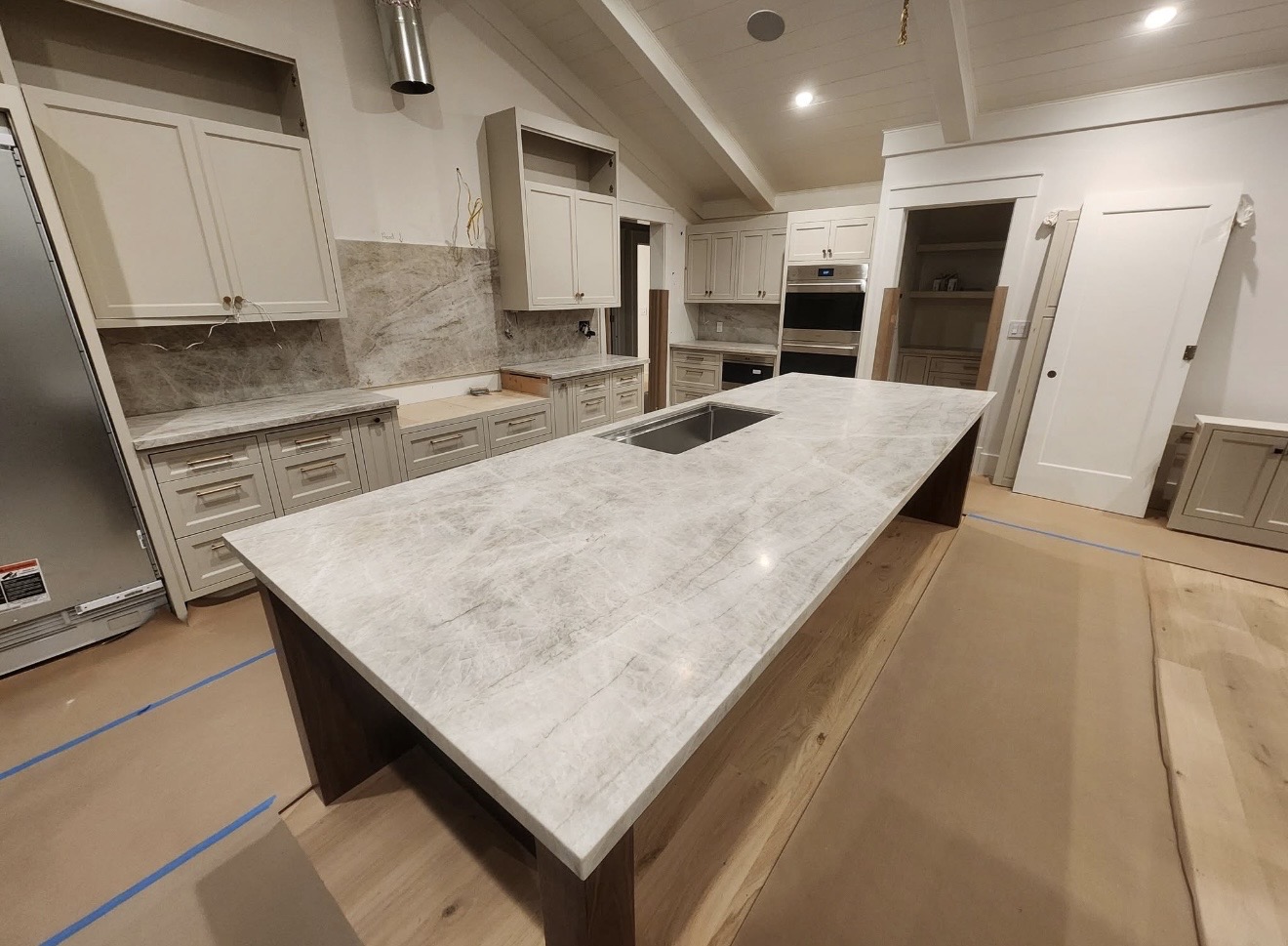
Veined granite has seen a massive surge in popularity because it mimics the dramatic look of marble while offering the superior durability of igneous rock. These slabs feature long, flowing lines of color that "move" across the surface. In 2026, designers are increasingly using veined granite for waterfall islands, where the pattern can continue vertically to the floor. Styles like Blue Dunes or Viscon White provide a high-end, artistic focal point that can make a standard kitchen feel like a custom-designed space.
Solid and Minimalist Granite
Truly solid granite is rare, as the stone is by definition an aggregate of minerals. However, certain varieties like Absolute Black or Premium Black offer a nearly uniform appearance. These styles win in contemporary or "industrial chic" kitchens. They provide a grounding, architectural element that pairs perfectly with light-colored cabinetry or metallic accents. The challenge with solid, dark styles is that they tend to show fingerprints and water spots more readily than their patterned counterparts.
The Battle of Finishes: Polished, Honed, and Leathered
The "feel" of your kitchen is dictated by the finish applied to the stone during fabrication. This is perhaps the most significant decision you will make after selecting your slab.
The Polished Finish
Polished granite is the classic choice. The stone is ground with progressively finer abrasives until it achieves a mirror-like shine. This finish wins for small or dark kitchens because the reflective surface bounces light around the room, making the space feel larger. Technically, polishing also seals the natural pores of the stone more effectively than other finishes, making it the most stain-resistant option available.
The Honed (Matte) Finish
A honed finish is created by stopping the buffing process before the surface becomes shiny. The result is a smooth, satin-like surface with no reflection. In 2026, many homeowners choose honed finishes to achieve a softer, more organic look. While beautiful, it is important to note that a honed surface is more porous than a polished one. It requires more frequent sealing and can be more prone to "darkening" when it comes into contact with oils or water.
The Leathered Finish
The leathered finish is the undisputed trend winner of 2026. This finish is achieved by brushing the stone with diamond-tipped brushes, resulting in a subtle, dimpled texture that follows the natural contours of the minerals. It has a matte appearance like a honed finish but adds a tactile dimension. Leathered granite is exceptionally good at hiding fingerprints, smudges, and water spots, making it the superior choice for high-use prep areas and outdoor kitchens.
Granite Grading and Why It Matters
When selecting your style, you will likely encounter "levels" or "grades" of granite. These are not necessarily measures of physical durability but rather of rarity and sourcing complexity.
- Level 1 (Entry Level): Usually consists of common speckled patterns sourced from high-output quarries in Brazil or India. These are the most affordable but offer the least "uniqueness."
- Level 2 (Mid-Grade): Features more movement, unique colors, and more pronounced veining.
- Level 3+ (Exotic): These are rare stones with striking colors (blues, deep greens, or bright reds) and complex mineral inclusions like semi-precious stones.
Choosing an "Exotic" style wins if you want your countertop to be the primary piece of art in your home. However, Level 1 and 2 stones are often "winners" for budget-conscious renovations where the goal is to increase property value without over-investing.
| Style Attribute | Polished Finish | Honed Finish | Leathered Finish |
|---|---|---|---|
| Aesthetic | Formal, High-Shine | Modern, Understated | Rustic, Organic |
| Light Reflection | High | Low/None | Low |
| Stain Resistance | High | Moderate | Moderate/High |
| Tactile Feel | Glass-like | Smooth/Satin | Textured/Pebbled |
| Maintenance | Easy wipe-down | Frequent Sealing | Hides Smudges Well |
| Popularity (2026) | Classic Standard | Niche/Architectural | Top Trend |
Edge Profiles: The Final Styling Touch
The edge of your granite slab can significantly alter the kitchen's overall "vibe." In 2026, the industry has moved away from overly ornate edges toward cleaner, architectural lines.
- Eased Edge: A slightly softened square edge. It is the winner for modern, minimalist kitchens.
- Mitered Edge: This involves joining two pieces of stone at a 45-degree angle to make the countertop appear 2 or 3 inches thick. This "chunky" look is a 2026 favorite for luxury islands.
- Beveled Edge: A 45-degree cut on the top edge that adds a touch of sophistication without being too traditional.
- Ogee Edge: A classic S-curve. While less common in modern builds, it still wins in traditional, Mediterranean, or Victorian-style home restorations.
Technical Maintenance: Ensuring the "Win" Lasts
A granite style only "wins" if it remains beautiful for decades. Granite is a silicate-based natural stone, meaning it is resistant to the acids (like lemon juice or vinegar) that would etch marble. However, it is still a porous material.
In 2026, the standard for protection is high-quality fluorocarbon-based impregnating sealers. Unlike topical sealers that sit on top, these penetrate the stone and bond with the minerals. For most polished granites, an annual sealing is sufficient. For honed or leathered styles, you may need to apply sealer every six months to maintain optimal moisture resistance. You can verify if your granite needs sealing by performing the "water drop test": place a few drops of water on the surface; if they bead up, the seal is intact. If they soak in and darken the stone within 10 minutes, it is time to re-seal.
Color Trends: What is Winning in 2026?
Color remains the most subjective part of the style race. Current data from the Natural Stone Institute suggests a shift toward warmer neutrals and deep, saturated tones.
- Warm White and Cream: Moving away from stark "hospital white," homeowners are opting for granites with gold or taupe veining to create a "Cotswold" or "Organic Modern" feel.
- Forest Greens and Deep Blues: Stones like Ubatuba or Costa Esmeralda are being used to create "moody" kitchens, often paired with dark wood cabinetry and brass hardware.
- The Return of "Black Beauty": Black granite in a leathered finish is the primary choice for those looking to create a masculine, sophisticated kitchen that contrasts with light oak flooring.
Frequently Asked Questions
Which granite style is the most durable?
While all granite is durable, polished finishes are technically the most resilient against stains because the polishing process closes many of the stone's natural pores. In terms of color, lighter granites tend to be slightly more porous than darker granites, which often contain higher densities of quartz and are naturally more moisture-resistant.
Is leathered granite harder to clean?
No, but it requires a different approach. Because of the textured surface, you cannot simply swipe a cloth across it as quickly as you would on a polished surface. However, leathered granite is far better at hiding water spots and dust, meaning you actually have to clean it "visually" less often than a high-gloss surface. A soft-bristled brush can help remove crumbs from deeper "valleys" in the texture.
Does granite style affect the resale value of my home?
Yes. As of 2026, neutral-colored veined granite (mimicking marble) and leathered black granite have the highest appeal for prospective buyers. Highly specific exotic colors (like bright red or purple) may be a personal "win" for you but can make a home harder to sell later.
Can I change the style of my granite after it is installed?
To an extent, yes. A professional stone restoration technician can "re-finish" a granite countertop in your home. They can take a polished surface down to a honed finish. However, creating a leathered finish usually requires heavy machinery at a fabrication shop and is rarely done effectively on-site.
Which edge style is safest for families with children?
The Bullnose (fully rounded) or Half-Bullnose edges are the safest. They eliminate sharp corners at the height of a child's head. For a more modern look that is still relatively safe, an Eased Edge provides a soft enough corner to prevent serious injury compared to a sharp, mitered edge.
Final Recommendation
To choose the winner for your kitchen, start with your primary constraint. If you have a busy household with high activity, a leathered, patterned granite is the practical winner for its ability to hide wear. If your goal is to maximize the "wow factor" and luxury feel, a veined granite with a mitered edge will provide the architectural impact you desire. Always view your specific slab in person under natural light before finalizing your choice, as no two pieces of granite are ever identical.
Image Gallery