How to Find Your Bank Account BIC for International Travel
To find your bank account’s BIC (Business Identifier Code), check your monthly bank statement, look under "Account Details" in your mobile banking app, or visit your bank's official website. You can also use the SWIFT online search too...
To find your bank account’s BIC (Business Identifier Code), check your monthly bank statement, look under "Account Details" in your mobile banking app, or visit your bank's official website. You can also use the SWIFT online search tool to verify a code by entering your bank’s name, city, and country.
Contents
Understanding BIC and SWIFT Codes in 2026
When preparing for international travel or managing finances across borders, you will inevitably encounter the term BIC. Standing for Business Identifier Code, the BIC is a standardized format defined by ISO 9362. It is a unique identification code for both financial and non-financial institutions. In the context of international banking, it is most commonly referred to as a SWIFT code, named after the Society for Worldwide Interbank Financial Telecommunication, which manages the registration of these codes.
By 2026, global banking has transitioned heavily toward the ISO 20022 messaging standard, which provides richer data for international transfers. However, the BIC remains the foundational "address" for your bank within the global network. Whether you are an expat setting up a local lifestyle or a traveler needing an emergency wire transfer, knowing your BIC is essential for ensuring funds reach the correct destination without being rejected or delayed by intermediary banks.
The BIC serves as the primary routing instruction for the SWIFT network, which connects over 11,000 banking organizations in more than 200 countries. Without this code, a foreign bank has no standardized way to identify which institution—and which specific branch—holds your account.
Why You Need Your BIC for International Travel
While many travelers rely on credit cards and digital wallets, there are several scenarios where a BIC becomes a critical piece of information. As of 2026, digital nomads and long-term travelers frequently use international bank transfers to avoid the high fees associated with ATM withdrawals or to pay for high-value services like long-term apartment rentals.
Receiving International Wire Transfers
If you lose your debit or credit cards while abroad, a wire transfer from a family member or a secondary account back home may be your only way to access liquid funds. To receive this transfer into a local or international account, the sender requires your full name, account number (or IBAN), and the BIC/SWIFT code.
Paying International Invoices
In many parts of Europe, Asia, and Latin America, businesses may prefer a direct bank transfer over card payments for large expenses, such as deposits on rental cars, medical bills, or tuition fees for language schools. These transfers, especially those crossing currency borders, require the BIC to route the money through the appropriate clearing systems.
Setting Up Local Digital Wallets
In 2026, many regional digital payment apps require a linked bank account for verification. When linking an account from your home country to a foreign-based financial service, the app will often request the BIC to verify the legitimacy and location of the source institution.
Where to Find Your Bank BIC: Step-by-Step Methods
Finding your BIC is generally straightforward, but the location of the code can vary depending on your bank's digital interface and regional banking regulations.
1. Mobile Banking Apps and Online Portals
This is the most efficient method in 2026. Most modern banking apps include a "Share Account Details" or "Account Information" section.
- Step 1: Log into your secure banking app.
- Step 2: Select the specific account you intend to use (e.g., Checking, Savings).
- Step 3: Look for a menu labeled "Account Details," "Manage Account," or "International Transfers."
- Step 4: The BIC/SWIFT code is usually listed alongside your Account Number and Routing Number (in the US) or IBAN (in Europe and elsewhere).
2. Monthly Bank Statements
Your physical or PDF bank statements are legal documents that almost always contain your bank’s routing information. Look at the header or footer of the statement. The BIC is often printed near the bank’s headquarters address or next to your personal account summary.
3. The Bank’s Official Website
If you cannot log in, most banks maintain a public "International Banking" or "Help" page that lists their SWIFT/BIC codes. Use the site's search bar to look for "SWIFT code" or "International transfers." Be cautious to ensure you are using the code for your specific region if the bank is a large multinational entity with different codes for different countries.
4. The SWIFT Official Search Tool
The Society for Worldwide Interbank Financial Telecommunication (SWIFT) provides a public directory. You can search by the bank’s name and location. This is the most authoritative way to verify a code if you are unsure if the one you found is current.
Anatomy of a BIC Code: What the Characters Mean
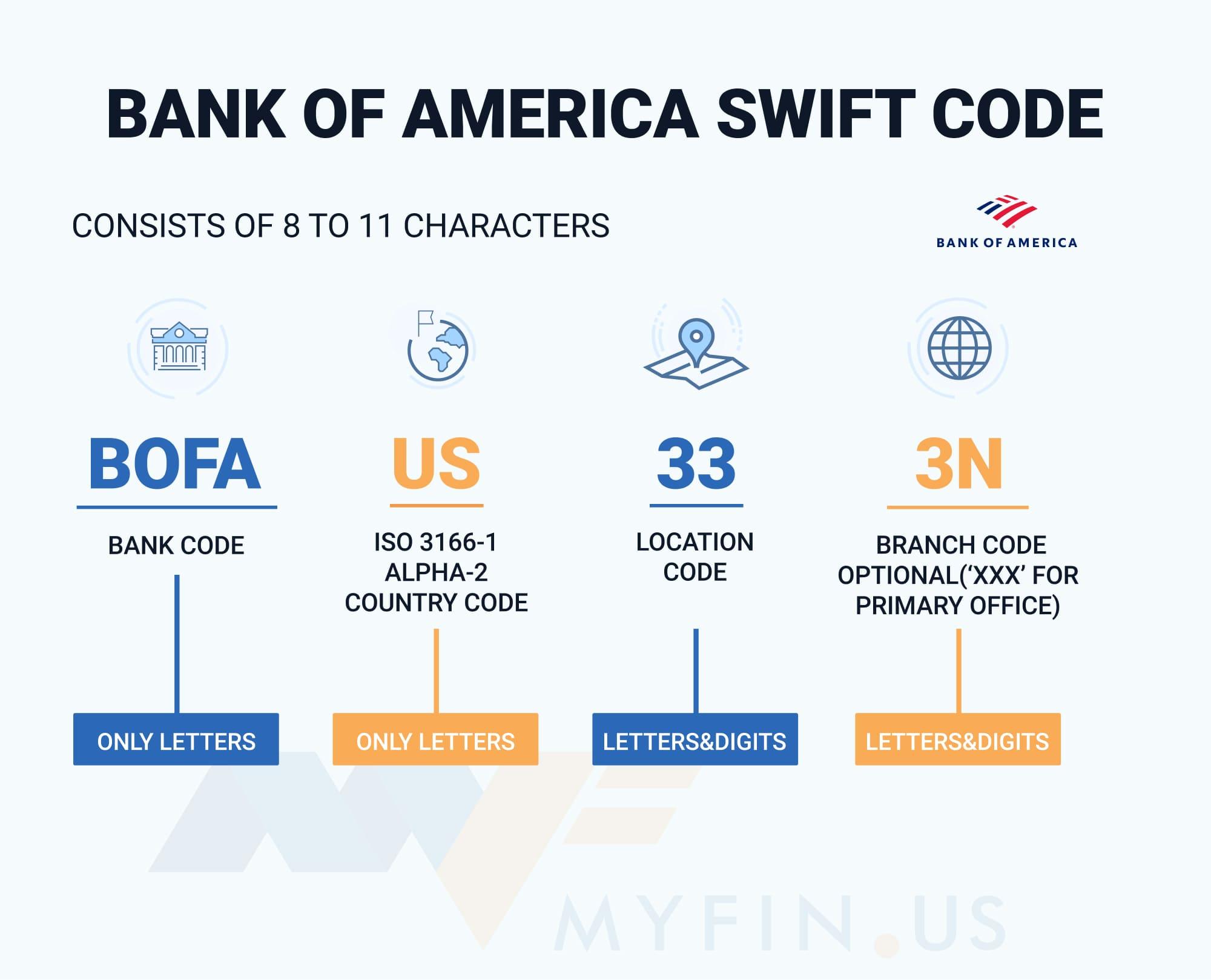
A BIC is typically composed of 8 or 11 characters. Understanding this structure can help you spot errors before initiating a transfer.
- First 4 Characters (Bank Code): These letters represent the bank itself (e.g., CHAS for JPMorgan Chase, BARC for Barclays). It usually looks like a shortened version of the bank's name.
- Next 2 Characters (Country Code): These letters identify the country where the bank is located using the ISO 3166-1 alpha-2 format (e.g., US for United States, GB for Great Britain, DE for Germany).
- Next 2 Characters (Location Code): These letters or digits identify the city or the head office of the bank.
- Last 3 Characters (Branch Code): This is optional. If a BIC is only 8 characters long, it refers to the primary head office. If there are 11 characters, the last three identify a specific branch. If you see "XXX" at the end, it simply signifies the head office.
BIC vs. IBAN: Knowing the Difference
A common point of confusion for travelers is the difference between a BIC and an IBAN. While they are often used together, they serve different purposes.
| Feature | BIC (SWIFT Code) | IBAN (International Bank Account Number) |
|---|---|---|
| Purpose | Identifies the specific bank or institution. | Identifies the specific individual account. |
| Scope | Global (Used worldwide). | Regional (Primarily Europe, Middle East, parts of Africa/Caribbean). |
| Format | 8 or 11 alphanumeric characters. | Up to 34 alphanumeric characters. |
| Example | ABCD US 33 XXX | DE 12 3456 7890 1234 5678 90 |
| Necessity | Required for almost all international wires. | Required for transfers to/from IBAN-participating countries. |
In 2026, the United States still does not use the IBAN system for domestic transfers, relying instead on Routing Transit Numbers (RTNs). However, for an American traveler to receive money from a European bank, they will need to provide their BIC/SWIFT code and their domestic account number.
Verification and Security: Avoiding Transfer Errors
Sending money internationally involves high stakes. Once a SWIFT transfer is initiated, it can be difficult and expensive to reverse.
Verify the Branch
Large banks often have one main BIC for all international transactions. However, some regional banks require you to use a specific BIC for a specific branch. Always confirm with your bank’s customer service if you are unsure which code to use for incoming foreign currency.
Watch for Intermediary Fees
When you provide your BIC for an international transfer, the money may pass through an "intermediary bank" before reaching yours. These institutions often deduct a fee (ranging from $15 to $50) from the principal amount. In 2026, many fintech platforms provide "Full Value" transfers where these fees are covered upfront, but traditional bank-to-bank SWIFT transfers usually involve these hidden costs.
Beware of Phishing
Never search for a BIC on third-party, unofficial forums or "directory" websites that are heavily cluttered with ads. Malicious actors may post incorrect codes to redirect funds or use these sites to harvest account information. Always use official bank sources or the official SWIFT directory.
Common Mistakes When Finding or Using a BIC
- Confusing the letter 'O' with the number '0': This is a frequent clerical error that can cause a transfer to bounce.
- Using a domestic routing number: In the US, the 9-digit routing number is for domestic ACH and wires only. It will not work for a SWIFT transfer from a foreign country.
- Assuming the BIC is on your debit card: While some European and Australian banks print the BIC and IBAN on the back of the card, most North American and Asian banks do not. Do not assume your card has all the information you need.
- Using an outdated BIC: Banks occasionally undergo mergers or rebranding (a common occurrence leading up to 2026). Always ensure the code you are using is current by checking your most recent statement.
FAQ
Is a BIC the same as a SWIFT code?
Yes. For nearly all practical purposes in international travel and banking, "BIC" and "SWIFT code" are used interchangeably. The BIC is the technical name of the standard, while SWIFT is the organization that issues and handles the codes.
Do I need a BIC for domestic transfers?
Generally, no. Domestic transfers within the United States use Routing Numbers, and transfers within the UK use Sort Codes. However, in the Eurozone, the BIC was historically required for SEPA transfers, though many banks now only require the IBAN for SEPA "Credit Transfers."
What happens if I provide the wrong BIC?
If the BIC is invalid, the sending bank’s system will likely reject the transfer immediately. If the BIC is valid but belongs to the wrong bank, the money will be sent to that institution. They will eventually realize the account number doesn't match their records and return the funds, but this process can take weeks and result in significant fee deductions.
Can I find my BIC on my checkbook?
Usually, no. Checkbooks typically display the domestic routing number and the account number. Because checks are a domestic instrument, the international BIC is rarely included on the printed leaves.
Is the BIC code case-sensitive?
BICs consist of uppercase letters and numbers. While most banking systems automatically convert lowercase letters to uppercase, it is a best practice to always write and enter the code in all caps to ensure accuracy.
Recommendation for Travelers
Before you depart for international travel in 2026, create a secure, encrypted digital note or a physical "emergency card" containing your bank's full name, your account’s BIC/SWIFT code, and your IBAN (if applicable). Having this information ready will save you from the stress of navigating banking apps over potentially insecure public Wi-Fi or in areas with poor data connectivity. Always verify the code directly through your bank's official app or website to ensure you are using the most current routing information for your specific account.
Image Gallery