How to Get a Yahoo Finance API Key: A Complete Integration Guide for 2026
To obtain a Yahoo Finance API key in 2026, you must register through a third-party API marketplace like RapidAPI, as Yahoo does not offer a direct public API portal for individual developers. After creating an account and subscribing t...
To obtain a Yahoo Finance API key in 2026, you must register through a third-party API marketplace like RapidAPI, as Yahoo does not offer a direct public API portal for individual developers. After creating an account and subscribing to the Yahoo Finance API, you will receive an "X-RapidAPI-Key" to authenticate your financial data requests.
Contents
The landscape of financial data has shifted significantly over the last decade. While Yahoo Finance remains one of the most visited financial websites globally, accessing its raw data programmatically has become more structured. For developers, quantitative analysts, and fintech enthusiasts, securing a Yahoo Finance API key is the first step toward building automated trading bots, portfolio trackers, or market sentiment dashboards.
The State of Yahoo Finance Data Access in 2026
In 2026, the demand for high-frequency, reliable financial data is higher than ever. Yahoo Finance continues to be a preferred source because it aggregates data from dozens of international exchanges, providing a breadth of coverage that many smaller providers cannot match. However, the method of access has evolved.
Years ago, Yahoo provided a free, undocumented API that many developers utilized. That "public" access was officially discontinued in 2017 to protect data integrity and monetize the service. Today, the "Yahoo Finance API" refers primarily to the hosted service available via the RapidAPI marketplace. This version is a managed service that mirrors the data found on the Yahoo Finance site, organized into clean, JSON-formatted endpoints.
Why You Need an API Key
An API key serves two primary purposes: authentication and rate limiting. Without a key, the server has no way of knowing who is making the request. The key identifies your account and ensures you stay within the usage limits of your subscription plan. In 2026, security standards require these keys to be passed via encrypted headers (HTTPS) to prevent unauthorized interception of your data stream.
Step-by-Step: How to Obtain Your Yahoo Finance API Key
Acquiring your key is a straightforward process, but it requires a few specific steps to ensure you are connected to the correct data stream.
1. Create a RapidAPI Account
Since Yahoo Finance does not host a "Developer Console" for the general public, you must go through the RapidAPI platform.
- Visit the RapidAPI website.
- Sign up using an email address or link your GitHub/Google account.
- Verify your email to ensure your account is active and eligible for API subscriptions.
2. Locate the Yahoo Finance API
Once logged in, use the search bar to find "Yahoo Finance." You will see several options, but you should look for the version with the highest popularity and service level agreement (SLA) scores. This version is typically managed by a team that ensures the endpoints stay updated even if Yahoo changes its underlying website structure.
3. Choose a Subscription Plan
The Yahoo Finance API operates on a freemium model.
- Basic (Free): Usually allows around 100 to 500 requests per month. This is ideal for testing your code or personal, low-frequency projects.
- Pro/Ultra (Paid): These tiers offer thousands of requests per month, higher rate limits (requests per second), and often include more detailed data points like historical charts or technical indicators.
- Select the plan that matches your project's scale. Even if you choose the free tier, you may be required to enter a credit card for "overage protection" to ensure service isn't interrupted if you exceed your limit.
4. Retrieve the X-RapidAPI-Key
After subscribing, navigate to the "Endpoints" tab. In the code snippet section (usually on the right side of the screen), you will see your unique X-RapidAPI-Key. This alphanumeric string is your credentials. You will include this in the header of every GET or POST request your application makes.
Technical Specifications and Authentication
When integrating the Yahoo Finance API key into your application, you must follow specific technical protocols. In 2026, the standard remains the REST (Representational State Transfer) architecture, which uses standard HTTP methods.
Request Headers
To successfully authenticate, your request must include at least two headers:
- X-RapidAPI-Key: Your specific API key.
- X-RapidAPI-Host: The host address of the Yahoo Finance API provider (e.g.,
yh-finance.p.rapidapi.com).
Example Request Structure
If you are using Python with the requests library, your setup would look like this:
import requests url = "https://yh-finance.p.rapidapi.com/market/v2/get-quotes" querystring = {"region":"US","symbols":"AAPL,MSFT,GOOGL"} headers = { "X-RapidAPI-Key": "YOUR_UNIQUE_API_KEY", "X-RapidAPI-Host": "yh-finance.p.rapidapi.com" } response = requests.get(url, headers=headers, params=querystring) print(response.json())
Comparing Yahoo Finance API Tiers
Choosing the right tier depends on your specific data needs. In 2026, the pricing is generally structured to support everyone from hobbyists to small enterprises.
| Feature | Basic (Free) | Pro | Ultra | Mega |
|---|---|---|---|---|
| Monthly Request Limit | 500 | 10,000 | 50,000 | 200,000+ |
| Rate Limit | 5 requests/sec | 10 requests/sec | 30 requests/sec | 100 requests/sec |
| Real-time Quotes | Yes (Delayed) | Yes | Yes (Low Latency) | Yes (Low Latency) |
| Historical Data | Limited | Full History | Full History | Full History |
| Technical Support | Community | Priority | 24/7 Dedicated | 24/7 Dedicated |
Note: Pricing and exact limits may vary based on the specific provider on the marketplace.
Understanding Data Endpoints
The Yahoo Finance API key gives you access to a wide variety of financial datasets. Understanding how these are categorized will help you optimize your request quota.
Market Summary and Quotes
This is the most common use case. You can fetch current prices, day highs, day lows, and volume for stocks, ETFs, currencies, and cryptocurrencies. Using the get-quotes endpoint is efficient because you can often request data for multiple symbols in a single call, saving your monthly quota.
Historical Data
For backtesting trading strategies, you will use historical endpoints. You can specify a time range (e.g., from Jan 1, 2020, to Dec 31, 2025) and a resolution (daily, weekly, or monthly). This data includes Open, High, Low, Close, and Adjusted Close (OHLC) prices, which account for stock splits and dividends.
Fundamental and Analysis Data
Unlike many "price-only" APIs, Yahoo Finance provides deep-dive fundamental data. This includes:
- Balance Sheets: Assets, liabilities, and equity.
- Cash Flow Statements: Operating, investing, and financing activities.
- Earnings Estimates: Analyst projections for future quarters.
- Insider Transactions: Buying and selling activity by company executives.
Common Pitfalls and Troubleshooting
Even with a valid Yahoo Finance API key, you may encounter errors. Understanding these status codes is vital for robust application development.
401 Unauthorized
This usually means your API key is missing, incorrectly typed, or your subscription has been suspended. Double-check that you are passing the key in the headers and not as a URL parameter.
429 Too Many Requests
You have exceeded your rate limit (e.g., more than 5 requests in a single second) or your monthly quota. To fix this, implement "throttling" in your code to space out requests, or upgrade to a higher tier.
403 Forbidden
This occurs if you try to access an endpoint that is not included in your current subscription plan. For example, some "Premium" endpoints involving specific international exchanges may require a Pro-level key.
Security Best Practices for Your API Key
In 2026, API key theft is a common security risk. If an unauthorized user gains access to your key, they can exhaust your paid quota or even incur overage charges on your credit card.
- Never Hardcode Your Key: Avoid placing the key directly in your source code, especially if you plan to upload the project to GitHub.
- Use Environment Variables: Store your key in an
.envfile and use a library likepython-dotenvto load it securely into your script. - Key Rotation: Periodically regenerate your API key through the RapidAPI dashboard to minimize the impact of potential leaks.
- IP Whitelisting: If your provider supports it, restrict API calls to only originate from your server’s specific IP address.
Alternatives to Yahoo Finance API
While Yahoo Finance is comprehensive, specific projects might benefit from alternative data sources available in 2026.
- Alpha Vantage: Excellent for technical indicators and global coverage with a very developer-friendly free tier.
- IEX Cloud: Known for high-quality, institutional-grade data for the US market, though their "pay-as-you-go" model can get expensive for high-volume users.
- Polygon.io: A favorite for developers who need ultra-low latency and real-time WebSocket streams for US equities and options.
- FinnHub: Offers unique alternative datasets like social sentiment and earnings call transcripts.
FAQ
Is the Yahoo Finance API key free?
There is a free tier available through RapidAPI that provides a limited number of requests per month (typically 500). However, for commercial use or high-frequency data needs, you will likely need to subscribe to a paid monthly plan.
Can I use the Yahoo Finance API for commercial trading?
Yes, provided you subscribe to a tier that allows commercial use and adhere to the terms of service. Most developers use the API to feed data into trading algorithms, but you must ensure your execution platform (like Interactive Brokers or Alpaca) is separate from your data source (Yahoo Finance).
Does the API provide real-time data?
Most tiers provide data that is "real-time" relative to the exchange, though the Basic and free versions may have a 15-minute delay depending on the specific exchange's rules. For true low-latency trading, an Ultra or Mega subscription is recommended.
How do I renew or change my API key?
Your API key does not expire as long as your account remains active and your subscription is paid. If you need a new key for security reasons, you can regenerate it through the security settings in your RapidAPI developer dashboard.
Why does my Python 'yfinance' library not require a key?
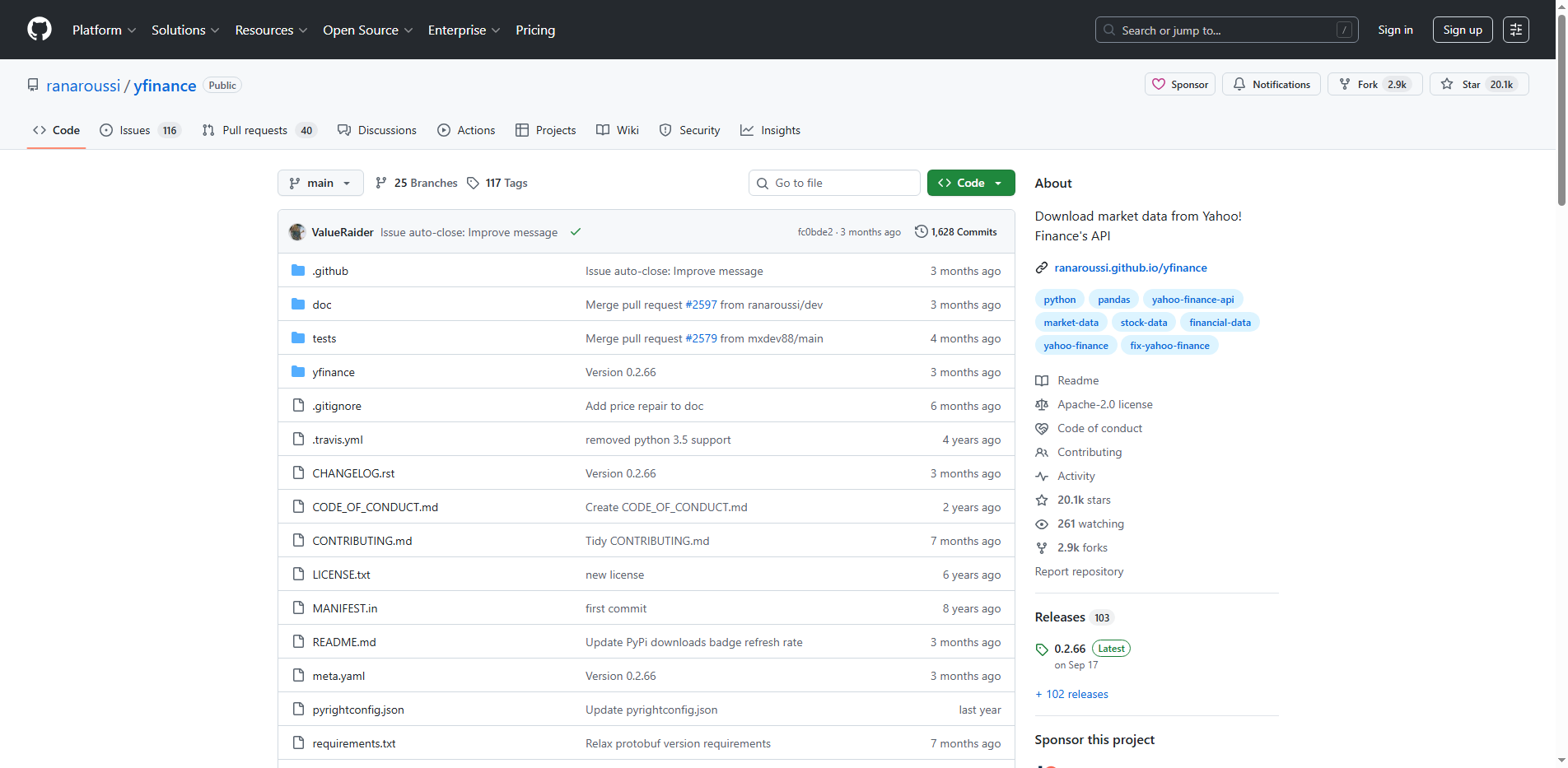
The popular yfinance library uses a method called "scraping" or accesses undocumented endpoints that do not require an official key. While convenient, this method is less stable than using a dedicated API key. Yahoo frequently changes its website structure, which can cause yfinance to break until the community updates it. Using an API key via RapidAPI provides a more stable, professionally managed connection.
Final Recommendation
For most users in 2026, the best path forward is to start with a Basic (Free) subscription to the Yahoo Finance API on RapidAPI. This allows you to build your integration and verify the data quality without financial commitment. Once your application is stable and you understand your monthly request volume, you can seamlessly scale to a paid tier to ensure reliability and higher data limits.
Image Gallery