Why the Harley-Davidson Ford F-150 Matters
The Harley-Davidson Ford F-150 matters because it represents a rare, highly successful co-branding partnership between two American manufacturing icons, merging automotive utility with motorcycle culture to create a collectible, high-p...
The Harley-Davidson Ford F-150 matters because it represents a rare, highly successful co-branding partnership between two American manufacturing icons, merging automotive utility with motorcycle culture to create a collectible, high-performance segment of luxury trucks that reshaped the full-size pickup market.
Contents
The Genesis of a Cultural and Industrial Partnership
The collaboration between Ford Motor Company and Harley-Davidson began in the late 1990s at a time when the full-size truck market was evolving. Pickups were no longer viewed exclusively as utilitarian workhorses meant solely for job sites and agricultural duties. Consumers increasingly purchased trucks as daily drivers, family vehicles, and status symbols. Recognizing this shift, Ford sought to leverage the powerful brand equity of Harley-Davidson, a name synonymous with American freedom, weekend recreation, and distinct styling.
The partnership officially materialized with special edition trucks starting with the F-150 SuperCrew for the 2000 and 2001 model years. This initial offering laid the groundwork for a multi-generational alliance that spanned multiple truck platforms, most notably the F-150 and the heavy-duty F-250/F-350 Super Duty lines. By combining Ford's manufacturing scale and engineering prowess with Harley-Davidson's iconic iconography, the partnership created a unique category of vehicles that appealed to motorcycle enthusiasts and luxury truck buyers alike.
What made these vehicles matter from an industrial standpoint was how they validated the concept of factory-customized trucks. Before these special editions gained mainstream prominence, heavy customization was largely left to the aftermarket sector. Ford and Harley-Davidson demonstrated that manufacturers could produce low-volume, high-margin, highly stylized vehicles directly from the assembly line, complete with factory warranties and rigorous quality control standards.
Design Language and Distinctive Aesthetic Features
The Harley-Davidson Ford F-150 is distinguished primarily by its meticulous attention to detail and bespoke aesthetic choices. Unlike standard trim packages that rely on minor badge changes and standard interior stitching, the Harley-Davidson editions featured comprehensive visual overhauls that mirrored the design ethos of contemporary Milwaukee motorcycles.
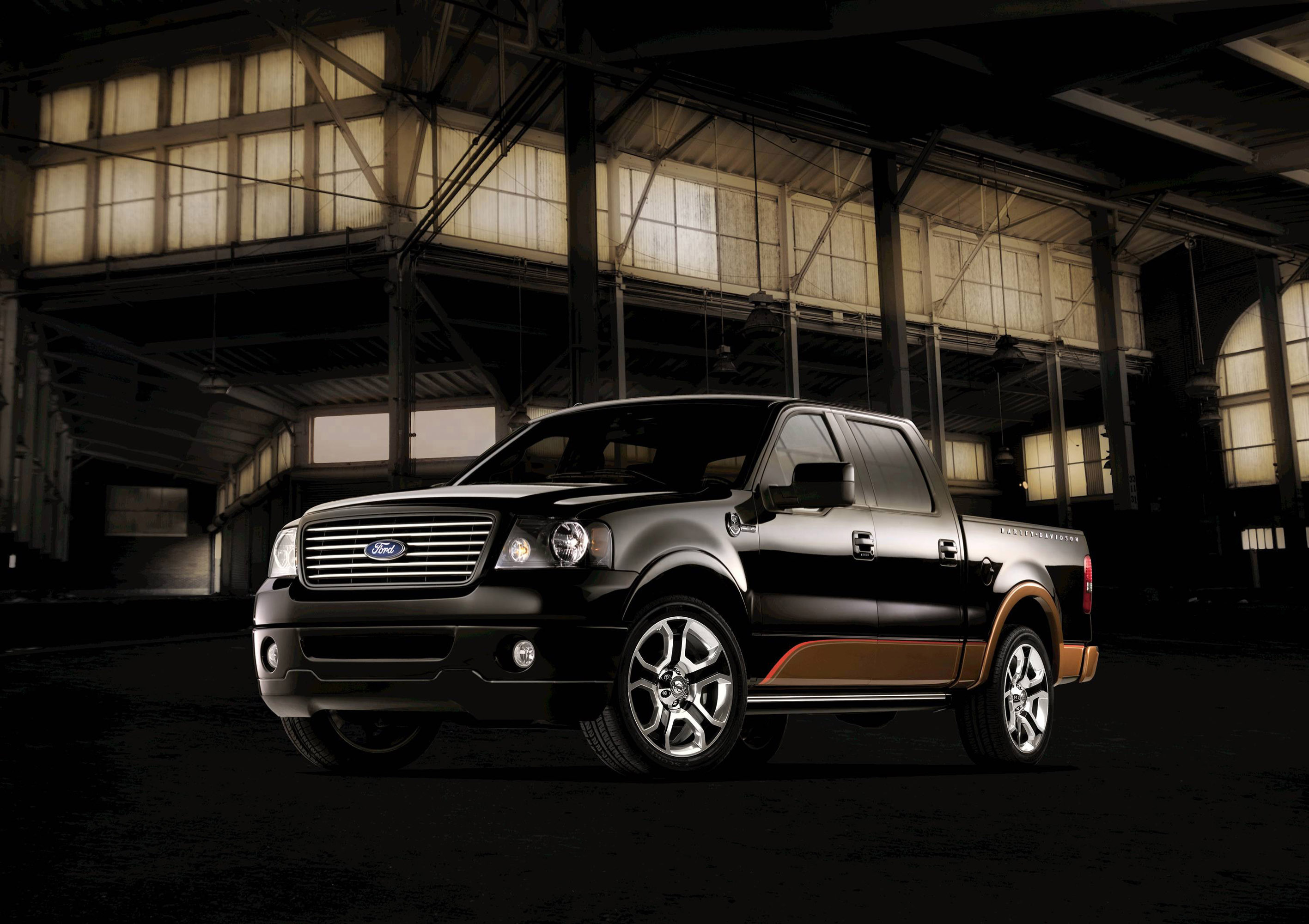
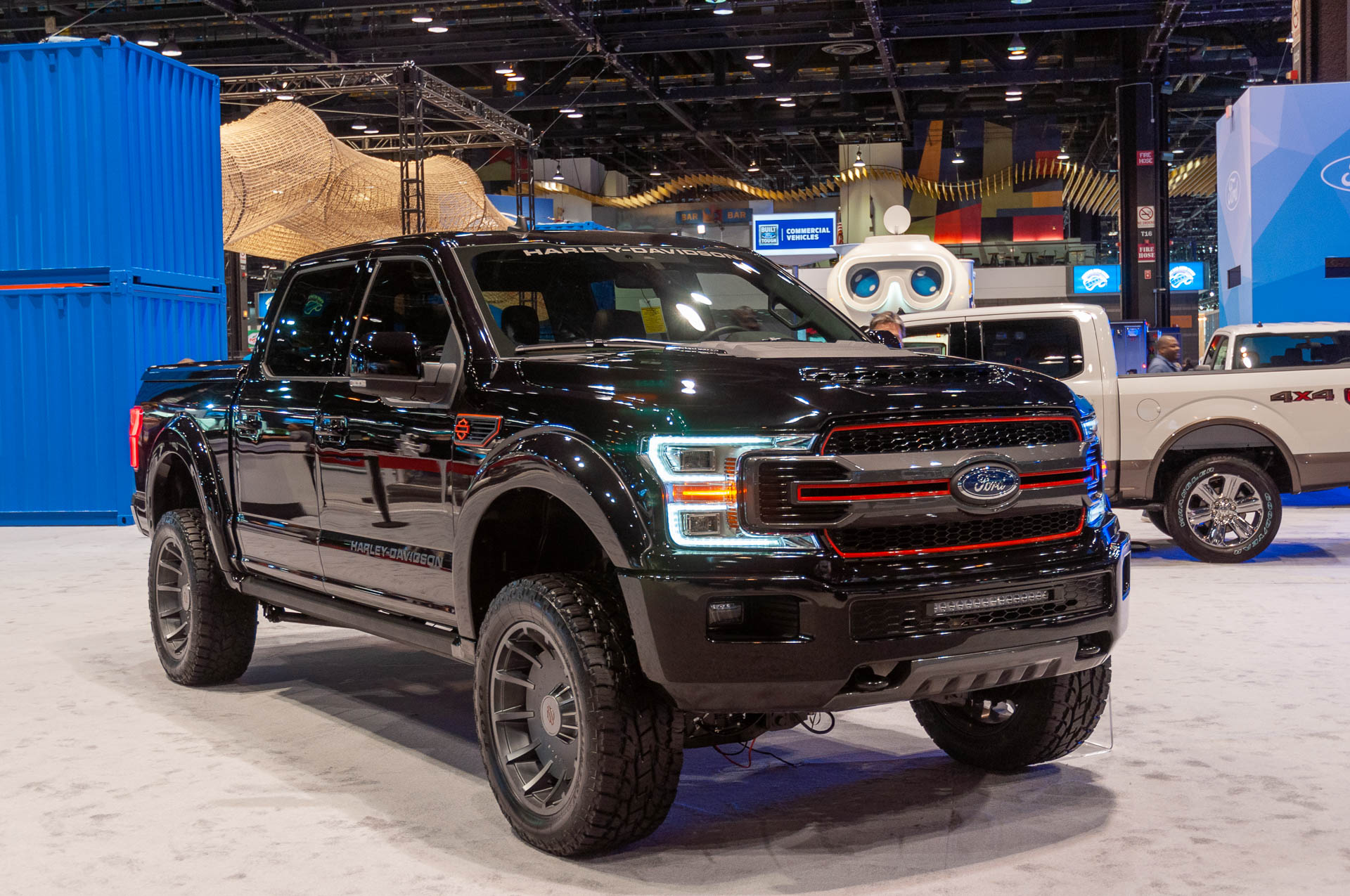
Exterior styling cues typically included exclusive paint finishes—most famously the deep, obsidian "Dark Shadow Grey" and gloss black finishes—complemented by custom pinstriping, massive chrome or polished aluminum wheels, and prominent Harley-Davidson badging. Many model years featured unique grilles, lowered suspensions, and custom exhaust tips that produced a deeper, more aggressive exhaust note.
Inside the cabin, the transformation was even more pronounced. Designers utilized premium materials such as black leather captain's chairs featuring authentic motorcycle leather details, barbed-wire embroidery, and spinner-style or jeweled instrument clusters. Serialized console badges stamped with the exact production number reinforced the exclusivity of each vehicle, turning a mass-produced chassis into a personalized collector's item.
Performance Evolution Across Generations
The mechanical specifications of the Harley-Davidson F-150 evolved alongside Ford's powertrain developments, ensuring that the trucks offered performance matching their aggressive styling. Early iterations relied on Ford's robust modular V8 engines, but the partnership reached its mechanical zenith with the introduction of supercharged powerplants.
In the mid-2000s, Ford equipped select Harley-Davidson F-150 models with an Eaton supercharger slapped onto the 5.4-liter Triton V8, significantly boosting horsepower and torque. This gave the heavy trucks straight-line acceleration that surprised sports car owners while retaining traditional towing and hauling capabilities. Later generations transitioned to Ford’s modern EcoBoost and high-output V8 architectures, maintaining a balance of responsive low-end torque and highway cruising efficiency.
| Model Year Range | Cab Style | Key Engine Specification | Distinctive Performance Feature |
|---|---|---|---|
| 2000–2003 | SuperCrew | 5.4L Naturally Aspirated V8 | Lowered sport suspension, custom tuned exhaust |
| 2004–2008 | SuperCrew | 5.4L Supercharged V8 (Later models) | Eaton roots-type supercharger, 22-inch wheels |
| 2009–2012 | SuperCrew | 5.4L V8 / 6.2L V8 | Premium luxury interior, specialized towing configurations |
Market Impact and the Rise of Factory Custom Trucks
The success of the Harley-Davidson F-150 fundamentally altered how automotive manufacturers approached product diversification. Before this collaboration, luxury trucks were largely confined to wood-grain accents and leather seats on standard trims like the Lariat or King Ranch. The Harley-Davidson edition proved that buyers were willing to pay a substantial premium for emotional resonance and lifestyle alignment.
This model paved the way for subsequent high-end and specialty trucks, including the Ford SVT Raptor, modern luxury trims like the Platinum and Limited, and other brand collaborations across the automotive industry. It proved that a pickup truck could serve as a canvas for lifestyle branding without sacrificing everyday usability. For collectors, these trucks occupy a secure niche, bridging the gap between modern automotive convenience and enthusiast culture.
Collecting, Preservation, and Modern Status
As time has passed, finding a clean, unmodified Harley-Davidson F-150 has become increasingly difficult, elevating their status in the collector car market. Many examples were driven hard, modified with aftermarket parts, or exposed to harsh winter climates, leading to rust and mechanical wear. Consequently, pristine, low-mileage examples—particularly the supercharged variants from the mid-2000s—command significant attention at specialty auctions and private sales.
Preserving these vehicles requires careful attention to the unique components that set them apart from standard F-150s. Sourcing original replacement interior leather, specific exterior badging, and specialized wheel components can prove challenging due to the limited production runs. Enthusiasts and collectors emphasize the importance of verifying serial numbers against official registry databases to confirm authenticity, as standard trucks are frequently cloned to mimic the Harley-Davidson specification.
Summary of Core Value and Legacy
Ultimately, the Harley-Davidson Ford F-150 matters because it represents a bold era of automotive experimentation that successfully merged two distinct subcultures of American manufacturing. By prioritizing specialized design, supercharged performance, and lifestyle branding, Ford and Harley-Davidson created a lasting blueprint for factory-customized luxury trucks that continues to influence the automotive landscape today.
Image Gallery