Participating vs. Nonparticipating Whole Life Insurance: Which Fits Your Needs
Choosing between participating and nonparticipating whole life insurance requires understanding how each policy handles surplus funds and risk. Participating policies allow policyholders to receive dividends based on the insurer's fina...
Choosing between participating and nonparticipating whole life insurance requires understanding how each policy handles surplus funds and risk. Participating policies allow policyholders to receive dividends based on the insurer's financial performance, while nonparticipating policies provide guaranteed, fixed benefits and premiums without dividend eligibility. Your choice depends on your preference for potential growth versus predictable costs.
Contents
Understanding Whole Life Insurance Foundations
Whole life insurance is a form of permanent coverage designed to remain in effect for your entire life, provided the premiums are paid. Beyond the death benefit, these policies accumulate a cash value component that grows over time on a tax-deferred basis. This cash value acts as a living benefit, which you can borrow against or withdraw under specific policy conditions.
The distinction between participating and nonparticipating insurance lies primarily in how the insurance company manages its financial surplus. An insurance company collects premiums, invests them in a portfolio of assets, and uses the returns to cover claims and operational expenses. When those investments perform exceptionally well, or when the company experiences lower-than-anticipated mortality costs, a surplus is generated. The regulatory and structural path this surplus takes defines the nature of your policy.
Participating Whole Life Insurance: The Dividend Approach
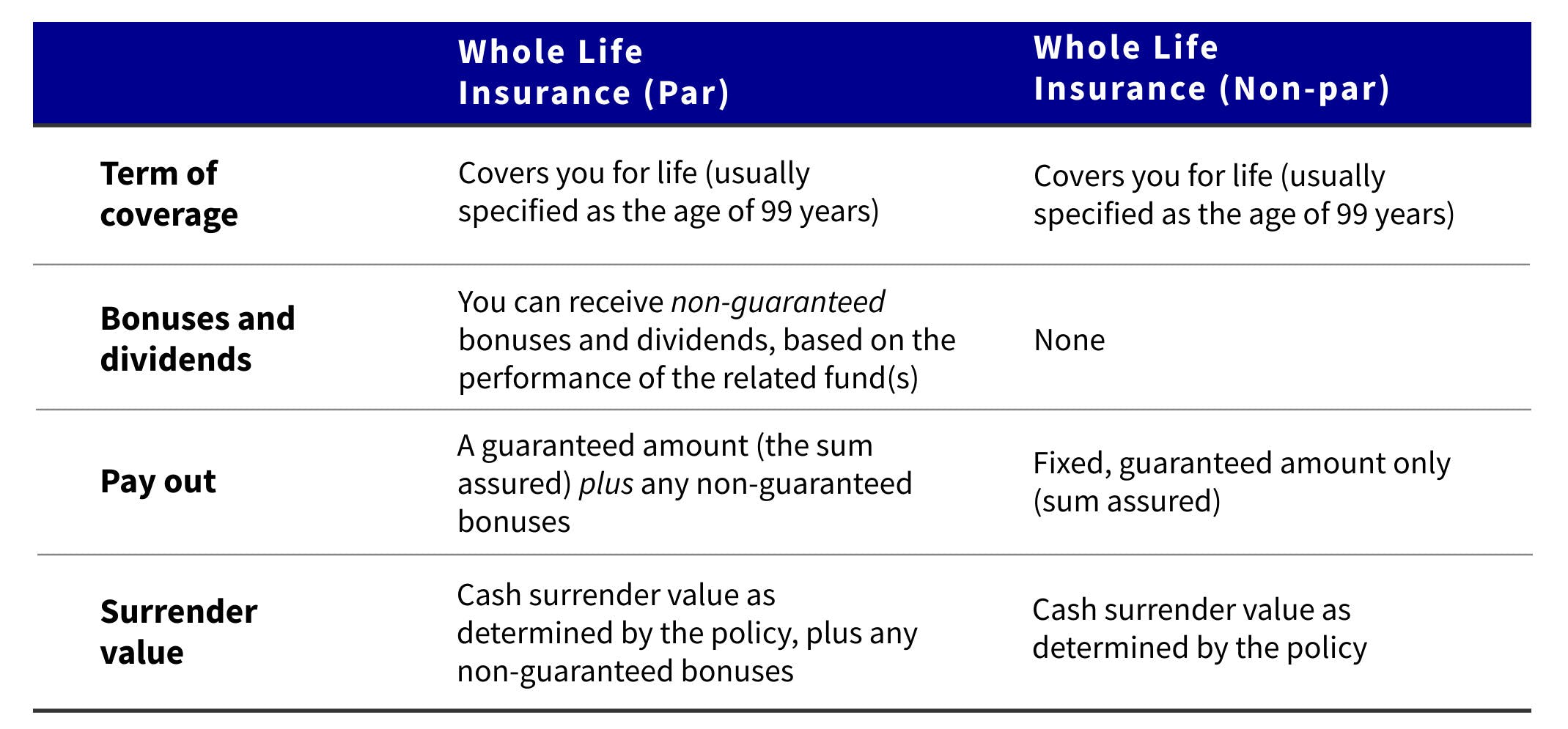
Participating whole life insurance, often called "par" insurance, is structured to allow the policyholder to share in the financial success of the insurance company. If the company achieves a surplus of funds, it may distribute a portion of that surplus back to policyholders in the form of dividends.
It is critical to understand that these dividends are not guaranteed. They are essentially a return of excess premiums collected by the insurer. Because they are not technically "profit" in the corporate equity sense, they are generally treated as tax-free returns of premium by many tax authorities, provided the total dividends do not exceed your total premiums paid.
Advantages of Participating Policies
- Cash Value Growth Potential: Dividends can be used to purchase paid-up additional insurance, which increases both the death benefit and the cash value of your policy.
- Premium Offset: You may have the option to apply dividends toward your future premium payments, potentially lowering your out-of-pocket costs over time.
- Inflation Hedge: As the policy grows through dividends, the death benefit may increase, providing a measure of protection against the eroding effects of long-term inflation.
Potential Drawbacks
- Uncertainty: Because dividends depend on company performance, interest rates, and mortality experience, you cannot rely on them for rigid financial planning.
- Higher Initial Premiums: Participating policies often carry higher base premiums compared to nonparticipating counterparts to account for the buffer required to sustain potential dividend distributions.
Nonparticipating Whole Life Insurance: The Fixed Approach
Nonparticipating insurance, or "non-par" insurance, is designed for individuals who prioritize predictability and lower initial costs over the potential for dividend-based growth. In a nonparticipating contract, the insurance company assumes all the risk and keeps all the surplus resulting from favorable investment performance or lower claims.
In exchange for giving up the right to participate in dividends, the policyholder receives a strictly defined set of guarantees. The death benefit, the premium amount, and the cash value accumulation schedule are typically locked in at the time of purchase.
Advantages of Nonparticipating Policies
- Budget Certainty: Since premiums are guaranteed not to change, they are easier to factor into a long-term household or business budget.
- Lower Upfront Cost: Without the need to build a surplus for dividend distribution, nonparticipating policies are often more affordable at inception.
- Simplicity: The lack of dividend options reduces the complexity of managing the policy. You do not need to make decisions about how to allocate dividend payouts (e.g., whether to buy more insurance or pay down premiums).
Potential Drawbacks
- Lack of Upside: You do not benefit if the insurance company enters a period of high investment returns.
- Less Flexibility: You have fewer options to adjust the death benefit or accelerate cash value growth through reinvested dividends.
Comparison Summary
To determine which path aligns with your financial goals, it is helpful to view the two types side by side.
| Feature | Participating (Par) | Nonparticipating (Non-Par) |
|---|---|---|
| Dividends | Potential, but not guaranteed | None |
| Premiums | Generally higher | Generally lower/fixed |
| Risk Exposure | Lower (shared with insurer) | Higher (fixed contract) |
| Cash Value | Can grow via dividends | Guaranteed growth rate only |
| Primary Goal | Long-term growth/flexibility | Cost certainty/predictability |
Factors for Choosing the Right Policy
When deciding between these two models in 2026, consider your risk tolerance and the specific purpose of the insurance. If the policy is intended to function as an asset class within a broader portfolio, participating policies offer the potential for long-term growth that may outperform a static interest rate. This is common in estate planning and wealth transfer strategies where the policy is intended to stay in force for decades.
Conversely, if you are purchasing the policy to cover a specific, finite liability—such as a loan or a business partnership buyout—the nonparticipating option may be superior. The predictability of a nonparticipating policy ensures that your coverage remains robust without the need to monitor company dividend performance or adjust for variable outcomes.
Professional Advice Limitation
This information is for educational purposes and does not constitute individual financial, tax, or legal advice. Insurance products are subject to underwriting, state-specific regulations, and the specific terms of the policy contract. Consult with a licensed financial advisor or insurance professional who can assess your specific situation, liquidity needs, and long-term financial objectives before making a purchase.
Frequently Asked Questions
1. Are dividends from participating policies taxable? Generally, dividends received from participating life insurance policies are considered a return of premium and are not taxable up to the total amount of premiums paid. However, if dividends exceed the total premiums paid, the excess may be subject to income tax. Always consult a tax professional regarding your specific jurisdiction.
2. Can I switch from a nonparticipating policy to a participating one later? Typically, you cannot "convert" an existing nonparticipating policy into a participating one. If you decide that the participating structure better suits your needs, you would generally need to apply for a new policy, which involves fresh underwriting based on your age and health status at that time.
3. Does the insurance company's financial strength matter more for participating policies? Yes. Since the value of a participating policy is linked to the company's performance, the financial stability and dividend history of the insurer are paramount. You should examine the company’s financial ratings from major agencies like A.M. Best or Moody’s to gauge their long-term viability.
4. Why would I choose a participating policy if dividends are not guaranteed? Even without guarantees, many historical participating policies have performed well over long horizons. Many people choose them for the "opportunity" aspect, effectively allowing them to participate in the company's surplus if economic conditions are favorable, while still maintaining the baseline guarantees of a whole life policy.
5. How do I verify the dividend history of an insurance company? Insurance companies typically provide a "dividend scale" or historical performance report upon request. While past performance does not guarantee future results, reviewing these documents—alongside independent ratings—can provide insight into the company’s conservative or aggressive approach to surplus management.
Next Steps for Your Decision
- Define your goal: Determine if the policy is for long-term wealth accumulation or a fixed, short-term debt obligation.
- Request illustrations: Ask an insurance agent for "in-force" illustrations for both participating and nonparticipating options based on your age and coverage amount.
- Check ratings: Use independent credit rating agency reports to verify the financial strength of the carriers you are considering.
- Review the contract: Pay close attention to the guaranteed cash value tables in the policy documentation provided by the insurer.
Image Gallery