The Truth About the Pearson VUE Life Insurance Test: What Candidates Need to Know
The Pearson VUE life insurance test is a standardized computer-based examination required for state licensure in the United States. It measures a candidate's baseline knowledge of insurance regulations, contract law, and policy types....
The Pearson VUE life insurance test is a standardized computer-based examination required for state licensure in the United States. It measures a candidate's baseline knowledge of insurance regulations, contract law, and policy types. Success requires a strategic approach to syllabus mastery, as the exam is designed to test technical proficiency rather than sales experience or industry intuition.
Contents
Understanding the Pearson VUE Role in Insurance Licensing
It is a common misconception that Pearson VUE creates the content for the life insurance exam. In reality, Pearson VUE serves as the testing administrator for most state insurance departments. The actual content, passing scores, and exam blueprints are determined by each individual state’s Department of Insurance (DOI) or a designated national provider like the National Association of Insurance Commissioners (NAIC) or Prometric.
When you sit for a Pearson VUE test, you are interacting with a third-party proctoring system. They manage the testing centers, the secure browser software, and the delivery of results. Because the test is administered across various jurisdictions, the "truth" about the difficulty of the exam often comes down to the specific state in which you are testing. Some states have higher passing thresholds or include more complex state-specific regulations than others.
Deciphering the Exam Blueprint
Every candidate should begin their preparation by downloading the Examination Content Outline (ECO) from the Pearson VUE website specific to their state. This document is the literal map of your exam.
The exam typically breaks down into two major domains:
- National Section: This covers universal insurance concepts, including types of policies (term, whole, universal, variable life), policy provisions, riders, and options, as well as annuity classifications and federal tax implications for life insurance.
- State-Specific Section: This section focuses on the regulatory environment of your resident state. It covers producer ethics, licensing requirements, prohibited practices (such as twisting, rebating, or churning), and the specific duties of the state commissioner.
Do not make the mistake of focusing solely on the national content. While the national section often constitutes the majority of the questions, failing the state section can lead to an overall failing grade, depending on how your specific state scores the exam.
Strategic Preparation: Why Most Candidates Struggle
The primary reason candidates fail the life insurance exam on their first attempt is "surface-level learning." Many test-takers memorize keywords from practice exams without understanding the underlying legal definitions.
The Pearson VUE exam utilizes psychometric testing methods. This means the questions are designed to be "distractor-heavy." You will often see four answers where two seem correct, but one is "more" correct based on legal standards. To navigate this:
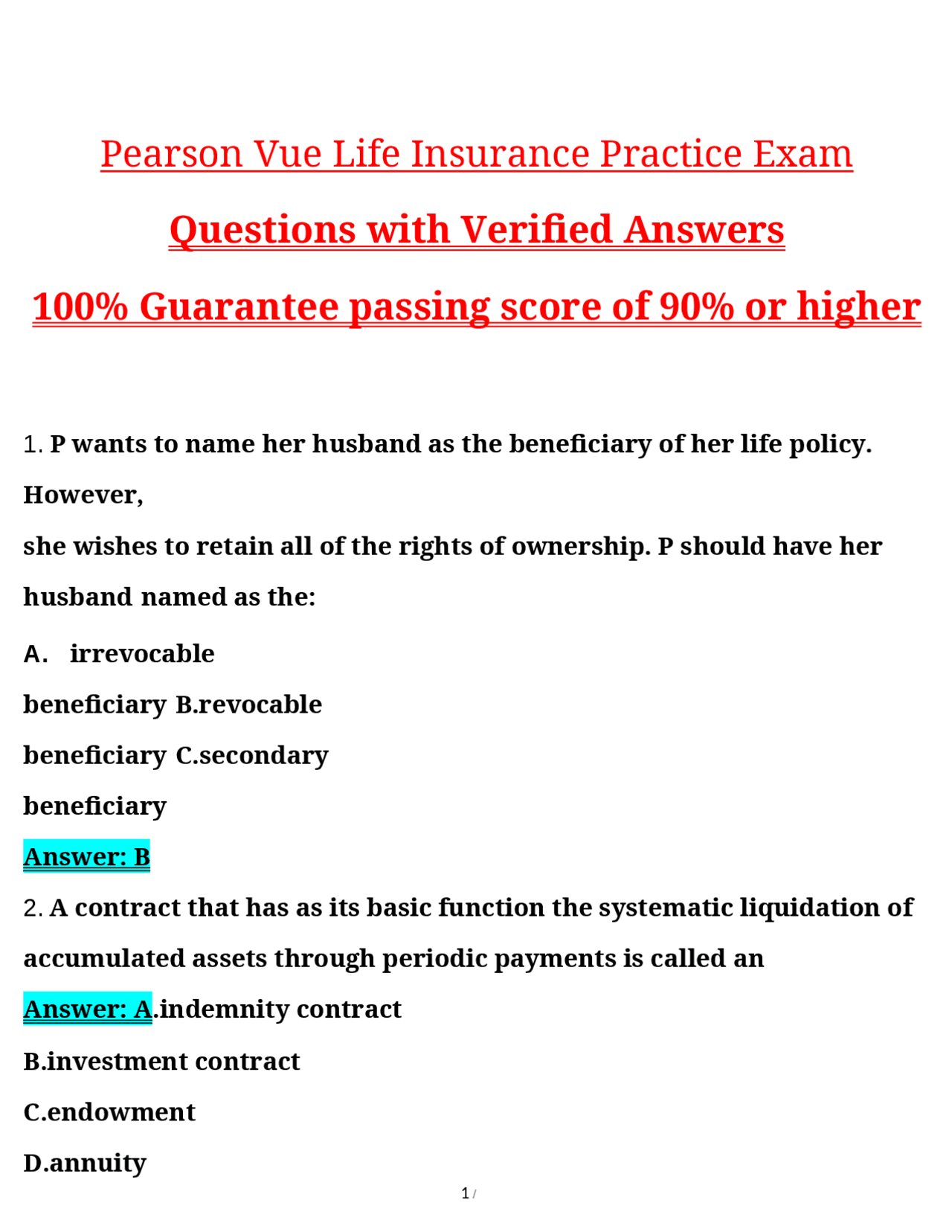
- Master Definitions: Understand the technical difference between an "implied warranty" and an "expressed warranty," or the nuance between "revocable" and "irrevocable" beneficiaries.
- Focus on Policy Ownership: Many questions revolve around who owns the policy and who has the right to exercise provisions. If you lose track of the entity (the insured, the owner, or the beneficiary), you will miss the question regardless of your product knowledge.
- Avoid Pattern Recognition: If you rely on memorizing the order of answers in a practice test, you will fail the real exam. The questions are pulled from a randomized database.
Examination Comparison: What to Expect
| Feature | Description |
|---|---|
| Exam Format | Computer-based, multiple-choice questions. |
| Question Style | Psychometric; focuses on scenarios and application. |
| Passing Score | Varies by state; typically 70% to 75%. |
| Duration | Generally 2 to 3 hours, depending on the state. |
| Access | Testing centers or secure remote proctoring. |
The Logistics of Testing Day
On the day of your examination, the experience is highly formalized. You will be required to provide two forms of identification, one of which must be government-issued and contain a signature and photo. Pearson VUE maintains strict security protocols, including biometric checks (palm vein scanning or photo capture) at many locations.
If you are testing at a center, expect a sterile environment. You will be provided with an erasable notepad and a marker. Use this immediately to jot down formulas or acronyms you have memorized, as you are not permitted to bring paper or electronic devices into the testing room. If you are testing remotely via OnVUE, the requirements are even stricter: your room must be cleared of all personal items, and the proctor will use your webcam to inspect your workspace before the test begins.
Managing Costs and Retakes
Registration fees for the exam vary significantly by state, usually ranging between $50 and $150 per attempt. It is critical to recognize that every time you fail, you must pay the full fee again.
If you do not pass, Pearson VUE will provide a score report that breaks down your performance by section. Do not discard this. Use it as a diagnostic tool. If you scored "High" in policy provisions but "Low" in state regulations, you know exactly where to redirect your study efforts for the next attempt. Many candidates make the mistake of restudying the entire course; instead, focus on the specific domains where your proficiency was lacking.
Common Mistakes and How to Avoid Them
- Rushing the Questions: The exam is not a race. You have ample time to read the entire question. Read the last sentence of the prompt first to understand what information you are actually looking for, then read the provided scenario.
- Changing Answers: Statistically, your first instinct is often correct unless you misread a key term (such as "NOT" or "EXCEPT"). Only change an answer if you have a concrete reason to believe you misread the question.
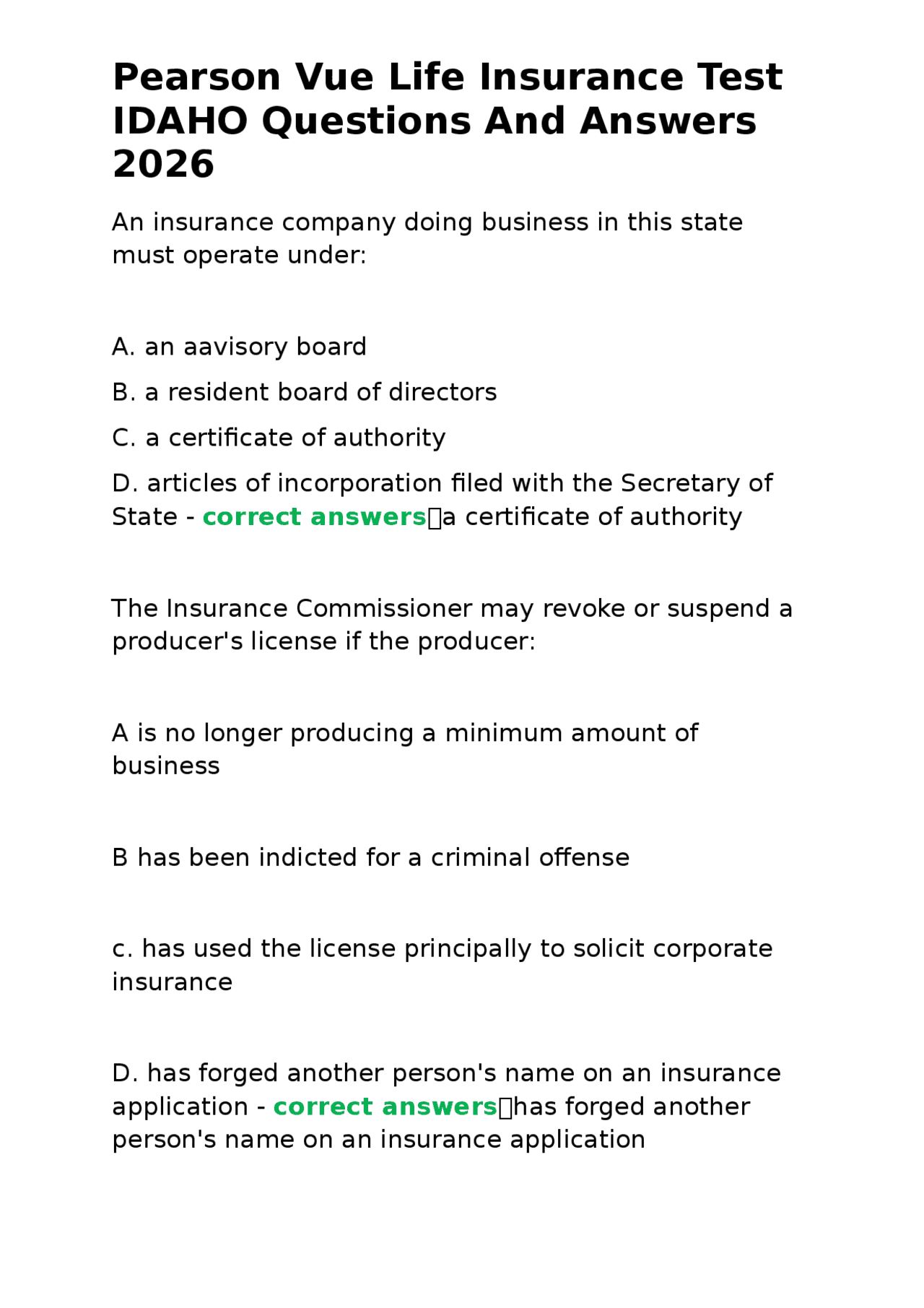
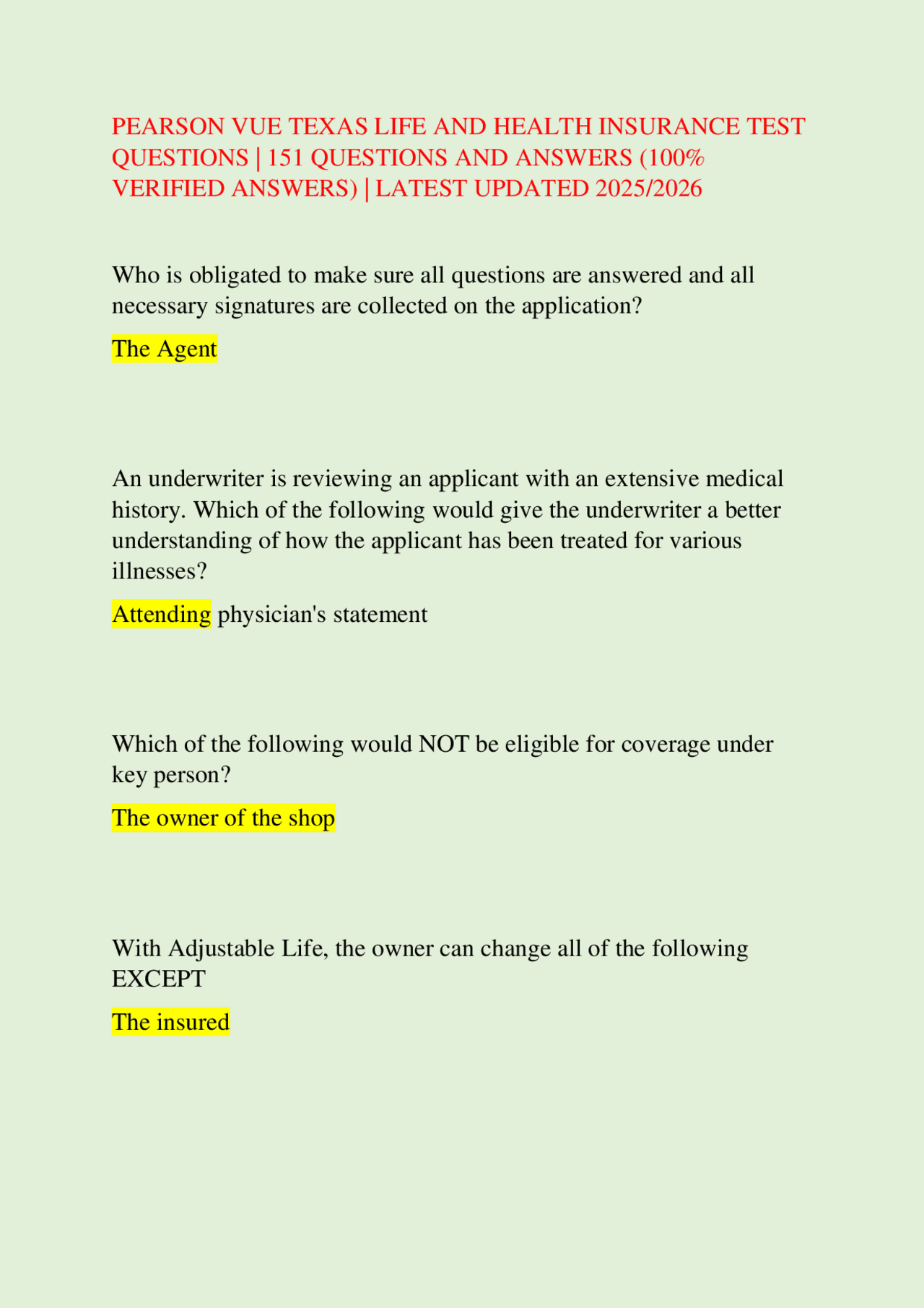
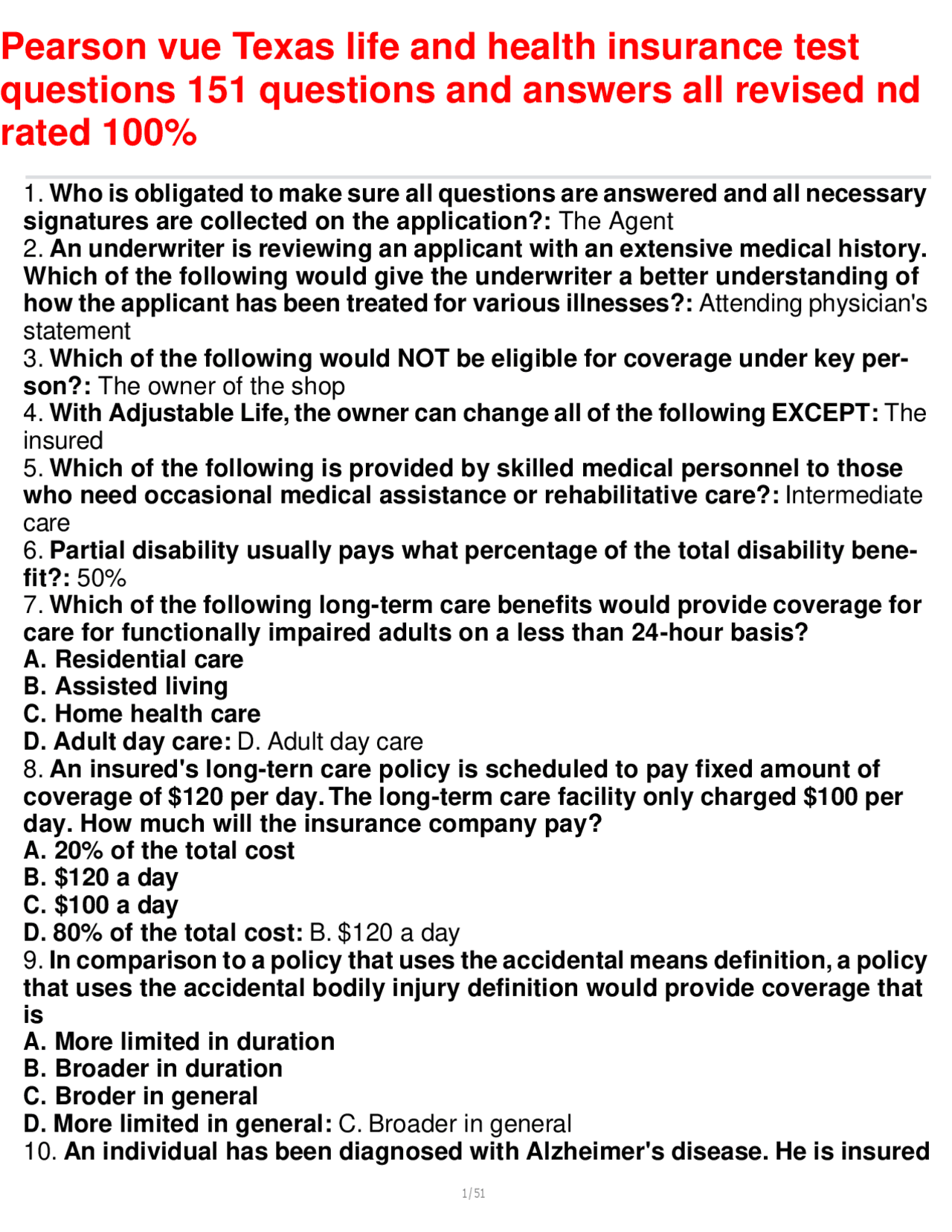
- Ignoring Practice Simulation: Use a reputable pre-licensing education (PLE) provider that offers a question bank that mirrors the Pearson VUE style. If your practice questions are significantly easier than the actual test, you are receiving a false sense of security.
Frequently Asked Questions
Is the Pearson VUE life insurance test harder than the property and casualty exam? Difficulty is subjective, but the life insurance exam often involves more complex mathematical concepts regarding interest rates, cash value accumulation, and tax tables. Property and casualty exams are generally more focused on liability and claim scenarios.
Can I use a calculator during the exam? Most testing centers provide an on-screen calculator. You are generally not permitted to bring your own. Ensure you know how to use the provided digital tool, as it may lack scientific functions you are accustomed to.
How soon after the exam will I get my results? In most cases, you receive a preliminary "Pass" or "Fail" notification immediately upon clicking the submit button. The official score report follows within 24 to 48 hours via your Pearson VUE account.
What happens if I have a technical issue during an online proctored exam? If your connection drops or your computer freezes during an OnVUE session, the proctor will attempt to troubleshoot. If the issue is on their side, you will be able to reschedule without penalty. Do not attempt to fix internet issues yourself; immediately use the chat feature to notify the proctor.
Are the questions on the Pearson VUE test identical to those in my study guide? No. While your study guide covers the topics that will appear on the test, the exact phrasing of the questions will differ. Understanding the concepts is the only way to ensure you can answer the questions regardless of how they are worded.
Final Recommendation
The Pearson VUE life insurance test is a gateway, not a barrier, provided you respect its structure. Your best path to success is to complete a state-approved pre-licensing course and treat the practice exams as a diagnostic indicator rather than a study guide. Before you schedule your exam, verify that your registration details match your legal identification exactly. Once you have mastered the regulatory sections and understood the logic behind policy ownership, you will be well-positioned to pass on your first attempt.
Image Gallery