Understanding What Parkinson’s Law Means for Productivity and Time Management
Parkinson’s Law states that work expands to fill the time available for its completion. Originally coined by Cyril Northcote Parkinson in a 1955 essay for The Economist, the concept suggests that the perceived importance and complexity...
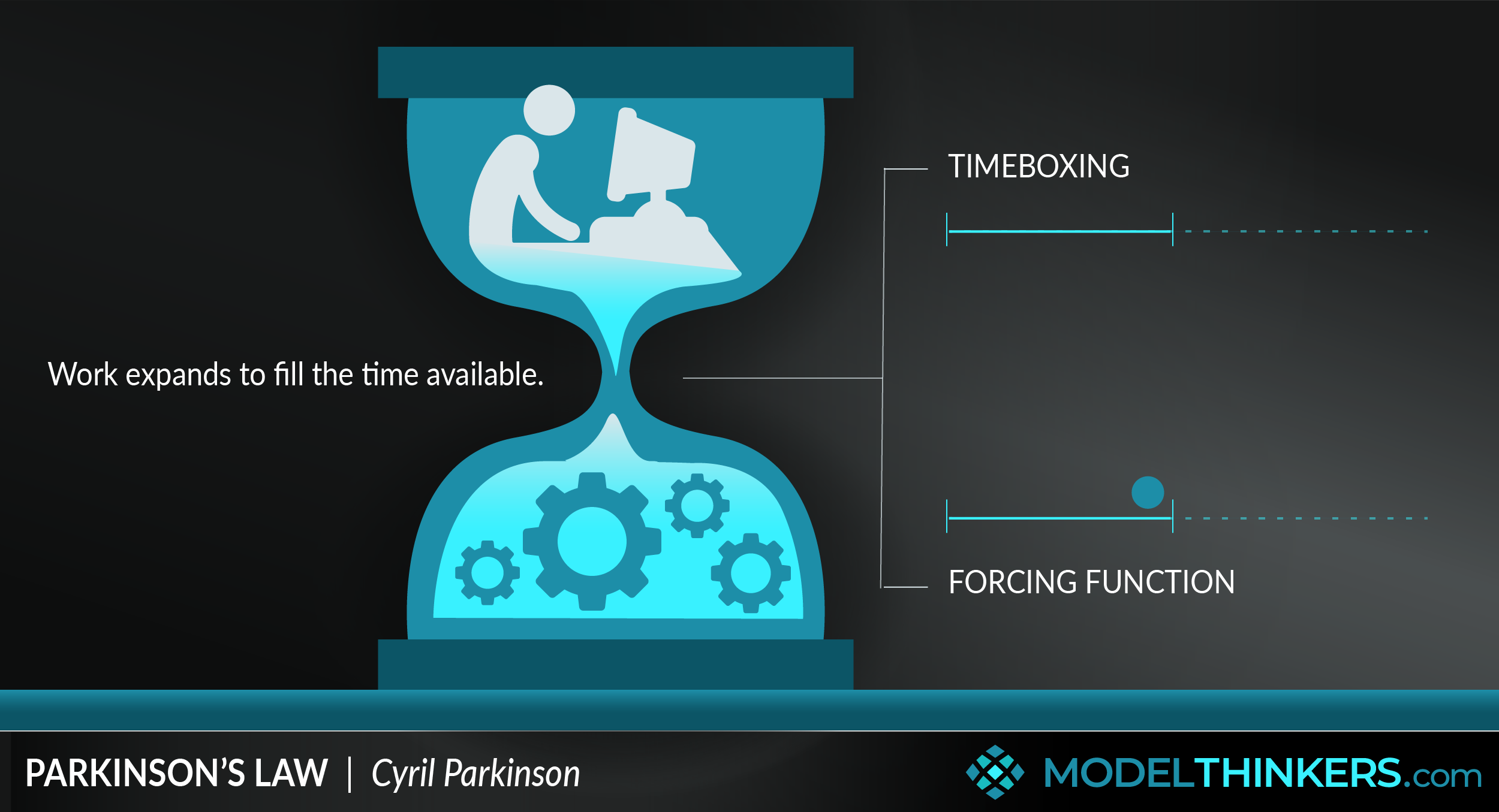
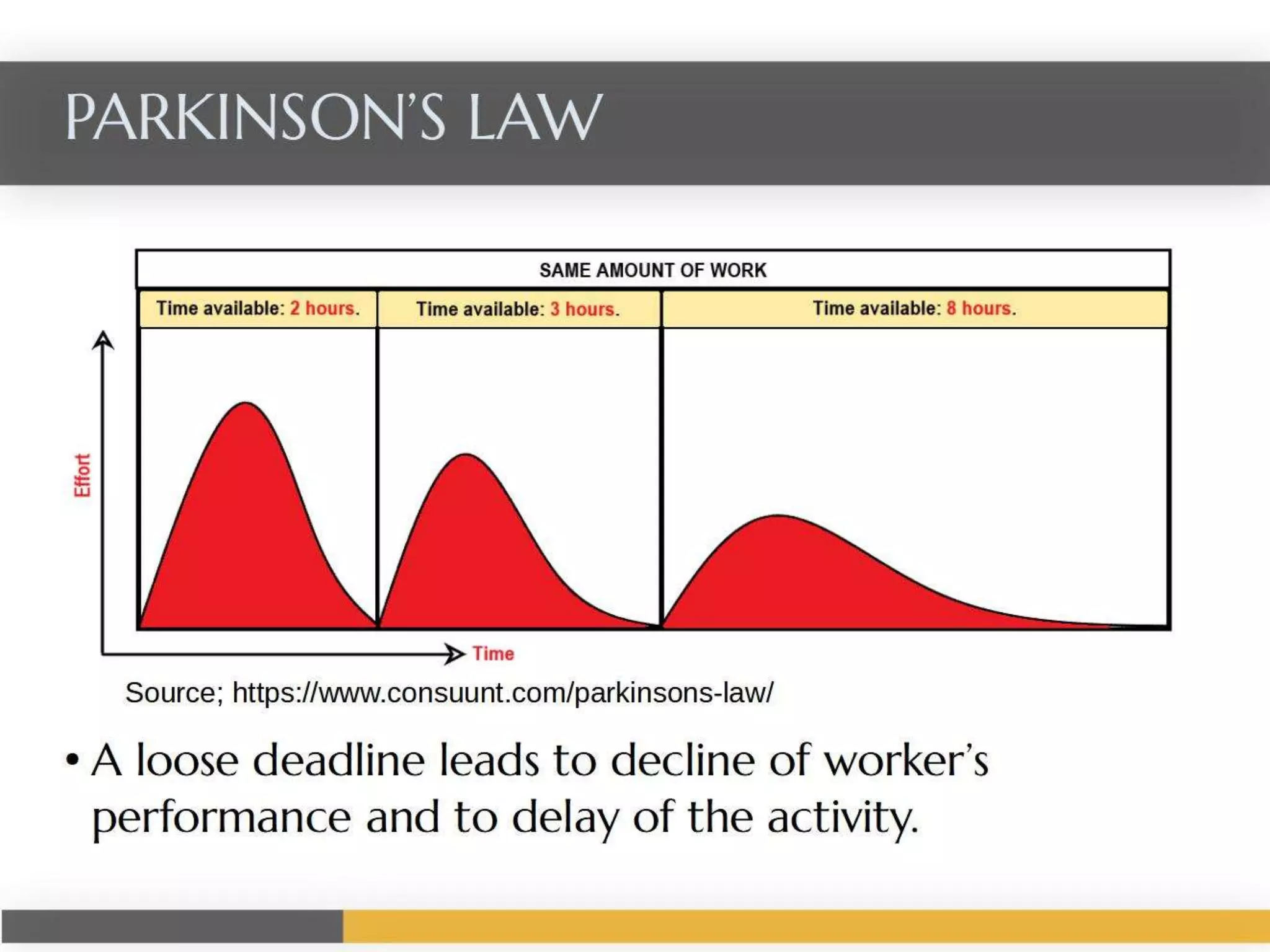
Parkinson’s Law states that work expands to fill the time available for its completion. Originally coined by Cyril Northcote Parkinson in a 1955 essay for The Economist, the concept suggests that the perceived importance and complexity of a task grow in direct proportion to the amount of time allotted for it. When a deadline is distant, the task often feels overwhelming and requires extensive preparation; when the deadline is near, the same task is frequently completed with focused efficiency.
Contents
The Origin and Core Concept
Cyril Northcote Parkinson, a British naval historian and author, introduced this observation in the context of bureaucratic inefficiency. He noted that as the number of officials in the British Colonial Office increased, the amount of work accomplished did not rise proportionally. Instead, the officials spent more time managing one another and creating unnecessary administrative procedures to justify their existence.
At its heart, Parkinson’s Law describes a psychological phenomenon rather than a mathematical constant. It addresses how human beings interact with constraints. If you give yourself a week to write a report, you will likely spend that entire week researching, formatting, and refining the document. If you are forced to write that same report in two hours, you will focus on the essential components and bypass peripheral adjustments that do not contribute to the final objective. The "expansion" of work occurs through gold-plating—adding unnecessary details, perfecting aesthetics that don't matter, and over-analyzing minor variables—simply because the temporal resources exist to permit these diversions.
Why Parkinson’s Law Impacts Professional Output
The impact of this law is most visible in corporate environments and project management. Without artificial constraints, tasks suffer from "scope creep," where the parameters of a project grow uncontrollably. When a team is given an overly generous timeline, the lack of pressure encourages procrastination. This leads to the "student syndrome," a common behavior where individuals delay starting a task until the latest possible moment, at which point the stress of the deadline forces a sudden, high-intensity burst of activity.
Furthermore, Parkinson’s Law explains why meetings often take exactly one hour even if the agenda could be covered in twenty minutes. Because the meeting is booked for a specific time block, participants instinctively fill that block with tangential discussions, repeated points, and slow-paced decision-making. By understanding this, managers can improve team output by tightening deadlines and strictly limiting the duration of meetings to the absolute minimum required to achieve the objective.
Practical Strategies to Mitigate the Effects
To leverage Parkinson’s Law to your advantage, you must flip the dynamic. Instead of allowing the task to dictate the time, allow the time to dictate the task. This is often referred to as "timeboxing."
- Set Artificial Deadlines: If a project does not have an external deadline, create an internal one that is significantly shorter than you think you need. This forces you to identify the "Minimum Viable Product" or the essential path to completion.
- Prioritize the Essential: When time is constrained, you are forced to make binary decisions: What is necessary for this to work, and what is merely decorative? By forcing these decisions earlier, you save significant energy.
- Limit Resource Allocation: Just as time expands to fill a void, costs often expand to consume a budget. Apply the law to your finances and team resources by setting "spending caps" that are lower than the maximum available, which encourages creative, leaner problem-solving.
- Use Iterative Cycles: Instead of working toward one massive deadline weeks away, break projects into daily or bi-daily sprints. This maintains a state of focused urgency that prevents the expansion of work.
Comparison of Time Management Paradigms
Understanding Parkinson’s Law is essential when contrasted with traditional planning methods. While conventional project management often seeks to build in "buffer time" to account for potential delays, excessive buffering can inadvertently trigger the negative effects of Parkinson’s Law.
| Strategy | Approach | Risk of Parkinson's Law | Best Use Case |
|---|---|---|---|
| Traditional Scheduling | Estimate time + buffer | High | High-risk, complex infrastructure projects |
| Timeboxing | Fixed time units for tasks | Low | Knowledge work and daily operations |
| Agile Sprints | Short, intense cycles | Very Low | Software development and creative teams |
| "When It’s Done" | No deadline | Extreme | Creative exploration or open-ended research |
Common Misconceptions
One major misconception is that Parkinson’s Law suggests work can always be reduced to zero time. This is a misunderstanding of the principle. The law identifies the inflation of effort, not the absence of a minimum threshold. If a task requires a specific sequence of technical actions—such as a chemical reaction that takes four hours to stabilize or the physical drying time of paint—it cannot be compressed beyond that physical limit.
The goal is not to perform work poorly or to reach a state of burnout, but to remove the "fluff" that accompanies work when it is allowed to expand. Applying Parkinson’s Law is about seeking efficiency, not necessarily speed at the expense of quality. By limiting the time available, you are choosing to prioritize quality through precision and focus rather than through the accumulation of time.
Frequently Asked Questions
1. Is Parkinson’s Law the same as procrastination? No. Procrastination is the avoidance of work, whereas Parkinson’s Law describes how the work itself expands to fill available time. Even if you don't procrastinate, you may still fall victim to the law by over-polishing a project simply because you have the time to do so.
2. Can Parkinson’s Law be applied to personal goals? Yes. If you give yourself a year to learn a new language, you may spend months in a cycle of low-intensity study. If you set a goal to reach a conversational level in three months, you will likely prioritize high-yield learning activities and practice more frequently.
3. Does using shorter deadlines decrease the quality of work? Often, it improves it. Shorter deadlines force you to focus on the core objective. By eliminating unnecessary steps, you spend more time on the components that truly provide value, rather than diluting your efforts across a wider range of low-impact tasks.
4. How do I know if I’ve set a deadline that is too aggressive? An aggressive deadline is a tool for focus. If you find you are cutting corners that lead to structural failure or significant safety risks, the deadline is not "tight"—it is reckless. The goal is to eliminate non-essential work, not to sacrifice the core requirements of the task.
5. What is the best way to start applying this to a team? Start with meetings. Reduce all standard one-hour meetings to forty-five minutes, or thirty-minute meetings to twenty. The group will naturally adapt to the compressed timeframe by arriving prepared and staying focused on the agenda.
Recommendation for Immediate Action
To immediately counter the effects of Parkinson’s Law in your workflow, audit your current project list. Identify one task that has been lingering on your "to-do" list for an extended period. Set a non-negotiable, aggressive deadline to finish that task within the next 48 hours. By forcing yourself to complete the work in a constrained window, you will likely discover that the tasks you perceived as "complex" were simply "expanded" by the lack of a firm cutoff date. Start with this small, high-leverage change to observe how your own output shifts when your time is limited.
Image Gallery