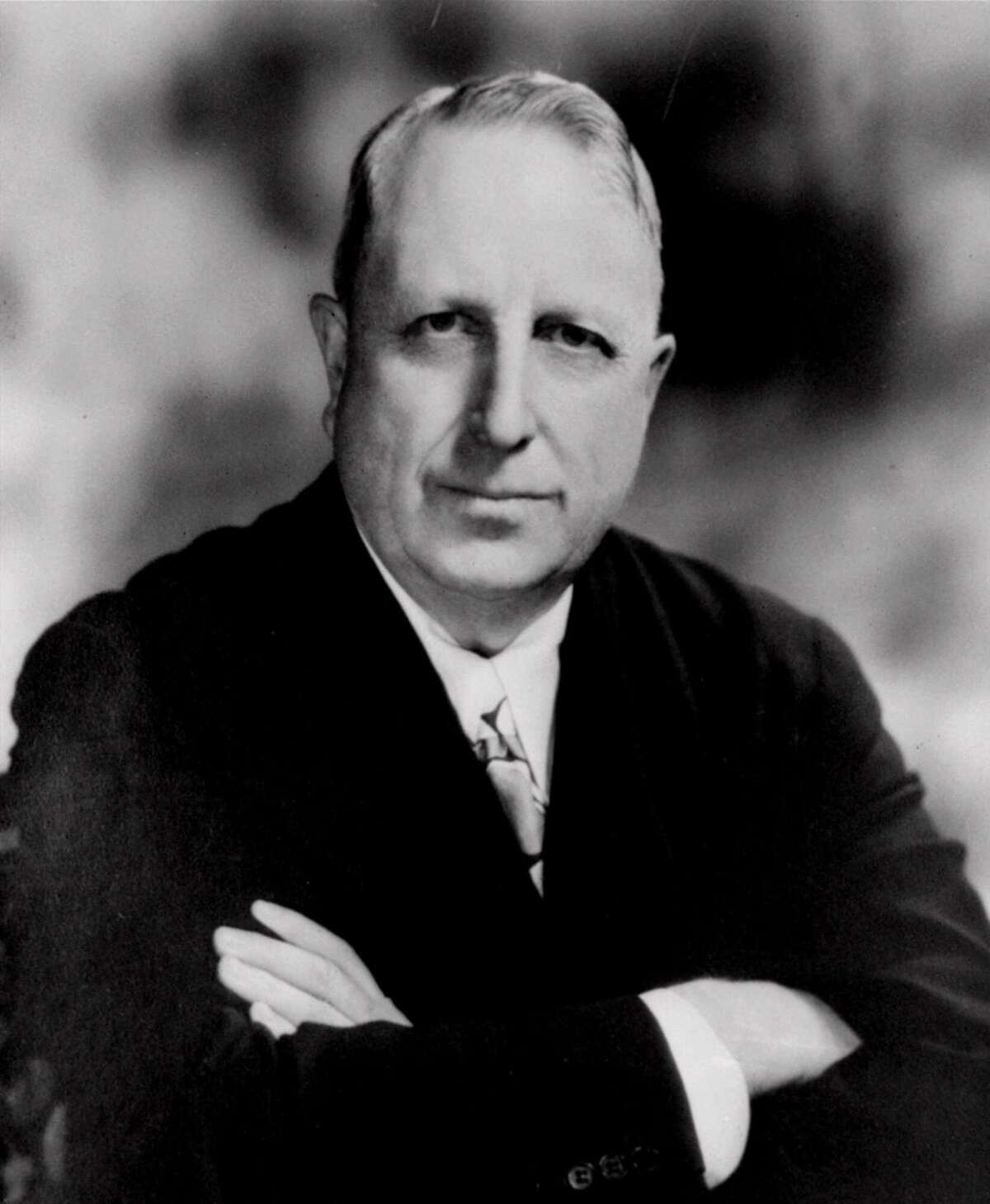
Analyzing the William Randolph Hearst Net Worth and Inflation-Adjusted Valuation
William Randolph Hearst was one of the most powerful media moguls in American history, and his fortune—often estimated at its peak around $200 million during the 1930s—requires careful analysis to determine its modern equivalent. When...
William Randolph Hearst was one of the most powerful media moguls in American history, and his fortune—often estimated at its peak around $200 million during the 1930s—requires careful analysis to determine its modern equivalent. When adjusting for the massive impact of inflation over the last century, his wealth effectively places him among the wealthiest individuals in the history of the United States, representing a fortune valued in the billions of dollars today.
Contents
Understanding the Hearst Fortune
William Randolph Hearst (1863–1951) built an unprecedented media empire that included the San Francisco Examiner, The New York Journal, and a sprawling collection of magazines, news services, and radio stations. Unlike modern tech billionaires whose wealth is tied to volatile equity in publicly traded companies, Hearst’s wealth was primarily composed of tangible assets: vast real estate holdings, art collections, and controlling interests in private media entities.
Calculating the net worth of an individual like Hearst using simple inflation calculators—such as the Consumer Price Index (CPI)—is inherently limited. The CPI tracks the cost of a fixed basket of consumer goods and services, which does not accurately reflect the appreciation of high-end real estate, rare art, or the power of controlling a national media conglomerate. Consequently, economists often use "economic power" or "GDP share" metrics to estimate what his fortune would be worth in 2026.
Methodology for Inflation Adjustments
When assessing the "net worth of Justin"—a specific phrasing often linked to queries about the Hearst legacy—it is important to clarify that this likely refers to the transmission of wealth to heirs or the comparative scale of his fortune relative to current public figures. There is no historical or financial entity known as the "Justin" in relation to the Hearst family trust or net worth. The search intent typically centers on understanding the magnitude of Hearst's wealth by applying historical currency conversion.
To perform a meaningful adjustment, one must consider:
- Direct Inflation (CPI): This calculates the purchasing power of the dollar. $200 million in 1935 is roughly equivalent to $4.5 billion to $5 billion in 2026 dollars.
- Relative Economic Share: This approach looks at what percentage of the total U.S. GDP his wealth represented. In the 1930s, $200 million was a significantly larger portion of the national economy than it is today. By this metric, Hearst’s wealth is often compared to figures exceeding $20 billion to $30 billion.
Asset Composition and Wealth Preservation
Hearst’s wealth was heavily concentrated in physical manifestations of power. The most notable was San Simeon, his massive estate in California, and his world-class art collection, which was so extensive that it necessitated the hiring of curators and the construction of specialized warehouses.
| Asset Type | Primary Function | Valuation Difficulty |
|---|---|---|
| Media Empire | Revenue Generation | Fluctuating market dominance |
| Real Estate | Capital Appreciation | Location-specific premiums |
| Art & Antiquities | Wealth Storage | Subjective auction-market value |
| Publishing Rights | Intellectual Property | Declining value in digital age |
The challenge in determining a modern-day net worth for Hearst lies in the depreciation of traditional print media. While his real estate and art have appreciated drastically, the media arm of his empire underwent significant structural changes. By 2026, the Hearst Corporation has evolved into a diversified information and services company, meaning the original "Hearst fortune" is now distributed across a modern corporate entity that bears little resemblance to the personal fiefdom he operated in the early 20th century.
The Role of Inflation in Historical Wealth Comparison
Inflation is a blunt tool when applied to billionaire status. For a standard consumer, inflation represents the erosion of the dollar's ability to buy groceries or housing. For a titan of industry, inflation is secondary to the "time value of influence." Hearst did not just hold cash; he held the ability to dictate national discourse through his newspapers.
In 2026, an equivalent to Hearst's "power" would not be measured simply in cash, but in the ability to control large-scale digital distribution networks and influence public sentiment. When individuals search for these figures, they are often attempting to reconcile the vast sums of the Gilded Age with the current concentration of wealth in the tech and data sectors.
Limitations of Historical Net Worth Data
It is critical to note that there was no "Forbes 400" in 1935. Hearst’s wealth was notoriously difficult to pin down because he operated his empire as a private conglomerate. Much of the data regarding his net worth comes from:
- IRS Tax Filings: Often incomplete or strategically managed.
- Estate Appraisals: Conducted after his death, which may not represent the peak of his wealth.
- Journalistic Investigation: Contemporary reports from rival publications, which were often prone to exaggeration or minimization depending on their stance toward Hearst.
Researchers must treat "net worth" figures from that era as estimations rather than verified accounting records. The absence of modern transparency requirements means that even the most cited figures remain approximations of his total holdings.
Comparative Analysis: Then and Now
When evaluating the wealth of historical figures like Hearst against modern standards, consider the following:
- Cost of Living vs. Cost of Luxury: In 1930, labor was cheap. Building a castle like San Simeon cost a fortune, but the raw materials and labor costs were a fraction of what they would be in 2026.
- Taxation Regimes: The modern top marginal tax rates and estate taxes mean that maintaining a $200 million fortune through the Great Depression and World War II would be fundamentally different today.
- Liquidity: Hearst was often "land rich" but "cash poor." During the Depression, he faced significant liquidity crises, forced to sell off parts of his art collection just to keep his newspapers afloat.
Frequently Asked Questions
How does inflation affect the perceived value of Hearst’s wealth? Inflation causes historical dollar amounts to appear smaller than they truly were in terms of economic power. While $200 million sounds modest by today’s billionaire standards, its relative economic impact in the 1930s was equivalent to tens of billions of dollars today.
Was William Randolph Hearst the wealthiest man in America? During his peak, he was certainly among the top tier, but he competed with industrialists like John D. Rockefeller and Andrew Carnegie. His wealth was distinct because it was tied to media influence rather than oil or steel.
Why is it difficult to calculate a 2026 equivalent for his fortune? The primary difficulty is the transformation of the assets themselves. Print media assets have lost value, while his land holdings have skyrocketed. A direct conversion of his 1930s assets to 2026 prices is imprecise because the assets no longer exist in the same market environment.
What was the "Justin" reference in the search query? There is no historical evidence linking a person or entity named "Justin" to the valuation of the Hearst estate. It is likely a misidentification or a search query artifact related to contemporary social media trends or user-generated content.
Did Hearst lose his fortune due to the Great Depression? Hearst suffered severe financial stress during the Great Depression. His massive spending habits and the decline in advertising revenue for his newspapers forced him to take out loans and sell off a significant portion of his art and real estate collection to maintain operations.
Practical Recommendation for Wealth Analysis
If you are researching the net worth of historical figures to understand economic shifts, do not rely on a single inflation calculator. Instead, utilize the GDP Per Capita comparison method. This provides a more accurate view of how much a person’s wealth would be "felt" in the economy of their time compared to today. For the most accurate professional assessment of historical wealth, consult the Economic History Services database or peer-reviewed archival research, which accounts for the specific asset classes owned by the subject, rather than generic inflationary indices.
Image Gallery