Optimizing MicroRNA Assay Performance in Clinical Research
Achieving robust microRNA (miRNA) assay performance in clinical research requires rigorous standardization of pre-analytical variables, precise normalization strategies, and the selection of high-sensitivity detection platforms. Resear...
Achieving robust microRNA (miRNA) assay performance in clinical research requires rigorous standardization of pre-analytical variables, precise normalization strategies, and the selection of high-sensitivity detection platforms. Researchers must mitigate common technical biases—such as hemolysis interference and extraction efficiency variability—to ensure that miRNA profiles provide reliable, reproducible biomarkers for diagnostic and therapeutic monitoring applications.
Contents
The Role of MicroRNAs in Clinical Diagnostics
MicroRNAs are short, non-coding RNA molecules (typically 19–24 nucleotides) that play a critical role in post-transcriptional gene regulation. Their presence in stable forms within biological fluids—including plasma, serum, urine, and cerebrospinal fluid—makes them attractive candidates for non-invasive "liquid biopsies." Unlike proteins, which may degrade rapidly or undergo post-translational modifications, miRNAs are often protected by extracellular vesicles (exosomes) or protein complexes, enhancing their stability in clinical samples.
However, moving miRNA analysis from basic discovery to the clinical laboratory introduces significant hurdles. Because miRNA concentrations in biofluids are often exceedingly low, the margin for technical error is narrow. Assay performance is defined by the ability to detect subtle differences in expression levels that correlate with disease progression, treatment response, or patient stratification, necessitating a move toward standardized protocols that account for biological and technical noise.
Critical Pre-Analytical Considerations
The "garbage in, garbage out" principle applies heavily to miRNA assays. Variability in sample collection, processing, and storage can mask the true biological signal.
- Collection and Hemolysis: Blood-based miRNAs are highly sensitive to hemolysis. Red blood cells contain specific miRNAs, such as miR-16 and miR-451, which can leach into the plasma if cells are damaged during venipuncture or processing. Clinical studies must routinely assess hemolysis using spectrophotometric hemoglobin measurements or the miR-451/miR-23a ratio to ensure sample integrity.
- Extraction Efficiency: Different commercial kits utilize varying chemistries (e.g., spin columns vs. magnetic beads) that yield divergent miRNA recovery rates. Inconsistent extraction efficiency can lead to false-negative results or skewed expression data.
- Storage Protocols: Samples should be processed into aliquots quickly to avoid freeze-thaw cycles, which can lead to RNA degradation and fragmentation. Standardizing the time from collection to centrifugation is vital for clinical repeatability.
Analytical Platform Comparison
The choice of detection technology remains a pivotal decision in assay design. Clinical research requires balancing the depth of discovery with the requirement for high-throughput, reproducible results.
| Technology | Sensitivity | Throughput | Suitability for Clinical Use |
|---|---|---|---|
| RT-qPCR | High | Low/Medium | Gold standard for validation and clinical testing. |
| Microarrays | Low/Medium | High | Useful for initial screening but lacks dynamic range. |
| NGS (RNA-Seq) | Very High | Very High | Excellent for discovery; requires complex bioinformatics. |
| Digital PCR | Absolute | Medium | Best for quantifying low-abundance targets precisely. |
RT-qPCR: The Clinical Workhorse
Reverse Transcription quantitative PCR (RT-qPCR) is favored in clinical settings due to its high sensitivity, relatively low cost, and fast turnaround time. However, it relies heavily on accurate normalization. Using an endogenous control—a reference gene that remains stable across all conditions—is essential. In many clinical studies, the stability of traditional internal controls (such as U6 or 5S rRNA) must be verified, as they are often susceptible to experimental conditions and disease-state fluctuations.
NGS and Digital PCR
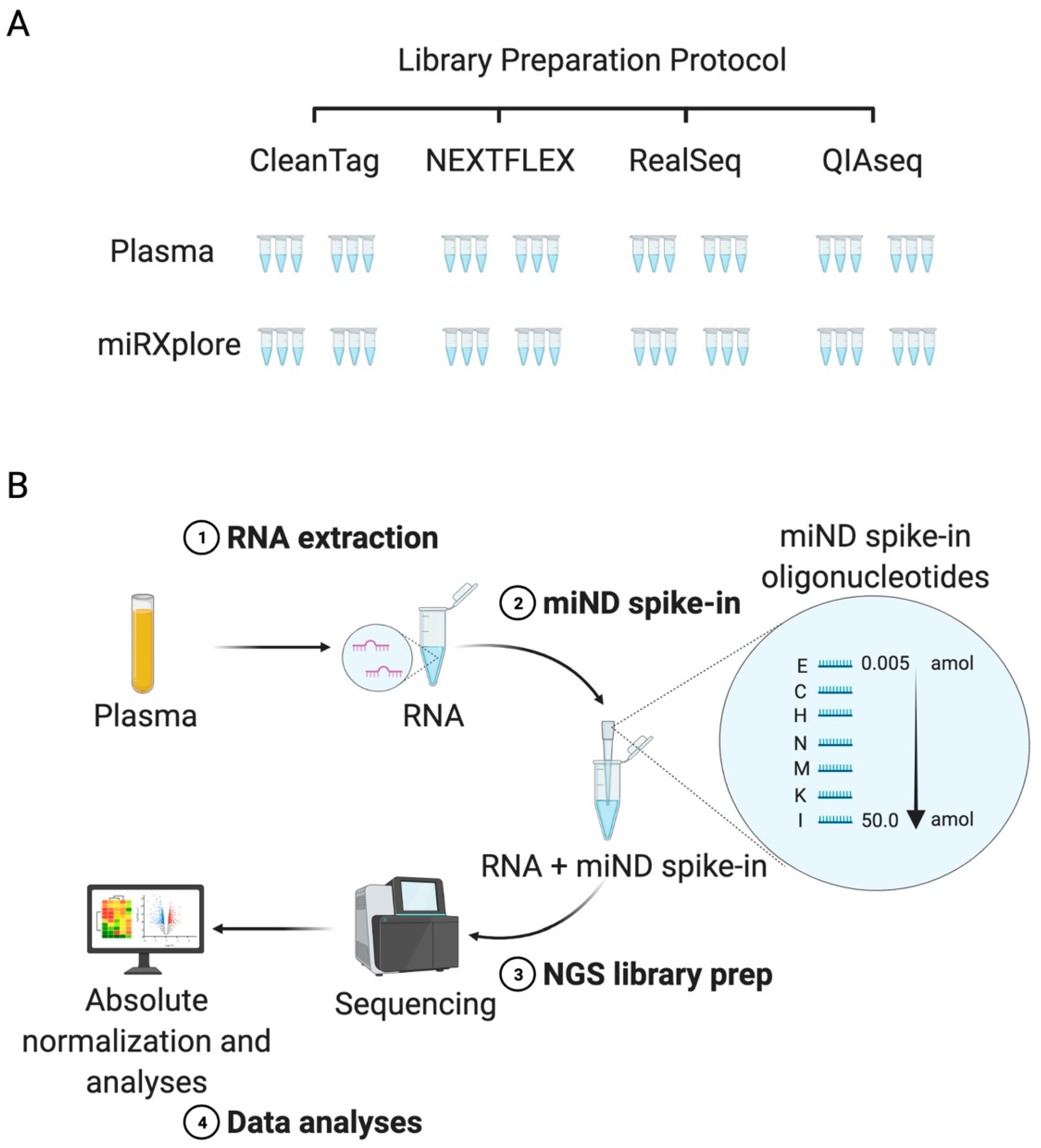
Next-Generation Sequencing (NGS) allows for the discovery of novel miRNAs, but it is prone to bias during library preparation, specifically regarding adapter ligation efficiency. Digital PCR (dPCR), by contrast, provides absolute quantification without the need for standard curves, making it arguably the most precise method for quantifying known, clinically validated miRNA biomarkers.
Normalization Strategies: The Hidden Variable
Normalization is perhaps the most significant challenge in miRNA quantification. Because there is often no "universal" housekeeper, clinical researchers are increasingly adopting global mean normalization or the use of multiple stably expressed endogenous miRNAs. In some cases, the addition of "spike-in" synthetic miRNAs (external controls) before RNA extraction is required to account for variations in recovery and reverse transcription efficiency. Failure to normalize correctly is the primary cause of poor assay reproducibility across different research centers.
Quality Control and Troubleshooting
Even with established protocols, clinical assays encounter persistent challenges. When assay performance metrics fall outside expected ranges, investigators should systematically address the following:
- Signal-to-Noise Ratio: If low-abundance miRNAs are being measured, increase the input volume or utilize pre-amplification steps, ensuring that pre-amplification does not introduce additional bias.
- Batch Effects: When processing large cohorts, perform measurements in randomized batches. Record the specific kit lots and reagent batches, as slight variations in manufacturer manufacturing can influence cycle threshold (Ct) values.
- Bioinformatics Integration: In sequencing studies, bioinformatics pipelines must be standardized. Differences in trimming algorithms, mapping software, and alignment parameters can lead to significant discrepancies in miRNA read counts, even when the same raw data is used.
Ethical and Regulatory Perspectives
In 2026, the regulatory landscape for miRNA-based diagnostics remains stringent. To achieve Clinical Laboratory Improvement Amendments (CLIA) certification or In Vitro Diagnostic (IVD) approval, assays must demonstrate analytical validity (accuracy, precision, analytical sensitivity/specificity) and clinical utility.
Researchers must document the analytical performance characteristics comprehensively, including the Limit of Detection (LoD) and Limit of Quantitation (LoQ). These metrics define the lowest concentration of miRNA that can be detected and reliably measured, respectively. For clinical research, moving beyond the discovery phase requires validating these assays in independent cohorts, ideally across multiple clinical sites, to ensure that the findings are not specific to a single laboratory’s internal environment.
Frequently Asked Questions
Why is hemolysis a major issue for miRNA assays? Hemolysis occurs when red blood cells rupture, releasing their internal miRNAs into the plasma. Because red blood cells contain very high concentrations of specific miRNAs, contamination can falsely inflate the expression levels of these markers, masking the true systemic miRNA profile.
What is the best way to handle normalization in clinical trials? There is no single "best" method, but the most robust approach involves using multiple stable endogenous controls identified through geNorm or NormFinder analysis, combined with synthetic spike-in controls to monitor the extraction and amplification process.
Can I compare miRNA data across different platforms? Generally, no. Because microarrays, RT-qPCR, and NGS utilize different principles of detection and capture, the absolute values are rarely comparable. Researchers should aim for cross-platform validation using the same technology for both discovery and clinical validation phases.
How do freeze-thaw cycles impact clinical sample quality? Repeated thawing leads to the degradation of RNA integrity. While miRNAs are more stable than mRNAs, excessive handling increases the likelihood of enzymatic degradation by RNases present in the sample, which can increase the variance in measured results.
What is the current regulatory status of miRNA assays? As of 2026, many miRNA assays remain in the "Laboratory Developed Test" (LDT) category. Transitioning these to fully approved IVD products requires rigorous longitudinal studies to demonstrate that the assay reliably improves clinical decision-making.
Strategic Recommendations
To ensure high-performance miRNA assays, clinical investigators must prioritize the establishment of a Standard Operating Procedure (SOP) that encompasses the entire lifecycle of the sample.
- Pre-Analysis: Define and strictly adhere to blood collection tubes (e.g., EDTA vs. Streck tubes), processing speeds, and storage temperatures (-80°C is standard).
- Analysis: Choose the platform based on the study goal. Use dPCR for absolute quantification of validated panels and NGS for discovery.
- Documentation: Record all technical metadata, including instrument calibration status and lot-to-date reagent records, to facilitate retrospective data audits.
By standardizing the technical framework of the assay, researchers minimize the "biological noise" that often hampers the discovery of actionable diagnostic biomarkers, thereby accelerating the transition of miRNA-based tools from the lab bench to the patient bedside.
Image Gallery