The IFC Format Explained: A Comprehensive Guide to OpenBIM and Interoperability
The Industry Foundation Classes (IFC) format is a neutral, open data standard designed to enable interoperability and seamless data exchange between different software applications used in the architecture, engineering, construction, a...
The Industry Foundation Classes (IFC) format is a neutral, open data standard designed to enable interoperability and seamless data exchange between different software applications used in the architecture, engineering, construction, and operations (AECO) industry. By preventing proprietary lock-in, IFC allows professionals to share digital building models reliably across diverse disciplines.
Contents
The architecture, engineering, construction, and operations (AECO) sector has traditionally relied on fragmented workflows. Different disciplines—ranging from structural engineering and architectural design to mechanical, electrical, and plumbing (MEP) systems—use specialized software packages. These applications often generate data in proprietary, closed file formats that do not natively communicate with competing platforms. Without a universal standard, collaborating stakeholders face massive data silos, costly errors, geometric distortions, and information loss during file transfers.
The Industry Foundation Classes format addresses this critical challenge by establishing a globally recognized, open standard for Building Information Modeling (BIM) data. Maintained by buildingSMART International, the specification provides a platform-neutral medium to describe building and infrastructure data throughout its lifecycle, from initial concept design through construction, operation, and eventual decommissioning.
Understanding the Core Concept of OpenBIM
To fully appreciate the IFC format, one must understand the philosophy of OpenBIM. OpenBIM is a universal approach to the collaborative design, realization, and operation of buildings based on open standards and workflows. Proprietary BIM formats tie users to specific software vendors, forcing all project participants to purchase and run identical application suites. This requirement creates steep financial barriers, limits competition, and complicates long-term data archiving because obsolete software versions can render proprietary files unreadable.
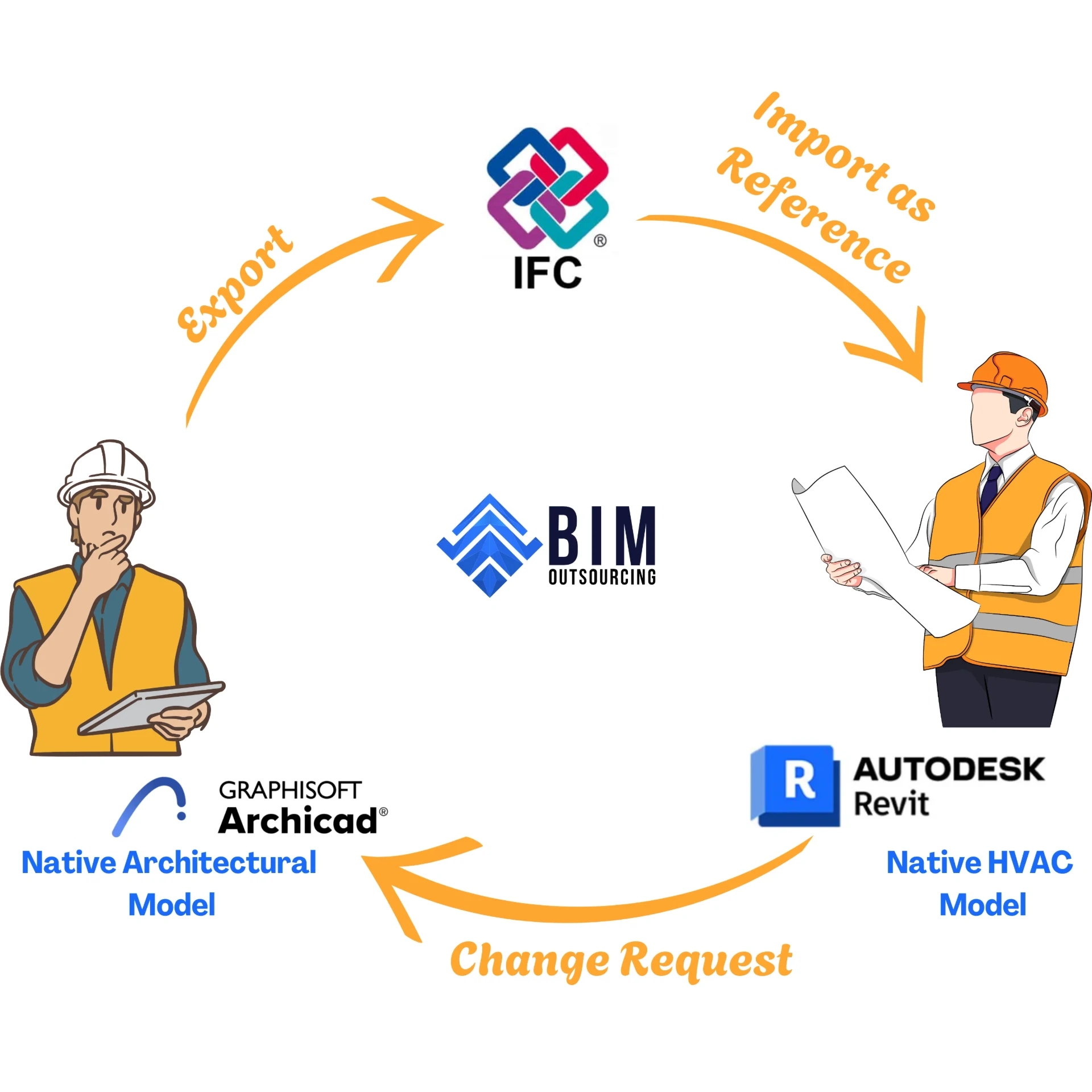
OpenBIM breaks down these barriers. The IFC format serves as the foundational data exchange mechanism that makes OpenBIM possible. Instead of translating a native project file directly into another vendor's proprietary format—which frequently results in missing metadata, corrupted geometry, or broken object parameters—software applications export or import a standardized IFC file.
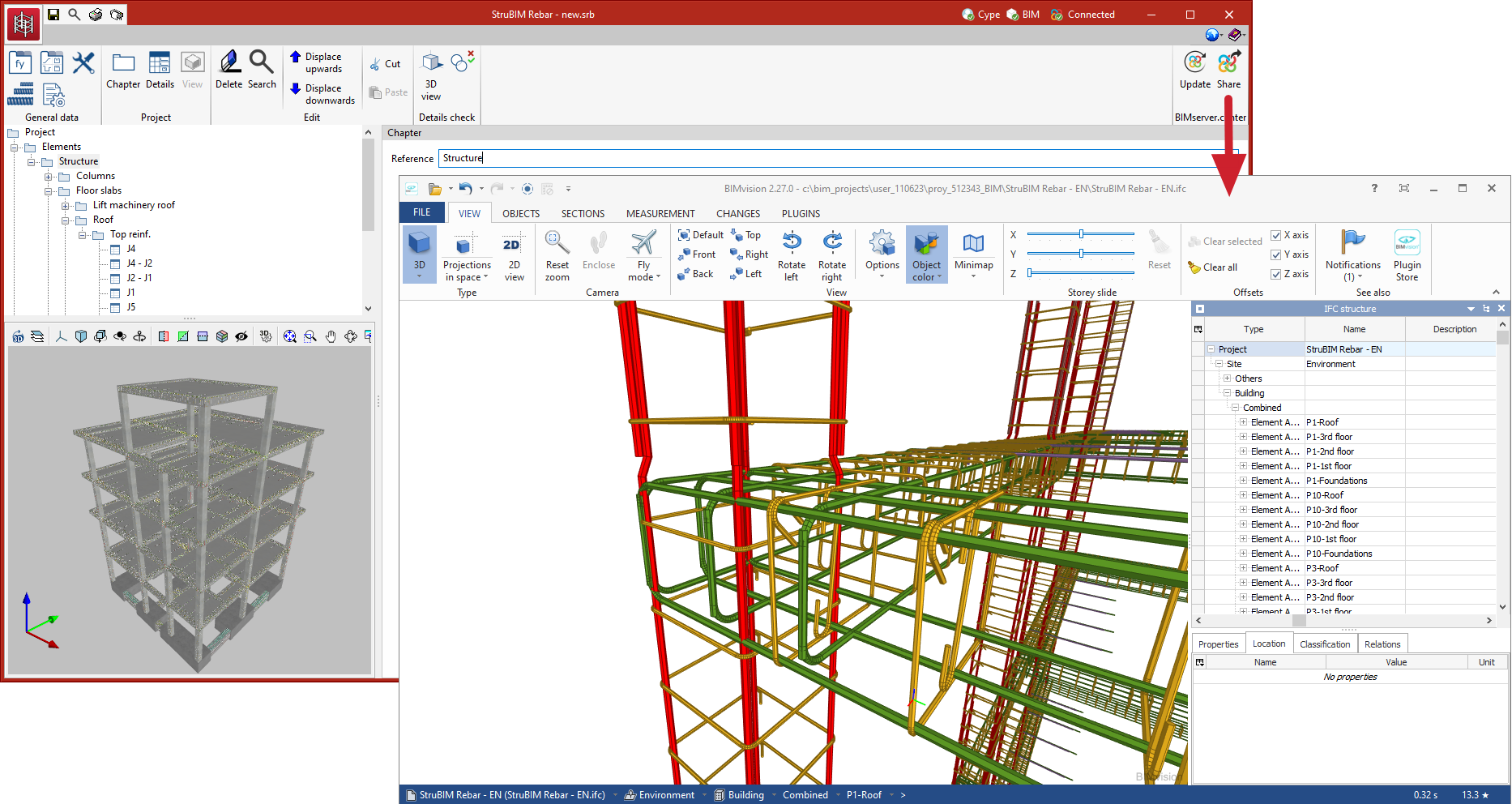
The architecture of IFC is object-oriented. Every physical and logical element in a built environment—such as walls, slabs, windows, doors, spaces, beams, and structural loads—is classified as an "entity" with specific properties, attributes, and relationships. A wall is not merely a collection of lines or unassociated 3D surfaces; it is recognized as an intelligent object with defined material properties, fire ratings, acoustic values, spatial containment, and thermal coefficients.
How the IFC Data Schema Works
The IFC standard is defined using EXPRESS, a conceptual data specification language standardized as ISO 10303-11. This schema organizes building information into a complex hierarchy, establishing relationships between physical components, spatial structures, actors, processes, and documents.
Understanding how the schema structures information helps users manage data exports and troubleshoot exchange errors. The data hierarchy is generally organized into four conceptual layers:
- Resource Layer: The foundational tier containing fundamental resource definitions, such as units of measurement, geometry primitives, basic materials, and date-time functions. These components do not depend on any higher-level concepts.
- Core Layer: The second tier providing the conceptual bedrock for all object definitions, including base classes for products, processes, controls, and actors.
- Interoperability Layer: The third tier containing object models specific to distinct construction disciplines, such as architectural components, structural elements, and building services.
- Domain Layer: The specialized tier accommodating extensions for specific sectors, such as HVAC engineering, electrical planning, structural analysis, and facility management.
Furthermore, IFC data can be serialized into several physical file formats depending on the required application and readability preferences. The most common file extensions include:
- .ifc: The standard STEP-based physical file format, structured in accordance with ISO 10303-21. It uses a plain-text, ASCII-based structure that is human-readable and widely supported across legacy and modern platforms.
- .ifcXML: An XML-encoded representation of the IFC schema. This format facilitates integration with web services and database systems, though file sizes are typically much larger than standard STEP files.
- .ifcZIP: A compressed archive format containing either an
.ifcor.ifcXMLfile. Compression drastically reduces file sizes, making complex infrastructure and building models easier to distribute via cloud environments.
Evolution and Major Versions of the IFC Standard
The development of the IFC format is an ongoing, community-driven process managed by buildingSMART International. Over the decades, the standard has evolved significantly to accommodate larger datasets, complex geometry, civil engineering infrastructure, and advanced sustainability metrics.
| Version | Release Year | Primary Scope and Technical Improvements |
|---|---|---|
| IFC 2x3 | 2006 | The most widely deployed and stable legacy version in the AECO industry. It established robust architectural and structural coordination capabilities. |
| IFC 4 | 2013 | Introduced advanced geometric representations (such as NURBS and swept solids), enhanced spatial decomposition, and extended MEP system capabilities. |
| IFC 4.1 | 2018 | Focused on alignment data and geotechnical integration, bridging the gap between building design and civil infrastructure projects. |
| IFC 4.3 | 2022 | Formally expanded the standard to cover infrastructure domains, including rail, road, ports, bridges, and waterways, achieving formal ISO standard status. |
| IFC 5 | In Development | Anticipated future iteration focusing on modularity, improved cloud-native database querying, and advanced parametric behavior. |
While newer versions like IFC 4.3 offer unprecedented breadth across infrastructure domains, IFC 2x3 remains deeply entrenched in many regional building authority submissions due to long-standing software implementation cycles and legacy municipal guidelines. Project teams must always confirm the required IFC version specifications with client briefs, local regulatory bodies, and project stakeholders before initiating modeling workflows.
Practical Applications and Workflow Integration
Implementing the IFC format successfully requires a structured approach to model authoring, coordination, and validation. The standard is utilized across several distinct project phases:
Model Authoring and Exporting
Designers create models within native authoring environments such as Autodesk Revit, Archicad, Tekla Structures, or Vectorworks. To share data, users configure IFC export settings. Proper configuration is vital; exporters must map native software categories to corresponding IFC entities (e.g., ensuring a proprietary curtain wall family is correctly exported as IfcCurtainWall). Incorrect mapping results in unclassified geometry that downstream consultants cannot filter, analyze, or schedule effectively.
Multi-Disciplinary Coordination
Once exported, models are compiled into a common data environment (CDE) or model coordination platform (such as Autodesk Construction Cloud, Trimble Connect, or Solibri). Clash detection is performed across architectural, structural, and MEP models to identify spatial interferences. Because the IFC format preserves object identifiers (GlobalUniqueIdentifiers or GUIDs), coordination software can track issue resolutions across successive model iterations without losing historical tracking data.
Facility Operations and Asset Management
Beyond design and construction, facility managers leverage IFC models for operations. Maintenance teams import IFC datasets into Computerized Maintenance Management Systems (CMMS) or Enterprise Asset Management (EAM) platforms. Because the standard captures manufacturer details, serial numbers, warranty dates, and spatial locations, operators can query the digital twin to locate faulty valves, check maintenance schedules, or review space utilization metrics.
Common Challenges and Limitations
Despite its immense value, working with the IFC format presents operational hurdles that practitioners must manage carefully:
- Data Loss and Geometric Translation Errors: Translating proprietary parametric relationships into a neutral format can lead to "dumbing down" complex geometry. Parametric rules may flatten into static boundary representation (BRep) meshes, preventing downstream users from modifying parametric constraints.
- Property Set Inconsistencies: Custom parameters created by users in native software often fail to map cleanly into standard IFC Property Sets (
Pset). Establishing strict Project Information Delivery Manuals (IDM) and Model View Definitions (MVD) mitigates this risk by defining exactly what data must be exchanged. - File Size and Performance Bottlenecks: Large infrastructure or multi-building complexes exported to STEP-based
.ifcfiles can grow excessively large, straining computer memory during viewing and clash detection routines.
Frequently Asked Questions
What software applications support the IFC format?
Most professional AECO software suites support IFC import and export. Architectural and engineering tools such as Autodesk Revit, Archicad, Allplan, Vectorworks, Tekla Structures, and Bentley Systems platforms all feature native IFC translators. Dedicated open-source viewers and model checkers like BlenderBIM, IFC++ libraries, and Solibri also provide robust support.
Is the IFC format free to use?
Yes. The IFC standard is an open, non-proprietary specification maintained by buildingSMART International. Anyone can download, read, and implement the schema without paying licensing fees or royalties, though commercial software vendors must invest engineering resources to build and certify their translators.
What is a Model View Definition (MVD)?
A Model View Definition is a subset of the complete IFC schema tailored to address specific data exchange requirements for a particular workflow (such as energy analysis or structural coordination). An MVD defines precisely which entities, attributes, and property sets must be included and validated in the exported file.
Can I edit an IFC file directly?
Standard .ifc files are structured text or data files, meaning they are not typically edited like native CAD or BIM project files. However, specialized BIM authoring tools and dedicated open-source platforms (such as BlenderBIM) allow users to modify, enrich, or correct IFC files directly.
How do I verify the quality of an IFC export?
Quality verification is performed using dedicated BIM validation and model checking software. Tools like Solibri, BIMcollab Zoom, or open-source validators check the file against predefined rules, geometric integrity standards, and structural hierarchies to ensure no critical data was lost during export.
Conclusion and Next Steps
The Industry Foundation Classes format serves as the backbone of collaborative digital construction, breaking down proprietary software silos and ensuring long-term data accessibility across the AECO lifecycle. To maximize the effectiveness of IFC workflows on your next project, establish clear information delivery requirements early, enforce standardized Model View Definitions among all consulting partners, and conduct rigorous export testing before major milestone submissions.
Image Gallery