Understanding Workers' Compensation Notice Requirements in the Pennsylvania Statute (2026 Guide)
Under the Pennsylvania Workers' Compensation Act, specifically Section 311, an injured employee must provide notice of a work-related injury to their employer within 120 days of the occurrence. Failure to provide notice within this str...
Under the Pennsylvania Workers' Compensation Act, specifically Section 311, an injured employee must provide notice of a work-related injury to their employer within 120 days of the occurrence. Failure to provide notice within this strict timeframe generally results in a complete bar to receiving benefits. To receive compensation retroactive to the date of the injury, notice must be given within 21 days.
Contents
In the landscape of 2026, the Pennsylvania Workers' Compensation system remains a complex interplay of statutory mandates and judicial interpretations. For any worker injured on the job in the Commonwealth, the most critical hurdle is not the medical diagnosis itself, but the fulfillment of the "notice" requirement. This procedural gatekeeper is codified primarily in Sections 311 and 312 of the Pennsylvania Workers' Compensation Act. Understanding these statutes is essential for employees seeking to protect their rights and for employers looking to remain compliant with state regulations.
The Statutory Foundation: Section 311 of the PA Workers' Compensation Act
Section 311 of the Act serves as the primary statute of repose concerning the reporting of work injuries. It creates a tiered timeline that dictates not only whether a claim is valid but also when the payment of benefits begins.
The 21-Day Rule for Retroactive Benefits
While the statute allows up to 120 days to report an injury, there is a significant financial incentive to report it much sooner. If an employee provides notice to the employer within 21 days of the injury, compensation is payable from the date the disability began (subject to the standard seven-day waiting period). If the notice is provided after 21 days but before the 120-day limit, compensation is only payable from the date the notice was actually given.
For example, if a worker is injured on May 1st but waits until June 1st (31 days later) to notify their supervisor, they may forfeit any wage loss benefits that would have accrued between the date of injury and June 1st. In 2026, with the rising costs of living and medical care, this "lost month" of benefits can be devastating for a household.
The 120-Day Absolute Deadline
Section 311 states that "unless such notice be given within one hundred and twenty days after the occurrence of the injury, no compensation shall be allowed." This is a mandatory requirement. Even if an injury is catastrophic and clearly work-related, the Pennsylvania courts have consistently held that a failure to meet the 120-day notice requirement is fatal to the claim.
There are very few exceptions to this rule. The most notable exception involves the "discovery rule," which applies to injuries or diseases where the relationship to the employment is not immediately apparent, such as repetitive stress injuries or occupational illnesses like asbestosis.
The Content of the Notice: Section 312
If Section 311 tells you when to report, Section 312 tells you what to report. The statute is relatively lenient regarding the format of the notice, but it must contain specific information to be legally valid.
Section 312 requirements include:
- The Fact of Injury: The employee must clearly state that an injury occurred.
- Connection to Employment: The notice must inform the employer that the injury was sustained in the "course of employment." Simply telling a boss "my back hurts" is often insufficient. The worker must state, "I hurt my back while lifting a crate on the loading dock."
- Time and Place: The notice should specify "on or about a specified time, at or near a specified place."
In 2026, while many employers utilize digital portals or mobile apps for incident reporting, the legal standard remains the same. The notice can be verbal or written, but written notice—via email, text, or a formal incident report—is highly recommended to create a verifiable paper trail.
The Discovery Rule and Latent Injuries
Not all injuries happen in a single, traumatic moment. Pennsylvania law recognizes that some conditions develop over time. Under the Discovery Rule embedded in Section 311, the 120-day clock does not begin to tick until the employee knows, or by the exercise of reasonable diligence should know, of the existence of the injury and its possible relationship to their employment.
This is particularly relevant for:
- Hearing Loss: Where the 120 days may start when a doctor informs the worker that their deafness is noise-induced from the factory.
- Repetitive Trauma: Such as carpal tunnel syndrome, where the "injury" is a cumulative process.
- Occupational Diseases: Like lung conditions or cancers caused by chemical exposure, where the symptoms might not appear for years.
In these cases, the "date of injury" for notice purposes is the date the worker receives a medical diagnosis linking the condition to their job.
Employer Obligations and the LIBC-500 Poster
The statute does not only place burdens on the employee. Under Section 305 of the Act, Pennsylvania employers are required to post a specific notice in a conspicuous place at their business location. This is commonly known as the LIBC-500 form, or the "Notice to Employees - Workers' Compensation."
This poster must include:
- The name of the employer's workers' compensation insurance carrier.
- The policy number and expiration date.
- The contact information for the insurer or the third-party administrator (TPA).
- A list of "designated health care providers" (the Panel of Physicians).
If an employer fails to post this notice, they may face administrative fines. Furthermore, if they fail to provide a "panel" of at least six healthcare providers, the employee may have the right to seek treatment from any doctor of their choosing immediately following the injury.
Summary of Pennsylvania Notice Deadlines (2026)
| Requirement Type | Deadline | Legal Consequence of Failure |
|---|---|---|
| Notice for Full Retroactive Benefits | 21 Days from injury date | Benefits only start from the date notice is given, rather than the injury date. |
| Absolute Notice Deadline | 120 Days from injury date | The claim is legally barred; no compensation or medical coverage can be recovered. |
| Discovery Rule Notice | 120 Days from date of knowledge | Same as absolute deadline, but the clock starts upon medical diagnosis/knowledge. |
| Medical Treatment (Panel Rule) | First 90 Days of treatment | If the employer followed posting rules, the worker must see a panel doctor for 90 days. |
| Statute of Limitations (Claim Petition) | 3 Years from injury date | Even with notice, a formal Claim Petition must be filed within 3 years to preserve the claim. |
Common Pitfalls in Providing Notice
Even well-meaning employees often make mistakes that jeopardize their claims. A common issue arises when an employee mentions an injury to a co-worker but not to a member of management. Under the statute, notice must be given to a supervisor, foreman, or an individual in the personnel/HR department. Telling a "lead" or a peer is often insufficient to satisfy the legal requirement of notice to the "employer."
Another pitfall is the "wait and see" approach. A worker might feel a "pop" in their shoulder but hope it goes away over the weekend. If they wait 22 days to report it, they have already lost their right to retroactive pay. If they wait 121 days, their medical bills (which could reach tens of thousands of dollars) become their own personal responsibility.
In the current year 2026, courts are also seeing more disputes regarding "constructive notice." This occurs when an employer witnesses an accident or provides immediate medical care. While this can satisfy the notice requirement, it is legally risky to rely on the employer's observation. A formal, clear statement from the employee is always the safest course of action.
Frequently Asked Questions
Does an oral report count as notice under the PA statute?
Yes, the Pennsylvania statute does not strictly require the notice to be in writing. An oral report to a supervisor that includes the date, location, and the fact that the injury was work-related is legally sufficient. However, oral notice is frequently contested in court (a "he-said, she-said" scenario). It is always advisable to follow up an oral report with a written confirmation, such as an email or a text message, to ensure there is a record of the communication.
What if my employer saw me get hurt?
If your employer or a direct supervisor actually witnessed the accident, the notice requirement may be satisfied through "actual knowledge." However, the burden of proof is on the employee to show the employer knew not just that an event happened, but that an injury occurred and that it was related to the work being performed. Relying on "they saw it happen" is a common reason for denied claims; filing a formal report is always the better practice.
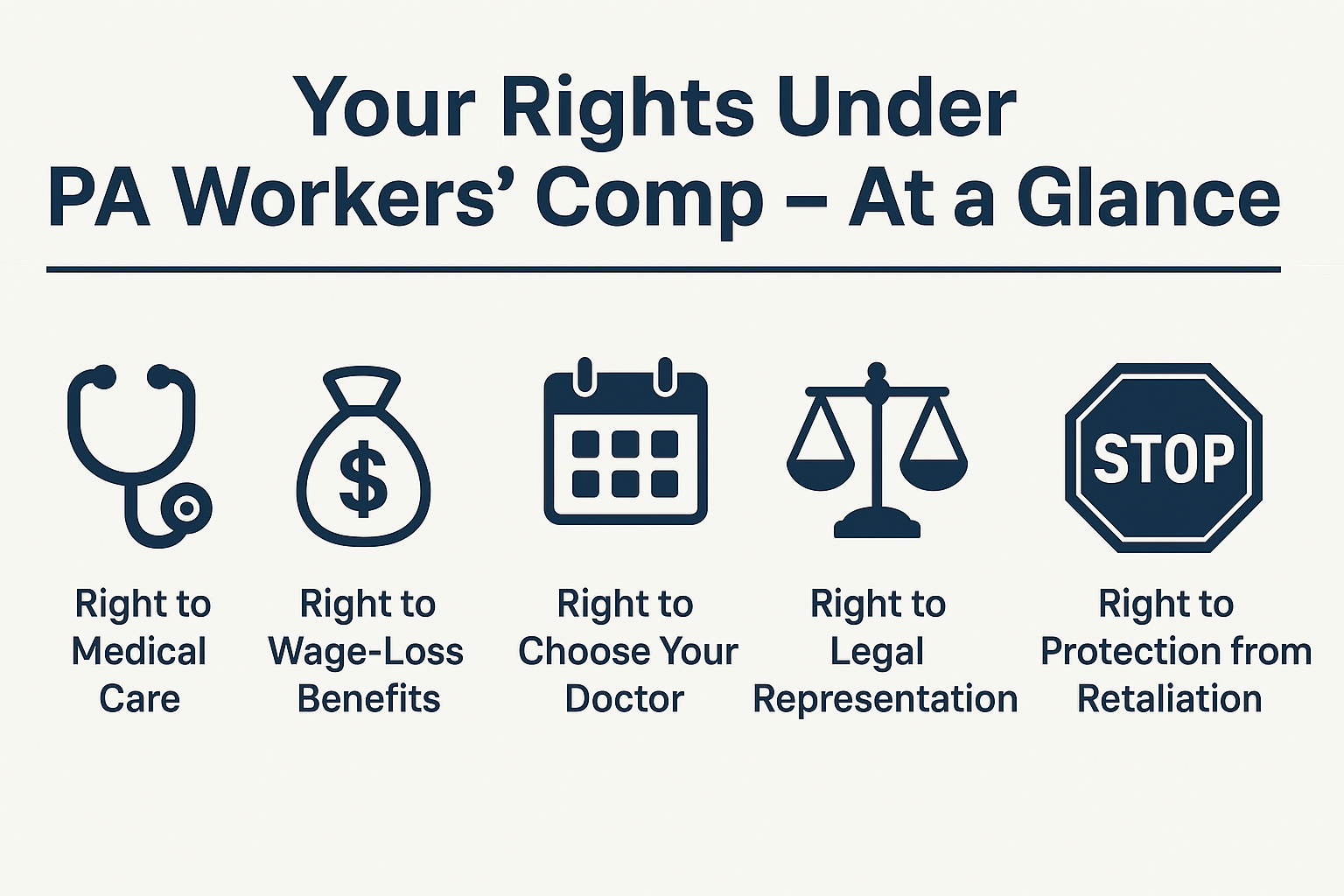
Can I be fired for reporting a work injury in Pennsylvania?
No. Pennsylvania law prohibits employers from retaliating against employees for exercising their rights under the Workers' Compensation Act. While Pennsylvania is an "at-will" employment state, firing a worker specifically because they reported an injury or filed a claim is considered a "wrongful discharge in violation of public policy." If this occurs, the worker may have grounds for a separate civil lawsuit in addition to their workers' compensation claim.
Does the 120-day rule apply to medical-only claims?
Yes. Whether you are seeking wage loss benefits (indemnity) or just payment for medical bills, the notice requirements of Section 311 apply. If you fail to notify your employer within 120 days, the insurance carrier is not obligated to pay for your surgery, physical therapy, or diagnostic testing, even if the treatment was clearly necessary due to a workplace event.
Who is the "proper" person to receive notice?
Notice should be given to someone in a position of authority. This includes your direct supervisor, a department head, the business owner, or the Human Resources department. Notice to a security guard or a union steward—unless they are also your supervisor—may not satisfy the statutory requirement.
Final Recommendations for Injured Workers
If you sustain an injury in a Pennsylvania workplace in 2026, your first priority must be your health, but your second must be the protection of your legal rights.
- Report the injury immediately: Do not wait for the 21-day or 120-day deadlines. Report it the same shift it happens.
- Be specific: Ensure the employer knows the injury happened at work while you were performing your job duties.
- Document everything: Save copies of incident reports, take photos of the LIBC-500 poster, and keep a log of whom you spoke to and when.
- Seek a Medical Diagnosis: If your injury involves a gradual onset of pain, see a doctor quickly to establish a "date of discovery" for the 120-day clock.
By adhering strictly to the timelines set forth in the Pennsylvania statute, you ensure that the system works as intended: providing necessary medical care and wage replacement for those injured in the service of their employers.
Image Gallery