Standard Penetration Test (SPT): A Comprehensive Guide to Field-Based Soil Investigation
The Standard Penetration Test (SPT) is an in-situ geotechnical site investigation method used to characterize the relative density, consistency, and shear strength of subsurface soil layers. By driving a standard split-spoon sampler in...
The Standard Penetration Test (SPT) is an in-situ geotechnical site investigation method used to characterize the relative density, consistency, and shear strength of subsurface soil layers. By driving a standard split-spoon sampler into the ground using a specific hammer weight and drop height, engineers derive an "N-value" that provides critical data for foundation design, settlement analysis, and liquefaction assessments.
Contents
The Significance of SPT in Modern Geotechnical Engineering
As of 2026, the Standard Penetration Test remains the most widely utilized field test in geotechnical engineering globally. Its enduring popularity stems from its dual-purpose nature: it provides a numerical index of soil resistance (the N-value) while simultaneously recovering a disturbed soil sample for laboratory identification and classification.
Originally developed in the early 20th century and standardized under ASTM D1586, the SPT has evolved into a sophisticated operation involving automated hydraulic rigs. However, the fundamental physics remains constant. The test is particularly effective in granular soils, such as sands and gravels, where undisturbed sampling is notoriously difficult. In the context of 2026 construction standards, SPT data serves as the baseline for preliminary site characterization before more specialized tests, such as the Cone Penetration Test (CPT) or Pressuremeter Test (PMT), are considered.
Essential Equipment and Technical Specifications
To ensure data reproducibility, the equipment used in an SPT must strictly adhere to international standards. Variations in equipment can lead to significant errors in energy transfer, which in turn skews the resulting N-value.
1. The Split-Spoon Sampler
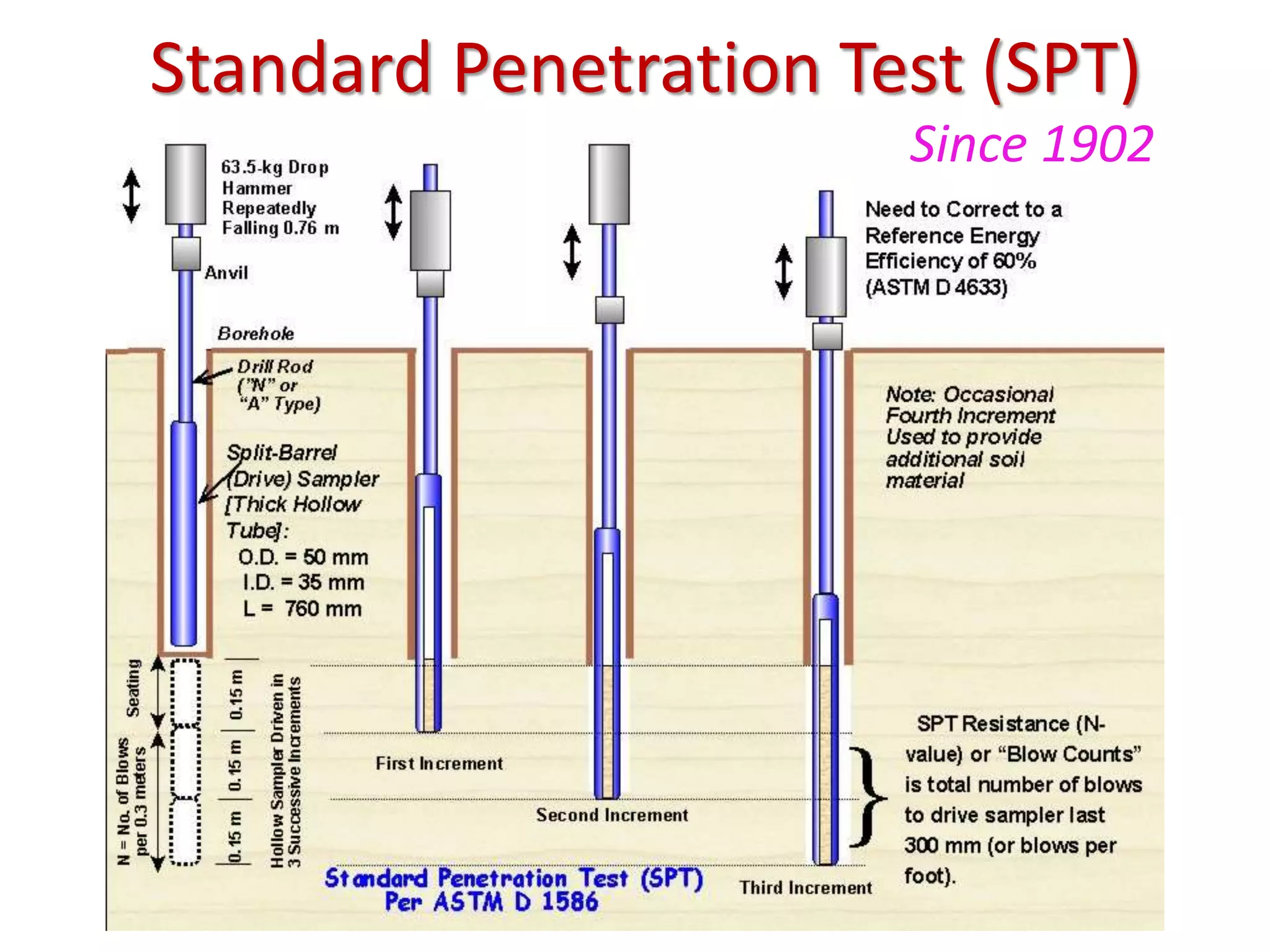
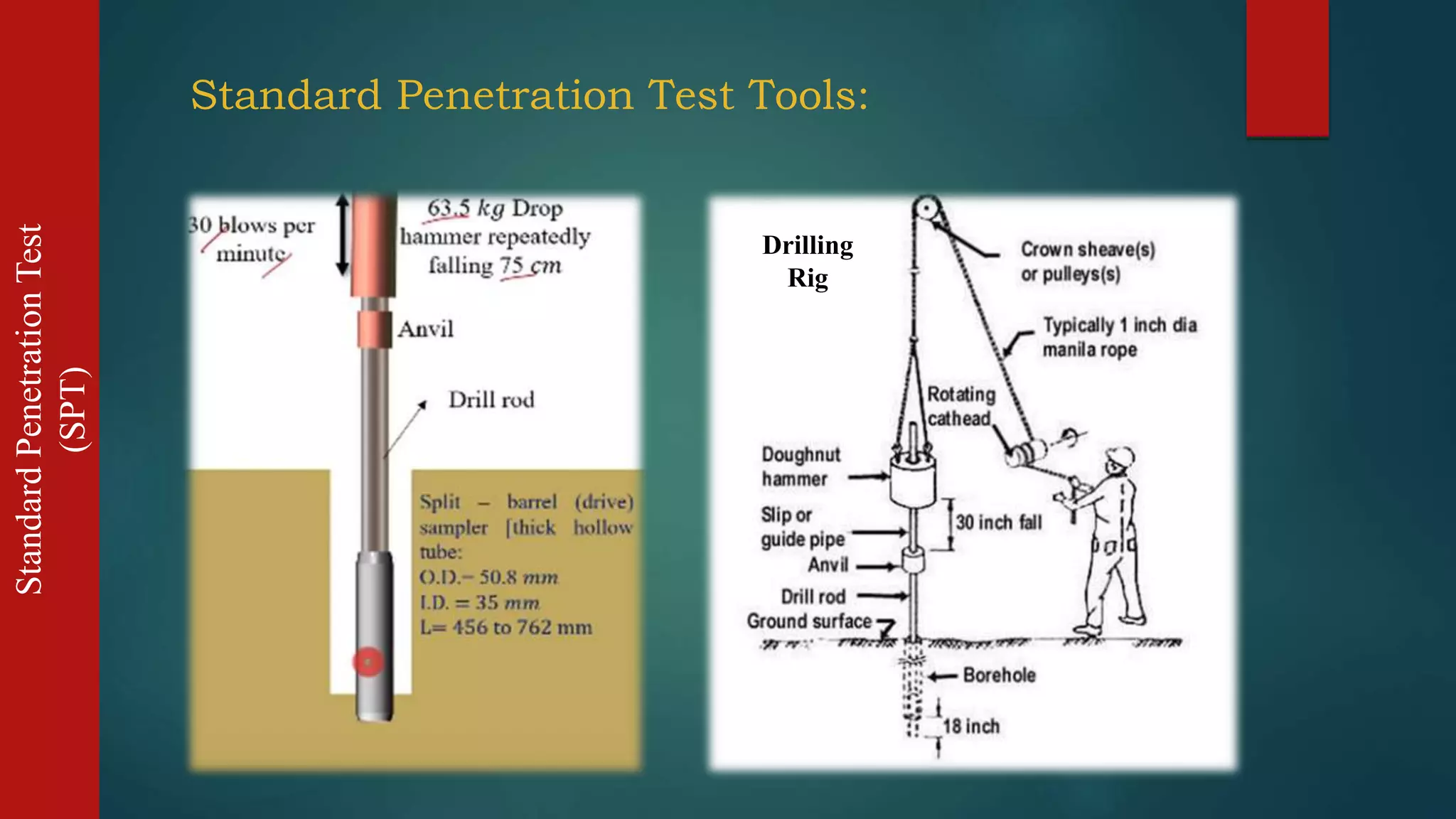
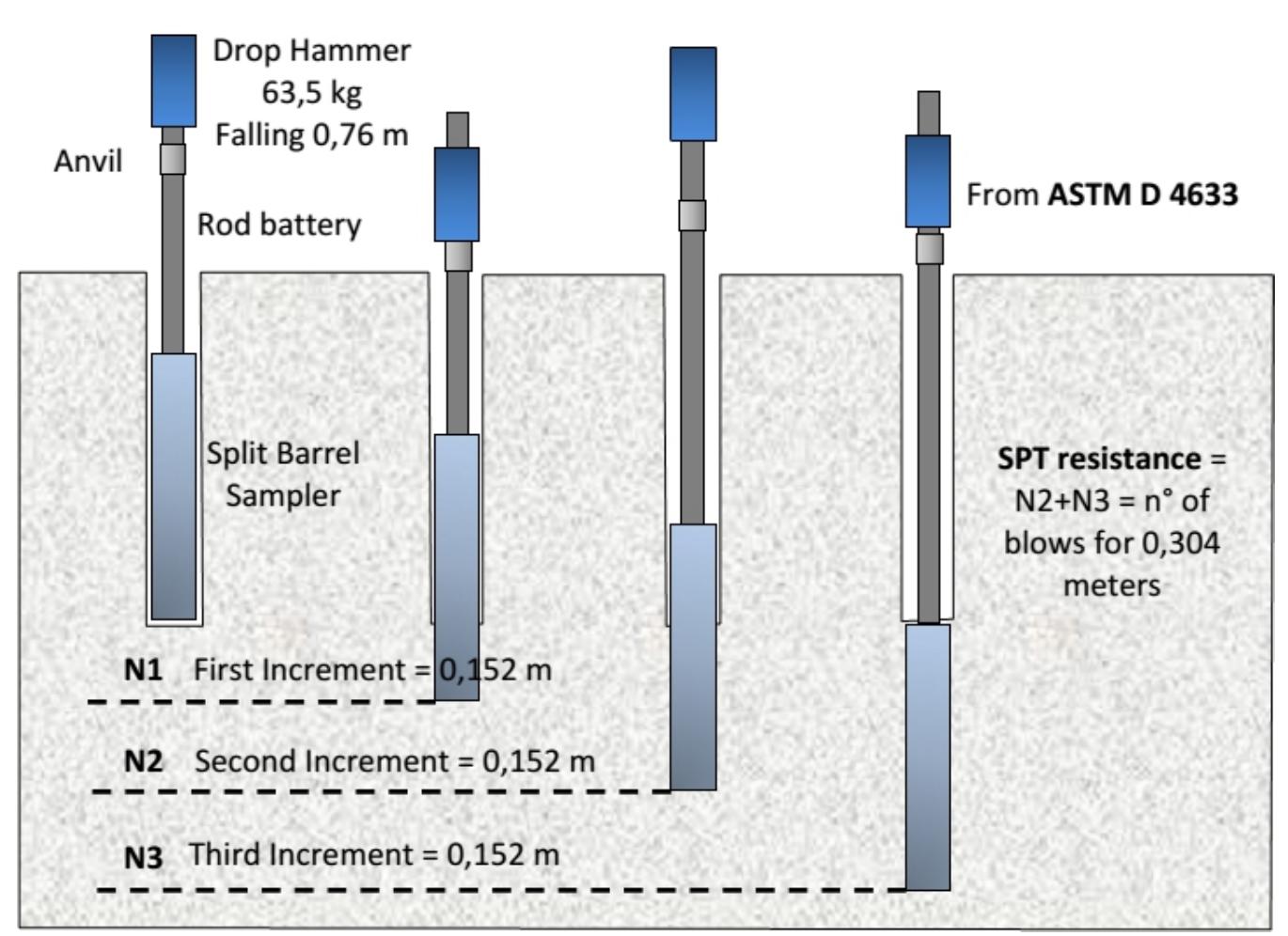
The sampler is a thick-walled steel tube with an outer diameter of 50.8 mm (2 inches) and an inner diameter of 34.9 mm (1.375 inches). It consists of a driving shoe, a split barrel that can be opened longitudinally to retrieve the soil, and a coupling head that connects to the drill rods. The split-barrel design is crucial because it allows the field technician to examine the soil stratigraphy immediately upon extraction.
2. The Drive Weight (Hammer)
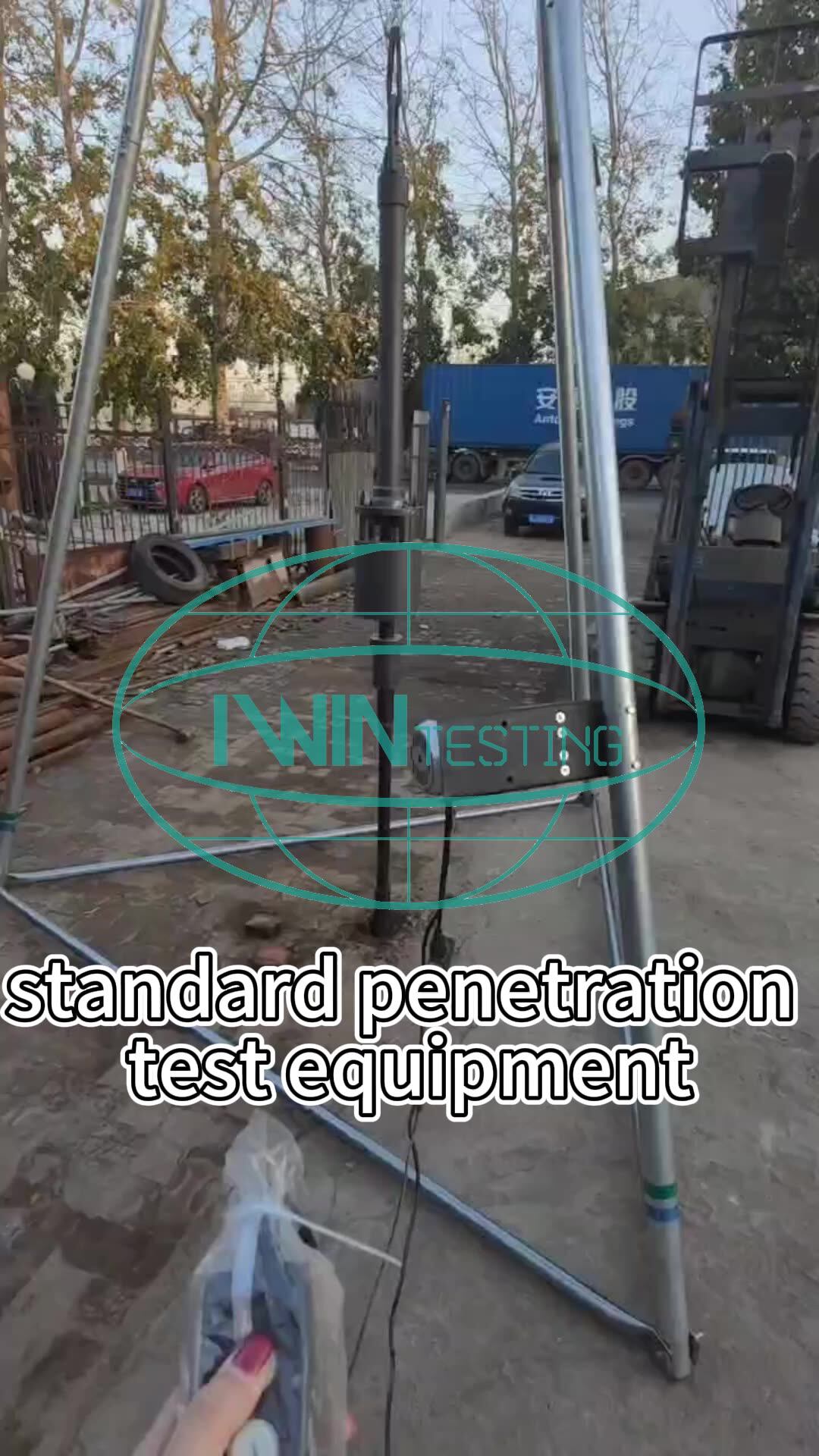
The standard hammer weighs 63.5 kg (140 lb). In modern 2026 operations, "automatic hammers" are the industry standard. These mechanical systems ensure the hammer is raised to exactly 760 mm (30 inches) before being released in a free-fall. Older "rope and pulley" systems are increasingly rare due to their inconsistent energy delivery, which typically only achieves 60% of the theoretical potential energy.
3. Drill Rods and Anvil
Drill rods transmit the impact energy from the hammer to the sampler. The stiffness and weight of these rods vary by depth; for deep investigations, the energy lost through rod vibration must be accounted for using correction factors. The anvil is the strike point at the top of the rod string where the hammer impact occurs.
Step-by-Step SPT Procedure
Executing a Standard Penetration Test requires precision to avoid "disturbing" the soil before the test begins. The following sequence outlines the standard field protocol:
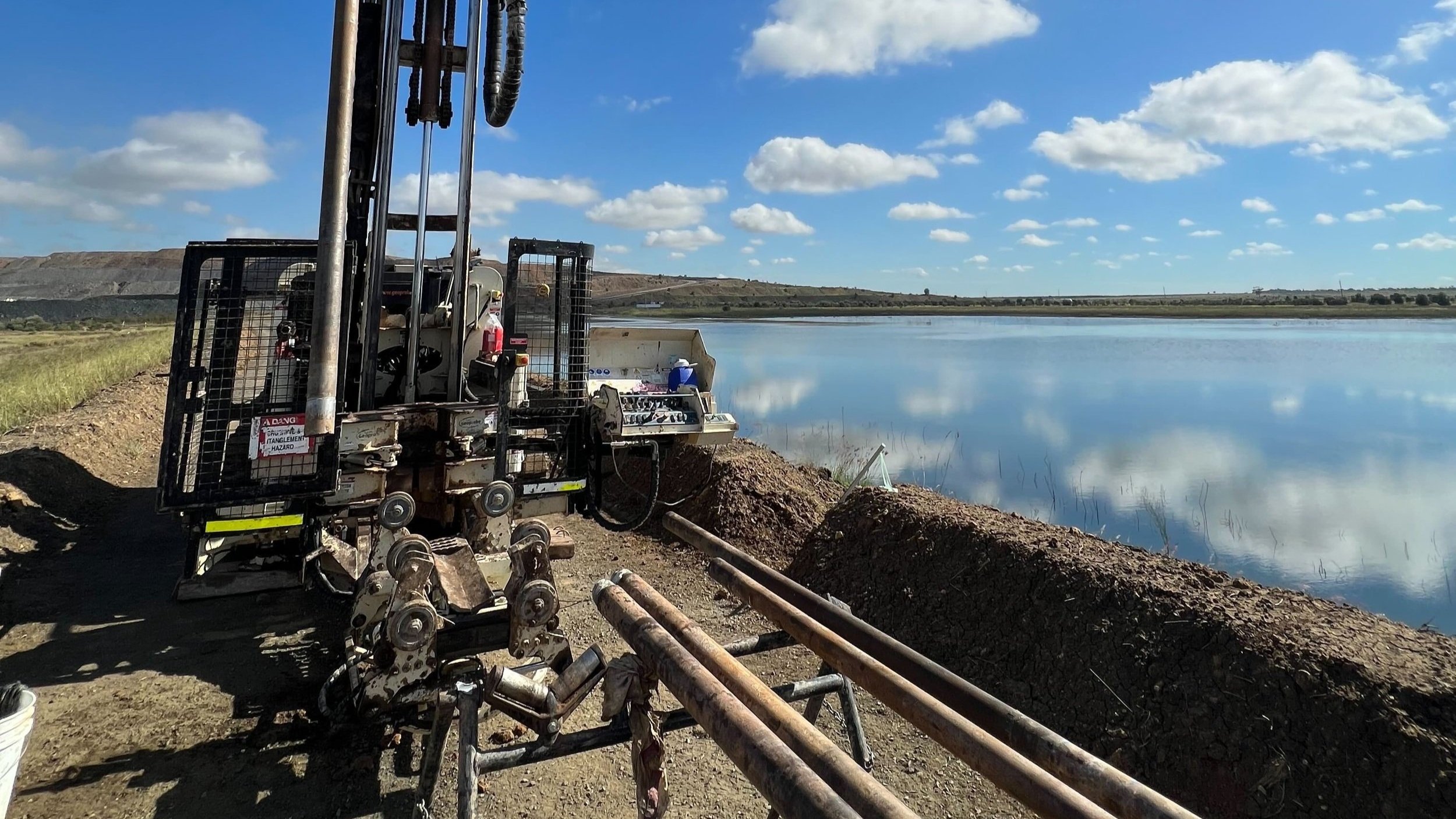
- Borehole Preparation: A borehole is advanced to the desired testing depth using rotary drilling or hollow-stem augers. It is vital that the bottom of the hole is cleaned of all loose debris (slough) to ensure the sampler starts on "virgin" soil.
- Seating the Sampler: The sampler is lowered to the bottom of the borehole. The technician marks three successive 150 mm (6-inch) increments on the drill rod above the surface.
- The Driving Phase:
- First Increment (0–150 mm): This is known as the "seating drive." The blow count for this interval is recorded but typically ignored in the final N-value calculation because this soil may have been disturbed during the drilling process.
- Second and Third Increments (150–450 mm): The hammer is dropped repeatedly until the sampler penetrates the next 300 mm (12 inches).
- Calculating the N-Value: The sum of the blows required for the second and third 150 mm increments is recorded as the Standard Penetration Resistance, or the N-value.
- Sample Recovery: The sampler is pulled to the surface, opened, and the soil is logged. A portion of the sample is sealed in a moisture-proof container for lab testing (e.g., Atterberg limits or grain size analysis).
Understanding Refusal and Limitations
In very dense materials or rock, the sampler may stop moving. This is known as "Refusal." Standards typically define refusal as:
- 50 blows required for any single 150 mm increment.
- A total of 100 blows for the final 300 mm.
- No advancement after 10 successive hammer blows.
When refusal occurs, the engineer must note the penetration depth achieved (e.g., N=50/25mm). Continuing to strike a sampler at refusal can damage the equipment and yield no useful data.
Correction Factors: Adjusting for Field Realities
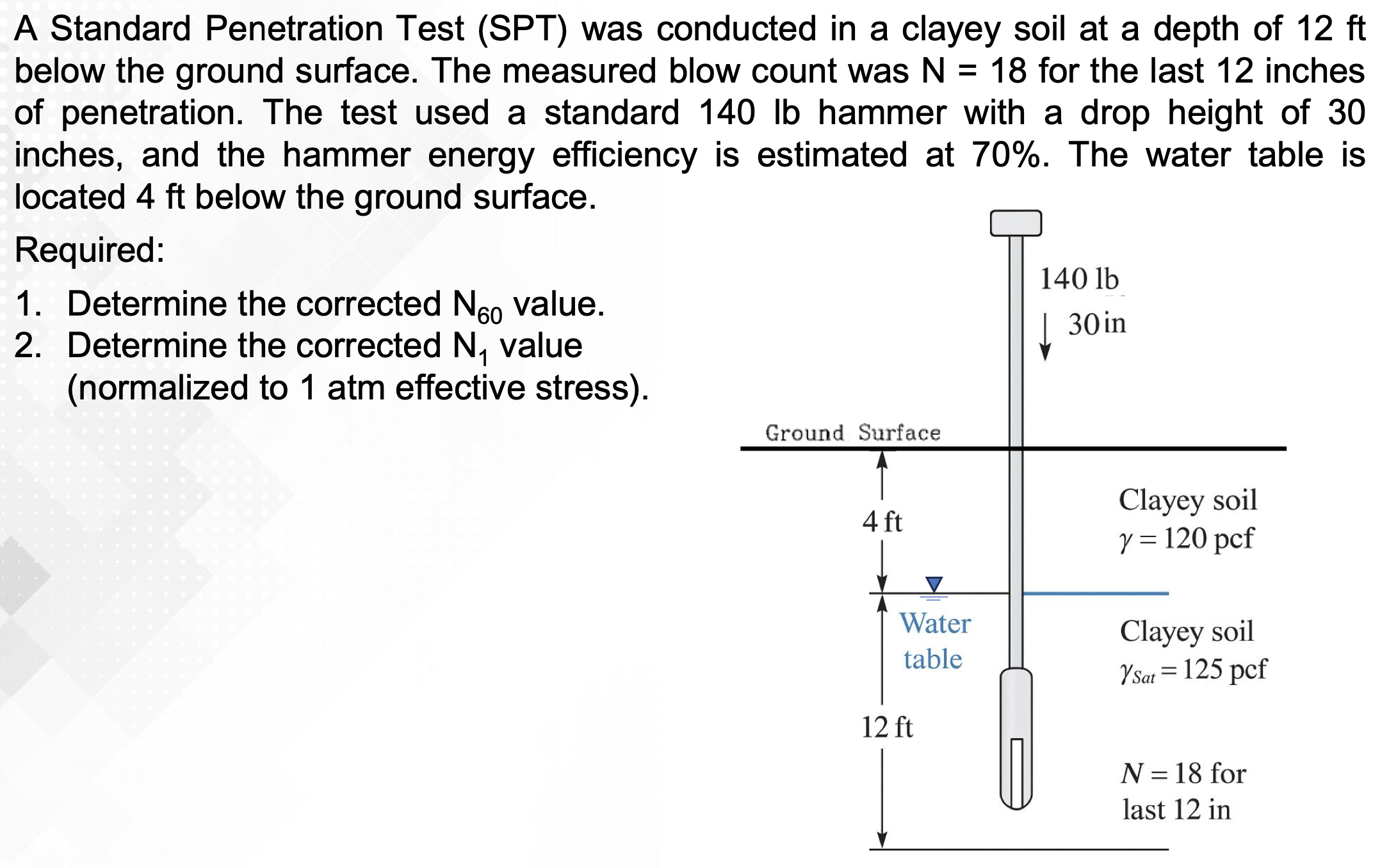
The raw N-value recorded in the field ($N_{field}$) is rarely used directly in design equations. Because different rigs transfer different amounts of energy, engineers normalize the data to a standard energy ratio of 60% ($N_{60}$). In 2026, the standard correction formula is:
$$N_{60} = N_{field} \times C_E \times C_B \times C_S \times C_R$$
- $C_E$ (Energy Correction): Adjusts for hammer efficiency. Automatic hammers often have a $C_E$ between 0.8 and 1.3, depending on their calibration against the theoretical 60% standard.
- $C_B$ (Borehole Diameter): Larger boreholes can lead to lower resistance; factors range from 1.0 (65–115mm) to 1.15 (>200mm).
- $C_S$ (Sampler Correction): If a sampler liner is omitted, the friction decreases, and a correction (typically 1.1 to 1.2) is applied.
- $C_R$ (Rod Length): For shallow depths (<4m), energy transfer is less efficient due to rod "whip," requiring a reduction factor (0.75).
- $C_N$ (Overburden Correction): In sands, the N-value is influenced by the weight of the soil above it. The corrected value $(N_1)_{60}$ accounts for this effective overburden pressure.
Geotechnical Correlations and Soil Behavior
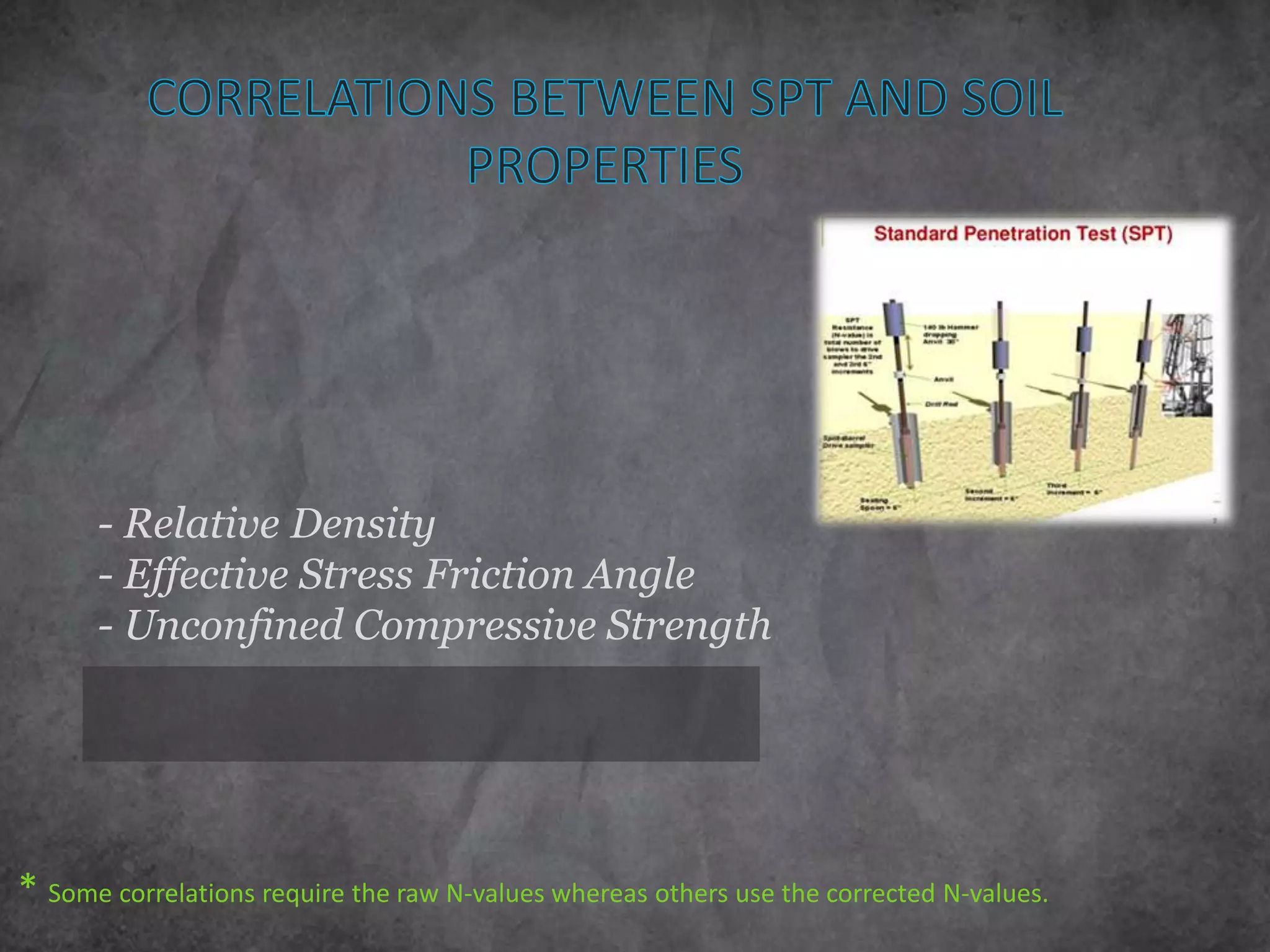
The N-value is a proxy for various engineering properties. While these correlations are empirical, they provide high-value insights during the feasibility stages of a project.
Relative Density of Granular Soils (Sands)
| N-Value (Corrected) | Relative Density | Description |
|---|---|---|
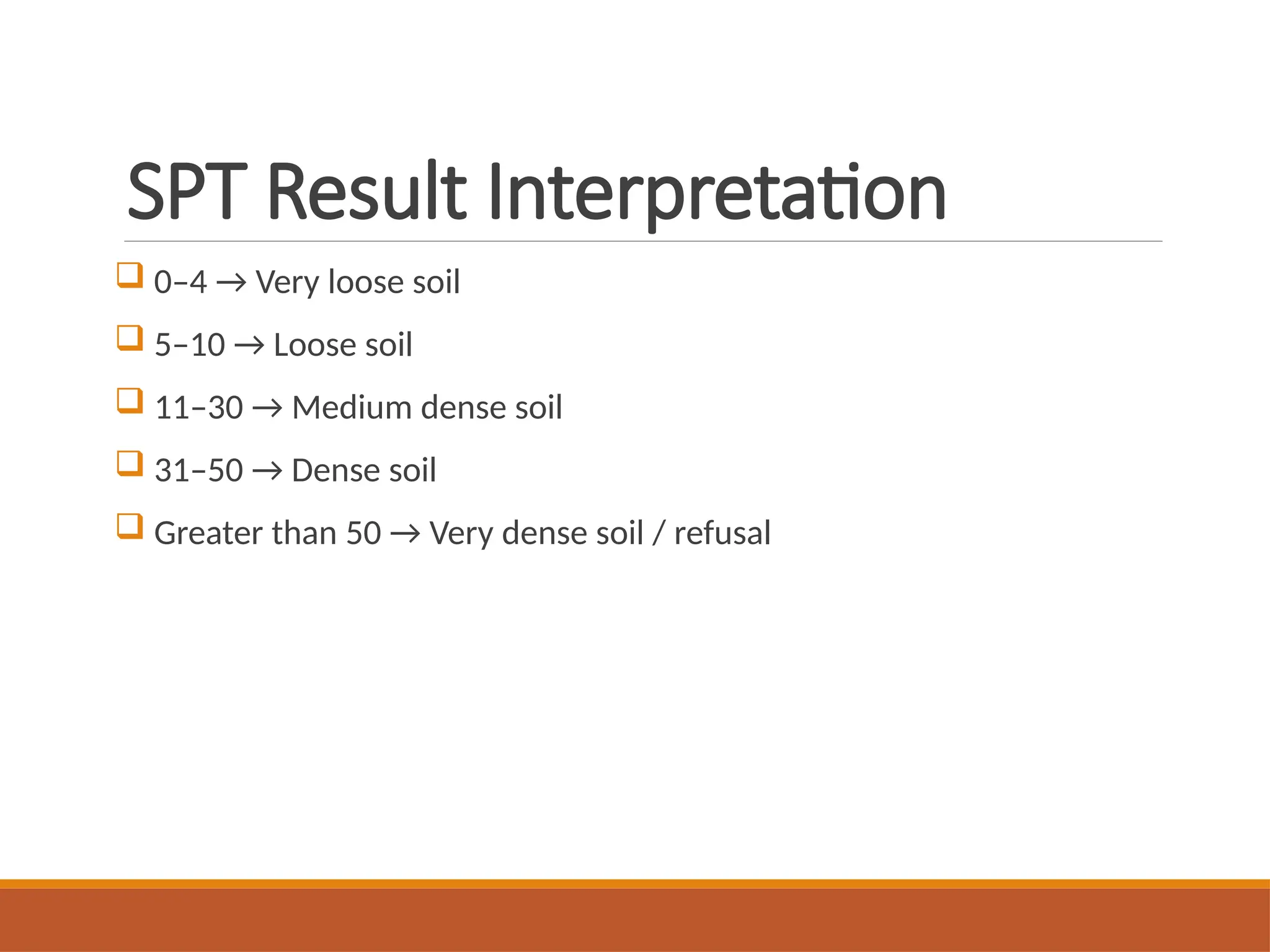
| 0 - 4 | 0% - 15% | Very Loose |
| 5 - 10 | 15% - 35% | Loose |
| 11 - 30 | 35% - 65% | Medium Dense |
| 31 - 50 | 65% - 85% | Dense |
| > 50 | > 85% | Very Dense |
Consistency of Cohesive Soils (Clays)
For clays, the SPT is less reliable than for sands, but it still offers a rough estimate of undrained shear strength ($c_u$).
- N < 2: Very Soft (Easily squeezed by fingers)
- N 4–8: Medium Stiff (Can be molded with strong finger pressure)
- N 15–30: Very Stiff (Indented by thumbnail with difficulty)
Comparison: SPT vs. CPT vs. PMT
| Feature | Standard Penetration Test (SPT) | Cone Penetration Test (CPT) | Pressuremeter Test (PMT) |
|---|---|---|---|
| Data Type | Incremental (every 1-1.5m) | Continuous profile | In-situ stress-strain curve |
| Sample Recovery | Yes (Disturbed) | No | No |
| Best Soil Type | Sands, Gravels, Stiff Clays | Silts, Soft Clays, Fine Sands | All soils and soft rock |
| Primary Output | N-value | Tip resistance ($q_c$), Sleeve friction ($f_s$) | Menard Modulus ($E_m$) |
| Cost | Moderate | High (setup), Low (per meter) | High |
| Reliability | Operator-dependent | Highly standardized/digital | Highly specialized |
Common Errors and Quality Control
Even in 2026, the SPT is prone to errors if not supervised by a qualified geotechnical technician. Common pitfalls include:
- Inadequate Borehole Cleaning: If "cuttings" remain at the bottom of the hole, the sampler will drive through this debris, resulting in an artificially low N-value.
- Hydrostatic Imbalance: In sandy soils below the water table, if the water level in the borehole is lower than the natural groundwater table, a "blow-up" or quicksand condition can occur at the bottom of the hole, rendering the test results invalid.
- Worn Drive Shoes: A blunt or damaged sampler shoe increases resistance, leading to an artificially high N-value.
- Inaccurate Drop Height: Even with automatic hammers, mechanical wear can result in a shorter drop than the required 760 mm. Annual calibration of the hammer's energy output is a mandatory requirement for major infrastructure projects.
FAQs about Standard Penetration Tests
Can SPT be performed in gravelly soils?
While SPT can be performed in gravel, the results are often misleading. If a large cobble or gravel particle is positioned directly under the sampler shoe, the N-value will skyrocket (refusal), representing the hardness of the rock rather than the density of the soil matrix. In such cases, the Large Penetration Test (LPT) or geophysical methods are preferred.
Why is the first 150mm of the test ignored?
The first 150mm (6 inches) is considered the "seating drive." It is used to penetrate through any soil that may have been loosened or contaminated by the drilling bits. By ignoring this first increment, engineers ensure that the recorded N-value represents the undisturbed, native state of the soil.
How does the water table affect the N-value?
In very fine or silty sands below the water table, a high N-value may be artificially inflated due to pore water pressure that cannot dissipate quickly during the impact. Engineers often apply a "dilatancy correction" (Terzaghi and Peck correction) when the measured N-value is greater than 15 in saturated silty sands: $N_{corr} = 15 + 0.5(N_{field} - 15)$.
Is the SPT sample suitable for consolidation testing?
No. The SPT sampler is "thick-walled," which causes significant shearing and disturbance to the soil structure as it is driven into the ground. For consolidation or triaxial testing, "undisturbed" samples must be collected using thin-walled Shelby tubes or piston samplers.
How often should SPT be conducted in a borehole?
The standard frequency is every 1.5 meters (5 feet) or at every change in soil strata. For critical loading zones—such as directly beneath a proposed footing—the testing interval may be reduced to every 0.75 or 1.0 meters to capture a more detailed profile.
Practical Recommendations for Project Managers
When commissioning a site investigation involving the Standard Penetration Test, ensure that the drilling contractor provides a recent Energy Calibration Report for the specific hammer being used. In 2026, many regulatory bodies require energy measurements (via force and velocity transducers) to be performed on at least 10% of the boreholes on large-scale projects.
Furthermore, always cross-reference SPT N-values with laboratory classification. An N-value of 20 means something very different in a well-graded sand than it does in a high-plasticity clay. By integrating field resistance data with lab-verified soil types, engineers can develop a robust geotechnical model that minimizes the risk of foundation failure or unforeseen settlement.
Image Gallery