LG OLED E7P Review: Evaluating a "Picture on Glass" Icon in 2026
The LG OLED E7P remains a significant milestone in television history, distinguished by its unique "Picture on Glass" aesthetic and integrated soundbar. While its peak brightness and lack of HDMI 2.1 features lag behind modern 2026 sta...
The LG OLED E7P remains a significant milestone in television history, distinguished by its unique "Picture on Glass" aesthetic and integrated soundbar. While its peak brightness and lack of HDMI 2.1 features lag behind modern 2026 standards, its perfect black levels and sophisticated design continue to offer a premium viewing experience for those maintaining these legacy units.
Contents
The Legacy of the LG E7P Series
When LG released the E7P series in 2017, it was positioned as a high-end alternative to the more common C-series. The "E" stood for "Elegant," a designation earned through a manufacturing process that bonded a razor-thin OLED panel directly onto a translucent glass back. In 2026, looking back at this design, it remains one of the most visually striking televisions ever produced. Unlike the modern "Gallery" series (G-series) which focuses on flush wall mounting, the E7P was designed to be a centerpiece, often appearing as if the image were floating in mid-air.
The E7P was part of the 7-series lineup, which included the B7, C7, E7, G7, and the flagship "Wallpaper" W7. While all these models shared the same 4K OLED panel and M16P processor, the E7P differentiated itself through its superior build quality and a more robust integrated audio system. In the current secondary market of 2026, the E7P is often sought after by collectors and enthusiasts who prioritize industrial design as much as raw technical specifications.
Design and Build: The Picture on Glass Innovation
The hallmark of the LG E7P is the Picture on Glass technology. To achieve this, LG took the organic light-emitting diode (OLED) layer and applied it to a 3mm thick pane of glass. The glass extends slightly beyond the edge of the screen, creating a subtle transparent border that catches ambient light.
This design choice was not merely for show; it provided structural rigidity to the incredibly thin OLED material. Modern 2026 OLEDs often use carbon fiber or lightweight metal alloys to achieve thinness, but the glass-backed E7P has a weight and "heft" that feels substantially more premium than contemporary mid-range sets. The back of the unit is finished in a clean, dark grey, with the internal components housed in a plastic "backpack" on the lower half of the chassis.
Attached to the bottom of this glass pane is a permanent metallic grille that houses a 4.2-channel, 60W speaker system. This integrated soundbar serves as the base for the TV when using the included stand, or hangs elegantly below the screen when wall-mounted. For users in 2026 who prefer a minimalist setup without external wires and receivers, the E7P's built-in audio remains surprisingly competitive with modern mid-range standalone soundbars.
Picture Quality and HDR Performance
The core appeal of any OLED is its self-emissive pixels. Because each pixel can turn off completely, the E7P achieves a "perfect" black level, resulting in an infinite contrast ratio. This remains its strongest suit in 2026. When watching films in a dark room, the black bars in letterboxed movies disappear entirely, a feat that even the most advanced Mini-LED displays of today struggle to replicate without some "blooming" or "halo" effects.
Color Accuracy and Gamut
The E7P covers roughly 99% of the DCI-P3 color space, which was the gold standard at its release and remains the target for most HDR content today. LG's 2017 processing was a significant step forward in reducing "crushed blacks" (loss of detail in dark areas), though it lacks the sophisticated AI-driven tone mapping found in 2026 processors like the Alpha 11.
High Dynamic Range (HDR)
The E7P supports four major HDR formats:
- HDR10: The industry standard.
- Dolby Vision: LG's preferred dynamic metadata format.
- HLG (Hybrid Log-Gamma): Primarily for broadcast.
- Technicolor HDR: Added via a post-launch firmware update.
In terms of brightness, the E7P hits a peak of approximately 700 to 750 nits in small highlights. By 2026 standards, where "MLA" (Micro Lens Array) and "QD-OLED" panels routinely exceed 2,000 nits, the E7P may appear somewhat dim. However, because its black levels are absolute, the perceived dynamic range remains high. The primary limitation is the Auto Brightness Limiter (ABL), which aggressively dims the screen when large areas of the image are bright (such as a hockey game or a snowy landscape) to protect the panel from overheating and premature degradation.
Smart Features and webOS 3.5
The E7P launched with webOS 3.5. While LG has since moved to much newer versions of the operating system, the E7P's interface remains remarkably fluid. The "Magic Remote" with its on-screen cursor is still one of the most intuitive ways to navigate a TV menu.
However, in 2026, the internal hardware shows its age. App load times for services like Netflix, Disney+, and YouTube are noticeably slower than on modern hardware. Furthermore, many newer streaming features—such as high-bitrate AV1 decoding or specialized gaming overlays—are absent. Most owners of an E7P today will find that pairing the TV with an external 4K streaming device (like an Apple TV 4K or Shield TV) provides a much better experience than relying on the aging internal OS.
Technical Specifications Table
| Feature | Specification |
|---|---|
| Panel Type | WRGB OLED (10-bit) |
| Resolution | 3840 x 2160 (4K UHD) |
| Refresh Rate | 120Hz Native |
| HDR Formats | Dolby Vision, HDR10, HLG, Technicolor |
| Processor | LG M16P |
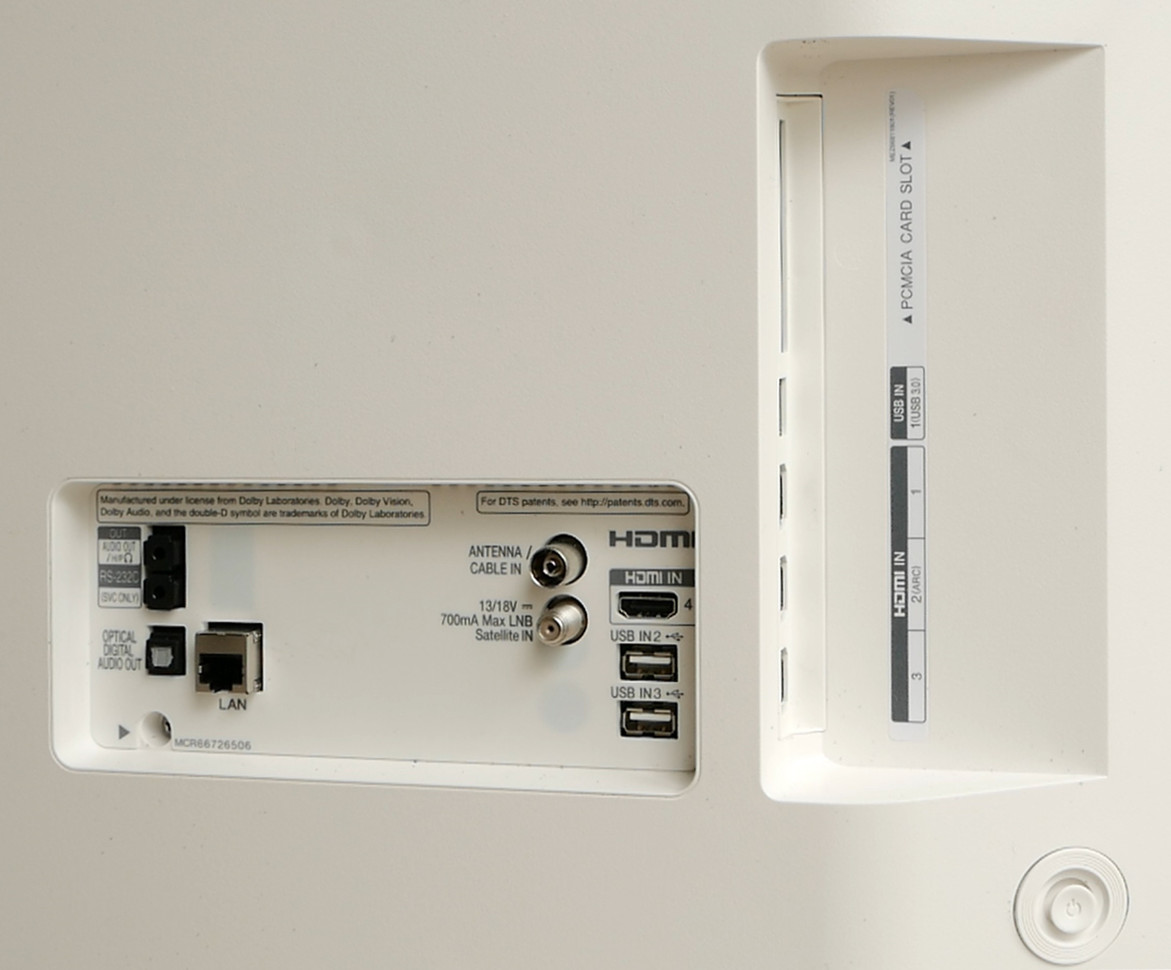
| HDMI Ports | 4x HDMI 2.0b (HDCP 2.2) |
| Audio Output | 60W (4.2 Channel) with Dolby Atmos |
| Peak Brightness | ~700-750 nits (2% window) |
| Weight (65") | 50.9 lbs (without stand) |
| Release Year | 2017 |
Performance in Gaming
For gamers in 2026, the E7P is a bittersweet proposition. It features a native 120Hz panel and exceptionally low input lag (roughly 21ms in Game Mode), which was industry-leading in 2017. However, it lacks HDMI 2.1 bandwidth. This means it cannot support 4K at 120Hz from consoles like the PlayStation 5 or Xbox Series X, nor does it support Variable Refresh Rate (VRR) or Auto Low Latency Mode (ALLM).
PC gamers can still achieve 1080p at 120Hz or 4K at 60Hz. The instantaneous response time of the OLED pixels ensures that there is almost zero motion blur, making it a viable screen for cinematic single-player games where high frame rates are less critical than visual fidelity.
The 2026 Reality: Longevity and Burn-In
The most significant concern for an LG E7P in 2026 is permanent image retention, commonly known as burn-in. Unlike 2026 OLED panels that utilize deuterium-stabilized compounds and advanced heat sinks, 2017-era OLEDs were more susceptible to wear.
If the unit has been used heavily for news channels with static logos or as a PC monitor, there is a high probability of visible "ghost" images. Furthermore, OLED pixels lose brightness over time. A unit with 20,000 hours of runtime may only be capable of 500 nits of peak brightness compared to its original 750. When inspecting a used E7P, it is vital to run a full-screen color slide test (red and yellow are particularly revealing) to check for uneven pixel wear.
Comparative Value: E7P vs. Modern Alternatives
In 2026, a new mid-range OLED like the LG C4 or C5 will objectively outperform the E7P in brightness, processing, and gaming features. However, the E7P occupies a niche for those who value industrial design. The integrated soundbar and glass construction are features that have largely disappeared from modern lineups as manufacturers focus on cost-cutting and ultra-thin bezels.
Compared to the 2017 B7 and C7 models, the E7P is a clear step up in build quality. While the screen itself is identical, the E7P’s audio system and premium materials make it a more desirable "living room" piece than its plastic-heavy siblings.
Frequently Asked Questions
Can the LG E7P play 4K 120Hz content?
No. The LG E7P is equipped with HDMI 2.0b ports, which lack the bandwidth for 4K at 120Hz. Its maximum 4K input is 60Hz. It can, however, handle 1080p at 120Hz if the source device supports it.
Does the E7P support Dolby Atmos?
Yes, the E7P was one of the first TVs to support Dolby Atmos decoding natively. It can play Atmos tracks through its built-in soundbar or pass them through via HDMI ARC (not eARC) to a compatible sound system using the Dolby Digital Plus container.
How do I prevent burn-in on an E7P in 2026?
To prolong the life of the panel, ensure the "OLED Panel Settings" (specifically Pixel Refresher) are allowed to run automatically when the TV is off. Keep the "OLED Light" setting below 60 for SDR content and avoid leaving static images or news tickers on the screen for extended periods.
Is the LG E7P still getting firmware updates?
As of 2026, the E7P is well outside its primary support window. While LG occasionally releases critical security patches or minor stability fixes for legacy webOS versions, do not expect new features or major UI overhauls.
How does the E7P audio compare to modern TVs?
The 60W integrated soundbar is significantly better than the "down-firing" speakers found on 90% of modern flat-panel TVs. It provides a wider soundstage and clearer dialogue, though it still lacks the deep sub-bass of a dedicated external subwoofer.
Final Recommendation
The LG OLED E7P is a "modern classic." In 2026, it is no longer the king of performance, but it remains a king of style. If you already own one and the panel is free of burn-in, there is little reason to upgrade unless you are a hardcore gamer requiring HDMI 2.1 or a brightness enthusiast. If you are looking to purchase one used, it should be treated as a secondary "cinema" TV for dark-room viewing where its design can be appreciated and its lower brightness is less of a factor. For primary sets in high-traffic rooms, a newer 2026 OLED with better longevity and brightness would be the more practical choice.
Image Gallery