Florida Life Insurance Agent Annuity Requirements: Licensing, Training, and Compliance Guide
To sell annuities legally in Florida, a life insurance agent must hold an active resident or non-resident Florida Life license (such as the 2-15 or 2-14 license), obtain a carrier appointment, and complete a state-approved 4-hour annui...
To sell annuities legally in Florida, a life insurance agent must hold an active resident or non-resident Florida Life license (such as the 2-15 or 2-14 license), obtain a carrier appointment, and complete a state-approved 4-hour annuity suitability course under Florida Statute § 627.4554. Selling variable annuities additionally requires active FINRA registration and a securities license.
Contents
Primary Licensing Prerequisites for Selling Annuities in Florida
The Florida Department of Financial Services (DFS) Division of Insurance Agent and Agency Services regulates all insurance producers operating within the state. Before an agent can discuss, solicit, or execute an annuity contract, they must satisfy strict statutory licensing and carrier appointment mandates.
Annuities in Florida are classified under the authority of life insurance. Consequently, generic property and casualty or health-only agents cannot present annuity products without first acquiring a life insurance line of authority.
- Pre-Licensing Education
- Florida State Exam Pass
- DFS License Issuance (2-15 or 2-14)
- 4-Hour Annuity Suitability Course
- Carrier Appointment & FINRA (if Variable)
State License Classifications (2-15 vs. 2-14)
Florida offers specific major license types that grant an agent the legal authority to transact life insurance and annuities:
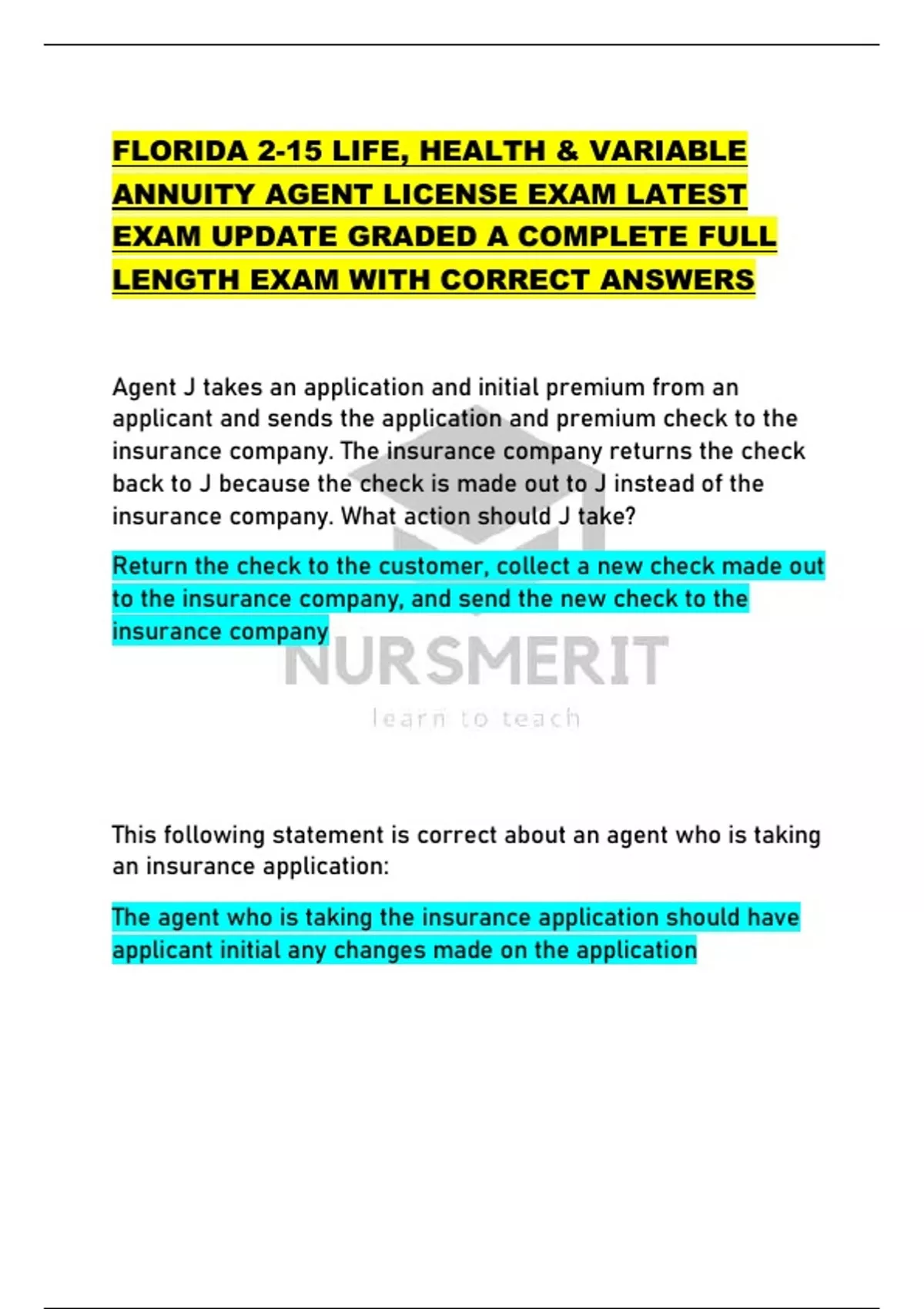
- Type 2-15 (Life, Health, and Variable Annuity Agent License): This is the most comprehensive individual producer license for retail financial professionals in Florida. It authorizes the licensee to transact life insurance, fixed annuities, variable annuities, health insurance, and Medicare supplement products. Candidates must complete a 60-hour state-approved pre-licensing course prior to sitting for the state examination.
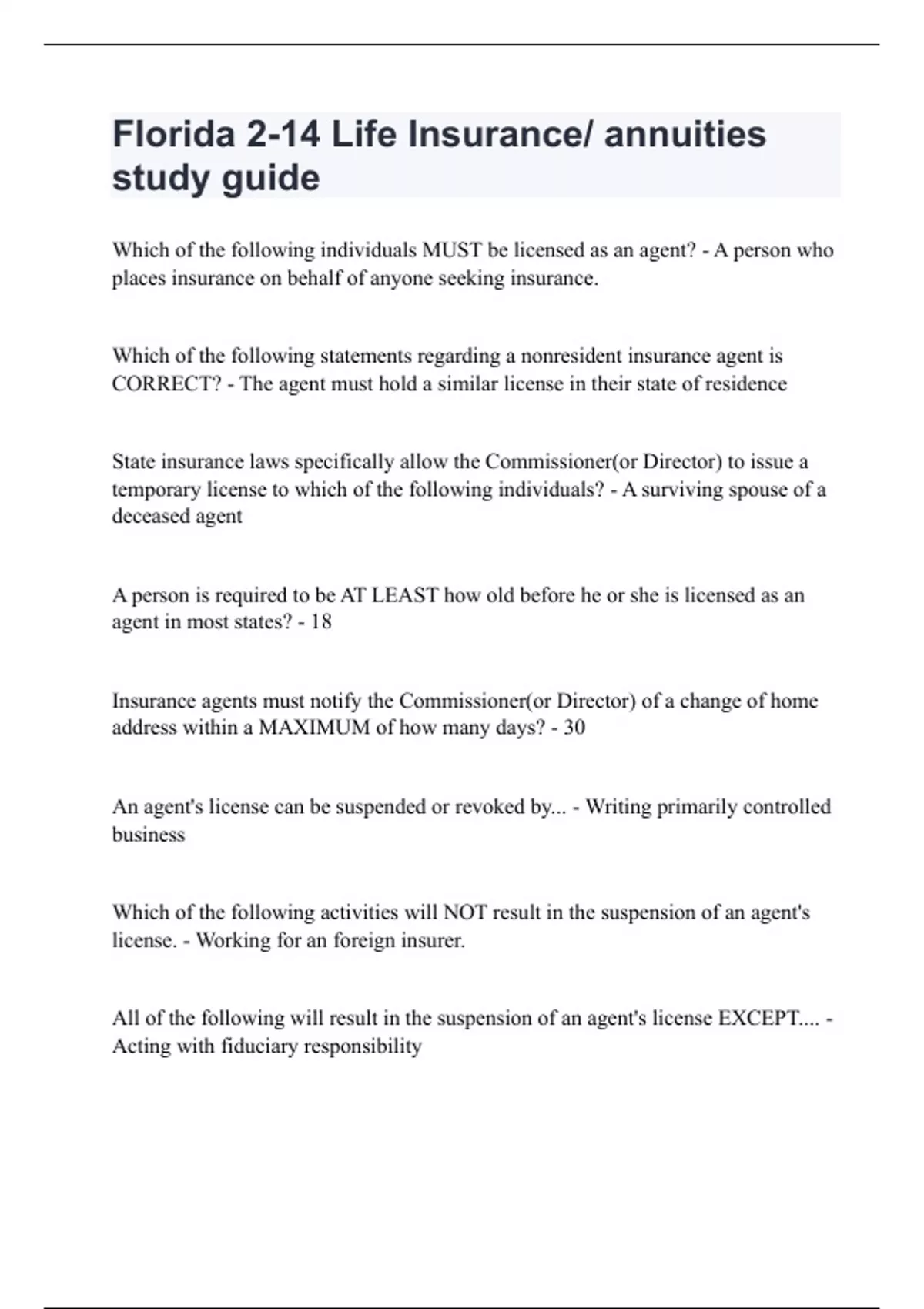
- Type 2-14 (Life Including Variable Annuity Agent License): This license allows the agent to transact life insurance, fixed annuities, and variable annuities, but excludes health insurance lines. Candidates must complete a 40-hour state-approved pre-licensing education program before taking the 2-14 state examination.
Both licenses allow the solicitation of fixed, fixed-indexed, and variable annuities, provided all secondary product-specific training and registration rules are met.
Fingerprinting, Background Checks, and Carrier Appointments
Obtaining the license from Florida DFS is only the baseline step. To actively write business, the following prerequisites apply:
- Background Screening: Applicants must submit digital fingerprints through an approved LiveScan vendor for a state (FDLE) and federal (FBI) criminal background check.
- State Examination: Candidates must earn a score of 70% or higher on the Pearson VUE Florida Insurance Licensing Exam corresponding to their license type.
- Insurer Appointment: A license alone does not authorize an agent to transact business. The producer must be formally appointed by at least one admitted insurance company authorized to write annuity contracts in Florida. If an agent fails to secure an active appointment within 48 months of licensure, the license expires.
Mandatory FINRA Registration for Variable Annuities
While fixed and fixed-indexed annuities fall solely under state insurance regulation, variable annuities are legally classified as securities under federal law. To solicit or sell variable annuity contracts in Florida, an agent must fulfill a dual-regulatory mandate:
- Hold an active Florida 2-15 or 2-14 license.
- Pass the Securities Industry Essentials (SIE) exam and maintain an active Series 6 or Series 7 registration administered by the Financial Industry Regulatory Authority (FINRA).
- Be associated with a registered broker-dealer or registered investment adviser (RIA).
Mandatory Annuity Suitability Training (Florida Statute § 627.4554)
Florida has strict standards regarding consumer protection in annuity transactions. Governing these requirements is Florida Statute § 627.4554, which codifies standard-of-care practices, disclosures, and agent education mandates.
- Complete Pre-Licensing & State Exam (2-15 or 2-14 License)
- Finish 4-Hour CE Board-Approved Annuity Suitability Training
- Secure Carrier Appointments & Carrier-Specific Product Training
- Complete FINRA Series 6/7 Registration (If Transacting Variable Annuities)
- Execute Consumer Financial Profiles & Best-Interest Disclosures Prior to Sale
- Maintain 24-Month CE Cycle (Including 4-Hour Law & Ethics Update)
The Initial 4-Hour Annuity Suitability Course
Before any Florida-licensed life agent solicits or sells an annuity product, the individual must complete a one-time, 4-hour continuing education (CE) course focusing on annuity suitability and consumer protections.
Key structural rules governing this requirement include:
- Course Approval: The course must be approved by the Florida Department of Financial Services and delivered by an authorized education provider.
- Content Coverage: Curriculum requirements must detail types of annuities, contract structures, taxation, premium allocations, withdrawal charges, rider mechanics, and ethical marketing to seniors.
- Reciprocity: Florida accepts equivalent training courses completed in other states, provided the training complies with the National Association of Insurance Commissioners (NAIC) Annuity Suitability Model Regulation.
Alignment with the NAIC Best Interest Standard
Florida aligned its statutes with the revised NAIC Suitability in Annuity Transactions Model Regulation (#275). This framework elevates the standard of care from a basic "suitability" standard to a Best Interest standard.
Under this standard, agents making annuity recommendations must:
- Act in the Best Interest: Put the consumer’s financial interests ahead of the producer's personal financial gain (such as higher commission structures).
- Satisfy Four Core Obligations:
- Care Obligation: Exercise reasonable diligence, care, and skill to understand the consumer's situation and product options.
- Disclosure Obligation: Provide written disclosures detailing the agent's role, licensing status, sources of compensation, and specific contract details prior to recommendation.
- Conflict of Interest Obligation: Identify and avoid—or disclose and mitigate—material conflicts of interest.
- Documentation Obligation: Create and maintain contemporaneous written records detailing the customer profile and the rationale behind the product recommendation.
Continuing Education (CE) Compliance Breakdown
Florida enforces strict continuing education cycles monitored through the state's official tracking database (CE Broker). Licensees must maintain their general CE requirements to keep their life license valid.
Biennial Hour Requirements by License Experience
Continuing education hours must be completed every two years by the end of the agent's birth month. The total required credit hours depend on the agent's experience level:
- Agents Licensed Under 6 Years: Required to complete 24 hours of approved continuing education every two-year compliance cycle.
- Agents Licensed 6 Years or More: Required to complete 20 hours of approved continuing education every two-year compliance cycle.
Mandatory Law and Ethics Updates
Included within the total credit hours, every Florida life insurance agent must complete a specific 4-hour Law and Ethics Update course tailored to their specific license type during every compliance period (e.g., Course Authority 5-214 for 2-15 licensees).
- Total CE Required (Every 2 Years)
- Under 6 Years Licensed: 24 Hours Total
- 4-Hour Specific Law & Ethics Update Course
- 20 Hours Elective DFS-Approved CE Credit
- 6+ Years Licensed: 20 Hours Total
- 4-Hour Specific Law & Ethics Update Course
- 16 Hours Elective DFS-Approved CE Credit
- Under 6 Years Licensed: 24 Hours Total
While the core 4-hour Annuity Suitability course is a mandatory one-time prerequisite prior to initial solicitation, insurance carriers or Florida DFS may mandate supplemental or refresher training when product regulations or state laws change.
Summary of Florida Annuity Licensing & Authorization Pathways
The following reference table outlines the prerequisites, regulatory bodies, and operational authorities across Florida annuity product types.
| Requirements & Parameters | Fixed & Fixed-Indexed Annuities (2-14 License) | Full Life, Health & Variable Annuities (2-15 License) | Variable Annuities (Securities Authorized) |
|---|---|---|---|
| Primary Regulator | Florida DFS | Florida DFS | Florida DFS & FINRA / SEC |
| Pre-Licensing Hours | 40 Hours | 60 Hours | 60 Hours (Life) + Securities Prep |
| State Exam Required | Yes (Florida 2-14 Exam) | Yes (Florida 2-15 Exam) | Yes (Florida Exam + SIE + Series 6/7) |
| Mandatory Annuity Course | 4-Hour Annuity Suitability | 4-Hour Annuity Suitability | 4-Hour Annuity Suitability |
| Securities Registration | Not Required | Not Required | Series 6 or Series 7 Required |
| Carrier Appointment | Life Insurance Carrier | Life/Health Insurance Carrier | Life Carrier + Broker-Dealer |
| Biennial CE Requirement | 24 Hours (<6 yrs) / 20 Hours (6+ yrs) | 24 Hours (<6 yrs) / 20 Hours (6+ yrs) | 24 Hours Insurance CE + FINRA Regulatory CE |
Operational Compliance & Suitability Documentation Standards
Complying with Florida insurance regulations requires comprehensive documentation during every client transaction. The Florida Department of Financial Services conducts market conduct examinations to verify that agents collect and preserve necessary documentation.
- Customer Profile Data Collected (Age, Net Worth, Income, Tax Status, Horizon)
- Product Analysis & Fit Review (Liquidity, Fees, Surrender Charges, Riders)
- Standard Disclosure Forms Signed (Florida Disclosure, Best Interest, Buyer's Guide)
- Carrier Submission & Record Retention (Maintained for Minimum 5 Years)
Required Consumer Profile Information
Prior to executing an annuity purchase, replacement, or exchange, Florida agents must make reasonable efforts to obtain comprehensive consumer profile information. Under Florida Statute § 627.4554, this profile includes:
- Age, annual income, and overall tax status.
- Financial resources, liquid net worth, and liquid assets.
- Financial objectives and investment time horizons.
- Existing assets (including investment, equity, and life holdings).
- Intended use of the annuity and liquidity needs.
- Risk tolerance, financial experience, and willingness to accept risk.
If a consumer refuses to provide this financial profile data, the agent cannot recommend an annuity product.
Disclosure Timelines and Replacement Requirements
To protect consumers—particularly seniors aged 65 and older—Florida law establishes explicit rules regarding disclosure delivery and contract replacements:
- NAIC Buyer’s Guide and Disclosure Statements: Agents must provide the official NAIC Buyer’s Guide to Annuities along with a written, product-specific disclosure statement explaining surrender fees, rider costs, market value adjustments (MVA), and cap rates before contract signing.
- Replacement Documentation (Twisting and Churning Rules): If an annuity recommendation involves replacing or exchanging an existing life contract or annuity, the agent must complete a formal replacement comparison form. The agent must evaluate surrender penalties, tax consequences, loss of existing contractual benefits, and new surrender charge schedules. Florida law strictly prohibits twisting (misrepresenting details to induce a replacement) and churning (replacing contracts solely to generate new agent commissions).
- Record Retention Period: Agents must preserve all completed suitability questionnaires, best-interest disclosures, profile forms, and contract workups for a minimum of 5 years to satisfy Florida DFS examination standards.
Common Compliance Failures and Penalty Risks
Failing to meet Florida annuity sales standards leads to severe administrative penalties administered by the Department of Financial Services under Florida Statute § 626.611 and § 626.621.
Common compliance pitfalls include:
- Unauthorized Sales: Soliciting annuity applications prior to completing the required 4-hour state-approved Annuity Suitability course or securing an active carrier appointment.
- Inadequate Suitability Analysis: Recommending fixed-indexed or multi-year guarantee annuities (MYGAs) with long surrender periods to elderly clients who need liquidity for medical expenses.
- Failure to Disclose Compensation: Hiding commission structures, production bonuses, or internal incentive trips when requested by the consumer under best-interest disclosure guidelines.
- Variable Product Non-Compliance: Selling variable annuities without holding active FINRA Series 6 or Series 7 registrations alongside a securities-licensed broker-dealer.
Administrative actions taken by Florida DFS for suitability or licensing violations include license suspension, permanent revocation, mandatory administrative fines, and restitution orders payable to affected contract holders.
Frequently Asked Questions
Can a Florida health-only (2-40) insurance agent sell annuities?
No. Agents holding only a Health insurance license (such as Type 2-40) cannot transact annuity products. To sell fixed or variable annuities, an agent must obtain a Life insurance license, such as the 2-14 (Life including Variable Annuities) or 2-15 (Life, Health, and Variable Annuities) license.
How often must Florida agents retake the 4-hour annuity suitability course?
The state-mandated 4-hour Annuity Suitability course is a one-time prerequisite requirement before selling annuity products. However, agents must complete their ongoing 2-year continuing education requirements (20 or 24 total hours depending on experience, including the mandatory 4-hour Law and Ethics Update). Insurers may also require periodic product-specific refresher courses.
Is an agent allowed to sell fixed-indexed annuities in Florida without a FINRA license?
Yes. Fixed-indexed annuities (FIAs) are regulated as insurance products under state law, not as registered securities. Therefore, a Florida agent needs only a 2-15 or 2-14 life license, an active carrier appointment, and the 4-hour annuity suitability training to sell fixed-indexed annuities. FINRA registration is required only when selling variable annuities.
What happens if an agent sells an annuity before taking the 4-hour training course?
Selling an annuity prior to completing the mandatory 4-hour annuity suitability training violates Florida insurance statutes. Florida DFS may issue administrative fines, suspend or revoke the agent’s insurance license, and order full premium refunds to impacted consumers.
Does Florida allow annuity training reciprocity from other states?
Yes. Florida accepts 4-hour annuity suitability training completed in another state, provided the course is approved by that state's insurance department and follows the NAIC Suitability in Annuity Transactions Model Regulation standards.
Action Plan for Florida Life Insurance Agents
To establish and maintain compliance for selling annuities in Florida, follow these step-by-step actions:
- Verify Active Life License: Log into the Florida DFS MyProfile portal to confirm an active 2-15 or 2-14 license status.
- Complete the 4-Hour Annuity Suitability Course: Enroll in a DFS-approved 4-hour annuity training course through an accredited provider before engaging in any consumer presentations. Verify completion credit on your CE Broker profile.
- Complete Carrier-Specific Product Training: Complete all product modules mandated by appointed annuity carriers prior to writing business.
- Confirm Securities Qualifications (If Applicable): If offering variable contracts, ensure active FINRA Series 6 or 7 registration and broker-dealer affiliation are in place.
- Establish Standardized Suitability Records: Use standard consumer profile questionnaires, NAIC Buyer's Guides, and replacement comparison forms for every sale, maintaining complete records for at least five years.
Image Gallery