How the 2026 Federal Income Tax Tables Shape Filing and Tax Planning
The 2026 federal income tax tables represent a significant shift in the American fiscal landscape, primarily driven by the expiration of the individual tax provisions of the Tax Cuts and Jobs Act (TCJA) of 2017. Taxpayers are now navig...
The 2026 federal income tax tables represent a significant shift in the American fiscal landscape, primarily driven by the expiration of the individual tax provisions of the Tax Cuts and Jobs Act (TCJA) of 2017. Taxpayers are now navigating a return to higher marginal rates, lower standard deductions, and the reintroduction of personal exemptions, all of which fundamentally alter filing strategies and net tax liabilities.
Contents
Understanding the 2026 Tax Bracket Shift
The 2026 tax year marks the first time in nearly a decade that the structural framework of the federal income tax system has reverted to pre-2018 standards. When the TCJA was passed in late 2017, the majority of its individual income tax provisions were designed with a "sunset" clause, set to expire on December 31, 2025. As we move through the 2026 filing season, the "new" tables are actually a modernized version of the old 2017 brackets, adjusted for inflation using the Chained Consumer Price Index (C-CPI-U).
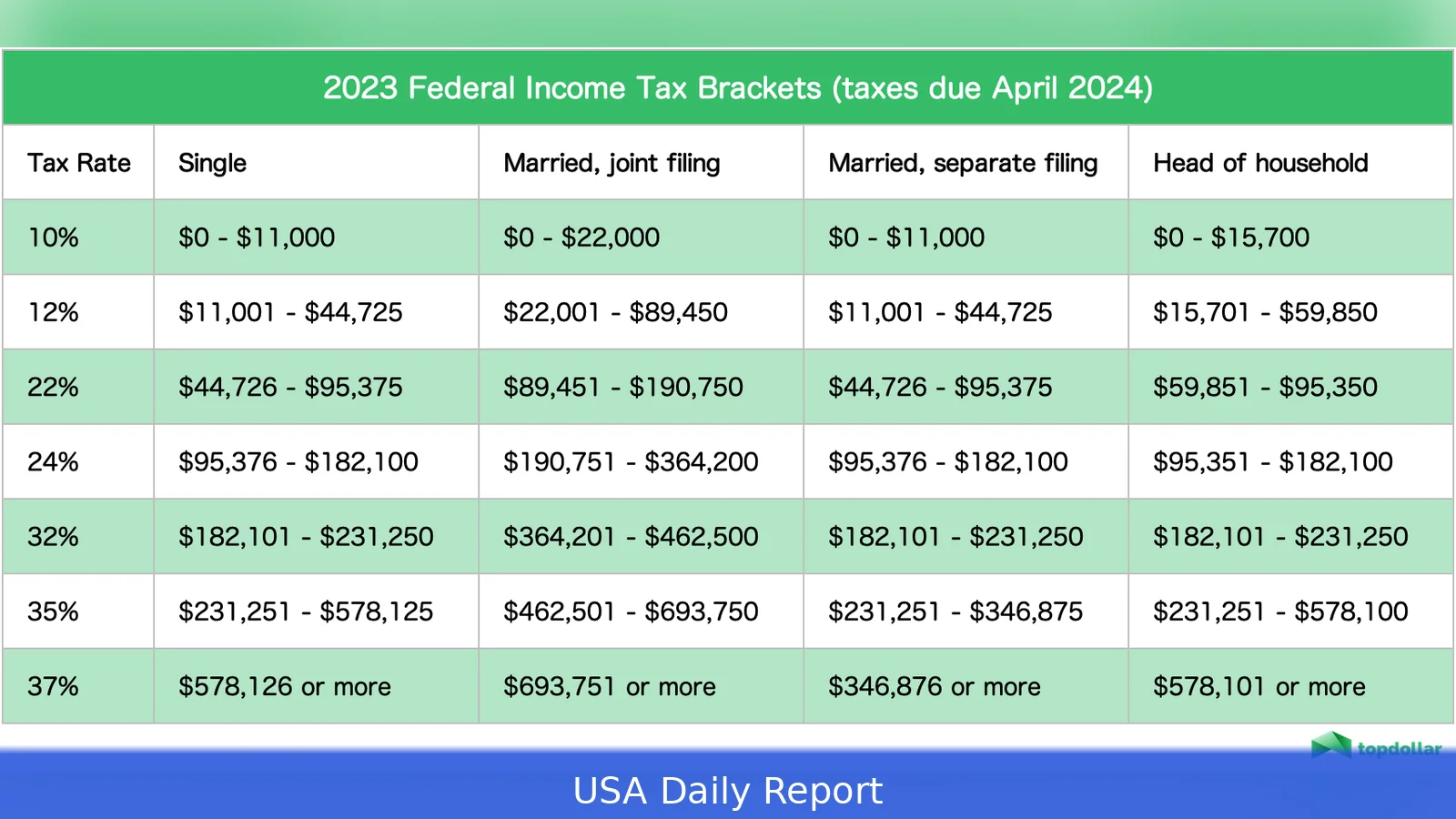
The most immediate change is the number and percentage of the marginal tax rates. Between 2018 and 2025, the rates were 10%, 12%, 22%, 24%, 32%, 35%, and 37%. In 2026, these have reverted to 10%, 15%, 25%, 28%, 33%, 35%, and 39.6%. For many middle-income earners, the jump from a 12% bracket to a 15% bracket, or a 22% bracket to a 25% bracket, represents a substantial increase in the "tax bite" on every additional dollar earned.
The Return of the 39.6% Top Bracket
High-income earners face a particularly sharp adjustment. The top marginal rate has increased from 37% back to 39.6%. This change does not just affect the ultra-wealthy; the income thresholds for this top bracket have also shifted. Filing in 2026 requires a precise understanding of where your income falls within these narrower bands. Because the brackets are progressive, only the income within a specific range is taxed at that rate. However, with the compression of the middle brackets (shifting 24% to 28% and 32% to 33%), more taxpayers are finding themselves pushed into higher percentages at lower real-income levels than they were just two years ago.
Impact on Standard Deductions and Personal Exemptions
One of the most drastic ways the 2026 tables shape filing is through the reduction of the standard deduction. Under the TCJA, the standard deduction was nearly doubled to simplify filing and reduce the number of people who needed to itemize. In 2026, the standard deduction has been cut roughly in half (adjusted for inflation since 2017).
To balance this reduction, the tax code has reinstated personal exemptions. For the past eight years, the personal exemption was set to $0. In 2026, taxpayers can once again claim an exemption for themselves, their spouse, and each qualifying dependent.
Comparing the Deduction Models
This shift changes the "breakeven" point for tax planning. For a single filer in 2025, the standard deduction was a large, flat shield. In 2026, the shield is smaller, but the "exemptions" provide a per-person benefit.
- Large Families: Families with multiple children may actually find that the combination of a lower standard deduction plus multiple personal exemptions results in a similar or even higher total "tax-free" income floor compared to the TCJA years.
- Single Filers/Couples without Children: These groups are likely to see a decrease in their total non-taxable income, as the reinstated personal exemption rarely fully offsets the massive drop in the standard deduction for those with fewer dependents.
Significant Changes to Itemized Deductions
Because the 2026 standard deduction is much lower, the IRS expects a massive surge in taxpayers choosing to itemize their deductions on Schedule A. This shift fundamentally changes how taxpayers track their expenses throughout the year.
The End of the SALT Cap
Perhaps the most discussed change for 2026 is the expiration of the $10,000 cap on State and Local Tax (SALT) deductions. From 2018 through 2025, taxpayers could only deduct up to $10,000 of their state and local property and income (or sales) taxes. For 2026, this cap is gone. Taxpayers in high-tax states—such as New York, California, New Jersey, and Illinois—can now deduct the full amount of these taxes again, provided they itemize. This "shapes" filing by making itemization significantly more attractive for homeowners in these regions.
Miscellaneous Itemized Deductions and Mortgage Interest
The 2026 tax tables also see the return of miscellaneous itemized deductions subject to the 2% floor. This includes unreimbursed employee expenses, tax preparation fees, and investment fees. Additionally, the limit on mortgage interest deductions has reverted. While the TCJA limited the deduction to interest on up to $750,000 of mortgage debt, the 2026 rules allow for interest deductions on up to $1 million of debt for mortgages taken out before the TCJA or after its expiration.
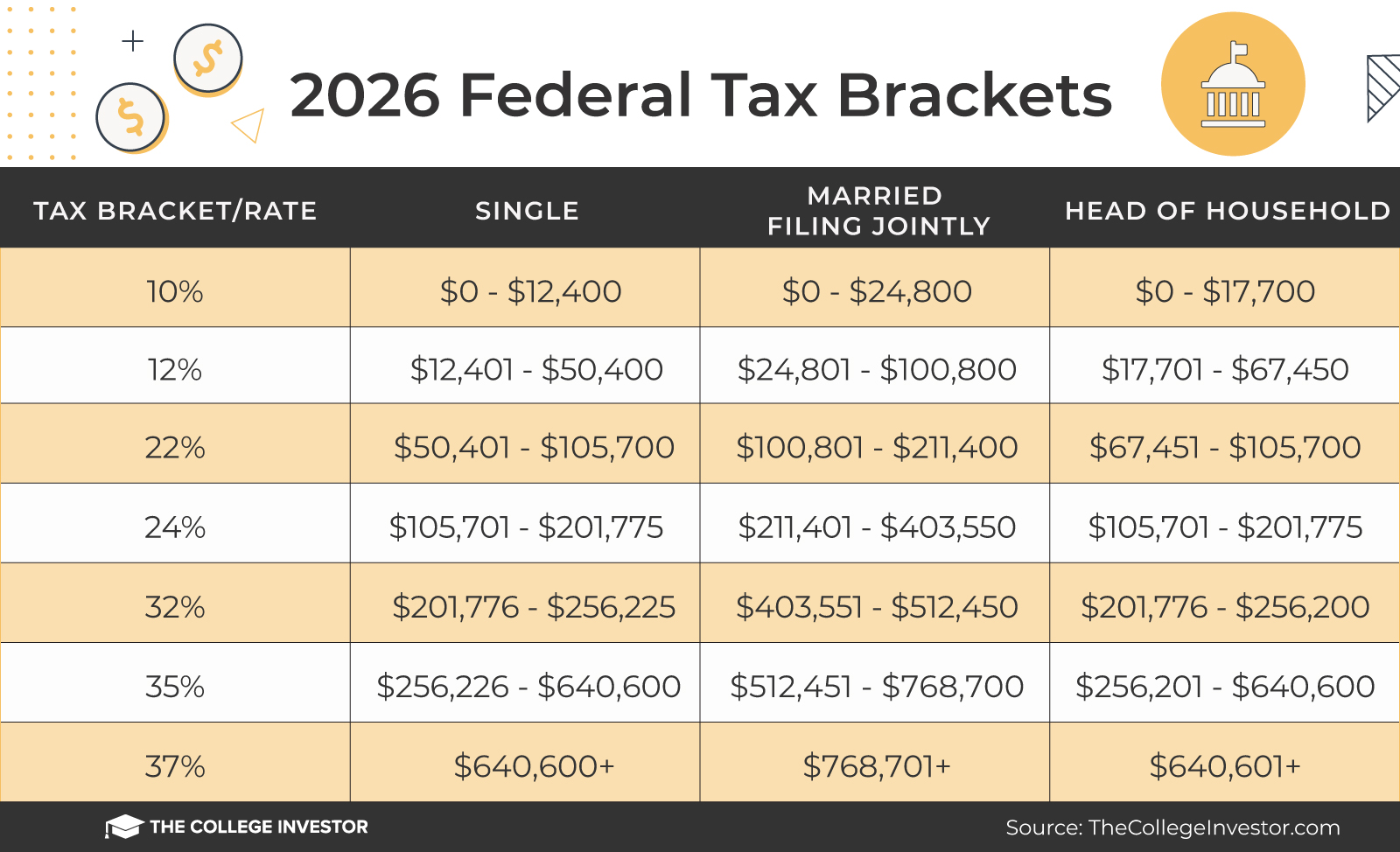
2026 Federal Income Tax Brackets (Estimated for Inflation)
The following table outlines the 2026 marginal tax rates for the two most common filing statuses. These figures reflect the statutory reversion to pre-2018 law, adjusted for the mandatory inflation increments.
| Tax Rate | Single Filers (Taxable Income) | Married Filing Jointly (Taxable Income) |
|---|---|---|
| 10% | $0 – $11,925 | $0 – $23,850 |
| 15% | $11,926 – $48,500 | $23,851 – $97,000 |
| 25% | $48,501 – $117,450 | $97,001 – $195,450 |
| 28% | $117,451 – $244,950 | $195,451 – $297,900 |
| 33% | $244,951 – $532,450 | $297,901 – $532,450 |
| 35% | $532,451 – $600,000 | $532,451 – $675,000 |
| 39.6% | Over $600,000 | Over $675,000 |
Note: These ranges are based on internal revenue code formulas and inflation adjustments provided by the Bureau of Labor Statistics and the Internal Revenue Service.
Strategic Planning for 2026 Filing
With the 2026 tables now in full effect, taxpayers must move beyond the "set it and forget it" mentality that characterized the TCJA era. The interplay between higher rates and different deduction structures requires active management.
Withholding and Estimated Payments
The most immediate action for 2026 is an audit of your Form W-4. Because the marginal rates have increased (e.g., 12% to 15%), withholding tables used by employers have been updated. If you haven't adjusted your withholding since 2025, you may find yourself under-withheld, leading to a surprise bill or penalty when you file in April 2027. This is especially true for households where both spouses work, as the combined income may push the couple into the 25% or 28% brackets faster than expected.
Retirement and Health Savings Accounts
Higher tax rates actually increase the "value" of tax-deferred contributions. When you are in a 12% bracket, contributing $1,000 to a traditional 401(k) saves you $120 in federal taxes. In 2026, if that same $1,000 puts you in the 15% or 25% bracket, your immediate tax savings increase to $150 or $250.
For those navigating the 2026 tables, maximizing contributions to Traditional IRAs, 401(k)s, and Health Savings Accounts (HSAs) is one of the most effective ways to lower your taxable income and stay within a lower tax bracket. Conversely, for those who believe rates will rise even further in the future, the 2026 "reset" might be a time to evaluate Roth conversions, though the immediate tax cost will be higher than it was in 2025.
The Section 199A (QBI) Deduction Expiration
Small business owners and freelancers face a unique challenge in 2026. The 20% Qualified Business Income (QBI) deduction, which allowed many sole proprietorships and S-corps to exclude a fifth of their income from taxation, has expired. This means that a business owner with $100,000 in profit will now be taxed on the full $100,000 at the higher 2026 rates, whereas in 2025, they were only taxed on $80,000 at lower rates. This change alone can increase a small business owner's federal tax liability by 30% or more.
Frequently Asked Questions
1. How does the 2026 standard deduction compare to 2025?
In 2026, the standard deduction has decreased significantly. For example, the 2025 standard deduction for married couples filing jointly was approximately $30,000 (after inflation). In 2026, this has reverted to approximately $16,000 (adjusted for inflation from 2017 levels). However, this is partially offset by the reintroduction of the personal exemption, which allows for a deduction of roughly $5,300 per person.
2. Is the $10,000 SALT cap really gone?
Yes, as of the 2026 tax year, the $10,000 limit on state and local tax deductions has expired. Taxpayers who choose to itemize their deductions on Schedule A can once again deduct the full amount of their state and local income taxes (or sales taxes) and property taxes. This is a major benefit for taxpayers in states with high property values or high income tax rates.
3. What happened to the Child Tax Credit in 2026?
The Child Tax Credit (CTC) has reverted to $1,000 per qualifying child under age 17, down from the $2,000 level established by the TCJA. Furthermore, the credit is now subject to lower phase-out thresholds, meaning higher-income families will see the credit disappear sooner than they did in previous years. The refundable portion of the credit is also more restricted under the 2026 rules.
4. Should I change my filing status for 2026?
While your filing status is usually determined by your legal marital status on December 31, the 2026 tables might change the math for "Married Filing Separately" versus "Married Filing Jointly." Because the 2026 brackets for married couples are precisely double those of single filers only at the lower levels (10% and 15%), the "marriage penalty" can reappear more sharply at higher income levels. Consult a tax professional if your combined income exceeds $200,000.
5. Are miscellaneous itemized deductions back?
Yes. The 2026 tables see the return of the deduction for miscellaneous expenses that exceed 2% of your Adjusted Gross Income (AGI). This includes costs like union dues, safety equipment for work, professional journals, and tax preparation software. For the past eight years, these were completely unavailable to W-2 employees.
Next Steps for Taxpayers
To successfully navigate the 2026 federal income tax tables, your first action should be a mid-year tax projection. Use your most recent pay stubs to estimate your year-end AGI and compare it against the new 2026 brackets and deduction limits.
If you previously took the standard deduction, gather documentation for property taxes, mortgage interest, and charitable contributions to see if itemizing is now the more advantageous route. Finally, consider increasing your contributions to tax-advantaged accounts to mitigate the impact of the higher marginal rates. If you own a business, consult with a CPA regarding the loss of the QBI deduction to explore alternative corporate structures or retirement plan options that could lower your taxable exposure.
Image Gallery