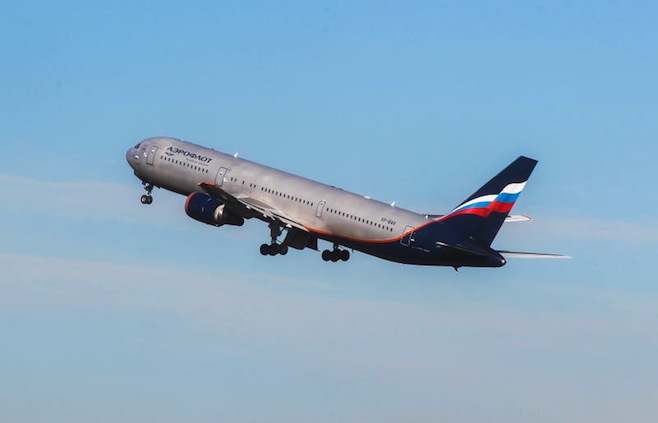
Aeroflot USA Flights Suspended After 2022 Ban: Status, Regulations, and Travel Alternatives
Direct commercial flights between the United States and Russia operated by Aeroflot remain completely suspended following the emergency airspace bans and regulatory sanctions imposed in March 2022. The restrictions prohibit Russian air...
Direct commercial flights between the United States and Russia operated by Aeroflot remain completely suspended following the emergency airspace bans and regulatory sanctions imposed in March 2022. The restrictions prohibit Russian air carriers from operating in U.S. airspace and bar U.S. airlines from entering Russian airspace, forcing all passenger and cargo traffic onto third-country transit routes.
Contents
Historical Background: The 2022 Airspace Closure
The suspension of Aeroflot services to the United States was triggered by geopolitical events in early 2022. On March 1, 2022, the U.S. government announced a complete prohibition on all Russian-owned, operated, registered, or controlled aircraft from using U.S. territorial airspace. The directive officially went into effect on March 2, 2022, under orders issued by the U.S. Department of Transportation (DOT) and the Federal Aviation Administration (FAA).
Prior to the ban, Aeroflot operated direct routes connecting Moscow’s Sheremetyevo International Airport (SVO) with major U.S. international hubs, including New York (JFK), Washington, D.C. (IAD), Miami (MIA), and Los Angeles (LAX). These flights provided a primary transport link for diplomatic personnel, business travelers, and dual-national families.
In response to the U.S. and European Union airspace bans, Russia’s Federal Agency for Air Transport (Rosaviatsia) issued reciprocal airspace restrictions. These retaliatory measures banned airlines from more than 30 nations, including the United States, from overflying Russian territory. Consequently, cross-polar and trans-Siberian flight paths—historically used by Western airlines connecting North America and Europe to Asia—were closed, fundamentally altering international commercial aviation logistics.
| Date | Event |
|---|---|
| March 1, 2022 | U.S. announces airspace ban on all Russian aircraft. |
| March 2, 2022 | U.S. DOT Notice & FAA Notice to Air Missions (NOTAM) active. |
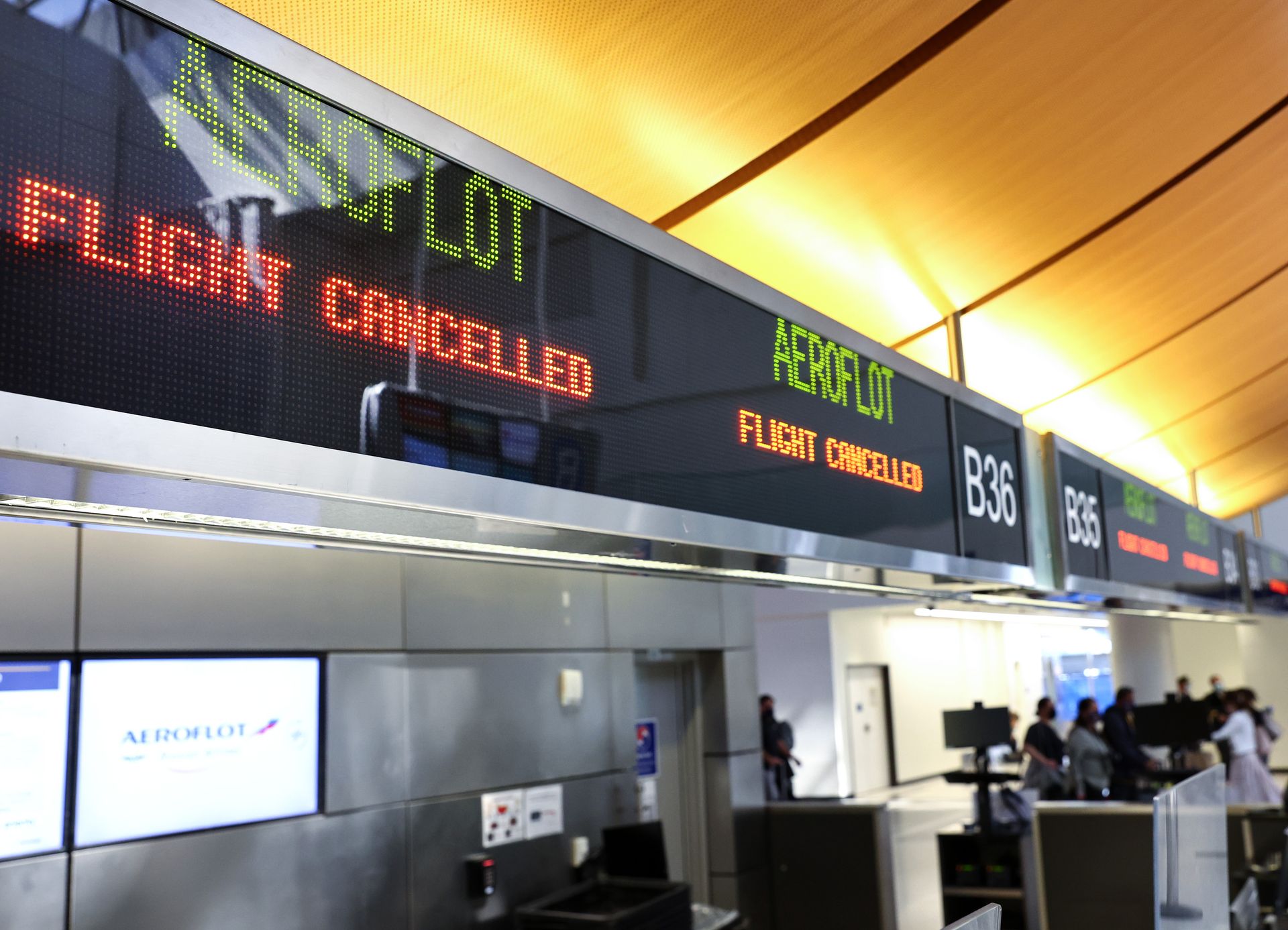
| March 5, 2022 | Aeroflot halts international routes due to seizure risk. |
| March 8, 2022 | Rosaviatsia issues reciprocal overflight ban for U.S. fleet. |
Regulatory and Sanctions Framework Governing Aeroflot
The suspension of Aeroflot’s U.S. operations is anchored in a complex web of legal enforcement mechanisms, aviation regulations, and trade controls enforced by multiple federal agencies.
Department of Transportation (DOT) and FAA Directives
The U.S. Department of Transportation issued Order 2022-3-1, suspending the foreign air carrier permits of Aeroflot and all other air carriers holding Russian operator certificates. The FAA issued a Notice to Air Missions (NOTAM) barring all aircraft owned, chartered, leased, operated, or controlled by a person identified with Russia from operating in U.S. airspace.
Bureau of Industry and Security (BIS) Export Enforcement
Beyond airspace closures, the U.S. Department of Commerce’s Bureau of Industry and Security (BIS) added Aeroflot and dozens of its specific aircraft to its Temporary Denial Order (TDO) list. Under Export Administration Regulations (EAR), BIS prohibited any global entity—including foreign ground crew, fueling companies, and maintenance providers—from servicing, refueling, repairing, or providing spare parts to designated Aeroflot aircraft that contain foreign-origin content subject to U.S. jurisdiction.
Aircraft Leasing and Seizure Complexities
A major barrier to international operations for Aeroflot stems from aviation asset leasing. A significant portion of Aeroflot’s fleet of Boeing and Airbus aircraft was leased from foreign lessors based in jurisdictions such as Ireland and Bermuda. Sanctions imposed by foreign authorities required foreign lessors to terminate aircraft leases with Russian carriers and demand the return of their assets.
To prevent foreign customs authorities from repossessing leased aircraft outside domestic borders, Aeroflot temporarily grounded almost all international flights in mid-March 2022. Subsequent domestic re-registration of these aircraft under Russian state flight registries created dual-registration status, which violates International Civil Aviation Organization (ICAO) conventions and complicates international landing clearance.
Current Status of U.S.–Russia Direct Air Travel
The regulatory and airspace prohibitions instituted in 2022 remain active. Direct commercial passenger and cargo flights between the United States and the Russian Federation are unavailable.
- UNITED STATES
- Third-Country Transit Hubs (Istanbul, Dubai, Yerevan, Belgrade, Baku, Doha)
- RUSSIAN FEDERATION
Because of persistent airspace closures and export controls, air carriers face significant structural limitations:
- Absence of Direct Air Corridors: Neither Aeroflot nor U.S. legacy carriers (Delta Air Lines, United Airlines, American Airlines) hold authorization to operate scheduled or charter services between the two nations.
- Maintenance Constraints: Sanctions prohibiting Boeing and Airbus from supplying original equipment manufacturer (OEM) parts, software updates, or engineering services force Aeroflot to rely on domestic maintenance facilities, reverse engineering, or domestic fleet alternatives like the Sukhoi Superjet 100 and Tu-214.
- Overflight Constraints: U.S. carriers operate at a commercial disadvantage on select Asian routes, as avoiding Russian airspace requires longer flight times, increased fuel burn, and payload limitations.
Alternative Travel Routes Between the United States and Russia
With direct flights offline, passengers traveling between the U.S. and Russia must connect through non-sanctioned third-country hubs. Airlines operating from countries that did not impose reciprocal airspace restrictions continue to fly into both U.S. and Russian airports.
Primary Global Transit Hubs
- Istanbul Airport (IST) – Turkish Airlines: Turkish Airlines serves as a principal connection point, offering direct long-haul flights from multiple U.S. gateways (such as JFK, ORD, LAX, MIA, IAD) to Istanbul, with continuing services to Moscow (VKO/SVO), St. Petersburg (LED), and other regional Russian cities.
- Dubai International (DXB) & Abu Dhabi (AUH) – Emirates & Etihad Airways: Middle Eastern hubs offer robust long-haul connectivity. Emirates operates flights from numerous U.S. metropolitan airports to Dubai, connecting to frequent daily flights into Moscow and St. Petersburg.
- Hamad International Airport (DOH) – Qatar Airways: Provides similar connectivity through Doha, servicing select cities in Russia while connecting to extensive U.S. route networks.
- Belgrade Nikola Tesla Airport (BEG) – Air Serbia: Air Serbia remains one of the few European carriers maintaining authorized access to both European/U.S. networks and Russian airspace, serving as a key European transit conduit.
- Yerevan Zvartnots International Airport (EVN) & Baku (GYD): Regional hubs in Armenia and Azerbaijan provide secondary connection options, particularly for regional destinations within southern Russia.
Financial, Payment, and Ticketing Considerations
Navigating travel under the current regulatory landscape requires planning beyond selecting flight routes. International banking sanctions and payment processing changes directly affect ticket booking and travel logistics.
Visa and Mastercard Operations
Major international payment networks, including Visa, Mastercard, and American Express, suspended operations in Russia in March 2022.
- U.S.-Issued Cards: Credit or debit cards issued by U.S. banks do not function inside Russia for purchases, ATM cash withdrawals, or local transportation bookings.
- Russian-Issued Cards: Cards issued by Russian banks do not function outside of Russia or on foreign airline websites operating outside the domestic payment ecosystem.
- Booking Interline Routing: Passengers booking itineraries across independent carriers (e.g., a U.S. carrier to Istanbul, followed by Aeroflot or Pobeda into Moscow) must purchase tickets as separate bookings using appropriate payment methods for each carrier.
Unredeemed Tickets and Refunds from 2022
Passengers who held tickets on Aeroflot flights canceled as a result of the 2022 suspension faced distinct refund processes:
- Direct refunds to U.S.-based credit cards became complex due to the disconnection of major Russian financial institutions from the SWIFT international banking system.
- Aeroflot offered vouchers or credit valid for future domestic or permitted international operations, though converting these credits into Western fiat currency remains subject to banking restrictions.
- Travelers who booked through U.S. travel agencies or third-party booking portals frequently sought recourse through credit card chargebacks under U.S. Department of Transportation consumer protection regulations, which require prompt refunds when an airline cancels a foreign flight segment to or from the United States.
Route Comparison for Travel Between the U.S. and Russia
The following table provides a breakdown of common transit options available to travelers navigating between the United States and Russia via third-country air corridors:
| Transit Hub / Country | Key Operating Carriers | Typical U.S. Departure Cities | Luggage Re-Check Required? | Key Transit Considerations |
|---|---|---|---|---|
| Istanbul, Turkey (IST) | Turkish Airlines, Aeroflot (connecting) | JFK, ORD, MIA, LAX, IAD, DFW | No (if booked under single ticket) | High flight frequency; short layover options; no transit visa for short stays for U.S. passport holders. |
| Dubai, UAE (DXB) | Emirates, Flydubai, Aeroflot | JFK, BOS, IAD, ORD, IAH, LAX | No (if interlined) / Yes (if separate tickets) | Adds overall flight duration; excellent connectivity to Moscow Sheremetyevo and Domodedovo. |
| Belgrade, Serbia (BEG) | Air Serbia | JFK, ORD | No (if flying Air Serbia end-to-end) | Direct access into Europe; smaller fleet capacity leads to higher seasonal fares. |
| Yerevan, Armenia (EVN) | FlyOne Armenia, Shirak Avia, Aeroflot | Connecting via Europe/Middle East | Yes (usually separate tickets required from U.S.) | Requires self-transfer; useful for regional Russian cities in the South (e.g., Sochi). |
| Doha, Qatar (DOH) | Qatar Airways | JFK, IAD, ORD, DFW, SFO | No (if booked as single itinerary) | Long-haul comfort; extended travel time compared to European transit corridors. |
Regulatory and Safety Disclaimers for Travelers
Travelers preparing to use third-country corridors to visit the Russian Federation should evaluate ongoing government advisories and regulatory requirements:
- Consular Services: The U.S. Department of State maintains a Level 4: Do Not Travel advisory for Russia due to unpredictable security conditions, limited embassy staffing, and constraints on consular assistance for dual U.S.-Russian citizens.
- Customs and Cash Controls: Strict restrictions govern the physical transport of currency. U.S. sanctions prohibit the export of U.S. dollar banknotes directly to Russia, while Russian customs laws restrict departing travelers from carrying out more than $10,000 USD (or equivalent) in foreign cash without registration.
- Sanctions Compliance: Travelers engaging in business activities or purchasing services from sanctioned Russian state entities (including designated airlines) must ensure compliance with regulations managed by the U.S. Treasury Department's Office of Foreign Assets Control (OFAC).
Frequently Asked Questions
Are Aeroflot flights to the United States expected to resume soon?
Resumption of direct Aeroflot flights to the U.S. depends on lifting the U.S. Department of Transportation ban, removing FAA airspace restrictions, terminating export control restrictions by BIS, and resolving retaliatory overflight bans by Russia. There is no public regulatory timeline for reversing these policy measures.
Can U.S. citizens still legally travel to Russia?
U.S. regulations do not explicitly forbid U.S. citizens from traveling to Russia. However, travelers must possess a valid Russian visa issued by a Russian embassy or consulate, use open international flight routes via neutral third countries, and abide by U.S. financial sanctions enforced by OFAC.
How can passengers resolve unused ticket claims from canceled 2022 Aeroflot flights?
Travelers unable to secure direct refunds from Aeroflot due to banking sanctions should contact the travel agency or platform used for the booking. If purchased directly with a U.S. credit card prior to the suspension of network services, travelers typically filed chargebacks based on DOT regulations requiring refunds for canceled international services.
Can foreign airlines operating to Russia fly through U.S. airspace?
A foreign carrier operating a non-prohibited flight (e.g., Turkish Airlines or Emirates) can operate within U.S. airspace when flying to or from its home country. However, no foreign carrier is authorized to operate direct passenger flights connecting the U.S. and Russia, as air service agreements between the two nations do not grant fifth-freedom cabotage rights for foreign carriers on that specific city-pair.
Are leased Aeroflot aircraft subject to seizure if flown outside Russia?
Aircraft owned by Western leasing firms that were re-registered in Russia remain exposed to foreign repossession or legal arrest in jurisdictions that enforce international aviation court orders and Cape Town Convention remedies. Consequently, Aeroflot restricts its international flights primarily to routes using state-owned or fully debt-cleared aircraft operating into friendly jurisdictions.
Practical Recommendations for Travelers
For individuals requiring travel between North America and Russia while direct carrier suspensions remain active, adherence to the following procedures is recommended:
- Book Single-Ticket Interline Itineraries Where Possible: Utilize carriers like Turkish Airlines or Air Serbia that can check luggage straight through to the final destination, avoiding foreign customs procedures during layovers.
- Prepare Alternative Payment Methods: Acquire globally accepted international payment options for third-country transit, and ensure adequate physical currency compliance for local needs inside Russia.
- Monitor Official Travel Advisories: Consult updated notices from the U.S. Department of State, the U.S. Department of Transportation, and local diplomatic missions prior to purchasing non-refundable international air travel.
Image Gallery