Ottawa IL Workers' Compensation Lawyer: Navigating Claims and Benefits in LaSalle County
An Ottawa, IL workers' compensation lawyer represents employees injured on the job, ensuring they receive all benefits mandated by the Illinois Workers' Compensation Act. Legal counsel helps injured workers navigate claim filings, disp...
An Ottawa, IL workers' compensation lawyer represents employees injured on the job, ensuring they receive all benefits mandated by the Illinois Workers' Compensation Act. Legal counsel helps injured workers navigate claim filings, dispute denied coverage, secure proper medical treatment, calculate accurate average weekly wages, and negotiate fair permanent partial disability settlements under Illinois law.
Contents
Understanding Workplace Injury Claims in Ottawa, Illinois
Ottawa, Illinois—situated at the confluence of the Illinois and Fox Rivers in LaSalle County—boasts a diverse regional economy. Local employment spans industrial manufacturing, silica sand mining, agriculture, logistics, healthcare facilities, commercial construction, and municipal services. While safety regulations govern these operations, workplace accidents remain a reality across all sectors.
When an employee sustains an occupational injury or illness in Ottawa or surrounding LaSalle County communities, their recovery and financial stability depend on the Illinois workers' compensation system. Governed by the Illinois Workers' Compensation Commission (IWCC), this administrative system is designed as a no-fault scheme. Injured employees do not need to prove employer negligence to receive benefits; they must only demonstrate that the injury arose out of and in the course of their employment.
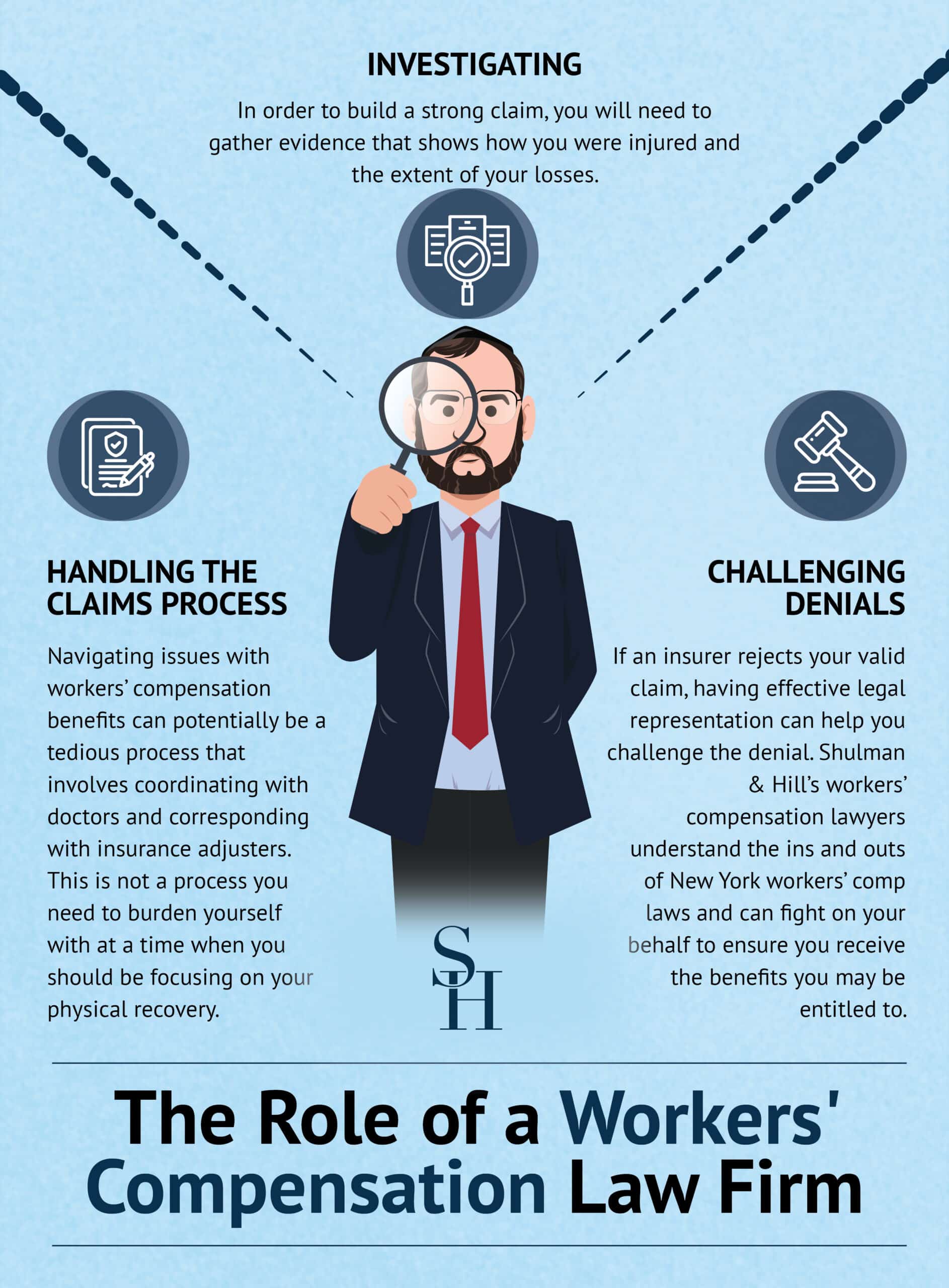
Navigating the administrative rules, medical provider choices, benefit calculations, and dispute mechanisms of the IWCC can prove challenging for injured workers facing physical recovery and financial stress. An experienced Ottawa workers' compensation lawyer provides the technical knowledge and legal representation needed to protect an employee's rights from the initial injury report through final settlement or IWCC arbitration.
Statutory Benefits Under the Illinois Workers' Compensation Act
The Illinois Workers' Compensation Act (820 ILCS 305) outlines specific statutory benefits available to injured workers. An attorney ensures that insurance carriers properly calculate and pay every benefit category to which an injured worker is legally entitled.
1. Medical Care and Payment Coverage
Under Section 8(a) of the Act, employers must pay for all reasonable and necessary medical care required to cure or relieve the effects of a work-related injury. This includes emergency room visits, physician services, surgical procedures, hospitalizations, prescription medications, physical therapy, assistive devices, and medical rehabilitation. In Illinois, workers face no copays or deductibles for authorized treatment related to an accepted work injury.
2. Temporary Total Disability (TTD)
When a doctor places an injured worker on complete off-work status, or when an employer cannot accommodate light-duty restrictions, the employee is entitled to Temporary Total Disability (TTD) benefits.
- Calculation: TTD benefits equal 66 2/3% (two-thirds) of the worker’s Average Weekly Wage (AWW), subject to statutory minimum and maximum limits.
- Duration: TTD payments continue until the worker is medically cleared to return to full-duty work or reaches Maximum Medical Improvement (MMI).
- Waiting Period: Benefits are payable starting on the fourth day of disability. If disability extends to 14 calendar days or more, benefits for the first three days are retroactively paid.
3. Permanent Partial Disability (PPD)
Once an injured worker reaches Maximum Medical Improvement—meaning their medical condition has stabilized and no further curative treatment will change the outcome—they may be evaluated for Permanent Partial Disability (PPD). PPD compensates the worker for permanent loss of bodily function or impairment resulting from the work injury.
PPD benefits are determined through several statutory methods under 820 ILCS 305/8:
- Scheduled Loss of Use: Specific statutory values assigned to body parts (e.g., arms, legs, hands, fingers, eyes).
- Unscheduled Loss (Person as a Whole): Applied when the injury affects the head, neck, back, or internal organs, calculated as a percentage of 500 weeks.
- Wage Differential: Available if an injury prevents the worker from returning to their customary occupation, forcing them into a lower-paying job. The benefit equals 66 2/3% of the difference between the former wage and the new earning capacity.
- Disfigurement: Compensation awarded for permanent scars to the head, face, neck, chest, hands, or lower legs.
4. Permanent Total Disability (PTD) and Death Benefits
For catastrophic injuries that render a worker permanently unable to perform any gainful employment, Permanent Total Disability (PTD) provides weekly payments for life. In tragic cases involving fatal workplace accidents, surviving spouses and dependent children may claim statutory death benefits and burial expense compensation.
Critical Deadlines and Notice Requirements in Illinois
Strict procedural deadlines govern Illinois workers' compensation claims. Missing a statutory cutoff can result in the total loss of entitlement to financial and medical benefits.
- Workplace Injury Occurs
- Notice to Employer: Must occur within 45 days of accident
- IWCC Claim Filing: Application for Adjustment of Claim must be filed within 3 years of injury (or 2 years from last TTD/PPD payment)
The 45-Day Employer Notice Requirement
Under Section 6(c) of the Illinois Workers' Compensation Act, an injured employee must give oral or written notice of the injury to the employer as soon as practicable, but no later than 45 days after the accident.
While oral notice to a manager, supervisor, or human resources representative is legally valid, written notice (via email, accident report form, or certified letter) provides verifiable evidence. Delaying notice allows insurance carriers to question whether the injury actually occurred at work.
Statute of Limitations for Filing with the IWCC
Giving notice to an employer or filling out an internal incident report does not preserve legal rights with the state. To formally protect a claim, an Application for Adjustment of Claim must be filed with the Illinois Workers' Compensation Commission.
The statute of limitations requires filing the application within:
- Three years from the date of the injury or accident; or
- Two years from the date of the last payment of workers' compensation benefits (such as TTD or medical bill payment)—whichever date is later.
For occupational diseases (e.g., repetitive stress injuries or exposure to toxins), specific discovery rules determine when the clock begins to run. An Ottawa workers' compensation lawyer ensures all formal petitions are properly drafted and filed with the IWCC before these absolute deadlines pass.
Navigating the Illinois "Two-Doctor Choice" Rule
Selection of medical providers is a frequently contested issue in Illinois workers' compensation cases. Section 8(a) of the Act outlines the choice of physician rules, often called the "Two-Doctor Choice" rule.
- Injured Worker Choice Selection
- Choice 1: Physician or Medical Clinic
- Includes all downstream referrals from First Doctor
- Choice 2: Physician or Medical Specialist
- Includes all downstream referrals from Second Doctor
- Choice 1: Physician or Medical Clinic
Under Illinois law, an injured worker has the right to choose two independent physicians for treatment, as well as any specialists or facilities to which those chosen physicians make formal referrals.
Important Exceptions and Caveats
- Emergency Care: Initial treatment received at an emergency room, urgent care center, or immediate care facility immediately following an accident does not count as one of the worker's two designated choices.
- Employer Preferred Provider Program (PPP): If an employer maintains an IWCC-approved Preferred Provider Program (PPP), opting out of the network consumes one of the employee's two physician choices. If an employer lacks an approved PPP, the worker retains full freedom to choose their initial two doctors.
- Downstream Referrals: When a chosen physician refers a patient to a surgeon, physical therapist, or diagnostic imaging center, those secondary providers fall under the original doctor's choice umbrella and do not count as a second choice.
Insurance adjusters often direct injured workers to industrial clinics selected by the employer or insurer. An experienced attorney protects the worker's statutory right to select independent medical specialists of their own choosing.
When to Hire an Ottawa Workers' Compensation Lawyer
While straightforward claims involving minor injuries may resolve smoothly, insurance companies often seek to minimize financial payouts. Legal representation becomes essential under several common scenarios:
1. Claim Denial or Disputes over Causation
Insurers frequently issue formal claim denials, arguing that the injury did not arise out of employment, that the worker had a pre-existing condition, or that the accident was not reported promptly. A lawyer gathers medical testimony, witness statements, and expert reports to establish causation before an IWCC Arbitrator.
2. Termination or Underpayment of TTD Benefits
If an insurer abruptly cuts off weekly TTD checks before an employee reaches Maximum Medical Improvement or returns to light-duty work, an attorney can file an emergency petition under Section 19(b) or Section 19(k) of the Act to compel reinstatement of benefits and seek penalties for unreasonable delay.
3. Miscalculation of Average Weekly Wage (AWW)
TTD and PPD payments depend directly on an accurate AWW calculation. Insurance adjusters sometimes omit overtime hours, mandatory bonuses, second job earnings, or recent pay raises from the calculation. Correcting a miscalculated AWW can significantly increase overall compensation.
4. Independent Medical Examinations (IMEs)
Insurance companies regularly require injured employees to submit to an examination by a physician selected and paid by the insurer—an Independent Medical Examination (IME) under Section 12. These physicians frequently conclude that the worker is fully healed or that further care is unnecessary. An attorney prepares the client for the IME and challenges adverse IME opinions in court.
5. Final Settlement Evaluation and Negotiation
Settling a workers' compensation claim waives future rights to medical care or financial compensation for that injury. A skilled Ottawa attorney evaluates PPD claims based on current statutory rate charts, medical records, functional impairment ratings, and relevant IWCC precedent to ensure the client receives maximum financial recovery.
Comparison of Illinois Workers' Compensation Benefits
The following table summarizes key benefit types under the Illinois Workers' Compensation Act, including calculation formulas, conditions, and payment limits.
| Benefit Type | Primary Purpose | Statutory Calculation Formula | Duration / Limitations |
|---|---|---|---|
| Medical Expenses | Covers all reasonable and necessary medical treatment for the work injury. | 100% of reasonable medical costs based on the IWCC Medical Fee Schedule. | No time limit; covers treatment until maximum recovery is achieved. |
| Temporary Total Disability (TTD) | Replaces lost income during active medical recovery when off work. | 66 2/3% of Average Weekly Wage (AWW), subject to state cap limits. | Paid until worker returns to work or reaches Maximum Medical Improvement (MMI). |
| Permanent Partial Disability (PPD) | Compensates for permanent functional loss or impairment of a body part. | 66 2/3% of AWW multiplied by statutory week values for specific body parts/loss. | Determined by statutory schedules, loss of trade, or percentage of person as a whole. |
| Wage Differential | Compensates for reduced earning capacity due to permanent work restrictions. | 66 2/3% of the difference between pre-injury AWW and post-injury earning capacity. | Payable for 5 years after final award or until worker turns age 67, whichever is later. |
| Permanent Total Disability (PTD) | Provides lifelong income for catastrophic injuries causing total disability. | 66 2/3% of AWW, subject to statutory minimums and maximums. | Paid weekly for the lifetime of the injured worker. |
| Death Benefits | Provides financial support to surviving dependents following fatal accidents. | 66 2/3% of deceased worker's AWW to spouse/dependents; burial benefit up to $10,000. | Paid to spouse for life (or until remarriage terms); child benefits continue to age 18 (or 25 if student). |
Legal Fees and Statutory Protections in Illinois
Workers' compensation attorneys in Illinois operate under strict statutory fee caps designed to protect injured workers from excessive legal costs.
Under Section 16a of the Illinois Workers' Compensation Act (820 ILCS 305/16a):
- Contingency Fee Structure: Legal fees are entirely contingent on securing compensation. If the lawyer recovers no money for the client, no attorney fees are owed.
- 20% Maximum Fee Cap: Attorney fees are capped at 20% of the recovered indemnity benefits (TTD, PPD, or lump-sum settlement).
- Medical Expense Exclusions: Lawyers generally cannot collect legal fees from undisputed payments made for medical treatment or routine voluntary TTD payments, unless the insurance company contested those payments or required legal intervention to secure them.
- IWCC Approval: Every attorney fee and settlement contract must be formally reviewed and approved by an IWCC Arbitrator to confirm compliance with state law before funds are disbursed.
Frequently Asked Questions
Can I be fired for hiring a workers' compensation attorney in Ottawa, IL?
No. Illinois law strictly prohibits employers from retaliating against, discriminating against, or terminating an employee for exercising their statutory rights under the Illinois Workers' Compensation Act. A retaliatory discharge by an employer creates grounds for a separate civil lawsuit against the employer.
Where are IWCC hearings held for injured workers in Ottawa and LaSalle County?
The Illinois Workers' Compensation Commission divides the state into regional hearing zones. For cases arising in LaSalle County, formal IWCC hearings, status calls, pre-arbitration conferences, and arbitrations are conducted at designated regional hearing sites, such as the Peoria or Joliet IWCC dockets, as assigned by the Commission.
What if my injury was caused by a pre-existing condition that was aggravated at work?
You are still eligible for workers' compensation benefits. Under Illinois law, an employer takes an employee "as is." If a workplace task or accident aggravates, accelerates, or worsens a pre-existing medical condition (such as degenerative disc disease or arthritis), the resulting disability and medical treatment are fully covered under the Act.
How long does a workers' compensation claim take to settle in Illinois?
The timeline varies depending on medical treatment duration. Claims should generally not be settled until the injured worker reaches Maximum Medical Improvement (MMI) and final medical reports are generated. Once MMI is established, settlement negotiations or arbitration proceedings typically take anywhere from a few months to over a year, depending on case complexity and whether issues are disputed.
Can I choose my own doctor after a workplace injury in Ottawa?
Yes. Under the Illinois "Two-Doctor Choice" rule, you can select up to two independent doctors of your choice, along with any secondary specialists to whom those initial doctors refer you. However, check if your employer participates in an approved Preferred Provider Program (PPP), as opting out consumes one of your two physician selections.
Practical Next Steps for Injured Workers in Ottawa
If you sustain a job-related injury or occupational illness in Ottawa or anywhere in LaSalle County, taking prompt, structured action protects your health and legal rights:
- Seek Immediate Medical Attention: Report to an emergency room, urgent care facility, or your personal doctor immediately. Clearly inform healthcare staff that the injury occurred on the job so medical notes accurately document the workplace connection.
- Provide Written Notice to Your Employer: Inform a manager, supervisor, or HR representative in writing within 45 days of the accident, detailing the date, time, location, and nature of the injury. Retain a copy for your records.
- Keep Detailed Records: Preserve all medical records, discharge instructions, work status slips (off-work notes or light-duty restrictions), mileage logs for medical appointments, and correspondence from insurance adjusters.
- Consult an Ottawa Workers' Compensation Attorney: Speak with a knowledgeable workers' compensation attorney before signing settlement agreements, giving recorded statements to insurance adjusters, or accepting lump-sum offers. An attorney will audit your Average Weekly Wage, ensure proper medical billing, file your Application for Adjustment of Claim with the IWCC, and advocate for maximum financial recovery.
Image Gallery