Why the Typhoon Lagoon Wave Lawsuit Matters: Legal Precedents and Water Park Safety
The lawsuit surrounding injuries sustained in Disney’s Typhoon Lagoon wave pool matters because it sets critical legal precedents regarding theme park premises liability, the limits of the "assumption of risk" defense, and operational...
The lawsuit surrounding injuries sustained in Disney’s Typhoon Lagoon wave pool matters because it sets critical legal precedents regarding theme park premises liability, the limits of the "assumption of risk" defense, and operational safety standards for high-velocity aquatic attractions. The cases examine whether operators bear responsibility when mechanical wave technology inflicts severe bodily harm on guests despite standard warning signs.
Contents
TYPHOON LAGOON WAVE POOL LITIGATION IMPACT
- LEGAL PRECEDENTS
- Limits of inherent risk
- Comparative fault
- OPERATIONAL SAFETY
- ASTM F24 compliance
- Lifeguard protocols
- CONSUMER DEFENSE
- Duty to warn
- Structural design
The Engineering Behind Typhoon Lagoon’s Surf Pool
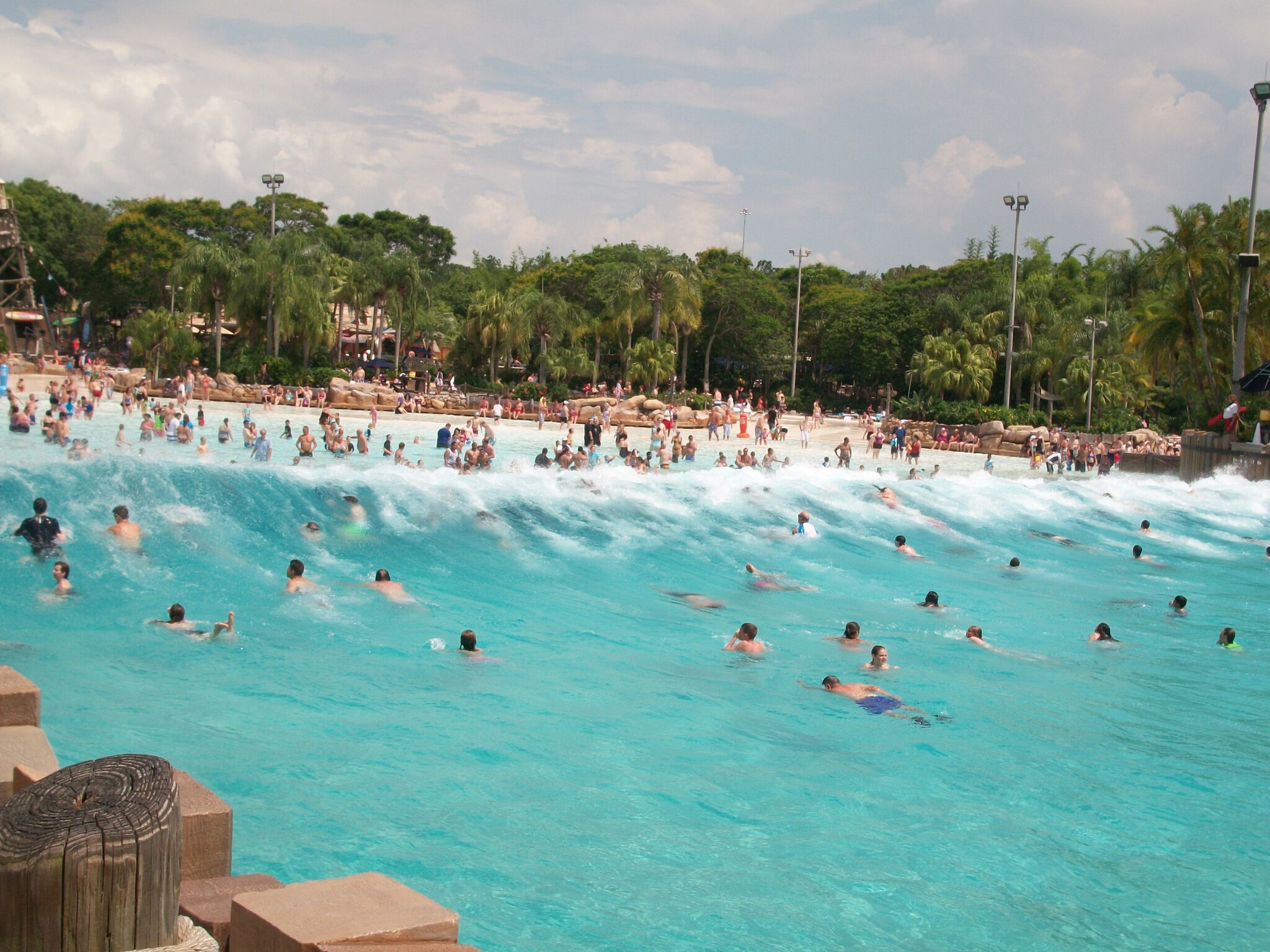
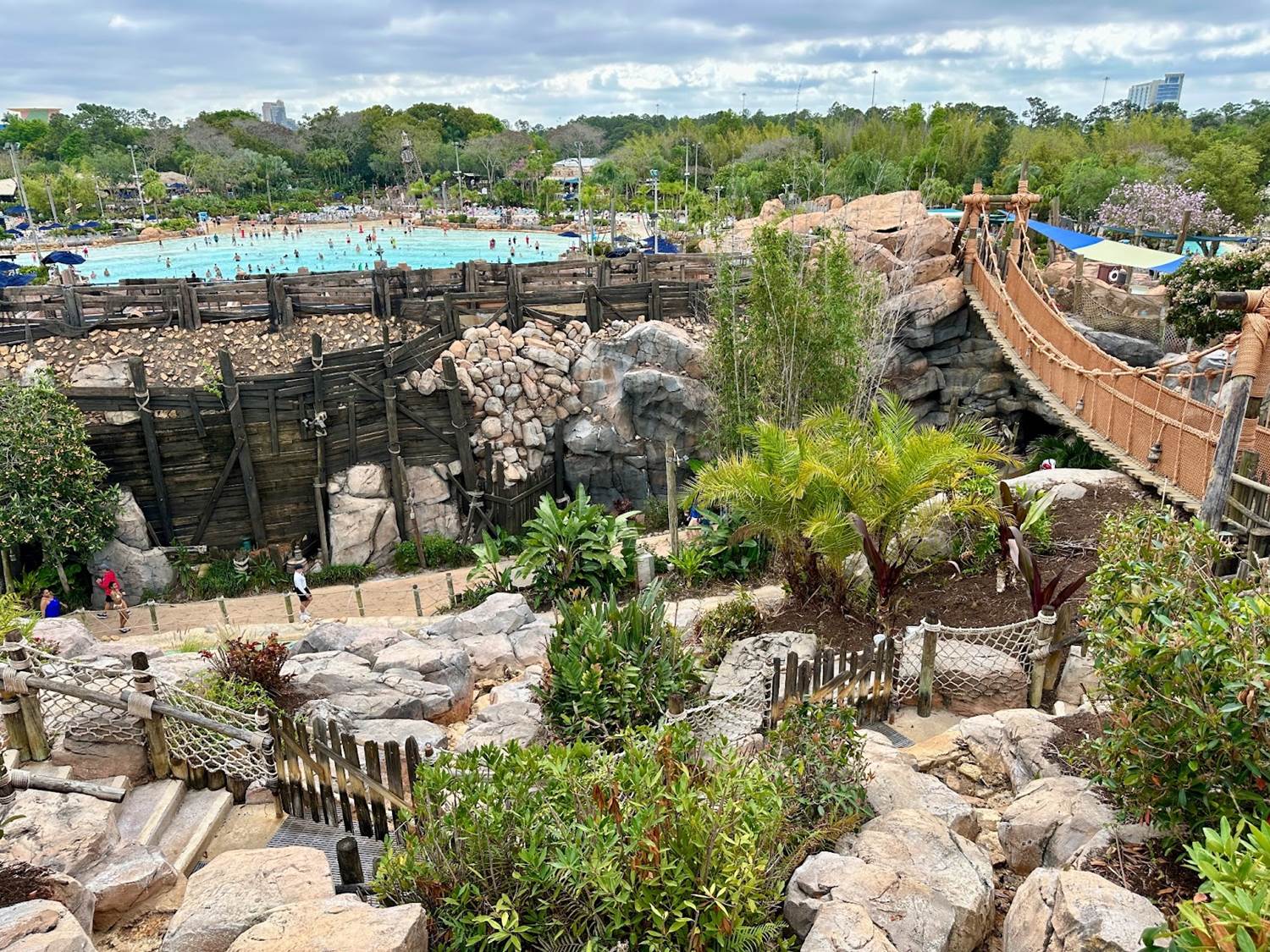
To understand the legal battles stemming from Disney’s Typhoon Lagoon, one must first grasp the sheer physical force of the attraction at the center of these disputes. Opened in 1989 at Walt Disney World Resort in Florida, the Typhoon Lagoon Surf Pool is one of the largest outdoor wave pools in North America. Unlike conventional community pool wave systems that generate gentle, continuous swells using pneumatic fans, Typhoon Lagoon utilizes a massive mechanical hydro-drop system.
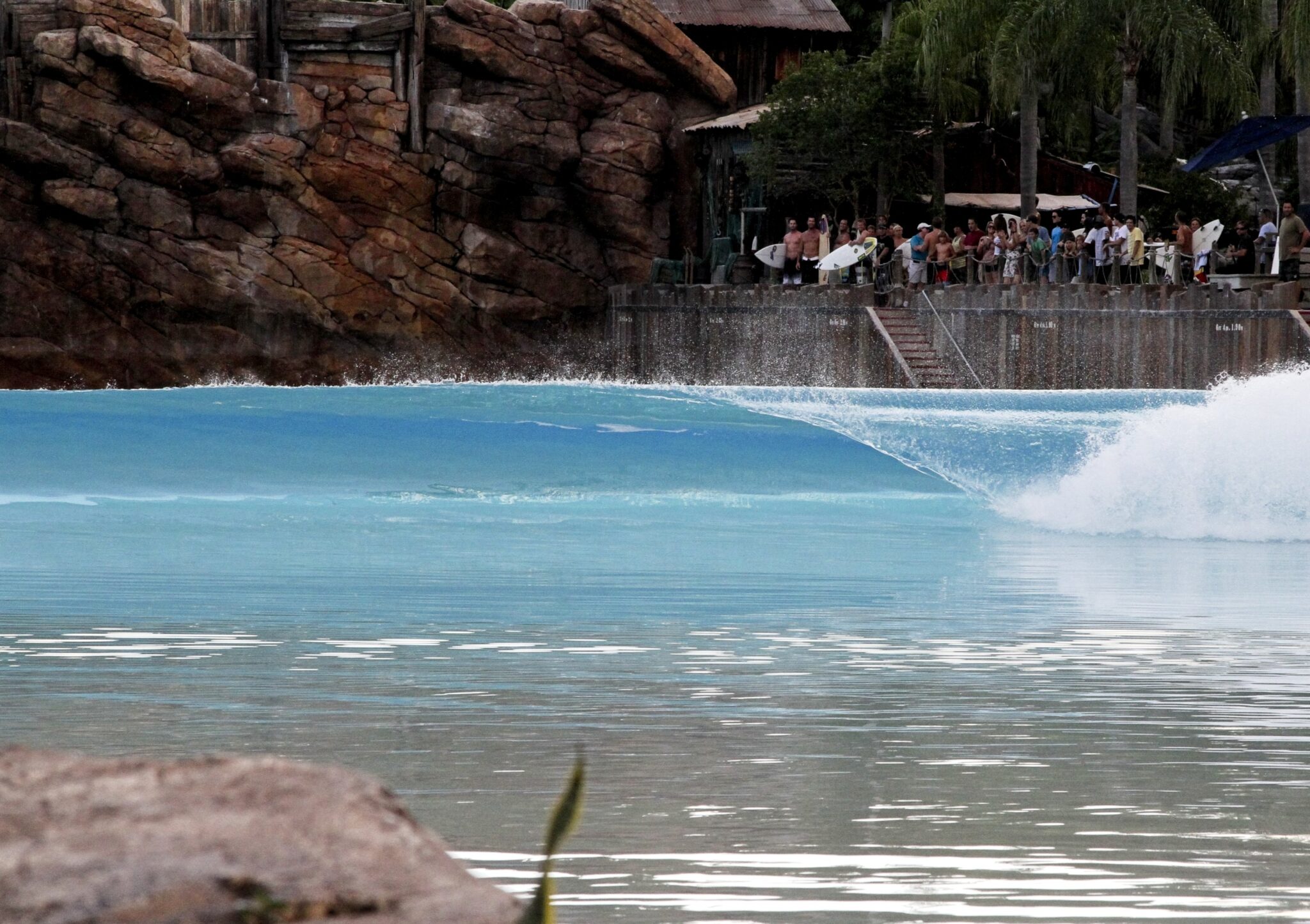
The wave pool operates by pumping thousands of gallons of water into elevated accumulation chambers behind a underwater barrier. Every 90 seconds, computer-controlled sluice gates open simultaneously, dropping roughly 80,000 gallons of water into the main basin. This instantaneous displacement creates a single, perfectly formed crest up to six feet high that travels across a zero-depth entry lagoon ending on a concrete sloped bottom.
The force required to propel a six-foot wall of water across a 2.7-million-gallon pool introduces physical dynamics distinct from natural oceanic surf. In the ocean, waves break over shifting sandbars, and water disperses across open coastal expanses. In an enclosed concrete basin, the hydraulic energy generated by mechanical displacement reflects off side walls and hard flooring, creating turbulent undertows, unexpected cross-currents, and intense impact zones where swimmers can be slammed directly into the concrete floor.
The Legal Core: Premises Liability vs. Assumption of Risk
The central legal debate in wave pool injury litigation revolves around the tension between premises liability and the doctrine of assumption of risk. Theme park operators routinely argue that swimming in a wave pool carries inherent risks that any reasonable guest should anticipate.
LEGAL BALANCE IN AMUSEMENT PARK PREMISES LIABILITY
- DEFENSE ARGUMENT
- Assumption of Risk
- Natural water risks
- Obvious hazards
- Posted disclaimers
- PLAINTIFF ARGUMENT
- Unreasonably Dangerous
- Extreme mech. forces
- Inadequate warnings
- Structural design
Under Florida premises liability law, commercial property owners owe two primary duties to business invitees (paying guests):
- To maintain the premises in a reasonably safe condition.
- To give warning of hidden or concealed perils that are known—or should be known—to the owner, but are unknown to the guest.
Express vs. Implied Assumption of Risk
In recreational injury cases, defense attorneys frequently invoke the principle that participants voluntarily assume the ordinary, inherent risks of an activity. For instance, a person ocean surfing assumes the risk of being knocked off their board by a natural wave.
However, legal actions against Typhoon Lagoon challenge whether this defense applies when an artificial wave system produces unnatural, dangerous kinetic forces:
- Primary Assumption of Risk: Applies to risks inherent in an activity (e.g., getting wet or losing balance in turbulent water). Courts generally rule that operators have no duty to protect participants from risks inherent to the activity itself.
- Secondary Assumption of Risk: Examines whether a defendant breached an independent duty of care that unreasonably increased the risks beyond those inherent in the sport or activity. Plaintiffs argue that poor pool basin geometry, concealed concrete ledges, or excessive wave timing create hidden hazards beyond ordinary wave pool play.
When a guest suffers catastrophic spinal trauma, severe neck fractures, or traumatic brain injury due to the mechanical surge driving them headfirst into a sloped concrete basin, courts must decide if that injury resulted from an inherent risk or from an unreasonably dangerous condition created by the park's design or operation.
Key Issues Raised in Typhoon Lagoon Wave Pool Litigation
Litigation stemming from incidents at high-impact wave pools generally focuses on three primary legal claims: structural design defects, failure to warn, and negligent operation.
PRIMARY CLAIMS IN WAVE POOL LITIGATION
- DESIGN DEFECTS
- Concrete basin geometry
- Hard floor surfaces
- Reflection zones
- FAILURE TO WARN
- Inadequate signs
- Missing audio cues
- Unclear risks
- NEGLIGENT OPERATION
- Dispatch timing
- Bathers density
- Lifeguard delay
1. Structural Design and Surfacing Materials
Standard swimming pools use plaster, tile, or specialized rubberized coatings over concrete. In high-energy wave pools, the combination of shallow water zones and hard floor construction creates a severe collision risk. Lawsuits frequently question whether the park fulfilled its duty of care by utilizing rigid, unyielding bottom surfaces in areas where six-foot mechanical waves predictably drive swimmers downward.
2. Adequacy of Warnings and Audio-Visual Cues
Typhoon Lagoon signals impending waves with a loud sonic horn blast, alerting bathers that a wave is about to be released. Plaintiffs in wave pool lawsuits often contend that a warning horn merely signals when a wave is coming, not the extreme physical force the wave exerts. Legal arguments focus on whether signage explicitly informs guests—particularly non-swimmers, children, or older adults—of the risk of severe impact injuries, quadriplegia, or neck trauma.
3. Comparative Fault and Bother Density Controls
Florida operates under a modified comparative fault standard. If a jury determines an injured guest contributed to their own injury (e.g., by standing in a dangerous area or failing to obey lifeguard instructions), any damages awarded are reduced by their percentage of fault.
However, if the plaintiff proves the park permitted overcrowded conditions that prevented guests from diving safely or escaping undertows, the park’s proportion of liability increases significantly.
Comparative Industry Analysis: Safety Standards & Legal Responsibilities
The litigation surrounding major wave pools has prompted significant changes in how aquatic facilities balance guest entertainment with safety engineering. The table below outlines how legal duties, risk factors, and risk mitigation strategies differ across various water park features.
| Attraction Type | Hydrodynamic Mechanics | Inherent Risk Profile | Primary Legal Duty of Care | Standard Safety & Risk Mitigation |
|---|---|---|---|---|
| Mechanical Surf Wave Pool (e.g., Typhoon Lagoon) | Intermittent 80,000-gal sluice releases generating 6 ft. solitary waves | Severe impact trauma, spinal injury, collision with floor or other bathers | Ensure basin geometry mitigates impact; provide explicit force warnings; enforce zone controls | Audio release horns, strict depth demarcations, segmented swimmer zones, high-density lifeguard staffing |
| Continuous Pneumatic Wave Pool | Fan-driven air pressure creating continuous 2–3 ft. rolling swells | Exhaustion, secondary submersion, mild collision risks | Maintain continuous water quality, prevent crowding, ensure clear visibility to pool bottom | Constant depth markings, mandatory life vest rules for minors, continuous scanning protocols |
| Lazy River / Current Channel | Low-velocity water pumps producing continuous linear flow (1–3 mph) | Minor collisions, tube tipping, localized drowning hazard | Prevent entrapment hazards around suction grates; control tube capacity | Anti-entrapment drain covers meeting VGB Act standards, clear exit/entry points |
| High-Speed Body Slides | Gravity-fed water lubrication down steep incline chutes | Cervical neck strain, flip injuries, deceleration impact | Ensure precise structural tolerances; enforce rider position and weight limits | Rigorous dispatch timing control, strict height/weight enforcement, padded splashdown zones |
Broad Industry Impacts: Regulations, ASTM Standards, and Operational Changes
The legal outcomes and publicity associated with high-profile wave pool lawsuits ripple far beyond individual courtroom verdicts. They directly shape how theme park operators, insurers, and regulatory bodies manage aquatic safety nationwide.
INDUSTRY ADAPTATION & COMPLIANCE CYCLE
- LAWSUITS & CLAIMS
- Severe injury reports
- REVISED ASTM F24 STANDARDS
- Equipment testing & surge limits
- OPERATIONAL ADAPTATION
- Zone scanning & wave cycle pauses
- INSURANCE REQUIREMENTS
- Mandatory life vests
1. Evolution of ASTM F24 Standards
The ASTM International F24 Committee on Amusement Rides and Devices establishes industry-wide technical standards for design, testing, operation, and maintenance. Wave pool litigation has pushed ASTM committees to refine standards regarding:
- Maximum wave height and frequency parameters relative to pool depth.
- Emergency stop systems capable of killing wave generators immediately.
- Hydraulic intake and discharge grate safety to prevent mechanical entrapment.
2. Enhanced Lifeguard Training Protocols
High-energy wave pools present unique visual and physical challenges for aquatic safety personnel. Turbulence, white water, and wave reflection obscure sightlines to the pool floor. In response to litigation exposing delays in spotting submerged victims, major operators adopted specialized training certifications (such as those developed by Ellis & Associates or NASCO). These protocols emphasize 10-to-20-second visual scanning rules specifically adapted for turbulent water conditions.
3. Comprehensive Risk Disclaimers and Admission Waivers
Lawsuits have driven theme parks to refine their ticket disclaimers, entry signage, and mobile app agreements. Modern admission contracts incorporate broad liability releases and explicit safety warnings detailing specific physical risks—including neck, back, and joint injuries—to strengthen defenses against future premises liability claims.
Practical Implications for Park Visitors and Legal Practitioners
Guidance for Water Park Visitors
To minimize personal safety risks while enjoying high-power wave attractions, guests should take specific precautionary steps:
- Understand the Wave Profile: Recognize that mechanical surf pools generate far greater directional force than standard community wave pools.
- Observe Entry Instructions: Pay attention to posted depth markers and listen for audio cues (such as horn blasts) that indicate wave release.
- Position Safety: Avoid standing near concrete retaining walls or sudden depth drop-offs where wave energy concentrates.
- Use Approved Flotation Devices: Non-swimmers and young children should always wear U.S. Coast Guard–approved life jackets, regardless of lifeguard presence.
- Adopt Protective Body Posture: If swept off your feet by a major wave, curl your body to protect your head and neck rather than extending limbs downward toward the hard concrete floor.
Considerations for Legal Counsel
Attorneys evaluating personal injury claims originating at theme park wave pools analyze several technical and evidentiary factors:
- Attraction Telemetry & Maintenance Records: Reviewing computer logs controlling sluice gate release sequences and wave height calibration settings.
- Video Surveillance & Sightline Audits: Analyzing footage to confirm whether lifeguards maintained required visual coverage during wave cycles.
- Signage and Warning Evaluation: Assessing whether posted warnings met clear legal standards for conspicuousness and specificity.
- Compliance with Florida Statutes: Verifying adherence to applicable state recreational safety regulations and municipal building codes.
Frequently Asked Questions
What makes the Typhoon Lagoon wave pool different from regular wave pools?
Typhoon Lagoon uses a hydro-drop mechanism that releases 80,000 gallons of water at once, generating solitary waves up to six feet high. Standard wave pools use air blowers or small paddles to produce continuous two- to three-foot swells. The sheer volume and velocity at Typhoon Lagoon create significantly higher kinetic impact forces against swimmers and the concrete pool bottom.
Can theme parks avoid liability by posting warning signs?
No. While warning signs help establish that a guest was informed of known risks, they do not provide total legal immunity. If an injury results from an unreasonably dangerous design flaw, negligent maintenance, inadequate lifeguard staffing, or a failure to correct known hazards, the park can still be held liable under premises liability law.
How does the "assumption of risk" defense work in Florida?
Under Florida law, primary assumption of risk applies to risks inherent in a given activity. However, if a park operator creates an abnormal hazard that exceeds the expected risks of the attraction—such as improper wave generator timing or dangerous bottom contours—the defense may not protect the operator from liability for resulting injuries.
What injuries are most common in high-impact wave pool lawsuits?
The most severe injuries cited in high-impact wave pool litigation involve cervical spine trauma, neck fractures, traumatic brain injuries (TBIs), broken limbs, and shoulder dislocations. These typically occur when the force of the mechanical wave drives a guest headfirst into the hard concrete bottom or into other bathers.
Are wave pools subject to government safety inspections?
Yes, water parks are subject to state regulatory oversight and municipal building codes. In Florida, commercial water park attractions fall under the regulatory umbrella of the Florida Department of Agriculture and Consumer Services (FDACS) or local building compliance authorities, alongside voluntary technical compliance standards set by ASTM International.
Practical Takeaways for Guests and Industry Stakeholders
The legal disputes surrounding Typhoon Lagoon's wave pool highlight a fundamental reality of modern amusement park operations: cutting-edge mechanical engineering must be matched by rigorous safety protocols and clear risk communication.
- For Park Guests: Recognize that high-action wave pools carry distinct physical demands compared to standard swimming features. Always check posted height and safety requirements, respect wave release signals, and utilize proper flotation devices.
- For Operators and Legal Professionals: Ensure that design considerations, maintenance schedules, warning systems, and staff training protocols remain fully aligned with established ASTM standards and premises liability requirements.
By understanding the balance between engineering mechanics, legal duties, and personal safety, both operators and visitors can help prevent severe aquatic injuries while preserving the fun of world-class water park attractions.
Image Gallery