Understanding Social Mobility Definition in Everyday Life
Social mobility refers to the movement of individuals, families, or groups through a hierarchy of social strata, typically defined by wealth, occupation, and education. In everyday life, this definition manifests as the ability to chan...
Social mobility refers to the movement of individuals, families, or groups through a hierarchy of social strata, typically defined by wealth, occupation, and education. In everyday life, this definition manifests as the ability to change your socioeconomic status through career advancement, educational attainment, or geographic relocation, rather than being restricted by your birth circumstances.
Contents
To understand social mobility, one must look past academic theory and observe how it functions within the infrastructure of daily existence. It is the invisible force that determines whether a child born into a low-income household has a realistic opportunity to achieve a higher standard of living than their parents, or whether an individual’s professional trajectory is limited by their initial access to resources. In 2026, social mobility remains a cornerstone of the "social contract," though its mechanisms have become increasingly complex due to shifts in the global economy and the digitalization of the workforce.
The Core Components of Social Mobility
Social mobility is rarely a single event; it is a cumulative process influenced by various structural and individual factors. To grasp the definition in a practical sense, it is helpful to break it down into its primary dimensions.
Vertical vs. Horizontal Mobility
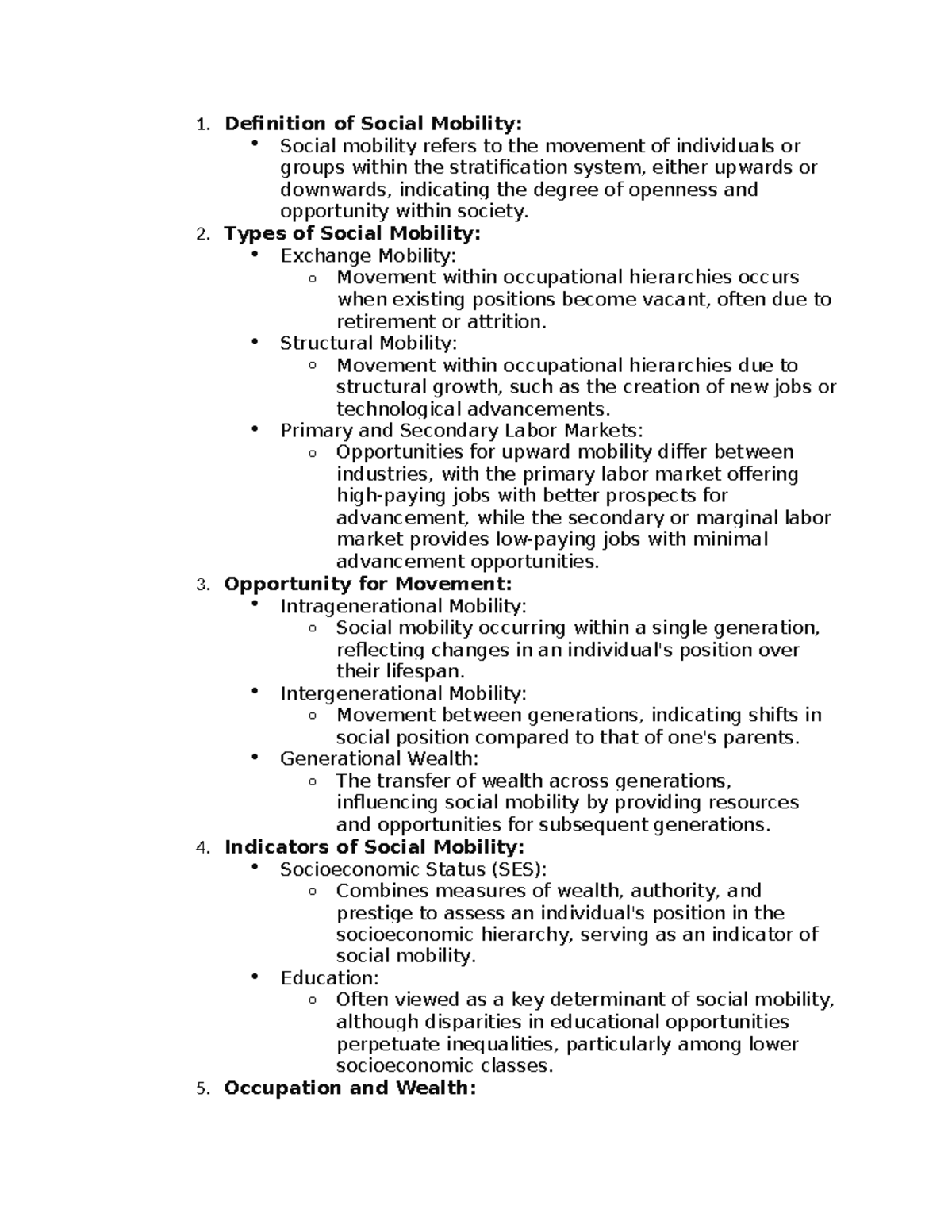
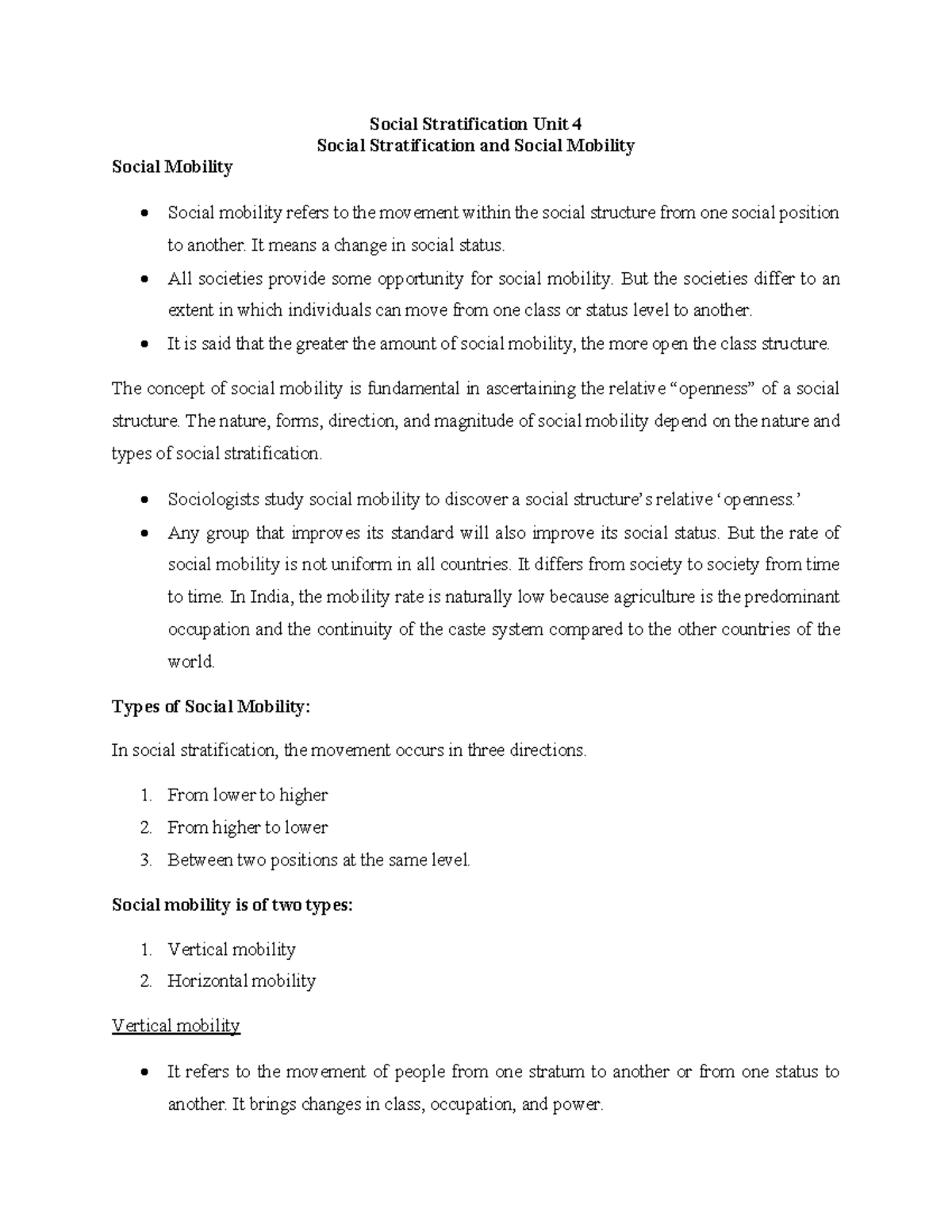
Vertical mobility is the most commonly discussed form, involving a move up or down the socioeconomic ladder. Upward mobility is the hallmark of economic progress, such as a factory worker transitioning into a managerial role after obtaining a degree. Conversely, downward mobility can occur during economic recessions or personal hardships, where an individual loses their status or income level.
Horizontal mobility, on the other hand, involves moving between positions that are different but remain within the same social class. For example, an accountant moving from a construction firm to a healthcare organization represents horizontal mobility. While the industry changes, the individual’s social standing and economic power remain relatively stable.
Intergenerational vs. Intragenerational Mobility
Intergenerational mobility measures how a person’s socioeconomic status compares to that of their parents or grandparents. This is often viewed as the ultimate test of a society’s fairness. If intergenerational mobility is high, it suggests that success is based more on merit than on inheritance.
Intragenerational mobility focuses on the changes in an individual’s status over the course of their own lifetime. This is frequently observed in career "ladders" where a entry-level employee eventually ascends to an executive position. In the 2026 labor market, intragenerational mobility is often fueled by "upskilling"—the continuous acquisition of new technical skills to stay relevant in a rapidly changing economy.
Social Mobility in Everyday Life: Practical Examples
Understanding the definition of social mobility is easier when viewed through the lens of daily interactions and life choices. It affects where we live, who we associate with, and the types of risks we are able to take.
The Role of Education
Education has long been called the "great equalizer." In everyday life, this is seen in the pursuit of higher education or specialized certifications. A person who is the first in their family to attend university is attempting to leverage education as a vehicle for upward social mobility. However, the quality of education and the prestige of the institution often play a role in how effective this vehicle actually is. Access to early childhood education and extracurricular activities also creates a foundation that facilitates easier movement later in life.
The Labor Market and Geographic Mobility
Where you live significantly impacts your mobility potential. Geographic mobility—moving to a city with more job opportunities—is a physical manifestation of social mobility. In 2026, the rise of remote work has decoupled geographic location from economic opportunity for some, but for many service-oriented or manufacturing roles, physical proximity to "opportunity hubs" remains essential. The ability to afford a move to a high-growth area is a prerequisite for mobility that many low-income families cannot meet.
Social and Cultural Capital
Perhaps the most nuanced aspect of social mobility is the influence of social and cultural capital.
- Social Capital: This refers to the networks and relationships an individual possesses. In everyday life, this is the "who you know" factor. Knowing how to navigate a corporate environment or having a mentor can accelerate upward movement.
- Cultural Capital: Defined by sociologist Pierre Bourdieu, this includes the skills, tastes, and manners that help a person fit into higher social circles. Understanding specific "unwritten rules" of high-status environments can be just as important as technical proficiency for achieving social mobility.
Comparing Types of Social Mobility
The following table outlines the different ways social mobility is categorized and provides real-world examples of how these definitions apply.
| Type of Mobility | Definition | Everyday Example |
|---|---|---|
| Upward Vertical | Moving to a higher social or economic tier. | A first-generation student becoming a high-earning software engineer. |
| Downward Vertical | Moving to a lower social or economic tier. | An executive losing their home and savings due to a sustained industry collapse. |
| Horizontal | Moving to a new role within the same social class. | A retail manager switching to a logistics coordination role with similar pay. |
| Intergenerational | Change in status relative to one's parents. | The child of a janitor becoming a university professor. |
| Intragenerational | Change in status during one’s own career. | A clerk starting in a mailroom and retiring as a Vice President. |
| Structural | Mobility caused by shifts in the wider economy. | The expansion of the tech sector creating thousands of middle-class jobs. |
Barriers and Bridges to Mobility
While the definition of social mobility suggests movement is possible for everyone, several barriers can stall progress. Identifying these is crucial for understanding why mobility rates vary across different demographics.
The "Sticky Floor" and "Glass Ceiling"
The "sticky floor" refers to a situation where individuals at the bottom of the economic distribution find it nearly impossible to move up due to a lack of resources, systemic bias, or poor infrastructure. Conversely, the "glass ceiling" represents an invisible barrier that prevents qualified individuals from reaching the highest levels of status, often affecting women and minority groups.
Cost of Living and Debt
In 2026, the cost of essentials—housing, healthcare, and education—acts as a significant drag on social mobility. High levels of student or consumer debt can prevent individuals from taking the risks necessary for upward movement, such as starting a business or moving to a more expensive city for a better job. When a large portion of income is dedicated to debt service, the "ladder" of mobility becomes much harder to climb.
Policy and Infrastructure
Public policy can either act as a bridge or a barrier. For instance, according to the OECD, policies that support affordable housing, public transportation, and vocational training are essential for fostering a mobile society. Without these, mobility often becomes a matter of luck rather than a result of merit and effort.
Measuring Social Mobility
Governments and economists use several tools to measure how much mobility actually exists within a population. These metrics help determine whether a society is living up to its ideals of equal opportunity.
- The Gini Coefficient: While primarily a measure of income inequality, a high Gini coefficient is often correlated with lower social mobility.
- Income Quintiles: Researchers track the movement of individuals between income fifths (quintiles) over decades.
- The Great Gatsby Curve: This economic concept illustrates the relationship between high income inequality and low intergenerational social mobility.
- Global Social Mobility Index: Published by organizations like the World Economic Forum, this index ranks countries based on health, education, technology access, and work opportunities.
Navigating Social Mobility in 2026
The definition of social mobility in everyday life is shifting as we move further into the decade. The traditional "linear" career path is being replaced by more fragmented, skill-based trajectories. For an individual in 2026, maintaining or increasing social status often requires:
- Continuous Learning: Relying on a single degree for a 40-year career is no longer a viable strategy for upward mobility.
- Digital Literacy: Access to high-speed internet and the ability to use AI tools have become fundamental prerequisites for higher-paying roles.
- Financial Literacy: Understanding how to invest and manage assets is a key driver for moving from "labor-based income" to "asset-based wealth," which is a hallmark of significant upward mobility.
Frequently Asked Questions
Is social mobility getting harder?
In many developed nations, data suggests that relative social mobility—the chance of a child from the bottom 20% reaching the top 20%—has stagnated or declined over the last few decades. While absolute mobility (earning more than your parents in real terms) was high during the mid-20th century, the rising costs of housing and education have made it more difficult for younger generations to achieve the same milestones as their predecessors.
What is the difference between relative and absolute mobility?
Absolute mobility measures whether you are better off than your parents were at the same age, regardless of where others stand. Relative mobility measures your position in the social hierarchy compared to others. You can have high absolute mobility (everyone gets richer) but low relative mobility (the rich stay rich and the poor stay poor, just with more money).
How does social capital affect my mobility?
Social capital acts as an accelerator. While hard work and talent are essential, knowing the "right people" can provide access to "hidden" job markets, mentorship, and investment opportunities that are not publicly advertised. Building social capital through networking and community involvement is a practical way to enhance your mobility potential.
Can social mobility be downward?
Yes. Downward mobility is a significant risk in volatile economies. It occurs when individuals or families lose their socioeconomic standing due to job loss, illness, or the obsolescence of their skills. Maintaining status often requires as much effort as gaining it, especially during periods of high inflation or technological disruption.
Does the neighborhood I grow up in affect my mobility?
Research, such as that conducted by Opportunity Insights, shows that the specific neighborhood where a child is raised has a profound impact on their future earnings. Factors like school quality, local job networks, and even the presence of two-parent households in the community correlate strongly with upward mobility rates.
Practical Recommendations
To actively engage with the concept of social mobility in your own life, focus on diversifying your capital. While financial capital (savings) is vital, do not neglect human capital (education and skills) and social capital (networks).
If you are aiming for upward mobility, identify the specific "credentials" and "cultural codes" required in your desired field. Seek out mentorship from those who have already made the transition you are attempting. For those in leadership positions, fostering social mobility within your organization involves creating transparent promotion pathways and actively recruiting from diverse socioeconomic backgrounds to ensure that talent, rather than just "polish," is rewarded.
Image Gallery