What Is a Mother's Copy Birth Certificate? Definition, Legal Status, and Key Differences
A mother's copy birth certificate is an informal souvenir document or uncertified hospital record provided to parents shortly after a child is born. Unlike an official government-issued certified birth certificate, a mother's copy typi...
A mother's copy birth certificate is an informal souvenir document or uncertified hospital record provided to parents shortly after a child is born. Unlike an official government-issued certified birth certificate, a mother's copy typically includes decorative elements such as newborn footprints and hospital signatures, but it lacks the legal authorization, official state seals, and registration numbers required for legal identification.
Contents
Defining the "Mother's Copy" Birth Certificate
A mother's copy birth certificate—frequently referred to as a hospital souvenir birth certificate, hospital certificate, or draft certificate of live birth—is a document generated directly by a birthing facility or hospital. It serves primarily as a personal keepsake and an immediate physical record for parents following delivery.
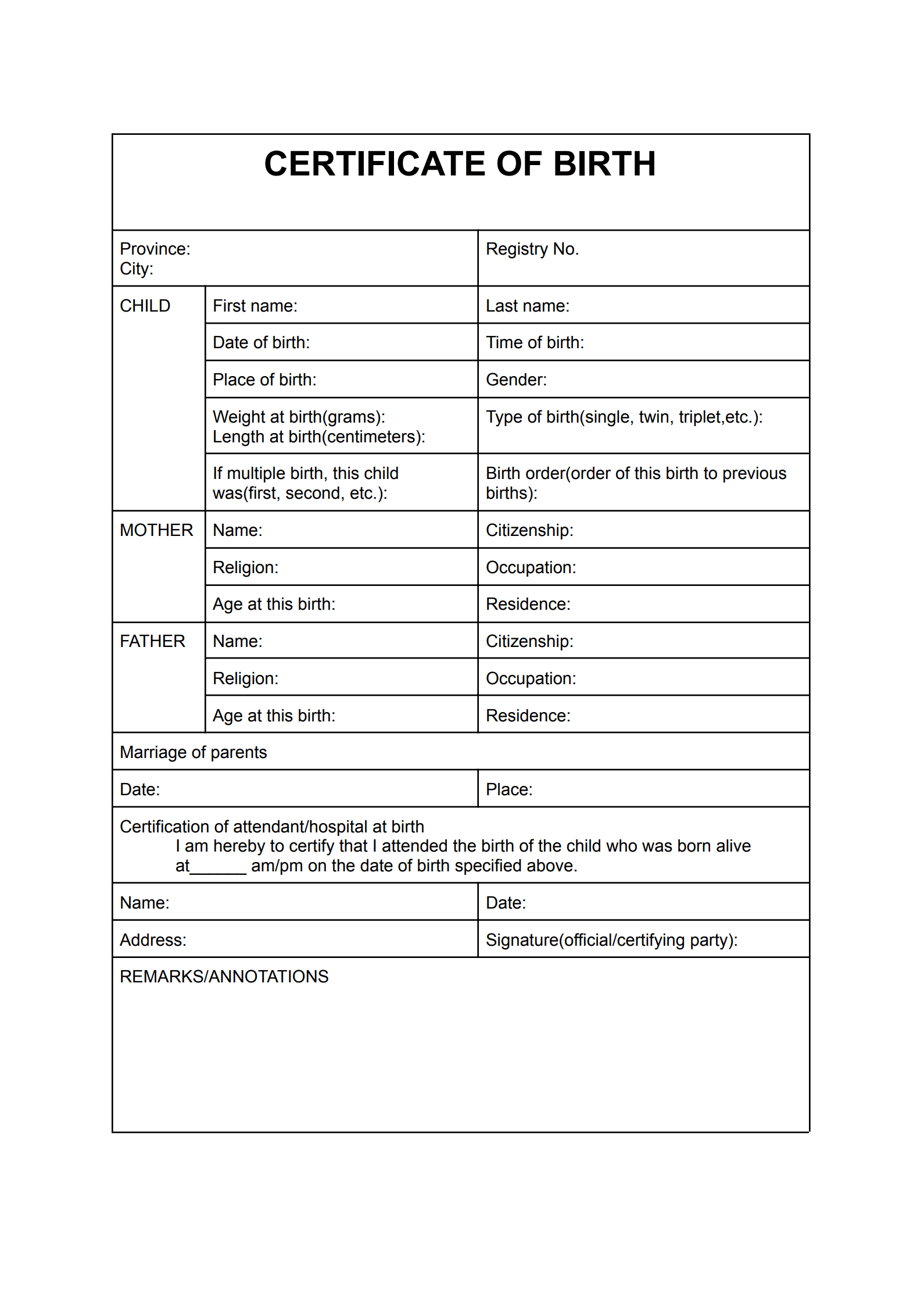
When a baby is born in a medical facility, the attending staff record clinical and demographic data. This includes the infant's full name, exact time and date of birth, weight, length, names of the parents, and the delivering physician or midwife's signature. To provide parents with an immediate record of the event, hospitals print a commemorative certificate, often stamped with the newborn's ink footprints.
However, it is critical to distinguish this document from an official record of vital statistics. A hospital is a private or public healthcare provider, not a legal registrar of vital records. While the hospital collects the data required to establish legal birth, the physical document given to the mother in her discharge packet does not constitute legal proof of citizenship, age, or parentage under federal, state, or international law.
In some international jurisdictions or older terminology, "mother's copy" may also refer to an uncertified informational copy of the Certificate of Live Birth retained by the family before the birth is formally entered into the national or municipal civil registry. Regardless of the phrasing, any birth document that has not been processed, recorded, and certified by an official government vital statistics office remains an informal record.
Official Certified Birth Certificate vs. Mother's Copy
Understanding the technical and legal distinctions between a mother's copy and an official certified birth certificate is essential for navigating identity verification, legal filings, and administrative processes.
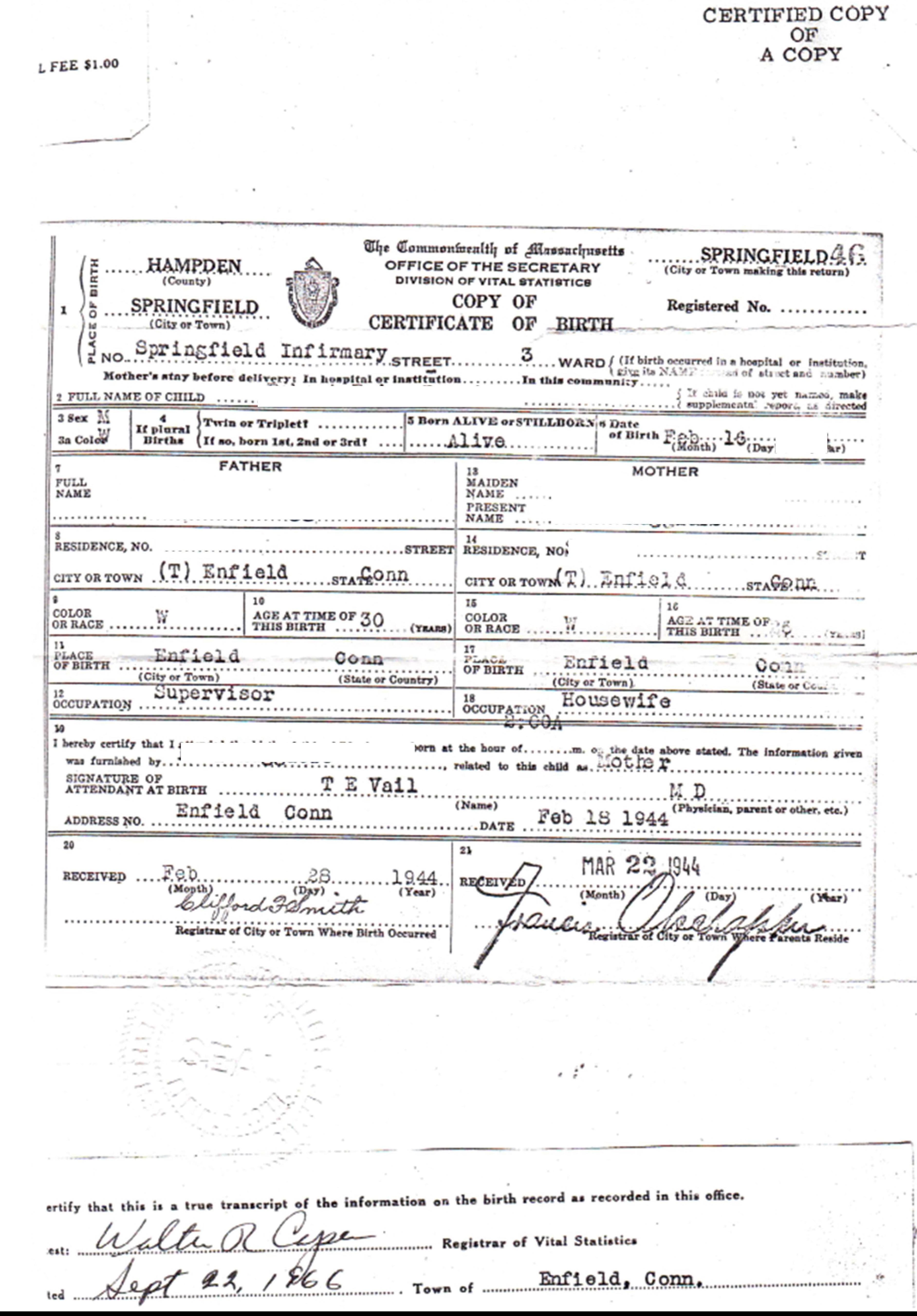
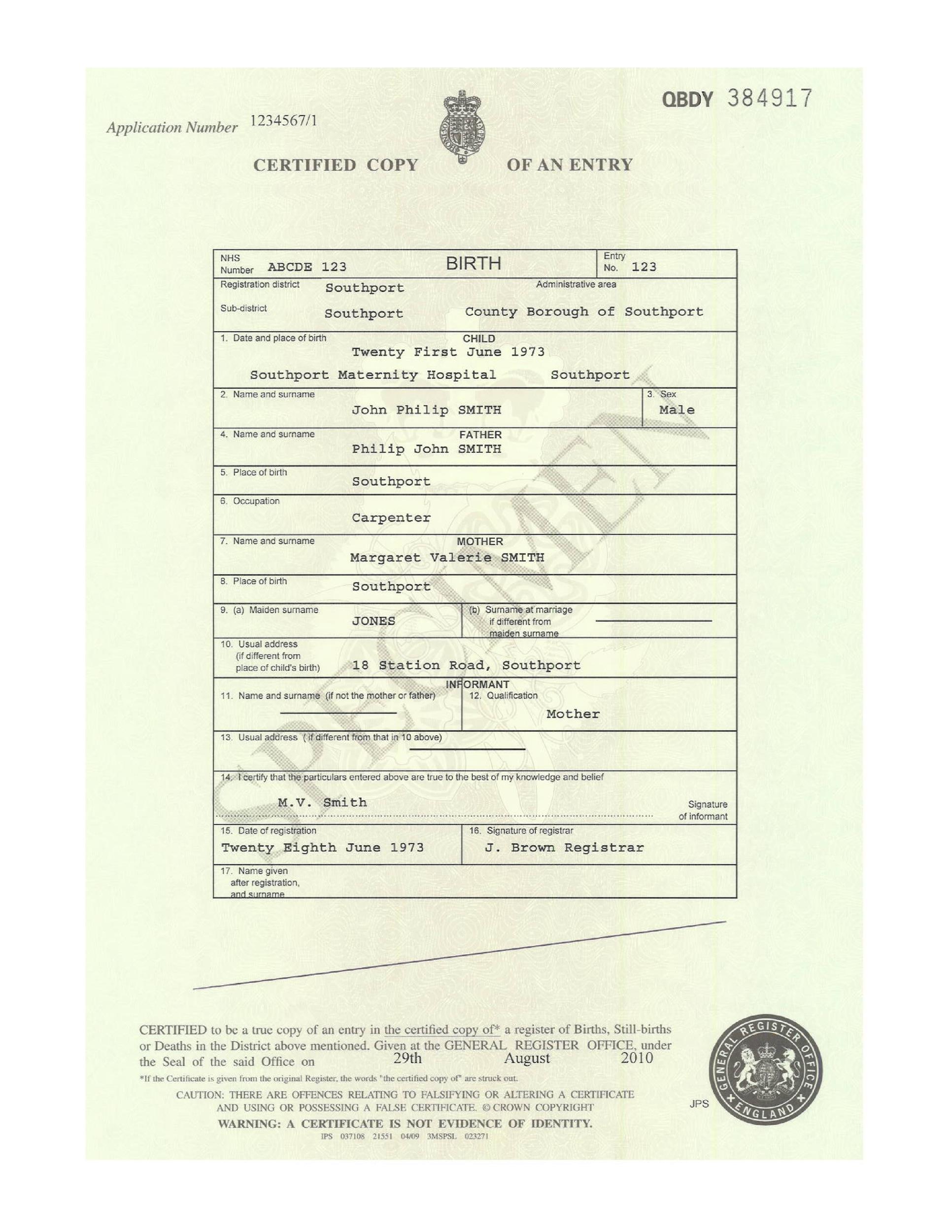
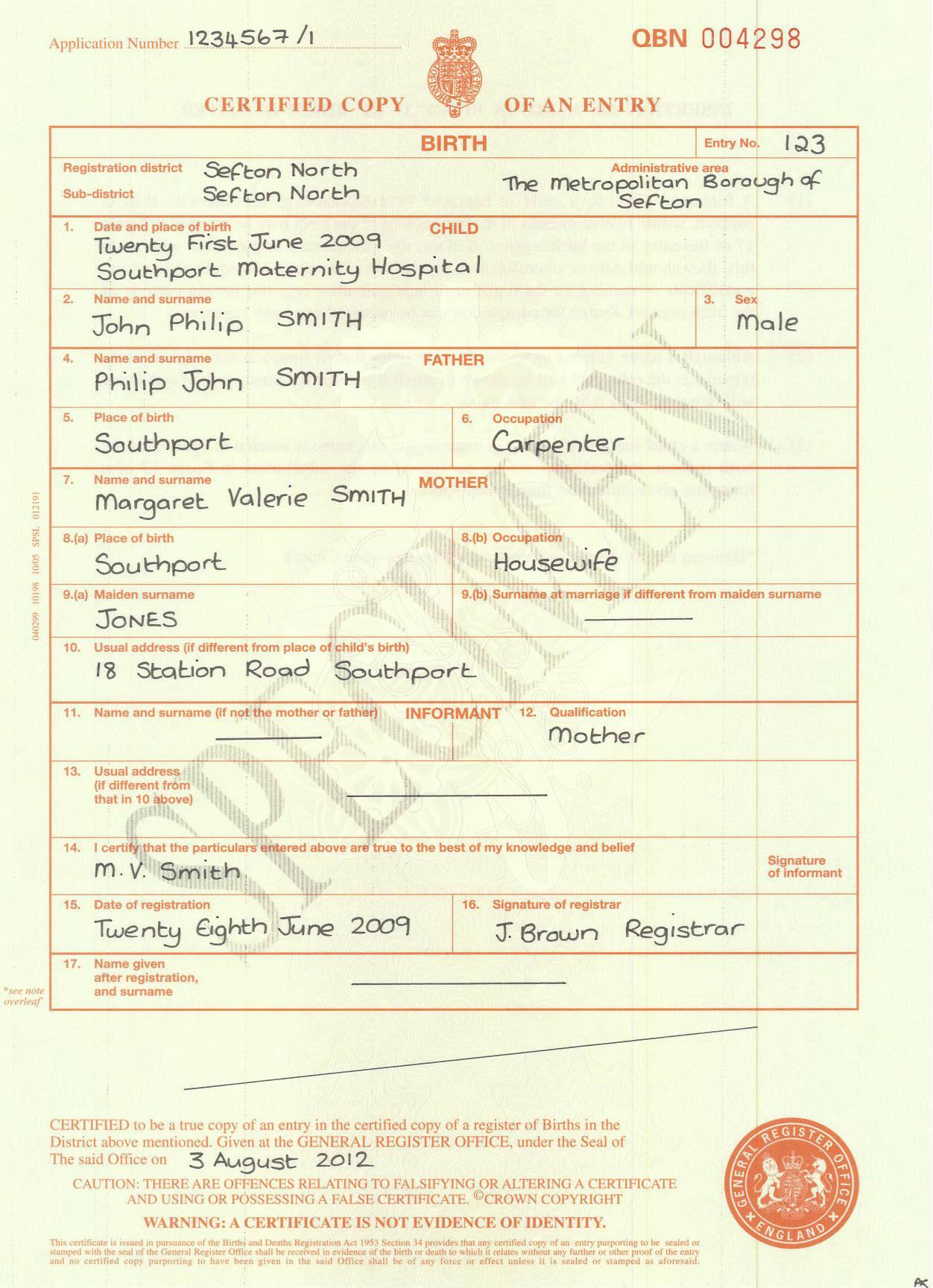
An official certified birth certificate is issued directly by a government authority—such as a state department of health, county clerk, bureau of vital statistics, or national civil registry. Once the hospital submits the birth registration data to the local registrar, the government creates a permanent record in its registry. When you request a copy from the government agency, they print an official copy on security paper featuring specific anti-fraud protections.
| Feature / Attribute | Mother's Copy (Hospital Souvenir) | Official Certified Birth Certificate |
|---|---|---|
| Issuing Authority | Hospital, birthing center, or attending facility | Government Bureau of Vital Statistics, State Registrar, or County Clerk |
| Legal Validity | None (Informational / Keepsake only) | Fully legally binding proof of age, identity, and citizenship |
| Security Features | Standard parchment paper, hospital letterhead, ink footprints | Security paper, multi-toned watermarks, raised/embossed state seals, security threads |
| State File Number | Absent | Present (Unique state or national registration number) |
| Registrar Signature | Missing (May contain doctor/nurse signature) | Contains official signature of the State or Local Vital Statistics Registrar |
| Accepted for Passports | No | Yes |
| Accepted for REAL ID / Driver's License | No | Yes |
| Accepted for Social Security Applications | No | Yes |
Physical and Technical Indicators of Authenticity
To determine whether a birth document in your possession is a mother's copy or an official government document, examine the physical attributes:
- Embossed or Raised Seal: Official certificates feature a raised, impression-embossed, or multicolored security seal from the state or county registrar. A mother's copy usually features a flat printed logo or no seal at all.
- Security Paper and Watermarks: Official vital records are printed on specialized paper designed to prevent photocopying. Holding the document up to the light often reveals embedded security threads or watermarks. Hospital copies are typically printed on cardstock or decorative stationery.
- Registration Details: An official certificate displays a formal "Date Filed" stamp and a unique State File Number or Local Registration Number assigned by the government registrar.
Why Hospitals Issue a Mother's Copy
Given that a mother's copy carries no legal weight, parents often wonder why healthcare facilities issue them in the first place. Hospitals issue these documents for several practical and ceremonial reasons:
1. Immediate Documentation for Parents
Official government birth certificates are not created instantly at the time of delivery. After a birth, the medical facility must compile the legal worksheet, verify parental information, and transmit the data to the appropriate city, county, or state registrar. This registration process can take anywhere from two to eight weeks depending on the administrative speed of the jurisdiction. The mother's copy provides parents with immediate physical documentation of the birth facts before official state records are available.
2. Form Review and Data Verification
The document handed to the mother at the hospital frequently serves as a final proofing copy. Parents can review the spelled names, birth times, and parental details to ensure accuracy before the hospital submits the permanent record to the government registrar. Catching an error on a draft document prevents the complex legal process required to amend an official state birth record later.
3. Keepsake and Ceremonial Value
The birth of a child is a major life milestone. Hospitals provide commemorative certificates featuring newborn footprints, handprints, and stylized fonts as a traditional gesture. These souvenir documents are intended for baby books, framing, and personal family archives rather than legal transactions.
Legal Limitations: What You Cannot Use a Mother's Copy For
Attempting to use a mother's copy for legal identification or government applications will result in immediate rejection. Federal standards, state motor vehicle agencies, and international travel authorities require certified documentation issued directly by vital statistics offices.
- UNACCEPTABLE FOR OFFICIAL USE:
- Hospital Souvenir Copy: NO Raised Seal
- Mother's Draft Copy: NO State File Number
- Commemorative Copy: NO Vital Registrar Signature
- REJECTED BY:
- U.S. Department of State (Passports)
- Social Security Administration (SSN / Benefits)
- State DMV / BMV (REAL ID Compliance)
- Public School Districts & Universities
- U.S. Citizenship and Immigration Services (USCIS)
Passports and International Travel
The U.S. Department of State enforces strict criteria for birth certificates submitted as proof of U.S. citizenship for passport applications. To be accepted, the birth certificate must be an official certified copy issued by the city, county, or state of birth. It must include the full name of the applicant, date and place of birth, parents' full names, a filing date within one year of birth, the signature of the registrar, and the official embossed, impressed, or multicolored seal of the issuing authority. Hospital-issued souvenir copies are explicitly rejected.
Social Security Card Applications
When applying for an original Social Security card or a replacement card for a minor, the Social Security Administration requires evidence of age, identity, and U.S. citizenship. The SSA strictly mandates original documents or copies certified by the issuing agency. Hospital commemorative certificates and notification-of-birth slips are listed by the SSA as unacceptable documentation.
REAL ID and Driver's Licenses
Under federal REAL ID enforcement standards, state departments of motor vehicles (DMVs) must verify an applicant's full legal name, date of birth, and lawful presence using primary identity documents. The U.S. Department of Homeland Security guidelines mandate certified vital statistics birth certificates. Presenting a mother's copy or hospital certificate at a DMV will prevent the issuance of a compliant driver's license or state ID.
School Enrollment and Sports Organizations
While some private daycares or informal youth activities may temporarily look at a hospital copy to verify a child's age, public school districts, athletic associations, and government assistance programs require official state-certified records to establish enrollment, residency, and benefit eligibility.
How to Obtain an Official Certified Copy of a Birth Certificate
If you currently only possess a mother's copy or hospital souvenir certificate, you must request an official certified copy from the proper government agency to complete legal tasks.
Step 1: Identify the Correct Issuing Authority
Birth records are maintained at the state, county, or municipal level where the birth physically occurred—not where the parents currently reside. To locate the appropriate office in the United States, consult the CDC National Center for Health Statistics directory ("Where to Write for Vital Records"), which lists the specific vital statistics office, fees, and requirements for every U.S. state and territory.
Step 2: Confirm Eligibility Requirements
Because birth certificates are confidential legal records, access is restricted to authorized individuals to prevent identity theft. Eligible applicants generally include:
- The person named on the record (if of legal age).
- Parents listed on the birth certificate.
- Legal guardians (with court-ordered proof of guardianship).
- Authorized legal representatives or individuals with a valid court order.
Step 3: Gather Required Identification and Documentation
When submitting an application to a state or county vital records office, you must provide valid government-issued photo identification, such as:
- A current driver's license or state ID card.
- A valid passport or military ID.
- Secondary proof of identity (if photo ID is unavailable), such as utility bills, pay stubs, or bank statements as permitted by state law.
Step 4: Submit the Application and Pay the Required Fee
Applications can usually be submitted through one of three methods:
- Online: Many states partner with secure third-party vital record processing services (such as VitalChek) to allow fast online ordering using credit cards.
- By Mail: Complete the state's official vital records application form, attach a notarized sworn statement (if required by the state), enclose a photocopy of your ID, and include a check or money order for the processing fee.
- In Person: Visit the county clerk's office, municipal vital statistics office, or state health department customer service center to obtain a certified copy on the same day.
Processing fees typically range from $15 to $35 per certified copy, depending on the state or municipality.
Common Misconceptions and Special Scenarios
Misconception 1: "The footprints make it the official original."
Many adults believe that because their hospital certificate features actual ink footprints taken in the delivery room, it is the most legal, authentic original copy in existence. In vital statistics law, ink footprints taken by hospital nurses are medical administration records and commemorative items. State registers of vital statistics rely on text data, parental attestations, and physician signatures recorded in official registries—not physical footprint impressions.
Misconception 2: "A certified copy is just a photocopy of the mother's copy."
An official certified copy is an exact transcript or photographic reproduction of the legal record stored in the government's vital statistics database. It is printed on security paper and bears an fresh or raised registrar's seal. It is not a photocopy of a hospital souvenir document.
Home Births and Unattended Births
In cases where a child is born outside of a medical facility (such as a planned home birth or unexpected delivery), a hospital souvenir copy will not exist. Parents must register the birth directly with the local vital statistics registrar within a specified timeframe (typically 7 to 10 days). Registration requires proof of pregnancy, proof that the birth occurred within the jurisdiction, and attestations from attending midwives or witnesses. Once registered, the state issues an official certified birth certificate.
Foreign Births to U.S. Citizens
If a child is born to U.S. citizen parents abroad, foreign hospitals may issue local birth declarations or hospital certificates. However, for U.S. legal purposes, parents should report the birth to the nearest U.S. Embassy or Consulate to obtain a Consular Report of Birth Abroad (CRBA) (Form FS-240). The CRBA carries the same legal weight as a U.S. state birth certificate.
Frequently Asked Questions
Can I use a mother's copy birth certificate to get a passport?
No. The U.S. Department of State requires an official certified birth certificate issued by a city, county, or state vital statistics office. A mother's copy or hospital souvenir certificate lacks the required state seal, filing date, and registrar signature, and will be rejected during passport processing.
Does a mother's copy birth certificate have a seal?
A mother's copy may have a printed hospital logo or a soft decorative seal, but it does not have an official government raised seal, embossed seal, or multicolored security stamp. Only records issued by an authorized government vital statistics office contain legal security seals.
What should I do if I only have a mother's copy of my birth certificate?
If you only possess a hospital souvenir copy, you should apply for an official certified birth certificate immediately through the vital records office of the state, county, or municipality where you were born. Do not wait for an urgent situation, such as foreign travel or driver's license renewal, as government processing times can take several weeks.
How can I tell if my birth certificate is official or just a souvenir?
Check the issuing authority printed at the top of the document. If it names a hospital, medical center, or health system, it is a souvenir copy. If it lists a State Department of Health, Bureau of Vital Statistics, or County Clerk, and features a state file number along with an embossed seal you can feel with your fingers, it is an official certified copy.
Is a mother's copy the same as a Certificate of Live Birth?
No. In legal usage, a Certificate of Live Birth refers to the official document filed with the government registrar establishing a live birth. While hospitals create a draft "Worksheet for Certificate of Live Birth" or provide an informational copy to the parents, the term "mother's copy" almost always refers to the informal hospital souvenir certificate rather than the legally registered government document.
Actionable Next Steps: Verifying Your Legal Documentation
To avoid unexpected administrative delays when applying for government services, employment, or identification, review your personal documents using this action plan:
- Inspect Your Current Document: Locate your birth record and examine it for official government markers, including an embossed or raised seal, a State File Number, and an official registrar signature.
- Verify Hospital vs. State Origin: Ensure the document was issued by a state department of health or county registrar, not the hospital where delivery occurred.
- Order Certified Copies Proactively: If your document is a hospital souvenir "mother's copy," visit the official vital records department website for your birth jurisdiction. Request at least two certified copies—one to keep in a secure home file and one for active applications.
- Store Souvenirs Safely: Retain your mother's copy with your family heirlooms or baby memory books. While it carries no legal authority, it remains a meaningful personal document.
Image Gallery