Bhutan Prince and the Future of Royal Influence: Modernizing the Wangchuck Dynasty
Crown Prince Jigme Namgyel Wangchuck represents the bridge between Bhutan’s revered monarchical heritage and its rapidly modernizing future. As Bhutan navigates constitutional democracy, economic diversification, and technological stat...
Crown Prince Jigme Namgyel Wangchuck represents the bridge between Bhutan’s revered monarchical heritage and its rapidly modernizing future. As Bhutan navigates constitutional democracy, economic diversification, and technological statecraft, the monarchy’s influence is shifting from direct governance to moral leadership, national cohesion, and institutional innovation, ensuring the throne remains relevant in an interconnected global landscape.
Contents
The Line of Succession: Crown Prince Jigme Namgyel Wangchuck’s Early Path
Born on February 5, 2016, Crown Prince Jigme Namgyel Wangchuck—known formally as The Gyalsey—is the heir apparent to the Golden Throne of Bhutan. He is the eldest child of King Jigme Khesar Namgyel Wangchuck (the Fifth Druk Gyalpo) and Queen Jetsun Pema. His upbringing occurs during an unprecedented chapter in Himalayan history: an era defined by democratic governance, digital transformation, and urgent economic reform.
Historically, royal heirs in Bhutan were groomed within isolated monastic and military structures designed to safeguard national sovereignty against external encroachment. By contrast, the Crown Prince's preparation reflects the dual pressures of ancient Buddhist statecraft and twenty-first-century institutional demands.
The young prince has been systematically integrated into ceremonial diplomacy and state infrastructure. In February 2023, at the age of seven, he became Bhutan’s first digital citizen by onboarding onto the country’s self-sovereign National Digital Identity (NDI) system. This symbolic milestone underscored the Wangchuck dynasty’s conscious alignment with digital modernization.
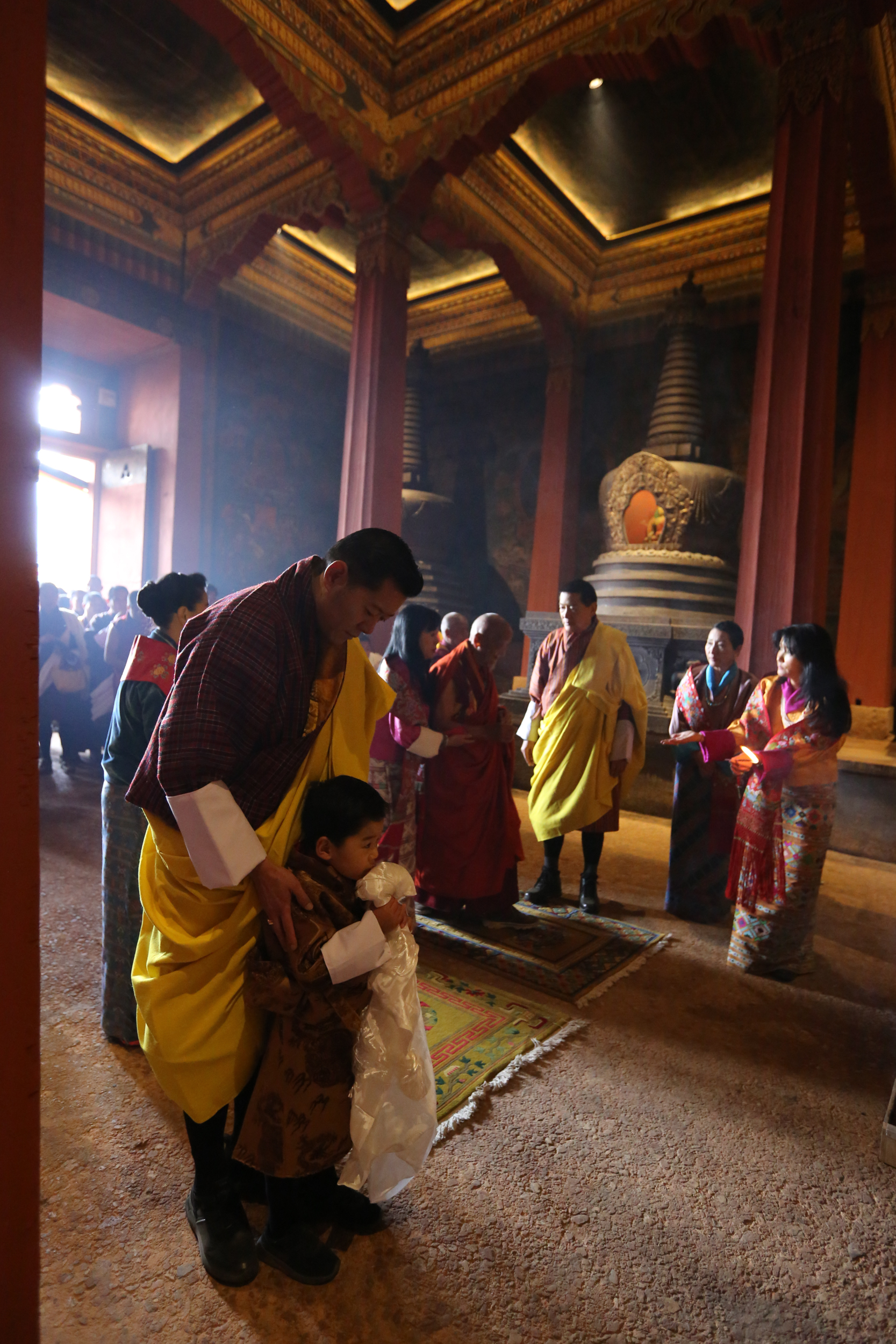
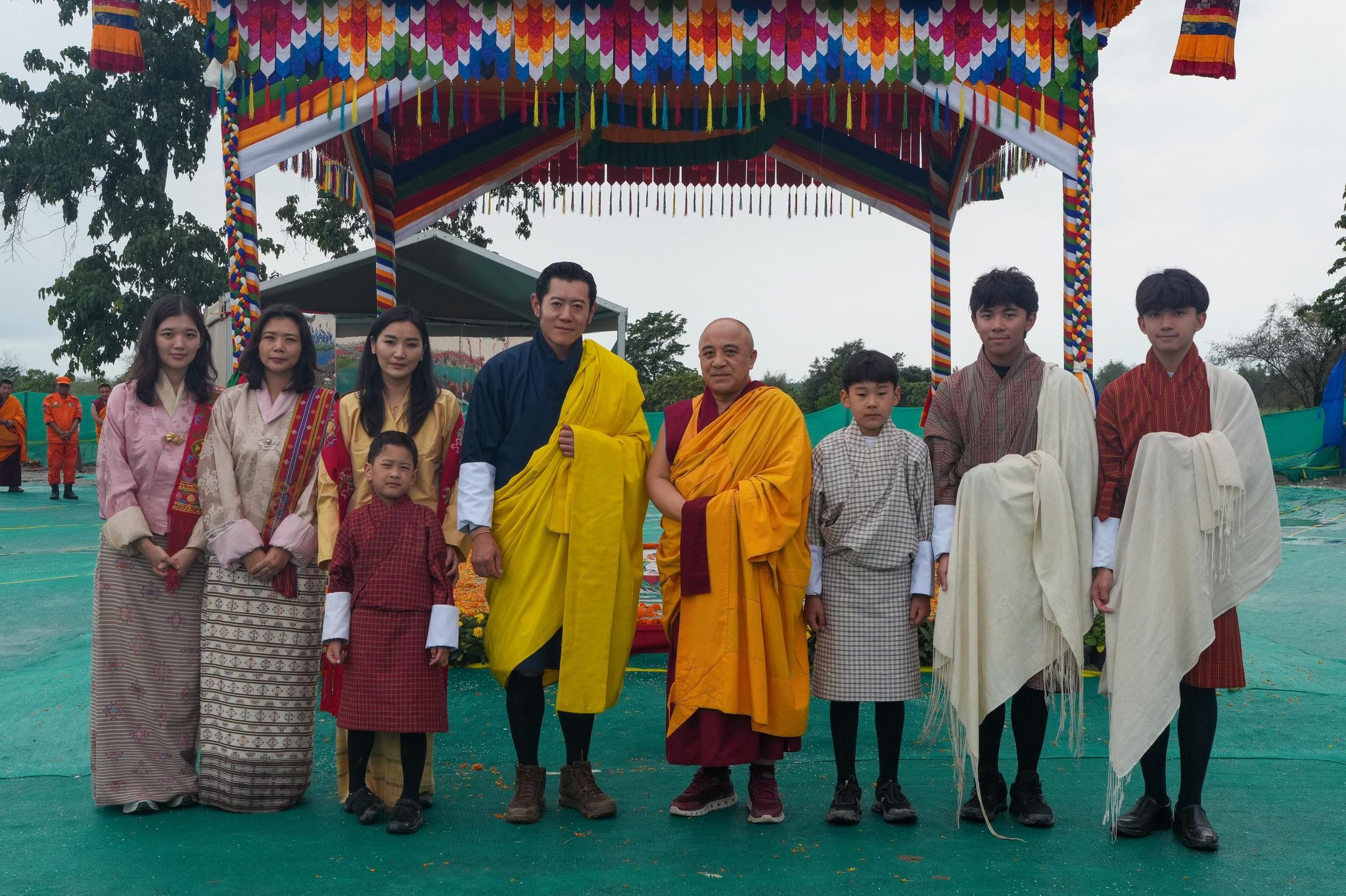
Rather than shielding the heir from the public sphere, King Jigme Khesar has deliberately integrated the Crown Prince into official duties, including state visits, parliamentary inaugurations, and environmental initiatives. This early visibility builds organic public affection while familiarizing the heir with the delicate mechanics of a modern constitutional system.
Constitutional Monarchy and the Evolution of Royal Authority
To understand the future of royal influence in Bhutan, one must examine the institutional transformation initiated by the Fourth King, Jigme Singye Wangchuck. In 2008, Bhutan adopted its first formal written constitution, transitioning from an absolute hereditary monarchy to a democratic constitutional monarchy.
Under the Constitution of the Kingdom of Bhutan:
- The Monarch as Head of State: The Druk Gyalpo serves as the symbol of unity of the kingdom and of its people.
- Separation of Powers: Legislative authority resides in a bicameral parliament, executive power rests with the Cabinet headed by the Prime Minister, and judicial power is vested in independent courts.
- Checks and Balances: The Constitution includes a mandatory abdication age of 65 for the monarch and allows parliament to initiate a vote of no confidence or abdication proceedings under specific, highly regulated legal conditions.
Monarchical Transition in Bhutan
- Absolute Monarchy
- Direct Executive & Legislative Rule
- 2008 Constitution
- Separation of Powers
- Mandatory Retirement
- Institutional Balances
- Constitutional Democracy
- Moral Leadership, National Unity & Strategic Guidance
This structural shift did not diminish royal reverence; instead, it elevated the Crown above the polarizing realm of partisan politics. While democratically elected governments manage routine budgetary allocations, party platforms, and civil administration, the King retains constitutional reserve powers:
- Granting Kidu (traditional welfare benefits and land grants to citizens facing distress).
- Exercising prerogative over defense, national security, and external boundaries.
- Serving as the primary protector of the Chhoe-sid-nyi (the dual system of religion and state).
As Crown Prince Jigme Namgyel matures, his prospective reign will operate strictly within these constitutional boundaries. Future royal influence will rely not on executive decree, but on moral authority, social capital, and convening power.
Economic Transformation and Royal Stewardship: Gelephu and Technology
Bhutan faces significant structural economic challenges, including youth emigration, public debt linked to hydropower gestation periods, and geographical isolation. In response, the monarchy has assumed the role of economic vision-setter, advocating systemic interventions to generate sustainable private-sector employment.
The centerpiece of this vision is the Gelephu Mindfulness City (GMC) Special Administrative Region (SAR), officially announced by King Jigme Khesar Namgyel Wangchuck during the National Day Address in December 2023. Spanning over 1,000 square kilometers along the southern border with Assam, India, the project aims to establish an autonomous economic and technological hub anchored in mindfulness, sustainability, and technological innovation.
Gelephu Mindfulness City (GMC) Framework
| Autonomous Status | Economic Anchors | Sovereign Alignment |
|---|---|---|
| • Executive autonomy | • Green tech & crypto | • Wangchuck stewardship |
| • Bespoke legal system | • Renewable hydropower | • Foreign investment |
| • Independent judiciary | • High-end ecotourism | • Diaspora repatriation |
The future of royal influence is intimately tied to the success of initiatives like Gelephu. Key dimensions include:
- Direct Royal Vision: The GMC is structured under royal charter, providing long-term institutional stability beyond parliamentary electoral cycles (which occur every five years).
- Digital and Sovereign Assets: Bhutan’s sovereign investment arm, Druk Holding and Investments (DHI), has diversified national reserves into digital assets, green computing, and sovereign artificial intelligence infrastructure powered by domestic hydropower.
- Talent Retention: The monarchy views structural modernization as a national security issue. By positioning the Crown as the primary catalyst for foreign direct investment, the royal family directly addresses the domestic brain drain of young professionals moving to Australia, the Middle East, and North America.
When the Crown Prince ascends to leadership roles, he will inherit an economy far removed from the agrarian model of his grandfather. His authority will increasingly be judged on how effectively the monarchy champions economic resilience without compromising sovereign values.
Dimensions of Royal Influence: Past, Present, and Future
The table below outlines how royal influence has transformed across generations of the Wangchuck dynasty and where it is projected to center during the Crown Prince's adult life.
| Dimension | Fourth Druk Gyalpo (1972–2006) | Fifth Druk Gyalpo (2006–Present) | Future Era: Crown Prince Jigme Namgyel |
|---|---|---|---|
| Primary System of Governance | Absolute monarchy transitioning to early administrative decentralization. | Constitutional democracy; parliamentary politics alongside royal reserve powers. | Mature constitutional democracy with established multi-party dynamics. |
| Philosophical Focus | Formulated Gross National Happiness (GNH); prioritized cultural preservation. | Balanced GNH with modernization, national digital identity, and institutional governance. | Integrating GNH with artificial intelligence, digital assets, and cross-border tech corridors. |
| Economic Role | State-driven economy; bilateral hydropower agreements; managed ecotourism. | Structural diversification; sovereign digital innovation; launching the Gelephu SAR. | Stewardship of international tech hubs; public-private partnerships; talent retention. |
| Public Interaction | Revered leader operating via direct tours and public councils (Dzongkhags). | Hands-on leader; frequent disaster relief presence; extensive civic engagement. | Hybrid presence: high-visibility physical diplomacy combined with digital-native platforms. |
| Geopolitical Strategy | Preserved national sovereignty; managed strategic alignment with India. | Deepened India partnership; negotiated complex border talks; broadened multilateral ties. | Navigating complex regional rivalries while positioning Bhutan as an international neutral enclave. |
Navigating Geopolitical Pressures and Internal Demographics
The future Crown Prince will operate at the intersection of complex external diplomacy and shifting domestic demographics.
External Geopolitics: The Himalayan Balance
Bhutan occupies a vital strategic buffer zone between India and China. Royal diplomacy has long formed the core of Bhutan’s external equilibrium:
- The Special Relationship with India: Rooted in the 1949 Friendship Treaty (updated in 2007), Bhutan maintains comprehensive defense, diplomatic, and trade ties with New Delhi. Monarchy-to-government diplomacy remains fundamental to this partnership.
- Border Negotiations with China: Bilateral boundary negotiations—particularly concerning the Doklam plateau and northern sectors—require steady sovereign oversight.
Because parliament and political parties frequently reflect transient domestic concerns, foreign powers place high value on the institutional continuity provided by the Druk Gyalpo. The Crown Prince is being conditioned to maintain this diplomatic neutrality, securing state independence while managing commercial relationships across South and East Asia.
Domestic Demographics and the Youth Challenge
Domestically, the expansion of global digital media, internet connectivity, and educational mobility has fundamentally altered the expectations of Bhutan's youth. While the monarchy remains universally respected, deference to traditional hierarchies is accompanied by demands for economic mobility, transparency, and meritocracy.
The Crown Prince's generation will consist entirely of digital natives. Royal communication will need to evolve beyond traditional royal proclamations (Kashos) into platforms and discourses that resonate with youth culture, while preserving the sacred role of the institution in public life.
Preserving Gross National Happiness in a Globalized Era
Bhutan’s defining philosophical contribution, Gross National Happiness (GNH), originated under the Fourth King as an alternative to Gross Domestic Product (GDP). GNH evaluates progress across four core pillars:
- Sustainable and equitable socioeconomic development.
- Environmental conservation.
- Preservation and promotion of culture.
- Good governance.
Under the current King, GNH has transitioned from a high-level philosophy into an empirical metric used by the Gross National Happiness Commission (now integrated into the National Land Commission and the Ministry of Finance) to screen national policies.
The Four Pillars of GNH
| Sustainable Development | Good Governance |
|---|---|
| Cultural Preservation | Environmental Integrity |
The future Crown Prince must manage the natural tension between GNH principles and rapid commercial integration:
- Cultural Anchors vs. Westernization: Upholding traditional customs, the national dress (Gho and Kira), and the state religion (Vajrayana Buddhism) while fostering an internationally competitive workforce.
- Carbon-Negative Commitment: Bhutan is one of the few net-carbon-negative countries in the world. The monarchy serves as the ultimate custodian of the constitutional mandate requiring at least 60% of the kingdom's landmass to remain forested for all generations.
Future royal legitimacy will hinge on validating that modernization does not erode the foundational spiritual and ecological safeguards created by the Crown's forebears.
Strategic Outlook: The Enduring Legitimacy of the Throne
Royal influence in Bhutan is not a relic of feudal privilege; it is an active mechanism of stability within a young, evolving democracy. As Crown Prince Jigme Namgyel Wangchuck prepares for his eventual role as the Sixth Druk Gyalpo, the nature of royal authority will continue its planned evolution:
- Unifying Institution: The Crown remains the sole entity above political, regional, and socioeconomic divides, providing continuity when electoral parliaments face gridlock.
- Guardian of State Identity: Amid intense globalization, the monarchy anchors Bhutan's sovereign autonomy, distinct Buddhist heritage, and environmental commitments.
- Sovereign Strategic Catalyst: As evidenced by the Gelephu Mindfulness City and investments in national digital infrastructure, the monarchy will continue to launch long-term modernization projects that exceed the legislative horizons of elected administrations.
By embedding modern technical capabilities within an institutional framework of Buddhist ethics and constitutional restraint, the Wangchuck dynasty is positioning its line of succession to lead Bhutan dynamically throughout the twenty-first century.
Frequently Asked Questions
Who is the current Crown Prince of Bhutan?
The current Crown Prince of Bhutan is Jigme Namgyel Wangchuck, born on February 5, 2016. He is the eldest son of King Jigme Khesar Namgyel Wangchuck and Queen Jetsun Pema, holding the formal title of The Gyalsey (Crown Prince) as the primary heir to the Golden Throne.
Does the King of Bhutan still hold absolute power?
No. Bhutan transitioned to a democratic constitutional monarchy in 2008 with the formal adoption of its national constitution. Executive power is held by the Prime Minister and the Cabinet, while legislative authority belongs to the elected Parliament. The King serves as the constitutional Head of State with defined reserve powers, particularly in national defense, foreign policy stability, and royal welfare (Kidu).
What is the Gelephu Mindfulness City, and why is the monarchy leading it?
The Gelephu Mindfulness City (GMC) is a planned Special Administrative Region in southern Bhutan designed to serve as an international economic hub focused on green technology, renewable energy, and sustainable investment. Because the initiative requires long-term international agreements, extensive legal autonomy, and capital preservation across multi-decade timelines, King Jigme Khesar Namgyel Wangchuck has spearheaded its creation under a royal charter to ensure continuous institutional backing beyond regular parliamentary election cycles.
How is the Crown Prince of Bhutan educated and prepared for succession?
The Crown Prince receives a comprehensive education that combines traditional Vajrayana Buddhist philosophy, Bhutanese language and culture, and modern international curricula. He is routinely included in state ceremonies, foreign delegations, and community outreach to develop direct governance literacy, public diplomacy skills, and an intimate understanding of the constitutional system he will eventually lead.
Can the Parliament remove or alter the powers of the King of Bhutan?
Yes. Under Article 2 of the Constitution of the Kingdom of Bhutan, the Parliament has the legal authority to pass a motion requiring the King to abdicate for reasons of permanent mental or physical incapacity, or for intentional violation of the Constitution. Such a motion requires a two-thirds majority in a joint sitting of Parliament, followed by a national referendum to confirm the decision.
Practical Action Framework for Observers and Analysts
To track how royal authority and succession dynamics develop in Bhutan over the coming years, focus on these concrete indicators:
- Review Parliamentary Legislative Records: Monitor official publications from the National Assembly of Bhutan and the National Council of Bhutan to track how royal charters interact with parliamentary statutes.
- Track the Development of Gelephu SAR: Follow the regulatory and structural milestones released by the Gelephu Mindfulness City governance authority to assess how royal economic initiatives attract sustainable capital.
- Monitor Civic Engagement Initiatives: Observe how public welfare schemes, digital identity expansions through Bhutan NDI, and sovereign technological projects evolve under royal stewardship.
Image Gallery