Why the Jeep Cherokee VIN Matters for Your Wallet
Your Jeep Cherokee’s Vehicle Identification Number (VIN) is a 17-character financial blueprint that dictates insurance premiums, resale value, and repair costs. By decoding this unique string, owners and buyers can identify specific tr...
Your Jeep Cherokee’s Vehicle Identification Number (VIN) is a 17-character financial blueprint that dictates insurance premiums, resale value, and repair costs. By decoding this unique string, owners and buyers can identify specific trim levels, safety features, and recall histories that directly impact total cost of ownership and prevent costly purchasing mistakes in the 2026 automotive market.
Contents
Decoding the Jeep Cherokee VIN: More Than Just a Serial Number
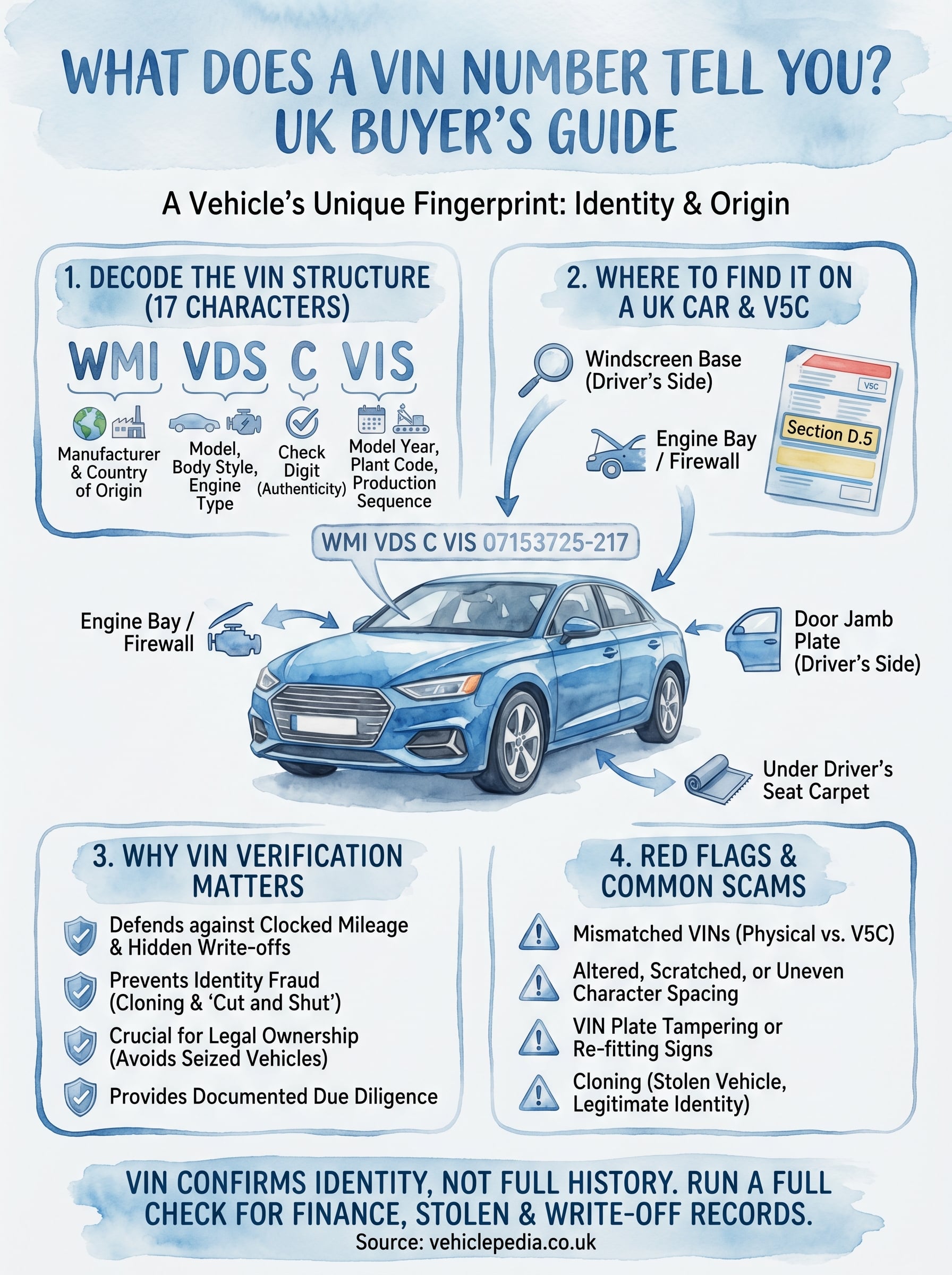
To the untrained eye, the VIN is a chaotic string of letters and numbers stamped on the dashboard and driver-side door jamb. However, for a Jeep Cherokee owner, this sequence is a sophisticated data packet. Since 1981, the 17-character format has been standardized, but the specific data encoded within a Jeep’s VIN provides granular details that can save or cost you thousands of dollars.
The first three characters represent the World Manufacturer Identifier (WMI). For most modern Jeep Cherokees, you will see "1C4," which indicates a Chrysler/Jeep vehicle manufactured in the United States. If you are looking at an older or international model, this code might change, which is the first indicator of potential shipping costs or parts availability issues. The fourth through ninth characters comprise the Vehicle Descriptor Section (VDS). This is where the "wallet impact" begins. These characters specify the engine type, body style, and trim level.
In the 2026 secondary market, distinguishing between a Cherokee Latitude and a Cherokee Trailhawk via the VIN is essential. Sellers often "upbadge" vehicles—adding decals and trim pieces from higher-end models to lower-tier frames. Relying on the VIN prevents you from paying a Trailhawk premium for a Latitude chassis. The 10th character identifies the Model Year, which is vital for calculating accurate depreciation, while the 11th character indicates the Assembly Plant. Knowing if your Cherokee was built at the Belvidere Assembly Plant can sometimes help enthusiasts track production quality trends associated with specific eras.
The Insurance Equation: How Your VIN Dictates Premiums
Insurance carriers do not just look at the make and model of your vehicle; they run the VIN through proprietary underwriting algorithms. For the Jeep Cherokee, a vehicle that has transitioned through various safety iterations (especially during the KL generation produced through the early 2020s), the VIN tells the insurer exactly which safety packages are factory-installed.
If your Cherokee’s VIN indicates it was equipped with the SafetyTec Group—which includes Blind-spot Monitoring and Rear Cross Path detection—you may be eligible for lower liability premiums. Conversely, if the VIN identifies a high-performance engine variant or a trim designed for heavy off-roading, like the Trailhawk, your collision premiums might be higher due to the increased cost of specialized components like skid plates and heavy-duty suspension.
Furthermore, insurance companies use the VIN to track "theft frequency" by sub-model. Some Cherokee trims are statistically more likely to be targeted for their infotainment systems or catalytic converters. By verifying the VIN before you buy, you can get an accurate insurance quote, preventing "sticker shock" after you’ve already signed the title. For 2026, as insurance rates continue to adjust for inflation and repair complexity, this pre-purchase step is more financially critical than ever.
Protecting Your Investment: Recalls and Warranty Verification
One of the most direct impacts the VIN has on your wallet involves the National Highway Traffic Safety Administration (NHTSA) recall database. Jeep Cherokees, particularly the KL generation (2014–2023), have faced several significant recalls involving the Power Transfer Unit (PTU) and transmission software.
If you purchase a used Cherokee without checking the VIN against the NHTSA Recall Database, you might inherit a mechanical "ticking time bomb." If a previous owner neglected a safety recall, the responsibility for the repair could technically fall on you if the manufacturer’s recall window or remedy program has reached its sunset. However, most safety recalls are open-ended; knowing the VIN allows you to force the dealership to perform these repairs for free, saving you hundreds or even thousands in labor and parts.
Beyond recalls, the VIN is the key to verifying the Balance of Factory Warranty. In 2026, many late-model Cherokees may still be under powertrain warranties or extended service contracts. The VIN tracks the "In-Service Date"—the exact day the vehicle was first sold. A vehicle manufactured in 2022 might not have been sold until 2023, meaning you could have an extra year of coverage you weren’t aware of.
Precision Maintenance: Saving Money on Repairs
The Jeep Cherokee has utilized various engines over the years, including the 2.4L Tigershark, the 3.2L Pentastar V6, and the 2.0L Turbo. Ordering parts based purely on the "year and model" is a common mistake that leads to "restock fees" and wasted shipping costs.
For instance, the braking systems and cooling components can differ significantly between a front-wheel-drive (FWD) Latitude and an 4x4 Trailhawk. When you provide a parts department or an online retailer with your VIN, you are ensuring that the Original Equipment Manufacturer (OEM) parts match your specific build sheet. This prevents "part-guessing," which often leads to installing the wrong component, potentially damaging other systems and doubling your repair bill.
Comparison of VIN-Identified Financial Factors (KL Series Example)
| VIN Position | Feature Identified | Financial Impact |
|---|---|---|
| 4th Digit | GVWR / Brake System | Affects insurance class and brake pad costs. |
| 5th Digit | Drive Line (4x4 vs FWD) | 4x4 models have higher resale but higher fuel/maintenance costs. |
| 6th Digit | Series/Trim Level | Prevents overpaying for "upbadged" lower trims. |
| 7th Digit | Body Style | Impacts aerodynamic efficiency and insurance premiums. |
| 8th Digit | Engine Type | Determines fuel grade, oil capacity, and spark plug costs. |
| 10th Digit | Model Year | Primary driver of Kelly Blue Book (KBB) and NADA valuation. |
Resale Value and the "Lemon" Factor
When it comes time to sell your Jeep Cherokee in 2026, savvy buyers will run a VIN history report (such as Carfax or AutoCheck). If your VIN is flagged with a "Salvage," "Rebuilt," or "Lemon" title brand, the value of your vehicle can drop by 30% to 50% instantly.
For buyers, the VIN is your shield against "title washing." This is a fraudulent practice where a vehicle with a branded title in one state is moved to another state that may not recognize the brand, resulting in a "clean" title. However, the VIN remains constant. A thorough search will reveal if the Jeep was ever submerged in a flood or involved in a structural accident. Paying $20,000 for a Jeep that is structurally worth $10,000 because of a hidden accident history is a mistake your wallet may never recover from.
Additionally, the VIN verifies the production sequence. Sometimes, vehicles built during the first month of a new generation (like the 2014 KL) have "first-year" bugs that affect resale. Conversely, the final production year of a generation often holds its value better because the manufacturer has ironed out the mechanical flaws.
How to Locate and Verify Your Jeep VIN
To leverage the financial benefits of the VIN, you must first locate it accurately. In a Jeep Cherokee, the most accessible location is the lower driver-side corner of the windshield. You should also compare this to the Federal Safety Certification Label located on the driver-side door b-pillar.
If these two numbers do not match, it is a massive financial red flag indicating the vehicle may have been rebuilt using parts from a stolen car or a different model. This discrepancy will make the vehicle nearly impossible to insure or sell legally in 2026. You can also find the VIN on:
- Vehicle registration documents
- Insurance policy cards
- The vehicle's engine block (in some older XJ models)
- The frame rail (visible in some 4x4 configurations)
FAQs About Jeep Cherokee VINs
Where is the most reliable place to decode my Jeep VIN for free?
The most reliable free resource is the NHTSA VIN Decoder. Unlike third-party sites that may try to sell you a history report, the NHTSA tool provides the direct manufacturing data provided by Stellantis (the parent company of Jeep). This tool is essential for verifying factory specifications and safety ratings without an upfront cost.
Can a VIN tell me the specific paint code for my Jeep?
While the VIN itself contains the build configuration, most public decoders won't show the paint code directly in the 17 digits. However, a dealership can use your VIN to pull a "Build Sheet." This document lists every single nut, bolt, and paint code (like "Diamond Black Crystal Pearl" or "Hydro Blue") used during assembly. This saves you money by ensuring any body repairs or touch-ups match perfectly the first time.
Does the VIN change if the engine is replaced?
No, the VIN is tied to the chassis/frame, not the specific engine block. However, if you replace the original engine with a different type (e.g., swapping a 2.4L for a 3.2L), the VIN will no longer accurately reflect the vehicle's mechanics. This can cause legal and financial issues during smog testing or resale, as the "VIN-expected" engine does not match the physical engine.
How does the VIN help in a "Total Loss" insurance claim?
In 2026, if your Cherokee is totaled, the insurance adjuster uses the VIN to find "comparable" vehicles in your area. If your VIN proves your Jeep had rare factory options like the Panoramic Sunroof or Luxury Group, the adjuster must include those features in the valuation. Without VIN verification, you might be compensated for a base model, losing out on thousands of dollars in the settlement.
Practical Recommendation
Before buying or performing major service on a Jeep Cherokee in 2026, always perform a "Triple Check": verify the VIN on the dashboard matches the door sticker and the title. Use the Mopar Owner Site to input your VIN and check for outstanding recalls. Finally, keep a copy of your vehicle’s full Build Sheet—attained via the VIN from a Chrysler/Jeep parts department—in your glovebox. This document is the ultimate tool for ensuring you never overpay for parts, insurance, or a used vehicle that isn't what it claims to be.
Image Gallery