Comprehensive ETL Tool Overview: Architecture, Capabilities, and Selection Guide
An ETL tool (Extract, Transform, Load) is a specialized data integration solution that automates the process of extracting raw data from multiple operational sources, transforming it to fit business logic and quality standards, and loa...
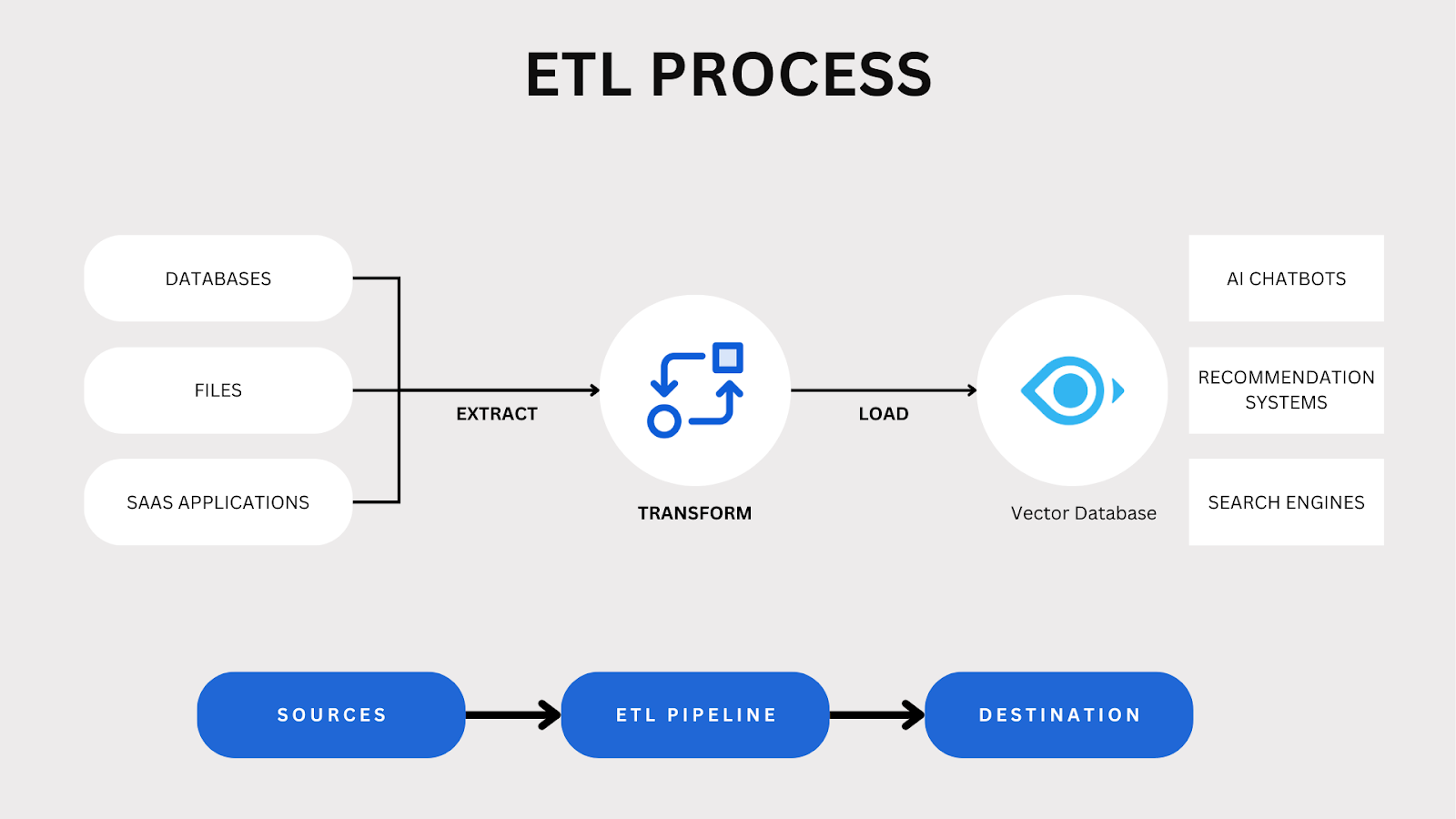
An ETL tool (Extract, Transform, Load) is a specialized data integration solution that automates the process of extracting raw data from multiple operational sources, transforming it to fit business logic and quality standards, and loading it into a centralized storage engine such as a data warehouse, data lake, or lakehouse. These tools serve as the foundational pipeline for enterprise reporting, business intelligence, and machine learning workflows.
Contents
Core Operations: Understanding the Extract, Transform, and Load Sequence
Modern enterprise data architectures rely on high-volume data movement to turn fragmented operational data into structured, actionable insights. An ETL tool coordinates three distinct, sequential operations to maintain data integrity and consistency across system boundaries.
- EXTRACT: Operational Data (Databases, APIs)
- TRANSFORM: Business Logic, Cleaning, Masking
- LOAD: Target Data Warehouse/Lake
1. Extraction: Data Ingestion Across Heterogeneous Systems
The extraction phase pulls structured, semi-structured, or unstructured data from diverse sources. These sources include relational databases (e.g., PostgreSQL, Oracle), NoSQL data stores (e.g., MongoDB, Cassandra), enterprise SaaS platforms (e.g., Salesforce, NetSuite), event streams, and flat files.
ETL tools handle extraction using several primary mechanisms:
- Full Extraction: Pulls the entire dataset from the source system. This method is typically reserved for small reference tables or initial pipeline seeds due to high network and compute overhead.
- Incremental Extraction: Captures only the records that changed since the last execution. Incremental ingestion relies on updated timestamps, high-water mark queries, or log-based mechanisms.
- Change Data Capture (CDC): Reads transaction log files directly from relational databases (such as MySQL binary logs or PostgreSQL write-ahead logs) to capture inserts, updates, and deletes in near-real-time without placing query load on production databases.
2. Transformation: Cleaning, Structuring, and Enriching Data
Once extracted, raw data must be processed to align with target schemas, business definitions, and privacy guidelines. Data transformation can occur in a dedicated staging engine or within memory while records are in transit.
Key transformation functions include:
- Cleansing and Normalization: Standardizing date formats, resolving inconsistent character encodings, trimming whitespace, and handling missing or corrupt values.
- Deduplication: Identifying and merging duplicate records across disparate source systems to create a unified view (such as a single customer record).
- Business Rule Application: Applying mathematical operations, currency conversions, lookups, and conditional logic to calculate business metrics.
- Data Anonymization and Masking: Obfuscating Personally Identifiable Information (PII) such as Social Security numbers, credit card details, and healthcare records to satisfy compliance frameworks like HIPAA and GDPR.
3. Loading: Writing to Target Storage Infrastructure
The final step writes transformed records into a destination system, such as Snowflake, Google BigQuery, Amazon Redshift, Microsoft Fabric, or a Databricks Lakehouse.
Loading behavior generally falls into two patterns:
- Initial/Full Load: Populates target tables entirely from scratch, commonly used when provisioning new analytical environments.
- Incremental Upsert (MERGE): Updates existing target records matching specific primary keys while inserting newly created records. High-throughput ETL tools leverage optimized bulk-loading utilities rather than row-by-row
INSERTstatements to maximize network and storage performance.
Architectural Paradigms: ETL vs. ELT vs. Reverse ETL
As underlying storage systems evolved from on-premises hardware to elastic cloud data warehouses, data integration patterns branched into distinct architectural paradigms.
- ETL:
- Source
- Transform Server
- Target Warehouse
- ELT:
- Source
- Target Warehouse (Transform inside)
- Reverse ETL:
- Warehouse
- Operational SaaS (Salesforce, etc.)
Traditional ETL
In classic ETL architectures, data transformations happen on an independent processing server (or mid-tier engine) before data reaches the destination database. This pattern protects target legacy data warehouses from heavy transformation compute loads. However, dedicated processing clusters add cost, maintenance overhead, and latency.
Modern ELT (Extract, Load, Transform)
With the advent of high-performance cloud data warehouses that separate compute from storage, the industry shifted toward ELT. Under this model, raw data is extracted and loaded directly into the cloud warehouse.
Transformations take place inside the warehouse itself using native SQL compute engines. ELT simplifies data ingestion by decoupling raw data collection from business logic, allowing data engineers to re-transform data historically without re-extracting it from original sources.
Reverse ETL
While ETL and ELT move operational data into central analytics repositories, Reverse ETL flows in the opposite direction. It extracts transformed, aggregated metrics from the data warehouse and writes them back into operational SaaS platforms (e.g., pushing customer churn scores directly into Salesforce or HubSpot). This process operationalizes analytics, equipping sales, support, and marketing teams with data-driven insights inside their native software interfaces.
Categorization of ETL Tools
The ETL landscape spans low-code managed enterprise platforms, specialized ELT ingestion tools, developer-focused open-source orchestrators, and SQL transformation frameworks.
MODERN DATA STACK
- Ingestion / ELT
- Fivetran
- Airbyte
- AWS Glue
- Orchestration
- Apache Airflow
- Dagster
- Mage
- Transformation
- dbt
- Custom SQL
1. Fully Managed Cloud ELT & Ingestion Platforms
These platforms prioritize low-maintenance operational management, featuring extensive libraries of pre-built, automated connectors for SaaS platforms and databases. They specialize in moving raw data directly into cloud data warehouses with automated schema drift management.
- Examples: Fivetran, Airbyte (Cloud edition), Qlik Replicate.
- Best Used For: Rapid deployment of standardized SaaS and database pipelines without writing custom connection code.
2. Cloud-Native Integration Services
Hyperscale cloud providers offer natively integrated serverless extraction and processing engines. These tools fit seamlessly into cloud security models, IAM roles, and storage layers.
- Examples: AWS Glue, Azure Data Factory (ADF), Google Cloud Dataflow.
- Best Used For: Organizations deeply committed to a single cloud platform requiring serverless scalability and tight native integration with enterprise storage buckets.
3. Enterprise Data Integration Platforms
Enterprise suites combine visual low-code development interfaces, extensive governance mechanisms, complex multi-cloud connectivity, and on-premises hybrid deployment capabilities.
- Examples: Informatica Intelligent Data Management Cloud (IDMC), Talend (Qlik), IBM InfoSphere DataStage.
- Best Used For: Large enterprises managing complex legacy systems, hybrid cloud infrastructure, and strict data governance governance mandates.
4. Open-Source Orchestration & Ingestion Engines
Open-source platforms give engineering teams complete control over pipeline code, deployment infrastructure, and security limits. Teams can write pipelines as code using Python or Java, fitting into standard CI/CD deployment pipelines.
- Examples: Apache Airflow, Dagster, Mage, Apache NiFi.
- Best Used For: Advanced data engineering teams requiring custom business logic, non-standard source integrations, and code-based pipeline configuration.
5. In-Warehouse Transformation Tools
Rather than moving data between external systems, in-warehouse tools focus exclusively on the "T" (Transform) in ELT. They turn raw staging tables into refined data models using modular, version-controlled SQL scripts.
- Examples: dbt (Data Build Tool), SQLMesh.
- Best Used For: Analytics engineers building data models directly within cloud data warehouses using SQL software development practices.
Feature Comparison Matrix
| ETL Category | Primary Representative Tools | Typical Deployment Model | Data Transformation Engine | Strengths | Strategic Trade-offs |
|---|---|---|---|---|---|
| Managed ELT Services | Fivetran, Airbyte Cloud | Managed SaaS | Cloud Data Warehouse (Post-Load) | Automated schema drift, zero infrastructure management, hundreds of pre-built connectors. | Usage-based pricing can scale rapidly; limited options for complex pre-load transformations. |
| Cloud-Native Engines | AWS Glue, Azure Data Factory | Managed Cloud Serverless | Spark / Serverless Dataflow | Native cloud IAM security, serverless auto-scaling, tight platform integration. | Cloud vendor lock-in; steeper learning curve for multi-cloud environments. |
| Enterprise Hybrid Platforms | Informatica IDMC, IBM DataStage | Hybrid Cloud / On-Premises | Dedicated Compute / Hybrid Engine | Complex multi-source support, advanced data lineage, governance controls. | High operational overhead; complex licensing structures. |
| Open-Source Orchestrators | Apache Airflow, Dagster | Self-Hosted / Kubernetes | Configurable (Python, Spark, SQL) | Infinite customization, zero license fees, code-based version control (Git). | Requires dedicated engineering teams for deployment, maintenance, and monitoring. |
| In-Warehouse Transformation | dbt (Data Build Tool) | SaaS or Open-Source CLI | Target Warehouse Engine | Version-controlled SQL, built-in testing, automatic documentation. | Specialized strictly for post-load data transformation; does not handle data extraction. |
Technical Evaluation Criteria for Selecting an ETL Tool
Selecting the right data integration solution requires evaluating core architectural requirements against your engineering resources, security guidelines, and business goals.
1. Connector Ecosystem and Custom Extensibility
Evaluate the vendor's library of pre-built source and target connectors. Confirm that the connectors support necessary features, such as incremental extraction methods and database Change Data Capture (CDC).
When working with custom applications or proprietary REST APIs, ensure the platform provides extensible SDKs or low-code HTTP connector builders.
2. Processing Latency: Batch vs. Real-Time Streaming
Define your organization's data freshness requirements:
Scheduled Batch Processing: Executes jobs at fixed intervals (hourly, daily, weekly). This approach works well for executive dashboards and historical reporting.
Micro-Batching: Runs short pipelines every few minutes, striking a balance between data freshness and warehouse processing costs.
Real-Time Streaming / Event-Driven: Processes events as they occur using technologies like Apache Kafka or AWS Kinesis. Streaming ETL requires specialized engines capable of low-latency, stateful event processing.
Latencies:
- Batch (Hours/Days)
- Micro-Batch (Minutes)
- Real-Time Streaming (Milliseconds)
3. Schema Drift Management
Source data structures change frequently. Upstream applications may add new columns, modify data types, or drop fields unexpectedly.
An enterprise-ready ETL tool must handle schema drift gracefully—either by dynamically altering target schemas to incorporate new columns without breaking running jobs, or by isolating breaking updates into dead-letter queues with clear alert notifications.
4. Data Governance, Lineage, and Compliance
As data flows through complex pipelines, maintaining visibility into data origin and transformation history becomes critical. Look for tools that automatically generate data lineage diagrams, track column-level dependencies, integrate with enterprise data catalogs (e.g., Alation, Collibra), and enforce data security standards like end-to-end encryption and dynamic masking.
5. Cost Structure and Total Cost of Ownership (TCO)
Pricing structures vary significantly across categories:
- Consumption-Based (Active Rows / MAR): Bills based on monthly active records moved or total rows updated. This model scales cost directly with data volume growth.
- Compute-Based (Node Hours / Credit Use): Charges based on underlying compute infrastructure runtime.
- User/License Subscriptions: Fixed operational expenditure common in enterprise software platforms.
Calculate total cost of ownership by factoring in vendor license costs, internal engineering resources needed to maintain custom code, and target warehouse compute consumption incurred by ELT workloads.
Implementation Best Practices and Common Pitfalls
Building robust, scalable data pipelines requires adhering to established data engineering principles.
DATA PIPELINE HEALTH CHECK
- Idempotent Writes: Prevent duplicate rows on retry.
- Quality Gates: Validate records prior to staging.
- DLQ Infrastructure: Isolate malformed data automatically.
- Observability: Track row counts, execution runtimes.
1. Design for Idempotency and Fault Tolerance
Every ETL pipeline step should be idempotent, meaning re-running a pipeline execution for a specific execution window produces identical output without duplicating records or corrupting historical state.
Leverage deterministic operational logic, temporary staging tables, and atomic database transactions to safely recover from pipeline failures.
2. Implement Data Quality Testing Gates
Validate incoming datasets before loading transformed records into production reporting layers. Incorporate open-source assertion frameworks—such as Great Expectations, Soda Core, or native dbt tests—to verify primary key uniqueness, non-null assertions, and column range boundaries.
3. Build Dead-Letter Queues (DLQ) for Malformed Data
Pipeline executions should not fail entirely because a single row contains invalid syntax or mismatched types. Route problematic records into isolated dead-letter queues or quarantine tables for inspection, allowing clean records to process without interruption.
4. Establish Pipeline Observability and Monitoring
Tracking job completion status is only the baseline. Robust data pipeline observability monitors four key operational metrics:
- Freshness: Has the data updated within expected operational windows?
- Volume: Did the pipeline process an unexpectedly high or low record count?
- Schema Evolution: Did upstream column modifications disrupt downstream models?
- Resource Utilization: Are compute execution times and data warehouse costs spiking unnaturally?
Frequently Asked Questions
What is the difference between an ETL tool and a data pipeline?
A data pipeline is any broad architectural framework that moves data from one software environment to another. An ETL tool is a specific, specialized type of data pipeline that extracts data from sources, applies analytical transformations, and loads it into a destination storage engine. All ETL processes are data pipelines, but not all data pipelines perform complex ETL transformations (e.g., simple file synchronization or data replication pipelines).
Is dbt (Data Build Tool) considered a complete ETL tool?
No. dbt focuses exclusively on the Transformation ("T") step within an ELT architecture. It assumes data has already been extracted from operational systems and loaded into a destination data warehouse or lakehouse by an ingestion platform like Fivetran, Airbyte, or AWS Glue. dbt then compiles SQL models into optimized native database code to transform that raw data in place.
What is zero-ETL, and will it replace traditional ETL tools?
Zero-ETL refers to tight, native integrations engineered directly between cloud point solutions (such as automated replication from Amazon Aurora databases directly into Amazon Redshift). While zero-ETL reduces the need for custom extraction glue code between specific supported platforms, it does not fully replace ETL tools across modern enterprises. Complex heterogeneous data environments, custom business transformations, legacy applications, and cross-cloud architectures still require dedicated data integration platforms.
How do data teams choose between buy vs. build for ETL pipelines?
Organizations generally buy managed SaaS or open-source commercial tools for standardized connectors (such as SaaS applications and common relational databases) where maintaining custom code yields low business value. Teams build custom pipeline components using frameworks like Apache Airflow, Dagster, or custom Python scripts when dealing with proprietary APIs, highly specialized data transformations, strict on-premises security requirements, or unique scale constraints.
Why is Change Data Capture (CDC) preferred over traditional database queries?
Traditional database extraction relies on querying production databases directly (e.g., executing SELECT * WHERE updated_at > timestamp). This approach puts heavy operational query load on production systems and misses records that were hard-deleted.
Change Data Capture (CDC) reads transaction logs directly at the storage layer without executing high-overhead application queries. This process captures complete row-level modifications (including deletes) in near-real-time with minimal impact on application database performance.
Strategic Next Steps for Data Leaders
- Audit Your Current Infrastructure: Map all active database sources, SaaS tools, and analytical targets. Document requirements for extraction methods, schema flexibility, and update freshness.
- Determine Technical Skill Set Alignment: Match potential tools to team expertise. Code-first data engineering teams benefit from open-source orchestrators (e.g., Airflow, Dagster) and dbt; visual-first teams may prefer enterprise platforms or managed SaaS solutions.
- Execute a Targeted Proof of Concept (PoC): Test candidate tools against real-world edge cases: connection drops, schema updates, data quality validation failures, and high-volume CDC streams.
- Enforce Governance and Security Early: Validate compliance policies (GDPR, HIPAA, SOC 2) and verify support for row-level encryption, dynamic column masking, and automated data lineage before finalizing tool procurement.
Image Gallery