What Netskope Provides for Enterprises: A Comprehensive Security Analysis
Netskope provides enterprises with a unified, cloud-native security platform known as Netskope One, which integrates Secure Access Service Edge (SASE) and Security Service Edge (SSE) capabilities. By combining a Next-Gen Secure Web Gat...
Netskope provides enterprises with a unified, cloud-native security platform known as Netskope One, which integrates Secure Access Service Edge (SASE) and Security Service Edge (SSE) capabilities. By combining a Next-Gen Secure Web Gateway (SWG), Cloud Access Security Broker (CASB), and Zero Trust Network Access (ZTNA), Netskope enables organizations to protect data and defend against threats across all web, SaaS, and private application traffic.
Contents
In 2026, the traditional perimeters of corporate networks have largely dissolved. As enterprises continue to embrace hybrid work models and decentralized data storage, the challenge of maintaining visibility and control has grown exponentially. Legacy security architectures, which relied on backhauling traffic to centralized data centers, are no longer viable due to latency issues and the sheer volume of cloud-based interactions. Netskope addresses these challenges by shifting security to the cloud edge, ensuring that protection follows the user and the data, regardless of location.
The Core Pillars of Netskope’s Enterprise Security
To understand what Netskope provides for enterprises, one must examine the specific components of its SSE (Security Service Edge) framework. This converged approach replaces disparate point products with a single, high-performance engine.
1. Next-Generation Secure Web Gateway (SWG)
A traditional SWG primarily filters URLs and blocks known malicious sites. However, modern enterprise traffic is dominated by cloud services and encrypted data. Netskope’s Next-Gen SWG goes beyond simple filtering by providing deep visibility into thousands of cloud applications. It decrypts and inspects TLS traffic at scale, identifying not just the destination of the traffic, but the specific actions being performed within an application (e.g., "Upload," "Share," or "Delete").
2. Cloud Access Security Broker (CASB)
Netskope is widely recognized as a pioneer in the CASB space. It provides two primary modes of operation:
- Inline CASB: Monitors and controls data in motion between the user and the cloud service. This allows for real-time policy enforcement, such as preventing an employee from uploading sensitive PII (Personally Identifiable Information) to a personal Dropbox account.
- API-based CASB: Scans data at rest within sanctioned cloud environments like Microsoft 365, Google Workspace, or Salesforce. This ensures that historical data is compliant and identifies misconfigurations that could lead to data exposure.
3. Zero Trust Network Access (ZTNA)
As enterprises move away from vulnerable legacy VPNs, Netskope ZTNA provides a more secure alternative for accessing private applications hosted in data centers or public clouds (AWS, Azure, GCP). Unlike a VPN, which often grants broad network access once a user is authenticated, ZTNA operates on the principle of least privilege. Users are connected only to specific applications they are authorized to use, and the applications themselves remain "invisible" to the public internet, significantly reducing the attack surface for ransomware and other lateral-movement threats.
Advanced Data Protection and DLP
Data is the most valuable asset of any enterprise, and its protection is at the heart of what Netskope provides. Netskope’s Data Loss Prevention (DLP) is integrated across the entire platform, providing a consistent policy engine for web, cloud, and private apps.
In 2026, Netskope’s DLP utilizes advanced techniques such as:
- Exact Data Matching (EDM): Identifying specific records from a database to prevent the exfiltration of sensitive customer information.
- Optical Character Recognition (OCR): Detecting sensitive data hidden within images or scanned documents.
- Fingerprinting: Tracking unique files and ensuring they do not leave the authorized corporate perimeter.
- AI-Based Classification: Using machine learning to automatically categorize data types, reducing the manual burden on security administrators.
This data-centric approach is particularly crucial for organizations dealing with strict regulatory requirements such as GDPR, CCPA, and HIPAA. By providing a single pane of glass for data movement, Netskope allows compliance officers to generate comprehensive audits and demonstrate "due care" in protecting sensitive information.
Security for the AI Era: SkopeAI
The rapid adoption of Generative AI (GenAI) tools like ChatGPT, Claude, and Gemini has introduced new risks to the enterprise. Employees often inadvertently share proprietary code, financial projections, or legal documents with these platforms. Netskope provides specialized protections for these use cases through its SkopeAI suite.
What Netskope provides for enterprises in the AI context includes:
- AI App Visibility: Identifying which AI tools are being used across the organization.
- Granular Risk Assessment: Providing a "Cloud Confidence Index" (CCI) for AI services, helping IT teams decide which tools are safe for corporate use.
- Data Guarding: Preventing the submission of sensitive data into AI prompts while still allowing employees to benefit from the productivity gains of the technology.
- Threat Protection: Monitoring for AI-generated malware or sophisticated phishing attempts targeting employees.
Architectural Advantage: The NewEdge Network
A significant part of what Netskope provides is not just software, but a global infrastructure known as NewEdge. This is one of the world's largest private security clouds.
Most security vendors rely on public cloud providers (like AWS or GCP) to host their security services. While convenient, this can introduce latency and "noisy neighbor" issues. Netskope’s NewEdge is a carrier-grade network with data centers in over 100 regions globally. By peering directly with major internet service providers (ISPs) and cloud providers, Netskope ensures that the security inspection process happens within milliseconds of the user, often resulting in a faster internet experience than a direct, unprotected connection.
Technical Comparison of Security Delivery Models
The following table highlights the differences between traditional legacy security and the Netskope SASE/SSE approach.
| Feature | Legacy Hardware/VPN | Netskope Enterprise SASE |
|---|---|---|
| User Experience | High latency due to backhauling | Low latency via global edge (NewEdge) |
| Visibility | Limited to network ports/protocols | Deep app-level and action-level visibility |
| Data Protection | Fragmented across point products | Unified DLP for web, cloud, and email |
| Access Control | All-or-nothing network access | Granular, application-specific (ZTNA) |
| Scalability | Requires hardware upgrades | Cloud-native, elastically scalable |
| AI Security | None or basic URL blocking | Context-aware AI prompt protection |
Implementation and Strategic Value
When an enterprise adopts Netskope, the implementation typically follows a phased approach to ensure business continuity. Organizations usually begin by deploying the Netskope Client to endpoints, which provides the steering mechanism for traffic.
Phased Deployment Strategy
- Discovery Phase: Using the CASB and SWG features to gain visibility into "Shadow IT." Most enterprises discover they are using 10x more cloud apps than IT was aware of.
- Risk Mitigation: Implementing "Read-Only" policies for risky applications and enforcing multi-factor authentication (MFA) via ZTNA.
- Governance and DLP: Applying advanced DLP profiles to prevent data leakage in real-time.
- Consolidation: Retiring legacy web proxies, VPN concentrators, and on-premises DLP appliances to reduce total cost of ownership (TCO).
The strategic value of Netskope lies in its ability to simplify the security stack. By consolidating multiple functions into a single platform, enterprises reduce the "alert fatigue" that plagues security operations centers (SOC). Instead of correlating logs from five different vendors, analysts see a unified timeline of user behavior, from the moment they log in to the moment they interact with a sensitive file.
Common Challenges and Considerations
While Netskope provides a robust suite of tools, enterprise adoption is not without its considerations.
- SSL Inspection at Scale: Decrypting all enterprise traffic requires careful planning regarding privacy (e.g., bypassing banking or healthcare sites) and performance. Netskope simplifies this with dedicated hardware in their NewEdge data centers, but policy configuration still requires expertise.
- Change Management: Moving from a traditional VPN to ZTNA requires a shift in how employees access resources. This often involves collaboration between network and security teams to define application-level access rules.
- Cost: As a premium, leader-quadrant solution, Netskope represents a significant investment. However, this is often offset by the decommissioning of legacy hardware and the prevention of costly data breaches.
Frequently Asked Questions
What is the difference between Netskope and a traditional VPN?
A traditional VPN connects a user to the entire corporate network, creating a risk of lateral movement if the user's credentials are stolen. Netskope ZTNA connects users only to specific authorized applications, keeping the rest of the network hidden and secure. Furthermore, Netskope provides continuous security inspection of the traffic, which most VPNs do not.
Does Netskope slow down the internet for employees?
Generally, no. Because Netskope operates the NewEdge private cloud network, it bypasses much of the congestion found on the public internet. By peering directly with providers like Microsoft and Google, Netskope often reduces latency for cloud applications compared to standard home or office internet connections.
Can Netskope protect against data leaks in Generative AI?
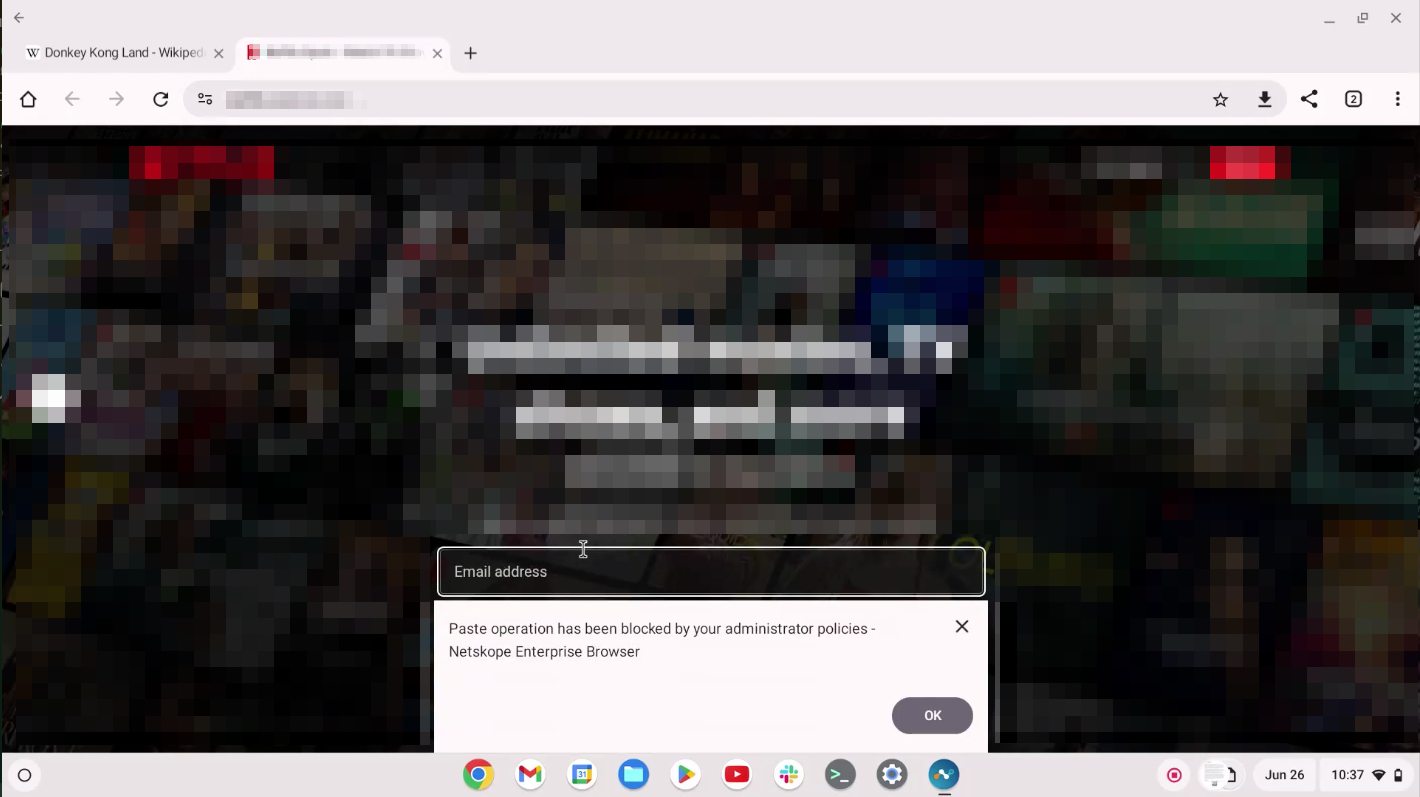
Yes. Netskope SkopeAI can identify when a user is interacting with an AI tool and apply DLP policies to the "prompts." For example, it can allow a user to use ChatGPT for general research but block them if they attempt to paste source code or customer PII into the chat interface.
Is Netskope suitable for small businesses?
Netskope is primarily designed for mid-to-large enterprises with complex regulatory, data protection, and hybrid work requirements. While smaller businesses can use it, the platform’s depth and granular control are most beneficial to organizations with hundreds or thousands of users and a significant cloud footprint.
How does Netskope handle encrypted traffic?
Netskope uses a high-performance SSL/TLS decryption engine within its NewEdge data centers. It can inspect encrypted traffic in real-time to look for malware or data exfiltration, while maintaining privacy by using pre-defined categories (like financial services or private health) that are automatically bypassed from inspection.
Strategic Recommendation
For enterprises operating in 2026, the transition to a SASE-based architecture is no longer optional; it is a requirement for operational resilience. To maximize the value of what Netskope provides, organizations should start with a comprehensive Cloud Risk Assessment. This allows leadership to identify the most significant gaps in visibility and data control before committing to a full-scale deployment. By prioritizing the protection of "Crown Jewel" data and replacing aging VPN infrastructure with ZTNA, enterprises can achieve a measurable improvement in their security posture within the first 90 days of implementation.
Image Gallery