Why Security Is Becoming the Number One Concern in Cloud Computing
Cloud security has transformed from an afterthought into the primary operational and financial hurdle for modern organizations, driven by accelerating enterprise cloud migration, escalating threat sophistication, complex multi-cloud en...
Cloud security has transformed from an afterthought into the primary operational and financial hurdle for modern organizations, driven by accelerating enterprise cloud migration, escalating threat sophistication, complex multi-cloud environments, and expanding regulatory frameworks.
Contents
The widespread adoption of cloud computing over the past two decades revolutionized how businesses scale operations, store data, and deliver applications. Organizations traded physical server hardware and on-premises data centers for scalable, on-demand infrastructure managed by major cloud service providers (CSPs) such as Amazon Web Services (AWS), Microsoft Azure, and Google Cloud Platform (GCP). Yet, this transition fundamentally altered the digital perimeter. As corporate infrastructure expanded across distributed global networks, securing these dynamic assets outgrew traditional perimeter defense models. Today, security stands unchallenged as the single greatest concern for chief information security officers (CISOs), chief technology officers (CTOs), and IT leaders worldwide. Understanding why security dominates cloud discussions requires examining the structural vulnerabilities, architectural complexities, and evolving threat vectors defining the modern digital landscape.
The Evolution of the Threat Landscape in Distributed Environments
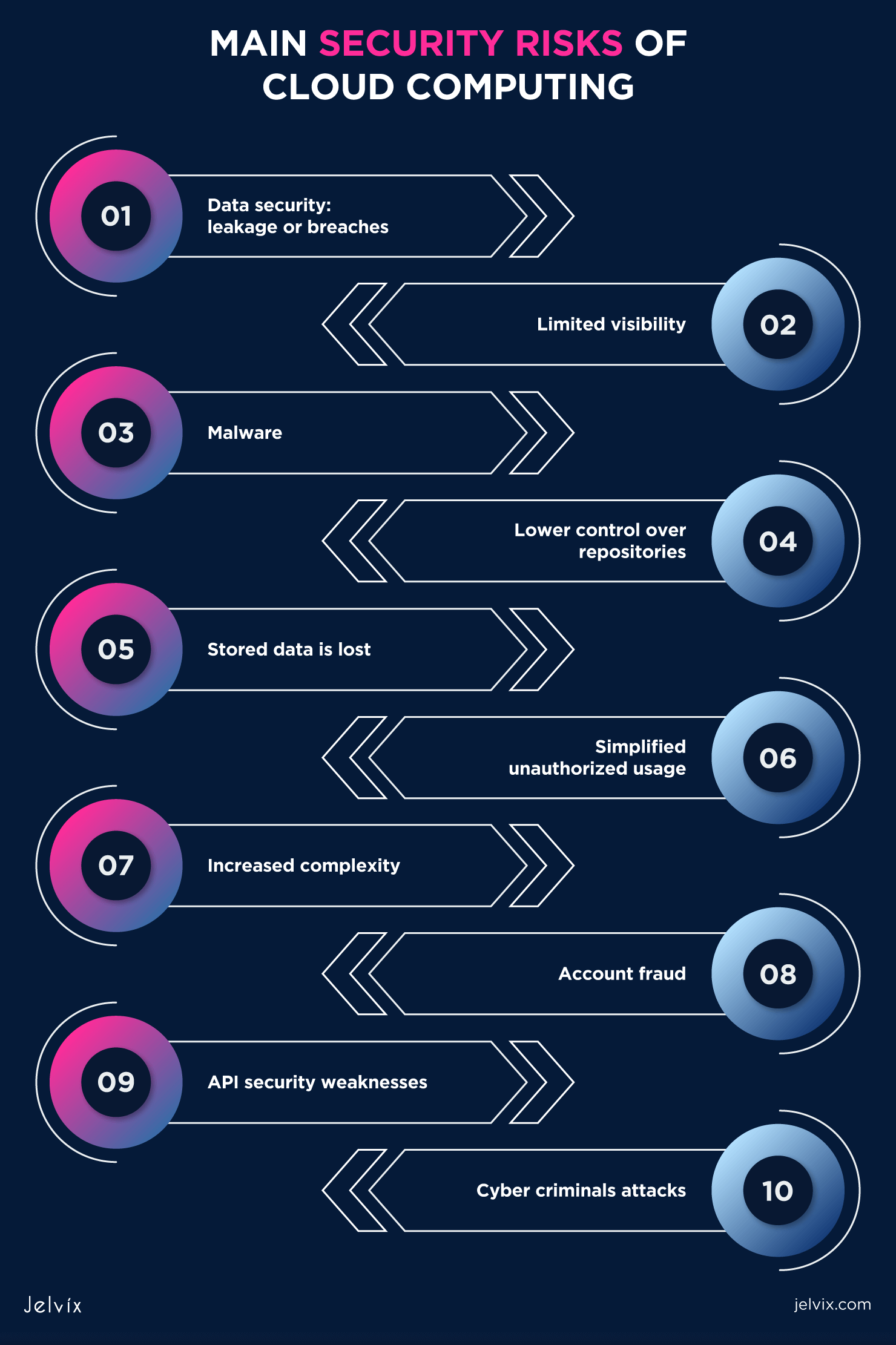
As enterprise networks transitioned from enclosed corporate offices to fluid, multi-cloud architectures, threat actors adapted with equal speed. Attackers no longer need to breach a physical firewall to compromise critical data; instead, they exploit native cloud characteristics, such as public accessibility, misconfigured storage buckets, and compromised administrative credentials.
Cybercriminals treat cloud infrastructure as a high-value target because a single breach can yield millions of customer records, intellectual property, or operational control over entire systems. Automated vulnerability scanners continuously sweep public internet spaces looking for open administrative ports, unpatched software instances, and overly permissive identity policies. Ransomware gangs have similarly evolved, developing specialized payloads capable of targeting cloud-native storage systems, backup containers, and virtual machines. Because modern enterprises rely heavily on continuous integration and continuous deployment (CI/CD) pipelines, a malicious actor who compromises a single code repository can inject malware directly into production environments, bypassing traditional security gates entirely.
The Shared Responsibility Model and Human Error
The foundation of cloud security rests on the Shared Responsibility Model, a framework that delineates security duties between the cloud provider and the customer. While CSPs secure the underlying infrastructure—including physical data centers, hardware, hypervisors, and global networking—the customer remains entirely responsible for everything they place in the cloud. This includes operating systems, network configurations, data classification, access management, and application code.
This division of labor frequently introduces catastrophic gaps due to human error. Organizations often assume that migrating to a hyperscale cloud provider means the provider manages security comprehensively. In practice, misconfigurations remain the leading cause of cloud security incidents. Common operational errors include:
- Leaving storage buckets publicly readable or writable.
- Failing to rotate administrative access keys and cryptographic secrets.
- Granting excessive, over-provisioned permissions to users and service accounts.
- Deploying unpatched virtual machine images containing known vulnerabilities.
Because cloud environments scale instantly, a single misconfiguration can expose millions of sensitive assets globally within seconds of deployment.
Complexity of Multi-Cloud and Hybrid Infrastructures
Modern enterprise architecture rarely relies on a single cloud vendor. Most organizations adopt multi-cloud and hybrid strategies to prevent vendor lock-in, optimize costs, and leverage specialized artificial intelligence or analytics tools across different providers. However, managing security across AWS, Azure, GCP, and legacy on-premises data centers creates unprecedented operational friction.
Each cloud provider utilizes distinct terminology, proprietary identity and access management (IAM) frameworks, and specialized security logging mechanisms. A security engineer who is an expert in AWS IAM policies may struggle to configure equivalent zero-trust guardrails within Google Cloud or Microsoft Azure. This fragmentation makes maintaining a unified security posture nearly impossible without specialized cloud security posture management (CSPM) tools. Furthermore, data flowing between disparate cloud environments and on-premises servers increases the surface area for interception and unauthorized access, demanding complex encryption protocols both in transit and at rest.
Regulatory Compliance and Data Sovereignty Pressures
The regulatory environment surrounding data privacy has tightened dramatically on a global scale. Organizations operating in the cloud must navigate a maze of stringent compliance mandates, including the European Union's General Data Protection Regulation (GDPR), the California Consumer Privacy Act (CCPA), the Health Insurance Portability and Accountability Act (HIPAA), and various regional financial sector standards.
Cloud computing complicates compliance because data is often stored across globally distributed server regions that may cross international borders. Organizations must constantly verify where their data resides, who has access to it, and how it is protected against foreign surveillance or extraterrestrial legal subpoenas. Non-compliance carries severe financial consequences, including multi-million-dollar fines, mandatory public disclosures, and reputational damage that can devastate customer trust. Consequently, cloud security is no longer just an IT issue; it is a critical board-level legal and financial liability.
The Rise of API Vulnerabilities and Supply Chain Risks
Modern cloud applications rely heavily on Application Programming Interfaces (APIs) and third-party software components to function efficiently. APIs serve as the digital glue connecting microservices, mobile applications, and external partner networks. Unfortunately, they also represent one of the most heavily exploited attack vectors in cloud computing.
Insecure, undocumented, or poorly authenticated APIs allow malicious actors to bypass standard authentication screens and scrape sensitive backend databases. Concurrently, software supply chain attacks have targeted open-source repositories and third-party libraries used in cloud-native development. When a widely utilized open-source library contains a critical zero-day vulnerability, every cloud application incorporating that library inherits the risk instantly. Securing the cloud now requires end-to-end visibility into software bills of materials (SBOMs) and real-time monitoring of all API traffic.
| Security Challenge | Primary Risk Factor | Mitigation Strategy |
|---|---|---|
| Cloud Misconfigurations | Human error and default settings | Implement automated CSPM tools and Infrastructure as Code (IaC) scanning. |
| Identity & Access Management | Over-privileged accounts and leaked keys | Enforce multi-factor authentication (MFA) and least-privilege access principles. |
| API Vulnerabilities | Lack of authentication and excessive data exposure | Deploy specialized API gateways and continuous behavioral monitoring. |
| Supply Chain Compromise | Malicious third-party code and open-source flaws | Utilize automated software composition analysis (SCA) and maintain verified SBOMs. |
Frequently Asked Questions
Does migrating to a major cloud provider guarantee data security?
No. Major cloud providers secure the physical infrastructure and underlying hardware virtualization layers, but the customer retains full responsibility for securing their data, access controls, configurations, and applications under the Shared Responsibility Model.
What is the single most common cause of cloud data breaches?
Misconfigurations of cloud storage and identity management policies remain the leading cause of cloud security breaches, frequently resulting from human error during rapid deployment cycles.
How does a multi-cloud strategy impact overall security posture?
A multi-cloud strategy increases complexity by forcing security teams to manage disparate IAM frameworks, logging formats, and compliance controls across different vendor ecosystems, raising the likelihood of visibility gaps.
What is Zero Trust architecture and why is it essential for cloud security?
Zero Trust is a security framework based on the principle of "never trust, always verify." It requires continuous authentication and authorization for every user and device attempting to access cloud resources, regardless of whether they are inside or outside the corporate perimeter.
How do compliance mandates influence cloud security budgets?
Regulatory standards like GDPR and HIPAA impose severe financial penalties for data mismanagement. This forces organizations to allocate substantial budget portions toward automated auditing tools, encryption protocols, and dedicated compliance personnel.
Strategic Next Steps for Cloud Security Resilience
Mitigating the escalating risks in cloud computing requires moving away from reactive patching and toward proactive, automated security governance. Organizations must embrace a continuous security posture by implementing Infrastructure as Code (IaC) scanning to catch misconfigurations before deployment. Furthermore, establishing strict least-privilege access models, mandating multi-factor authentication across all administrative tiers, and deploying cloud workload protection platforms (CWPP) will ensure that security keeps pace with digital innovation.
Image Gallery