Best Fast Cars Under $10,000: Performance, Specs, and Buyer’s Guide
Finding a genuinely fast car for under $10,000 requires balancing horsepower with potential maintenance risks. Top contenders on the used market include V8 muscle cars, turbocharged German sedans, and Japanese V6 coupes that achieve 0–...
Finding a genuinely fast car for under $10,000 requires balancing horsepower with potential maintenance risks. Top contenders on the used market include V8 muscle cars, turbocharged German sedans, and Japanese V6 coupes that achieve 0–60 mph in under six seconds. Success depends on prioritizing documented maintenance over low mileage to avoid catastrophic repair costs.
Contents
What Defines a Fast Car Under $10,000?
In the used vehicle market, purchasing a fast car on a $10,000 budget requires a clear definition of performance. In this price bracket, speed is generally measured by straight-line acceleration (0–60 mph in under 6.0 seconds), quarter-mile times, and overall power-to-weight ratio. A vehicle offering 250 to 350 horsepower in a lightweight or mid-weight chassis qualifies as fast, offering performance that rivals modern sport compacts for a fraction of the original sticker price.
Market conditions reflect a normalized used car landscape where $10,000 opens access to well-maintained vehicles from the late 1990s through the early 2010s. Achieving high performance at this entry point means taking on older electronics, higher odometer readings, or higher maintenance demands. Buyers must look past cosmetically pristine econoboxes to find performance platforms engineered from the factory with rigid chassis, robust drivetrains, and limited-slip differentials.
Top Fast Cars Available Under $10,000
The sub-$10,000 performance market spans three primary categories: American V8 rear-wheel-drive muscle, Japanese high-revving V6 coupes, and German turbocharged tuners. Each architecture brings distinct engineering advantages and unique points of failure.
1. Chevrolet Corvette C5 (1997–2004)
The fifth-generation Chevrolet Corvette remains one of the most capable performance values on the market. Powered by the all-aluminum 5.7-liter LS1 V8 engine, the C5 produces 345 horsepower and 350 lb-ft of torque. Featuring a rear-mounted transaxle that achieves a near-ideal 50/50 front-to-rear weight distribution, the C5 accelerates from 0–60 mph in roughly 4.7 seconds and can top 175 mph in factory trim.
Higher-mileage examples (typically between 110,000 and 150,000 miles) regularly clear the $10,000 threshold. The LS1 engine is mechanically durable, with replacement parts widely available and affordable. However, prospective owners must inspect the electronic brake control module (EBCM) on pre-2001 models, as replacement units are difficult to source, alongside harmonic balancers, which are prone to wobbling over time.
2. Infiniti G37 Coupe / Sedan (2008–2013)
The Infiniti G37 delivers refined, reliable Japanese performance built on Nissan's Front Midship (FM) platform. Equipped with the naturally aspirated 3.7-liter VQ37VHR V6 engine featuring VVEL (Variable Valve Event and Lift), the G37 generates 325 to 330 horsepower. It launches from 0–60 mph in 5.0 to 5.3 seconds, offered in rear-wheel drive (RWD) or all-wheel drive (G37x) configurations, paired with either a six-speed manual or a seven-speed automatic transmission.
The G37 offers a modern interior and superior crash test ratings compared to older sports cars. The VQ37 engine is resilient, but pre-2012 models suffer from paper rear timing gallery gaskets that can deteriorate, causing low oil pressure and requiring extensive labor to fix. Inspecting oil pressure logs or verifying aluminum gasket retrofits is essential during evaluation.
3. Nissan 350Z (Z33, 2003–2008)
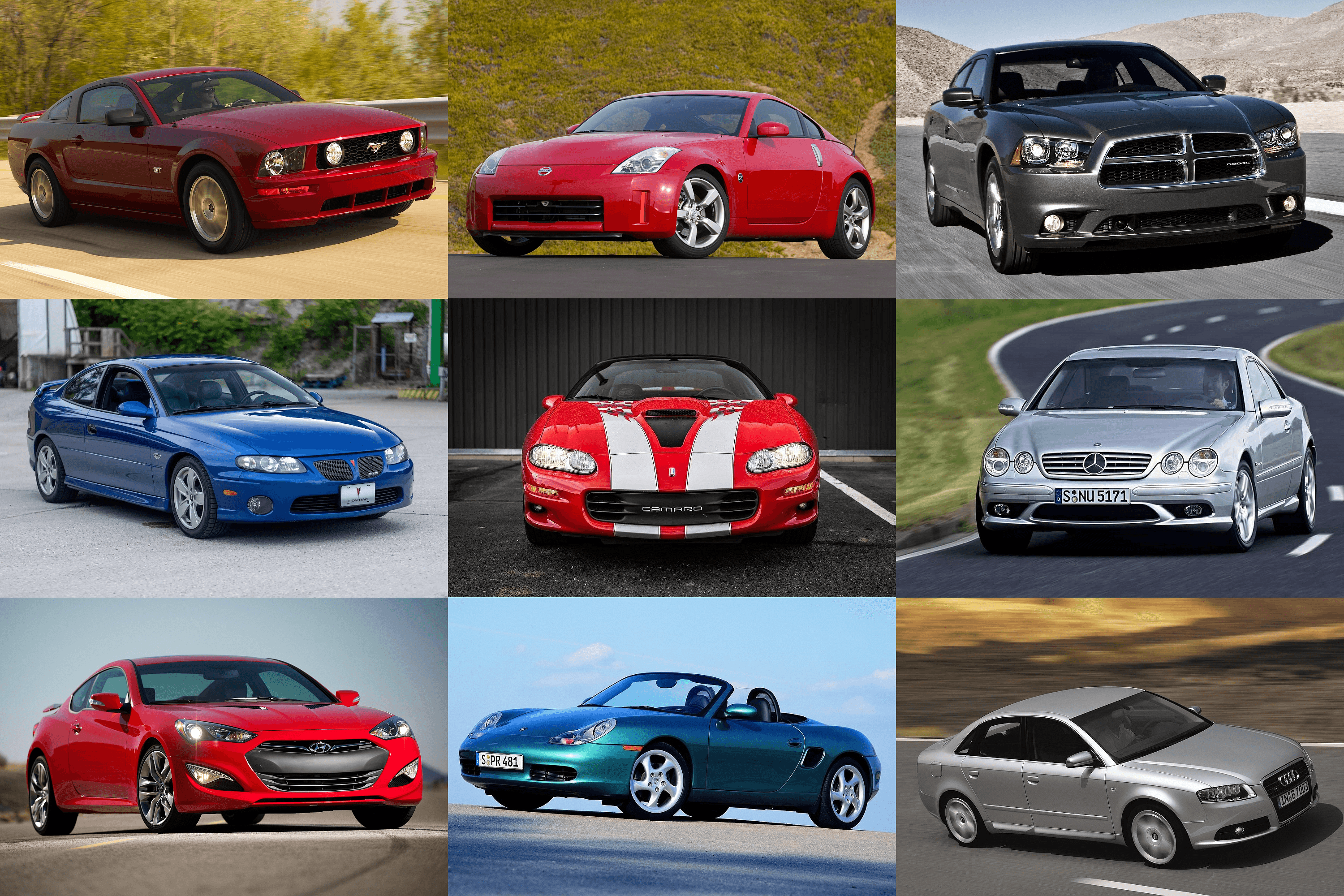
Sharing a similar chassis layout with the Infiniti G-series, the Nissan 350Z strips away back seats and luxury amenities in favor of a focused two-seater sports car experience. Models built between 2003 and 2006 utilize the VQ35DE engine producing 287 to 300 horsepower, while the updated 2007–2008 models feature the dual-throttle-body VQ35HR engine producing 306 horsepower with a higher 7,500 RPM redline.
A well-sorted 350Z completes the 0–60 mph sprint in 5.2 seconds. The Z33 platform benefits from an enormous aftermarket support ecosystem, making it a favorite for track days and drifting. Common issues include high oil consumption on early VQ35DE "RevUp" engines, worn synchros on early manual transmissions (CD001 through CD008), and worn rear differential bushings.
4. BMW 335i (E90 / E92, 2007–2010)
For raw tuning potential and rapid acceleration, the BMW 335i is an exceptional choice under $10,000. Powered by the N54 3.0-liter twin-turbocharged inline-six engine, the factory 335i produces 300 horsepower and 300 lb-ft of torque. It reaches 0–60 mph in 4.8 seconds. Simple software tunes (ECU remaps) can push this engine past 400 horsepower without internal engine modifications.
However, the N54 is notorious for complex maintenance requirements. The low purchase price is often balanced by high ongoing repair costs. Essential failure points include the high-pressure fuel pump (HPFP), twin wastegate rattle, electric water pumps, oil filter housing gaskets, and fuel injectors (Index 12 injectors can cost thousands to replace). A thorough service record history is vital when considering an N54-powered BMW.
5. Ford Mustang GT (S197, 2005–2010)
The S197 generation Ford Mustang GT brings classic retro styling powered by a 4.6-liter 3-valve Modular V8 engine. Delivering 300 horsepower and 320 lb-ft of torque, the S197 GT covers 0–60 mph in 5.1 seconds. While its solid rear axle lacks the independent rear suspension refinement of modern sports cars, it offers straightforward drag-strip launch traction and durable durability.
Parts for the 4.6L V8 are among the least expensive in the automotive industry. Critical issues to check include two-piece spark plugs in 2005–2007 models that can snap off inside the cylinder head during removal, alternator failures due to heat exposure, and water leaks entering the passenger footwell from clogged cowl drains.
6. Volkswagen Golf GTI (MK6, 2010–2014)
Buyers looking for hot hatch functionality alongside quick acceleration often turn to the sixth-generation Volkswagen Golf GTI. Featuring a 2.0-liter EA888 turbocharged inline-four producing 200 horsepower and 207 lb-ft of torque, the GTI covers 0–60 mph in 6.1 seconds when equipped with the Direct-Shift Gearbox (DSG) dual-clutch transmission. While down on peak horsepower compared to V8 rivals, its lightweight front-wheel-drive layout and quick torque delivery make it exceptionally nimble in urban traffic.
Key inspection areas for the EA888 engine include the timing chain tensioner (early designs fail without warning, causing engine destruction), intake manifold runner flap failures, carbon buildup on direct-injection intake valves, and ensuring the DSG fluid was changed every 40,000 miles.
Performance and Technical Comparison
The following table compares key technical specifications, acceleration metrics, drivetrain layouts, and common mechanical risks for high-performance vehicles available under $10,000.
| Vehicle Model | Engine Architecture | Horsepower / Torque | 0–60 mph (Seconds) | Drivetrain Layout | Primary Inspection Focus |
|---|---|---|---|---|---|
| Chevrolet Corvette C5 | 5.7L LS1 V8 | 345 hp / 350 lb-ft | 4.7 | RWD (Rear Transaxle) | EBCM module, harmonic balancer, steering column lock |
| Infiniti G37 | 3.7L VQ37VHR V6 | 328 hp / 269 lb-ft | 5.0 | RWD / AWD | Paper timing gallery gaskets (pre-2012), steering rack leaks |
| Nissan 350Z (HR) | 3.5L VQ35HR V6 | 306 hp / 268 lb-ft | 5.2 | RWD | Concentric slave cylinder (CSC), rear diff bushing, oil burning |
| BMW 335i (E90/E92) | 3.0L N54 Twin-Turbo I6 | 300 hp / 300 lb-ft | 4.8 | RWD / AWD | HPFP, wastegate rattle, water pump, valve cover leaks |
| Ford Mustang GT (S197) | 4.6L 3-Valve V8 | 300 hp / 320 lb-ft | 5.1 | RWD (Solid Axle) | Two-piece spark plug breakage, cowl drain leaks, alternator |
| Volkswagen Golf GTI (MK6) | 2.0L EA888 Turbo I4 | 200 hp / 207 lb-ft | 6.1 | FWD | Timing chain tensioner, carbon buildup, DSG service history |
Evaluating Reliability and Hidden Maintenance Costs
The true cost of a cheap fast car extends past the initial purchase price. High-output engines and aggressive factory suspensions put stress on mechanical components, meaning neglected maintenance accumulates quickly.
- Total Buyer's Budget: $10,000
- Vehicle Acquisition Capital: $7,500 – $8,000
- Initial Repair & Maintenance Fund: $2,000 – $2,500
- Mandatory Fluids & Filters (Engine, Trans, Diff, Brake)
- Consumables (Tires, Brake Pads, Rotors)
- Platform-Specific Deferred Maintenance (Gaskets, Pumps, Bushings)
The Cost of Deferred Maintenance
When high-performance sports sedans and coupes depreciate to $10,000, they frequently pass through owners who skipped expensive service intervals. A twin-turbo German car bought for $8,500 can easily require $3,000 in immediate repairs for high-pressure fuel pumps, injectors, and turbo wastegate assemblies. Similarly, a V8 muscle car may need a fresh clutch, new tires, and suspension arm replacements to handle its factory output safely.
Budgeting $2,000 to $2,500 past the purchase price as an immediate repair reserve protects buyers from sitting on a non-running vehicle.
Conducting a Pre-Purchase Inspection (PPI)
Before completing any transaction, paying an independent, brand-specialist mechanic to perform a pre-purchase inspection is critical. The inspection must prioritize:
- Diagnostic Trouble Codes (DTCs): Scanning all control modules for cleared codes, shadow codes, or incomplete emission monitors.
- Fluid Leaks and Compression: Checking for valve cover, oil pan, and rear main seal leaks. A compression and leak-down test is recommended for turbocharged or high-mileage V8 platforms.
- Chassis and Suspension Integrity: Inspecting subframe mounts, control arm bushings, strut towers, and checking for frame damage caused by undisclosed collisions or aggressive track usage.
- Rust and Corrosion: Checking structural points, floor pans, rocker panels, and suspension mounting bolts—especially on cars originating from winter road-salt regions.
Operating Costs: Insurance, Consumables, and Fuel
Owning a fast car comes with elevated operational overhead compared to a standard commuter sedan. Factoring these three running costs into a monthly budget is essential.
Insurance Rates for Performance Vehicles
Auto insurance underwriters calculate premiums based on risk statistics. Two-door sports coupes, V8 powertrains, and vehicles frequently associated with younger driver demographics incur significantly higher monthly insurance rates. Obtaining insurance quotes using specific VINs prior to purchase prevents financial surprises. Detailed driver risk guidelines published by the National Highway Traffic Safety Administration (NHTSA) highlight how vehicle performance tiers directly track with loss-frequency metrics.
High-Performance Consumables
Fast cars wear through tires and brakes much faster than standard commuter cars. Sticky, speed-rated performance tires (such as 200-treadwear or summer compound rubber) cost between $800 and $1,400 per set and may only last 15,000 to 20,000 miles. Braking systems on cars like the Infiniti G37 Sport or Nissan 350Z Track edition use multi-piston calipers (e.g., Akebono or Brembo) that require premium rotors and low-compressibility pads, doubling standard brake service costs.
Fuel Requirements
Most high-compression naturally aspirated V6/V8 engines and turbocharged engines require 91 or 93 Octane Premium Unleaded fuel. Running lower octane fuel forces the engine's ECU to retard ignition timing to prevent harmful knock, reducing horsepower and tank efficiency. Expect lower average fuel economy (typically 15 to 22 MPG combined depending on driving habits).
Frequently Asked Questions
What is the absolute fastest car under $10,000 in a straight line?
The Chevrolet Corvette C5 (1997–2004) and tuned BMW 335i (E90/E92) are the fastest straight-line performance cars available in this price range. A stock C5 Corvette runs 0–60 mph in ~4.7 seconds with a top speed over 175 mph. An N54-powered BMW 335i with a mild Stage 1 software flash easily matches or exceeds those acceleration figures for under $10,000 total investment.
Is it safe to daily-drive a $10,000 performance car with over 100,000 miles?
Yes, provided the vehicle has a documented service history and undergoes a thorough pre-purchase inspection. Naturally aspirated platforms like the Infiniti G37, Nissan 350Z, and Ford Mustang GT 4.6L are exceptionally reliable daily drivers over 100,000 miles. Turbocharged European platforms like the BMW 335i require more preventive maintenance to maintain daily reliability.
Should I buy a high-mileage manual or automatic performance car?
Manual transmissions are generally safer buys on the used market at high mileage. Rebuilding or replacing a clutch is straightforward and relatively inexpensive. Older torque-converter or early dual-clutch automatic transmissions (like early DSGs or GM 4L60Es) can be complex and expensive to replace if they fail due to deferred fluid service.
How much extra money should I save for repairs after buying a $10k sports car?
Buyers should maintain a dedicated repair reserve fund of $2,000 to $2,500. This covers initial fluid flushes, baseline maintenance, replacing worn tires or brakes, and addressing minor oil leaks or failing sensors immediately after taking ownership.
Why are some fast cars like the Audi S4 (B7) or Mercedes-AMG (C55) so cheap under $10k?
Older German V8 luxury-performance cars suffer severe depreciation due to extreme maintenance costs and complex engineering. Issues like timing chain guide failures on Audi 4.2L V8 engines require pulled-engine repairs costing over $4,000 in labor alone. Low purchase prices usually reflect incoming expensive maintenance bills.
Strategic Guidance for Buyers
To secure a fast, reliable vehicle under $10,000 without taking on an unmanageable money pit:
- Target Unmodified Examples: Prioritize stock vehicles owned by mature drivers over cars featuring cheap aftermarket bolt-ons, aggressive stance suspension modifications, or unverified ECU tunes.
- Verify Maintenance Records: Prioritize complete service records, oil-change histories, and proof of major service items (timing belts, water pumps, clutches) over lower mileage readings.
- Execute a Strict Budget Allocation: Set your maximum vehicle purchase price at $7,500–$8,000, reserving the remaining $2,000–$2,500 for taxes, registration, immediate fluid services, and emergency repairs.
- Get a Professional Pre-Purchase Inspection: Never purchase an aging performance vehicle without having a qualified technician inspect it on a lift and scan its electronic diagnostic modules.
Image Gallery