Selecting the Best CRM SMS Email Software for Calling: A Complete Enterprise Buyer's Guide
A unified CRM platform with SMS, email, and calling capabilities consolidates customer relationship management, voice telephony (VoIP), SMS messaging, and email outreach into a single interface. By eliminating disconnected communicatio...
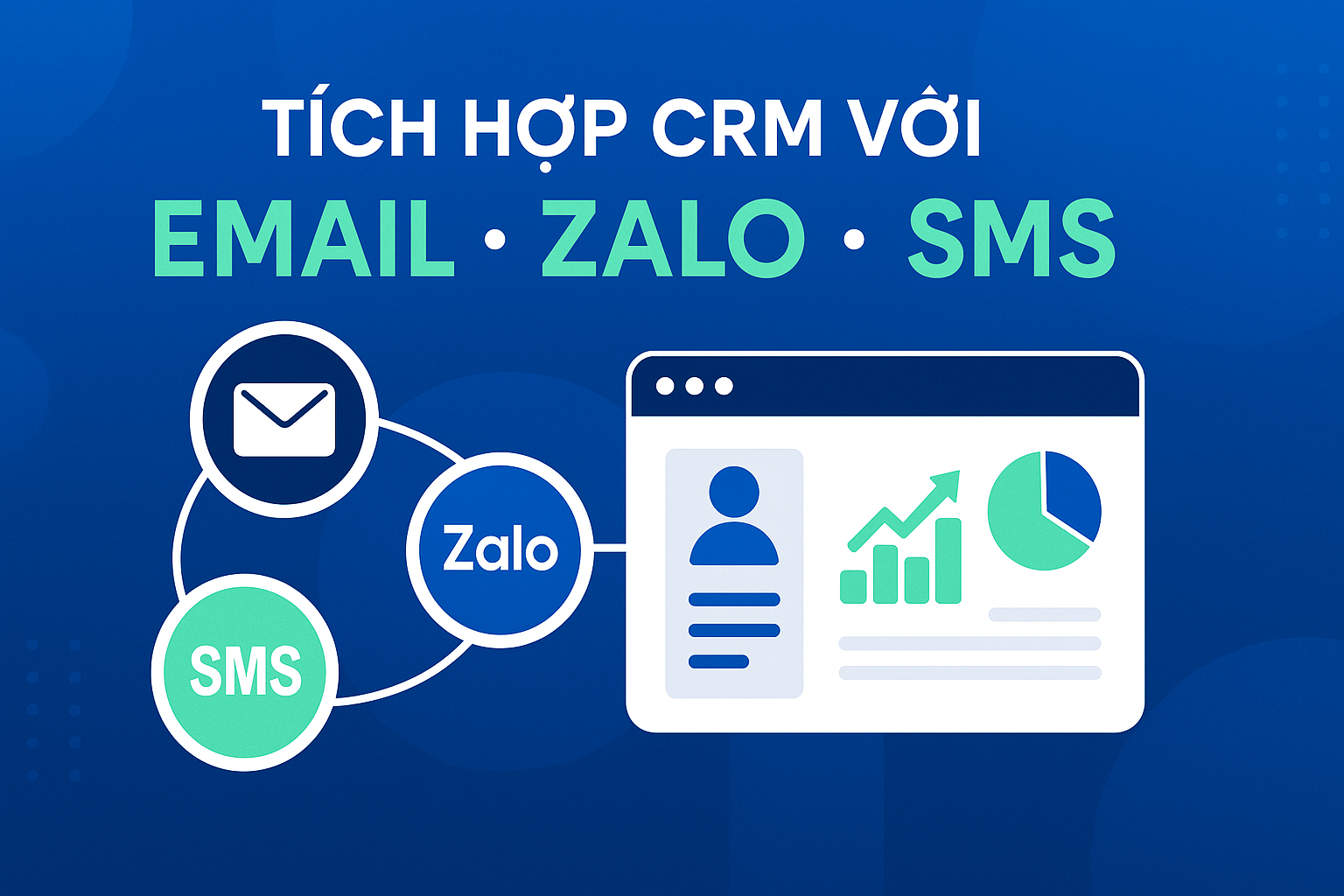
A unified CRM platform with SMS, email, and calling capabilities consolidates customer relationship management, voice telephony (VoIP), SMS messaging, and email outreach into a single interface. By eliminating disconnected communication channels, these software solutions enable sales and support teams to execute multi-touch engagement sequences, automate lead tracking, and maintain accurate activity logs without manual data entry.
Contents
What Is an All-in-One CRM for Voice, SMS, and Email?
Traditional sales technology stacks rely on separate software products: one for relationship and pipeline tracking, another for email marketing campaigns, a standalone cloud PBX or VoIP service for voice calls, and a gateway service for text messaging. Operating disparate tools creates data silos, increases software licensing costs, and forces representatives to jump between browser tabs—a phenomenon known as context switching that significantly lowers operational efficiency.
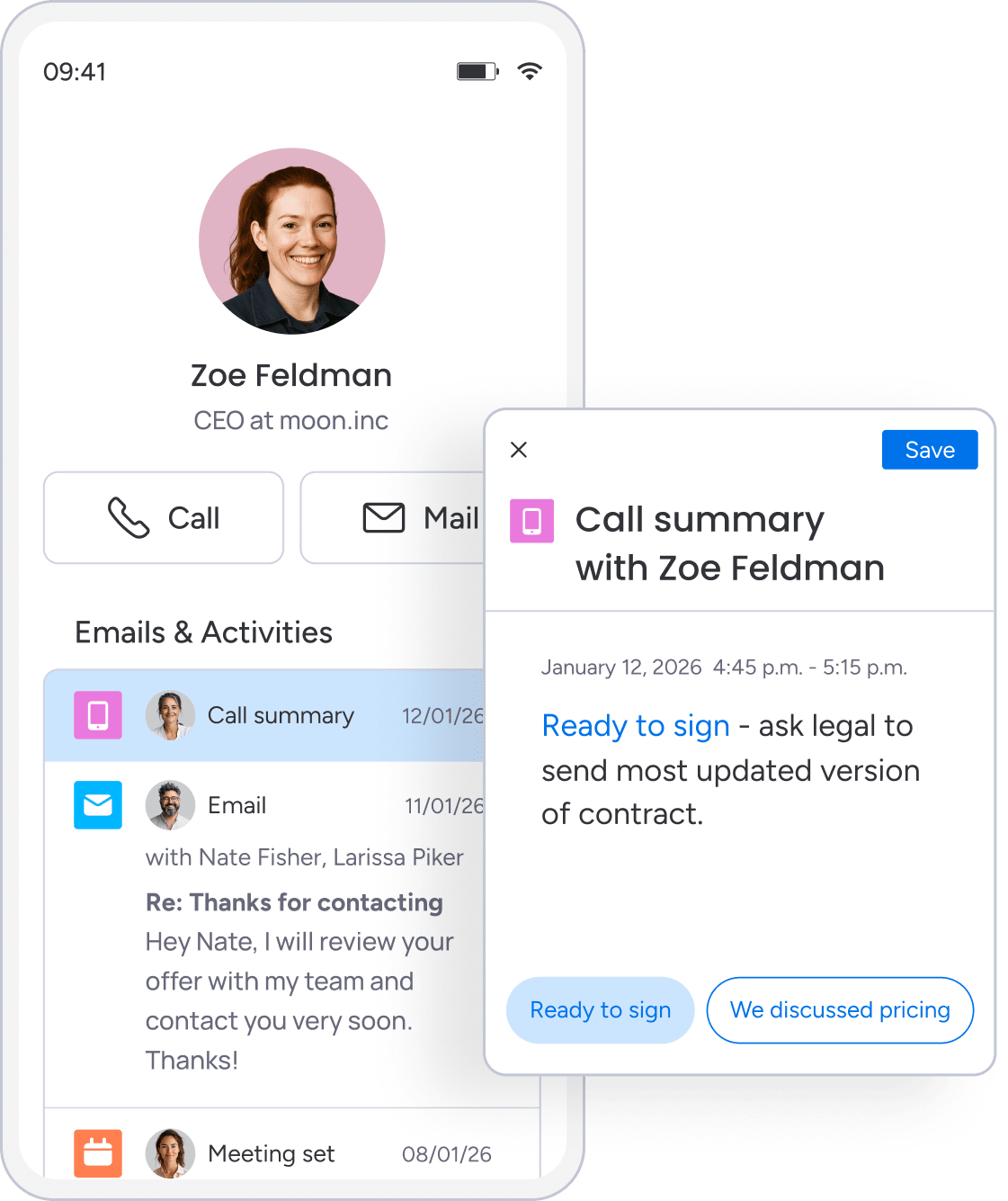
An integrated CRM SMS email software for calling merges these three primary outreach channels into a single operational interface powered by a unified contact database. When a representative opens a contact record, they can view historic email exchanges, past SMS conversations, recorded phone calls, and call transcripts alongside deal stage metrics and custom account attributes.
- Unified CRM Platform
- Voice Telephony (VoIP / Dialers)
- SMS / MMS (2-Way / Automated)
- Email Sequences
- Unified Lead & Activity Logs
Native Infrastructure vs. Third-Party API Integrations
When evaluating omnichannel CRMs, businesses encounter two primary system architectures:
- Native All-in-One Platforms: Systems built with embedded voice engines (often utilizing web-based RTC or underlying Communications Platform as a Service [CPaaS] infrastructure), native SMS gateways, and built-in email servers. Examples include Close CRM and GoHighLevel. These platforms require minimal initial configuration for communication infrastructure, as phone numbers and sending domains can be provisioned directly inside the administrative settings.
- Modular/Integrated CRMs: Enterprise platforms like HubSpot, Zoho CRM, or Salesforce Sales Cloud that provide deep native email and pipeline capabilities, but rely on API bridges, webhooks, or marketplace apps (such as Twilio, RingCentral, or JustCall) to deliver advanced telecommunication dialers and SMS messaging.
Key Technical Features to Evaluate
To select the right software, operations leaders and system architects must evaluate several technical components across voice, messaging, and data governance.
1. Built-in Power and Predictive Dialers
For high-volume sales teams, manual dialing slows down pipeline momentum. Advanced CRM telephony includes:
- Power Dialers: Automatically dial the next contact on a designated list as soon as a representative completes an active call, logging notes and disposition codes automatically.
- Predictive Dialers: Use algorithms to call multiple numbers simultaneously per available agent, filtering out voicemails, unanswered lines, and busy signals to connect agents instantly to live prospects.
- Voicemail Drop: Allows callers to drop a pre-recorded voicemail with a single click while immediately moving on to the next dial.
2. Automated Multi-Channel Sequences (Workflows)
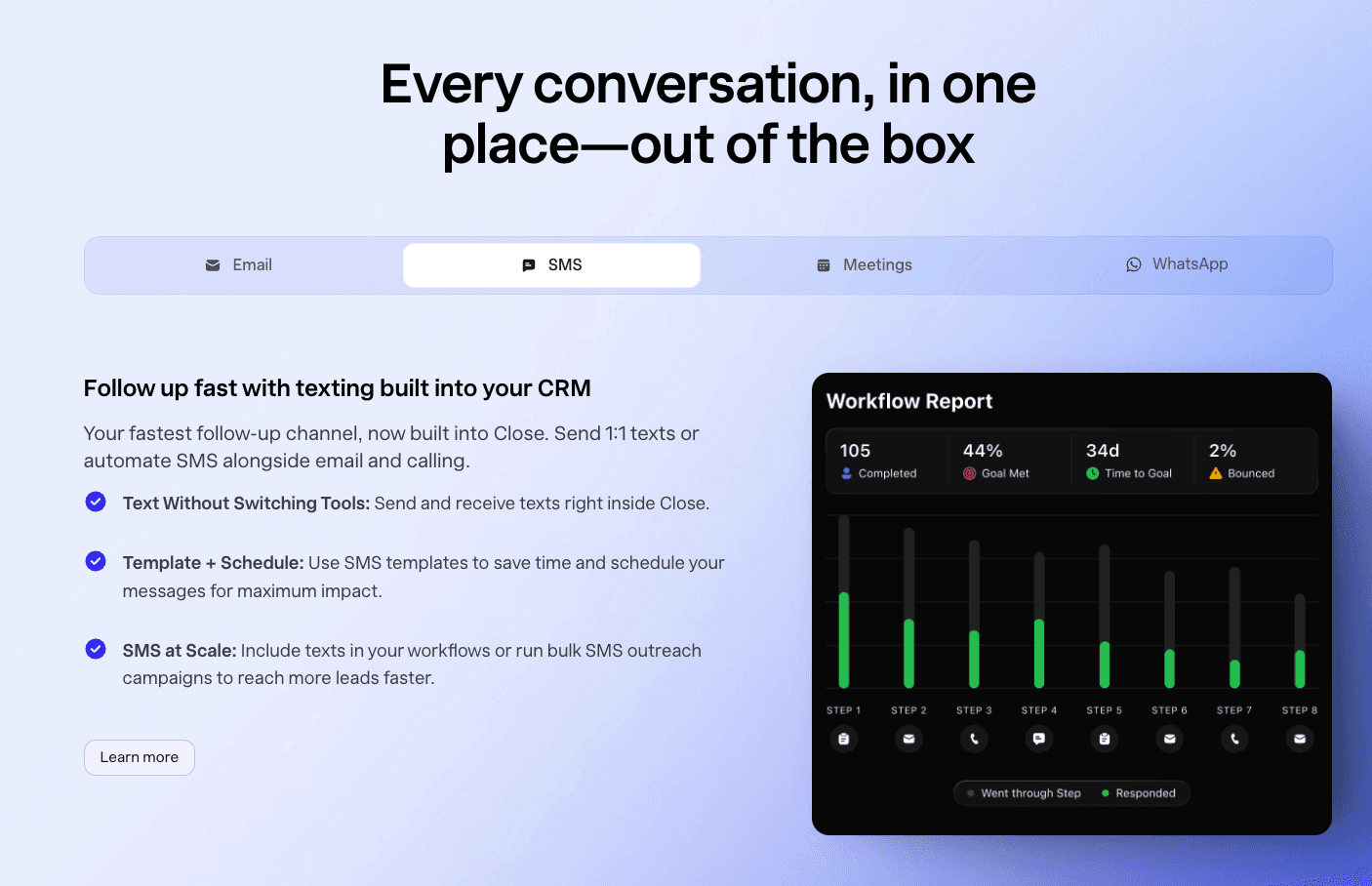
The primary performance multiplier of a unified communications CRM is the ability to construct cross-channel automated workflows. For example, when an inbound web lead submits a contact form:
- Minute 0: System sends an automated introductory email with requested resources.
- Minute 5: System triggers an automated SMS confirming receipt and offering a booking link.
- Minute 15: System places a call notification on the representative's task queue or executes an automated outbound call prompt.
3. Two-Way SMS and MMS Capabilities
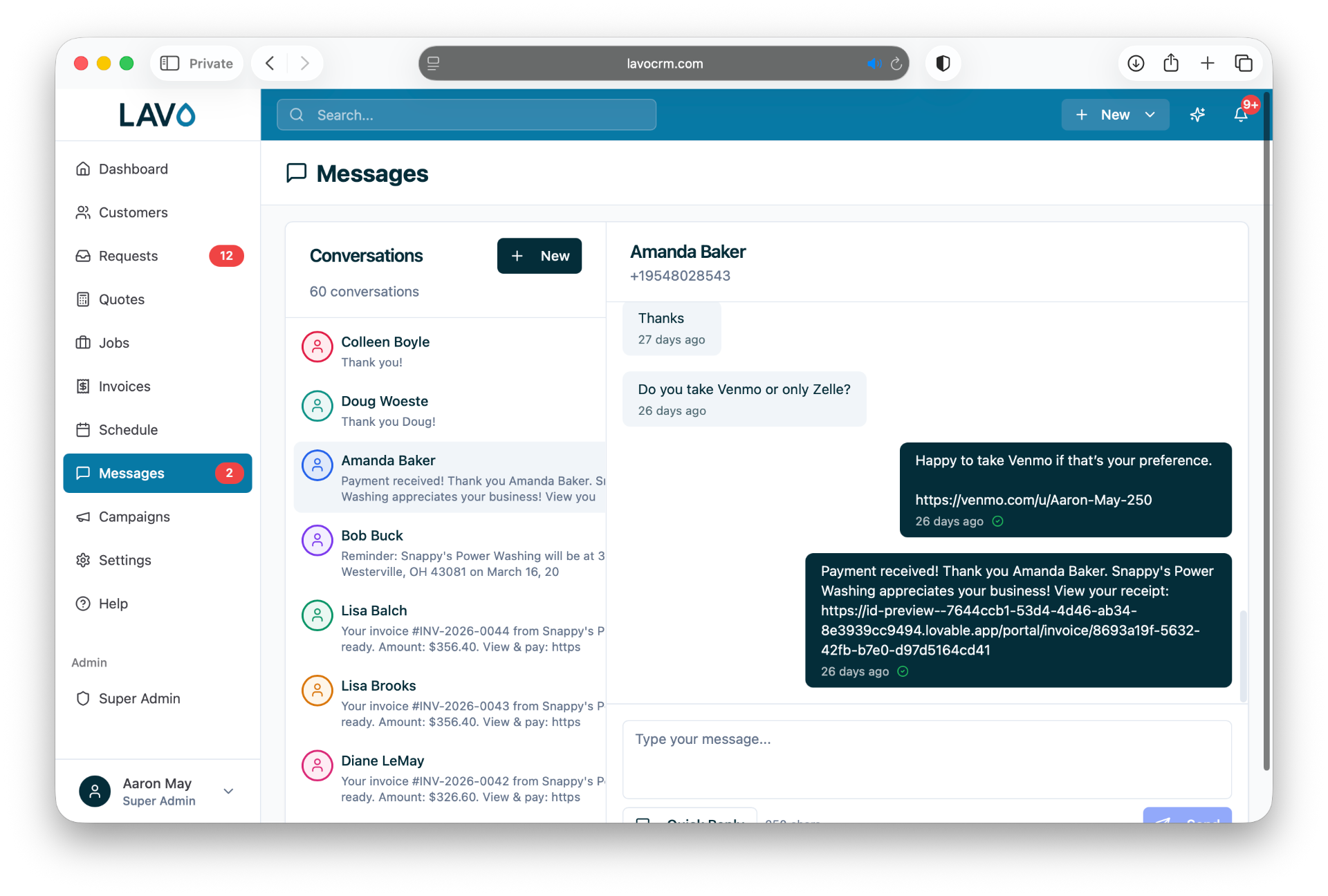
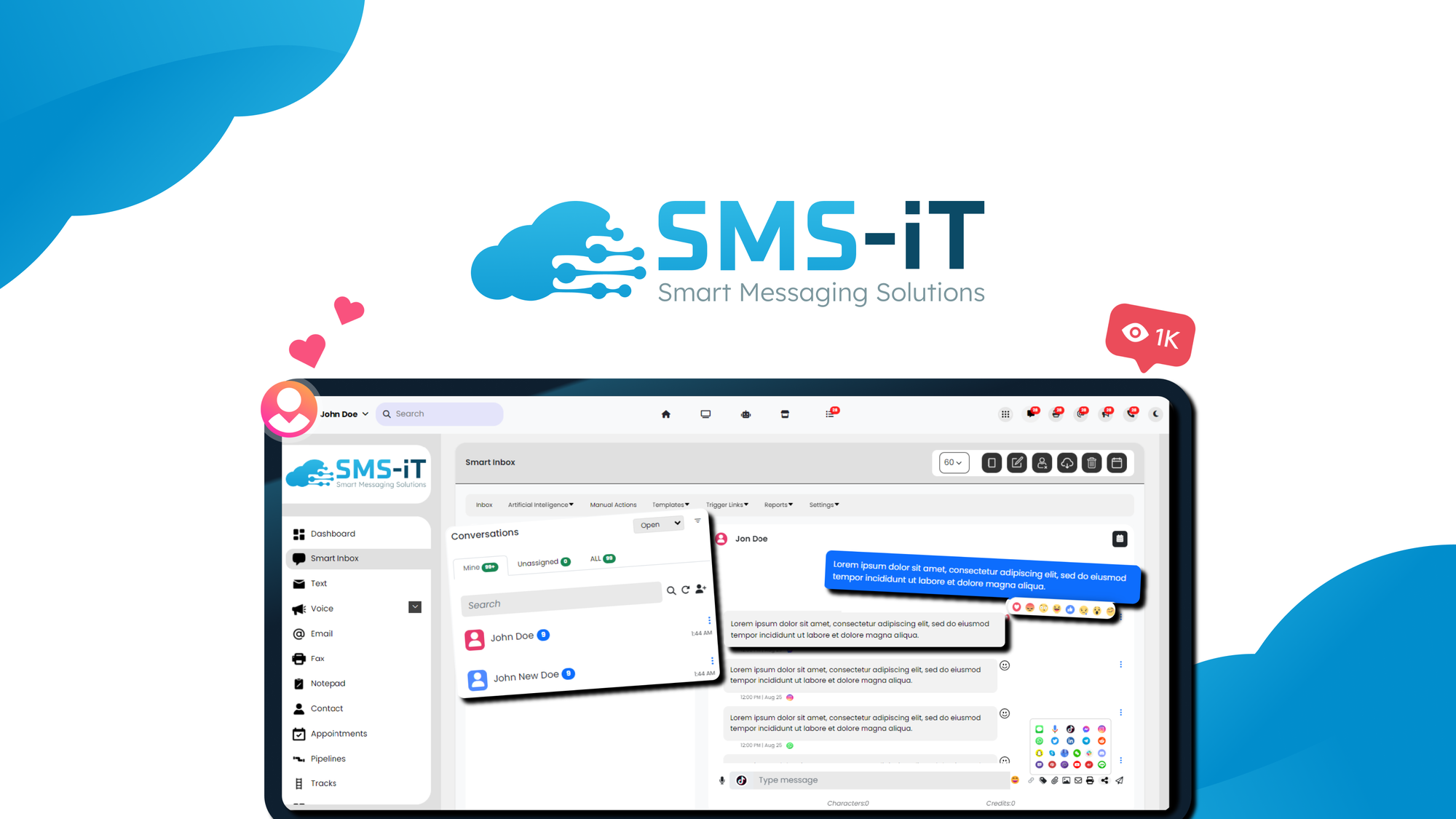
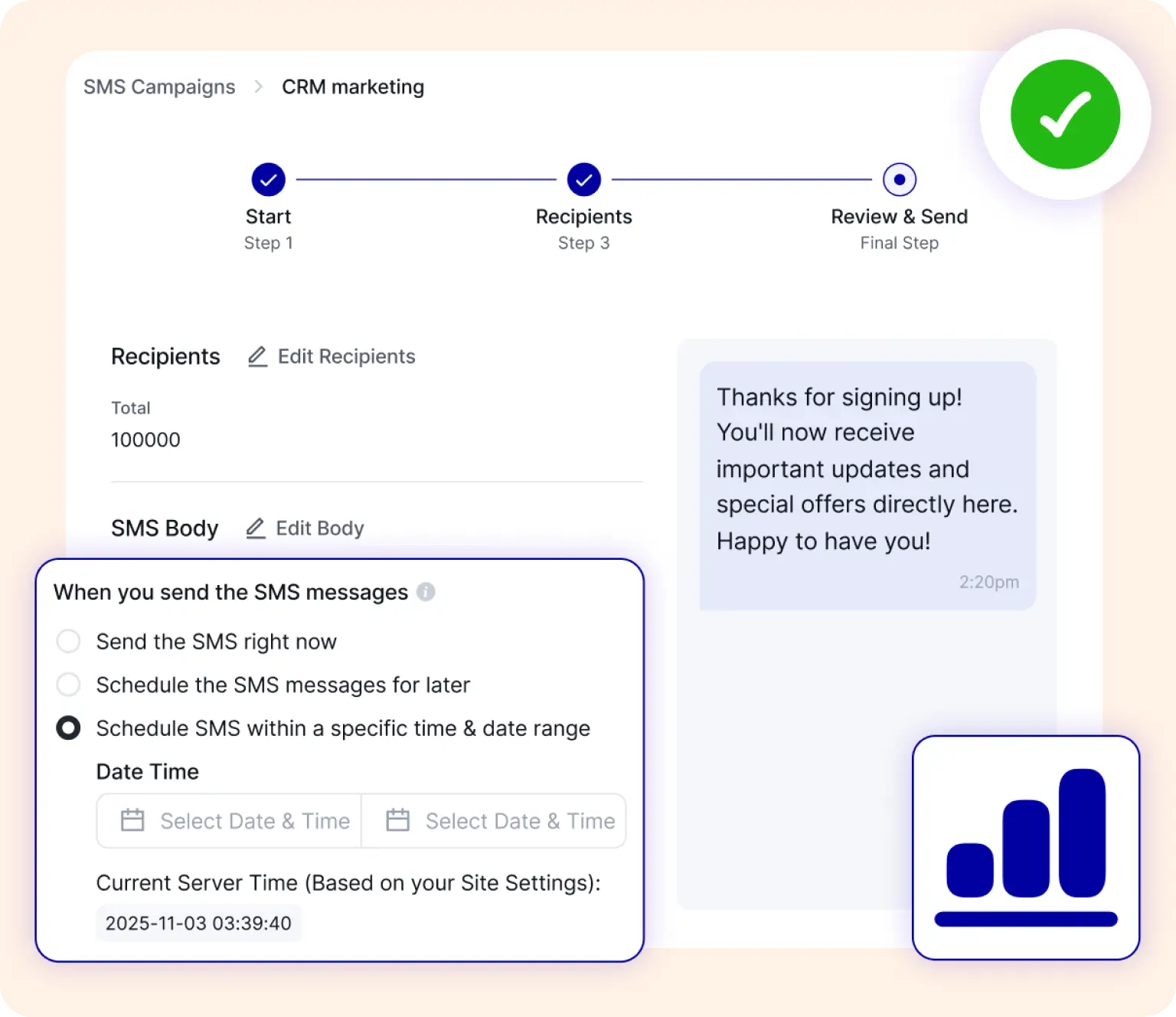
Beyond automated broad notifications, platforms must support two-way conversation management from a shared team inbox or individual line. Key technical prerequisites include support for Local and Toll-Free numbers, media file attachments (MMS), pre-approved message templates, and automated opt-out processing (handling compliance requests like STOP or UNSUBSCRIBE).
4. Advanced Email Engine & Deliverability Management
Robust CRMs include automated sequence engines, dynamic personalization tokens, real-time open/click tracking, and strict deliverability protocols. The platform must allow system administrators to connect custom domain names via DomainKeys Identified Mail (DKIM), Sender Policy Framework (SPF), and Domain-based Message Authentication, Reporting, and Conformance (DMARC) records to preserve domain reputation.
Top CRM Platforms with Voice, SMS, and Email Integration
The following software solutions represent the leading platforms offering integrated voice calling, SMS, and email capabilities directly within their customer management interfaces.
Close CRM
Close is built specifically for inside sales teams prioritizing high-volume outreach. It integrates voice calling, SMS, and email capabilities directly into its desktop and web applications without requiring complex third-party software add-ons.
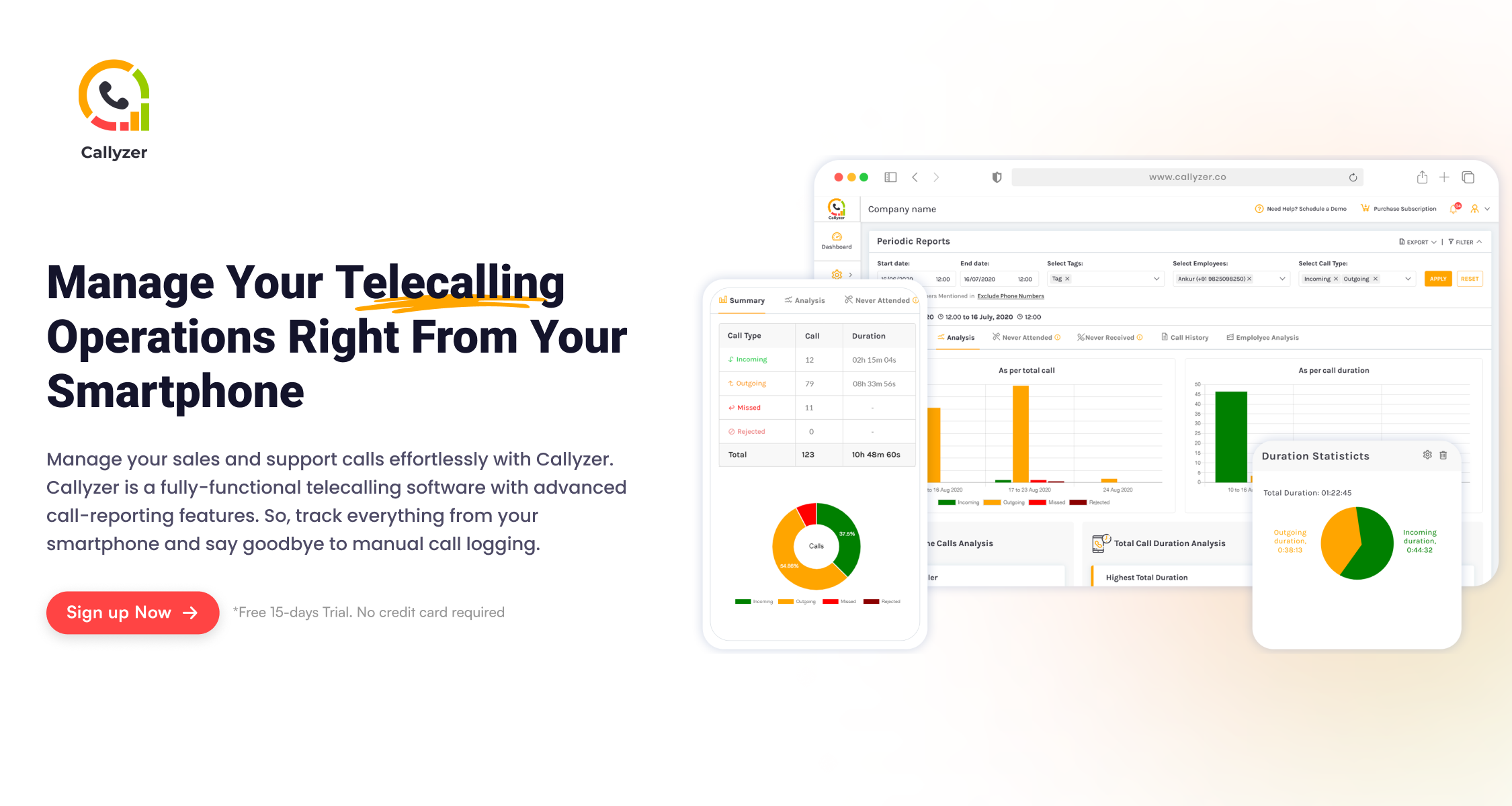
- Voice Capabilities: Features built-in global calling, power dialers, predictive dialers, call recording, call whispering, and automated voicemail drop.
- Messaging & Email: Native two-way SMS messaging, personalized email sequences, dynamic template tags, and unified lead inboxing.
- Best Suited For: Mid-market B2B tech and service companies running dedicated outbound or inside sales desks.
GoHighLevel (HighLevel)
GoHighLevel is an all-in-one sales, marketing, and operational platform designed primarily for marketing agencies, local service businesses, and SaaS resellers.
- Voice Capabilities: Built-in web dialer, call tracking, call routing, interactive voice response (IVR) menu creation, and automated missed-call text-back triggers.
- Messaging & Email: Comprehensive multi-channel campaign builders for SMS, MMS, WhatsApp, and bulk email outreach, utilizing Twilio or native LeadConnector phone/email infrastructure.
- Best Suited For: Agencies managing multi-tenant client sub-accounts, local service companies, and SMBs seeking marketing automation combined with CRM pipelines.
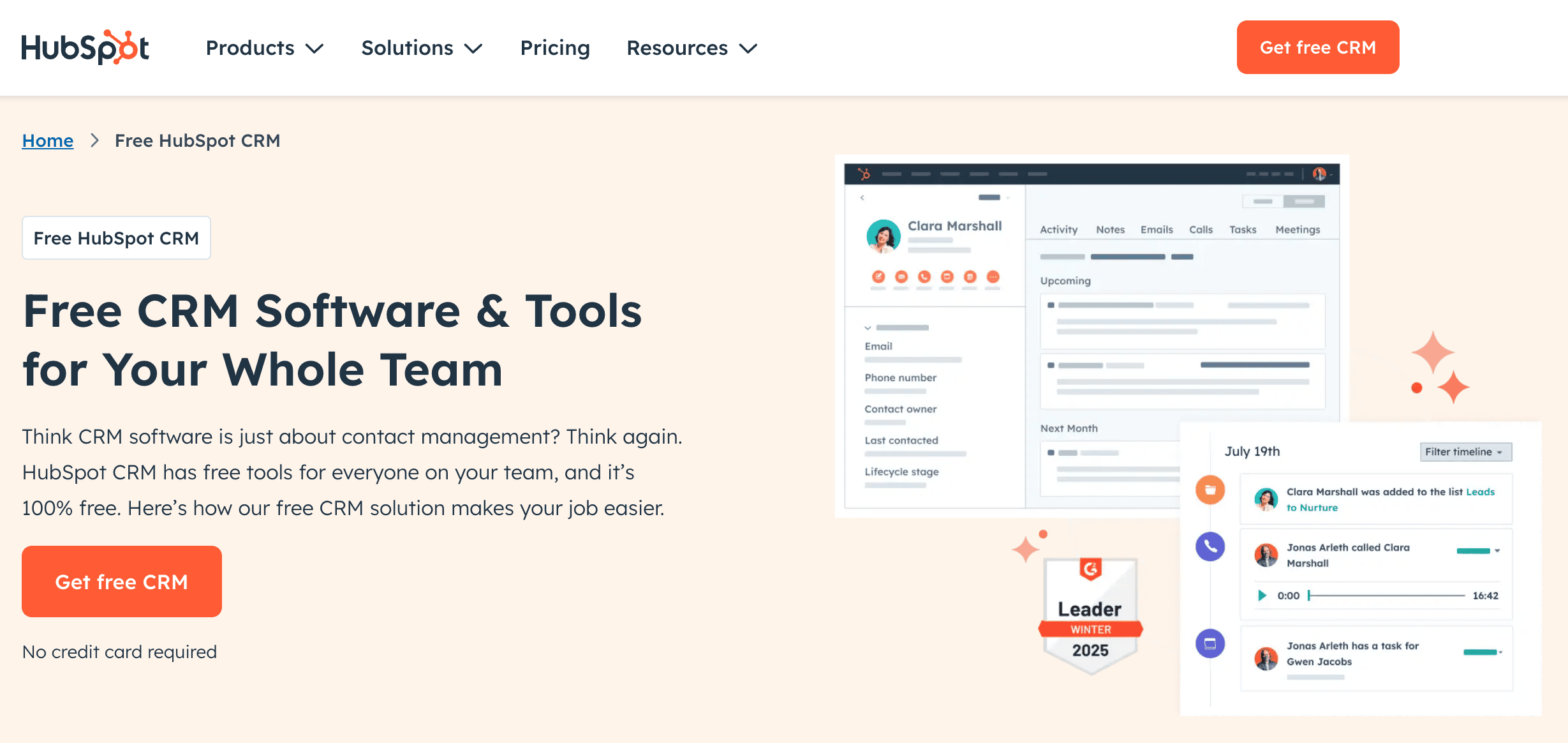
HubSpot Sales Hub
HubSpot provides enterprise-grade customer relationship management with broad operational scalability. While native email automation is built deep into the core engine, voice calling and SMS are handled through a hybrid model of native features and app integrations.
- Voice Capabilities: Native inbound/outbound click-to-call functionality within browser, call recording, automatic logging, and AI-driven conversation intelligence (transcription and sentiment analysis).
- Messaging & Email: Robust email tracking and automated sequencing. Native SMS capabilities are available through specific enterprise tiers or via seamless integrations with third-party tools like Kixie, JustCall, or Sakari.
- Best Suited For: Mid-market to enterprise businesses looking for deep inbound marketing alignment, advanced analytics, and structured sales reporting.
Zoho CRM
Zoho CRM offers an extensive suite of features with a low total cost of ownership. It handles telephony through its proprietary Zoho PhoneBridge framework, allowing businesses to hook up their preferred voice provider while natively managing email and messaging.
- Voice Capabilities: Integrates via PhoneBridge with over 100 telephony providers (including Twilio, RingCentral, and 8x8) to provide click-to-dial, pop-up caller profiles, and automated call logging.
- Messaging & Email: Built-in email marketing automation and multi-provider SMS integration modules supporting bulk and transactional messaging.
- Best Suited For: Cost-conscious small-to-medium businesses and enterprises needing extensive customization and integration with other business operational applications.
Salesforce Sales Cloud (with Digital Engagement & Service Cloud Voice)
Salesforce provides the industry standard for custom enterprise deployments. By combining Sales Cloud with add-ons like Sales Dialer, Service Cloud Voice, and Digital Engagement, organizations can build enterprise-grade omnichannel engines.
- Voice Capabilities: Enterprise click-to-dial, softphone integration, real-time call transcriptions, and automated workflow routing using Amazon Connect or third-party computer telephony integration (CTI) adapters.
- Messaging & Email: Omnichannel routing for SMS, WhatsApp, conversational AI agents, and deep email campaign management via Salesforce Marketing Cloud or Account Engagement (Pardot).
- Best Suited For: Large enterprise organizations requiring complex compliance governance, custom database architecture, and multi-department workflow routing.
Software Comparison Matrix
| Platform | Native Voice Calling | Native SMS Support | Native Email Automation | Primary Telephony Infrastructure | Target Business Size |
|---|---|---|---|---|---|
| Close CRM | Built-in (Power/Predictive) | Native 2-Way & Automation | Built-in Sequences | Built-in / Twilio Backing | SMB to Mid-Market |
| GoHighLevel | Built-in Web Dialer & IVR | Native 2-Way & Automation | Built-in Workflow Builder | LeadConnector / Twilio | Small Business & Agencies |
| HubSpot Sales Hub | Native Click-to-Call | Native / Marketplace App | Advanced Email Engine | Native Infrastructure / CTI | Mid-Market to Enterprise |
| Zoho CRM | Via Zoho PhoneBridge | Module / Integration | Native Workflows & Mass Mail | 100+ CTI Partners | SMB to Enterprise |
| Salesforce | Via Sales Dialer / CTI | Via Digital Engagement | Native & Marketing Cloud | Amazon Connect / CTI Apps | Enterprise |
Technical Setup & Regulatory Compliance Requirements
Deploying unified CRM software that handles outbound voice calls, SMS, and email requires strict adherence to international laws, carrier rules, and authentication standards. Failure to set up proper technical configurations can result in carrier filtering, blocked numbers, domain blacklisting, and severe financial penalties.
- Compliance & Authentication Stack
- Voice
- STIR/SHAKEN Framework
- TCPA Consent Checks
- DNC List Scrubbing
- SMS
- A2P 10DLC Reg.
- Toll-Free Verification
- STOP Opt-Outs
- Email
- DKIM Signing
- SPF Records
- DMARC Policy
- Voice
1. A2P 10DLC Registration for SMS
In the United States, telecommunications carriers (including AT&T, T-Mobile, and Verizon) mandate that any business sending Application-to-Person (A2P) messages over standard 10-digit long code (10DLC) local phone numbers must register their Brand and Use-Case Campaigns with The Campaign Registry (TCR).
- Brand Registration: Validates the legal entity sending messages using official business details (EIN/Tax ID, legal address, corporate website).
- Campaign Registration: Details the specific message templates, call-to-action flows, privacy policies, and explicit consumer opt-in collection methods used by the business.
- Impact of Non-Compliance: Unregistered messaging traffic experiences high message filtering rates, direct carrier blocks, and significant per-message penalty fees.
2. Voice Compliance: TCPA, DNC, and STIR/SHAKEN
Outbound sales calling is subject to stringent federal regulations designed to prevent unsolicited telemarketing and robocalls:
- Telephone Consumer Protection Act (TCPA): Enforced by the Federal Communications Commission, TCPA requires prior express written consent before initiating auto-dialed or pre-recorded marketing calls to wireless numbers.
- National Do Not Call (DNC) Registry: Organizations must scrub call lists against the national database managed by the Federal Trade Commission as well as maintain an internal, company-specific opt-out list.
- STIR/SHAKEN Protocol: A caller ID authentication standard implemented across telephony providers. System administrators must ensure their CRM telephony partner issues fully authenticated caller ID certificates (Attestation Level A) so outbound calls are not labeled as "Spam Likely" on customer handsets.
3. Email Authentication Standards
To prevent cold and automated email campaigns from landing in spam folders, system admins must configure three DNS authentication standards on sending domains:
- SPF (Sender Policy Framework): Specifies which IP addresses and email servers are authorized to send email on behalf of your DNS domain.
- DKIM (DomainKeys Identified Mail): Adds a cryptographic signature to outgoing messages, confirming the email was not altered in transit.
- DMARC (Domain-based Message Authentication, Reporting, and Conformance): Instructs receiving email servers (like Gmail or Microsoft Outlook) how to handle messages that fail SPF or DKIM checks. Major email providers mandate valid SPF, DKIM, and a DMARC policy for high-volume senders.
Common Implementation Pitfalls and Mitigation Strategies
Pitfall 1: Poor Data Hygiene and Contact Synchronization
When integrating voice, text, and email, improper mapping of contact records creates duplicate customer profiles.
- Mitigation: Establish phone numbers in standardized E.164 format (e.g.,
+14155552671) and enforce unique primary keys based on validated email addresses across all API integrations.
Pitfall 2: High Network Latency in Voice Calls
Using browser-based WebRTC softphones without adequate local network configuration results in dropped calls, voice delay, and audio jitter.
- Mitigation: Implement Quality of Service (QoS) rules on corporate routers to prioritize voice packet traffic over local networks. Ensure agents utilize wired Ethernet connections and high-quality USB headsets rather than Bluetooth setups.
Pitfall 3: Over-Automating Outreach (Channel Fatigue)
Triggering simultaneous emails, text messages, and phone calls the instant a lead enters the system can overwhelm prospects, leading to high unsubscribe rates and spam reports.
- Mitigation: Design structured omnichannel cadence maps that introduce delay steps between touches. Allow prospects to select their preferred communication channel during initial onboarding or form submission.
Frequently Asked Questions
Can I use my existing business phone numbers inside an all-in-one CRM?
Yes. Most CRM systems allow businesses to port existing local, toll-free, or virtual phone numbers from current carriers (such as Verizon, Comcast, or RingCentral) directly into the platform's telephony backend. Alternatively, systems can use SIP trunking or call-forwarding configurations to route calls while keeping existing telecommunication agreements intact.
How do all-in-one CRMs manage SMS opt-out requests automatically?
Industry-standard CRMs feature automated opt-out processing built directly into their communication modules. When a recipient replies with standardized keywords such as STOP, UNSUBSCRIBE, CANCEL, or QUIT, the system automatically flags the customer's phone record as opted-out and blocks future automated or manual text transmissions to that contact.
What hardware and network infrastructure are required for CRM web-calling?
Web-based CRM dialers use WebRTC technology, requiring standard web browsers (such as Chrome, Edge, or Firefox) and stable internet bandwidth. For optimal call clarity, organizations should allocate at least 100 kbps of dedicated upload and download bandwidth per simultaneous call, use wired Ethernet connections, and supply agents with noise-canceling USB headsets.
What is the difference between a Power Dialer and a Predictive Dialer in sales CRMs?
A power dialer calls one contact phone number at a time sequentially for a specific representative, automatically dialing the next contact as soon as the agent completes the previous interaction. A predictive dialer utilizes statistical algorithms to dial multiple phone numbers simultaneously per available representative, skipping busy lines, no-answers, and disconnects to route only live connections directly to available agents.
Is it legal to send commercial SMS messages through a CRM without prior consent?
No. In the United States, European Union, Canada, and many other jurisdictions, sending unsolicited commercial text messages without explicit opt-in consent violates consumer protection laws (such as the TCPA in the US and GDPR/ePrivacy Directive in Europe). Businesses must obtain verifiable consent through web forms, paper agreements, or opt-in keywords before initiating marketing text messages.
Strategic Implementation Next Steps
- Audit Current Communication Channels: Document existing email volumes, daily call totals per representative, outbound SMS requirements, and current software licensing costs.
- Verify Deliverability and Regulatory Compliance: Ensure your organization has an official legal business profile (EIN), registered web domains with access to DNS records (for SPF/DKIM/DMARC setup), and verified opt-in collection methods ready for A2P 10DLC campaign submission.
- Run a Controlled Technical Pilot: Select two target CRMs from the evaluation list, provision temporary test phone numbers and sending sub-domains, and conduct a 14-day trial focusing on call audio quality, workflow builder flexibility, and sequence performance.
- Standardize Operational Playbooks: Train sales and support representatives on channel-specific messaging protocols, manual call note disposition standards, and opt-out management policies before launching full production deployments.
Image Gallery