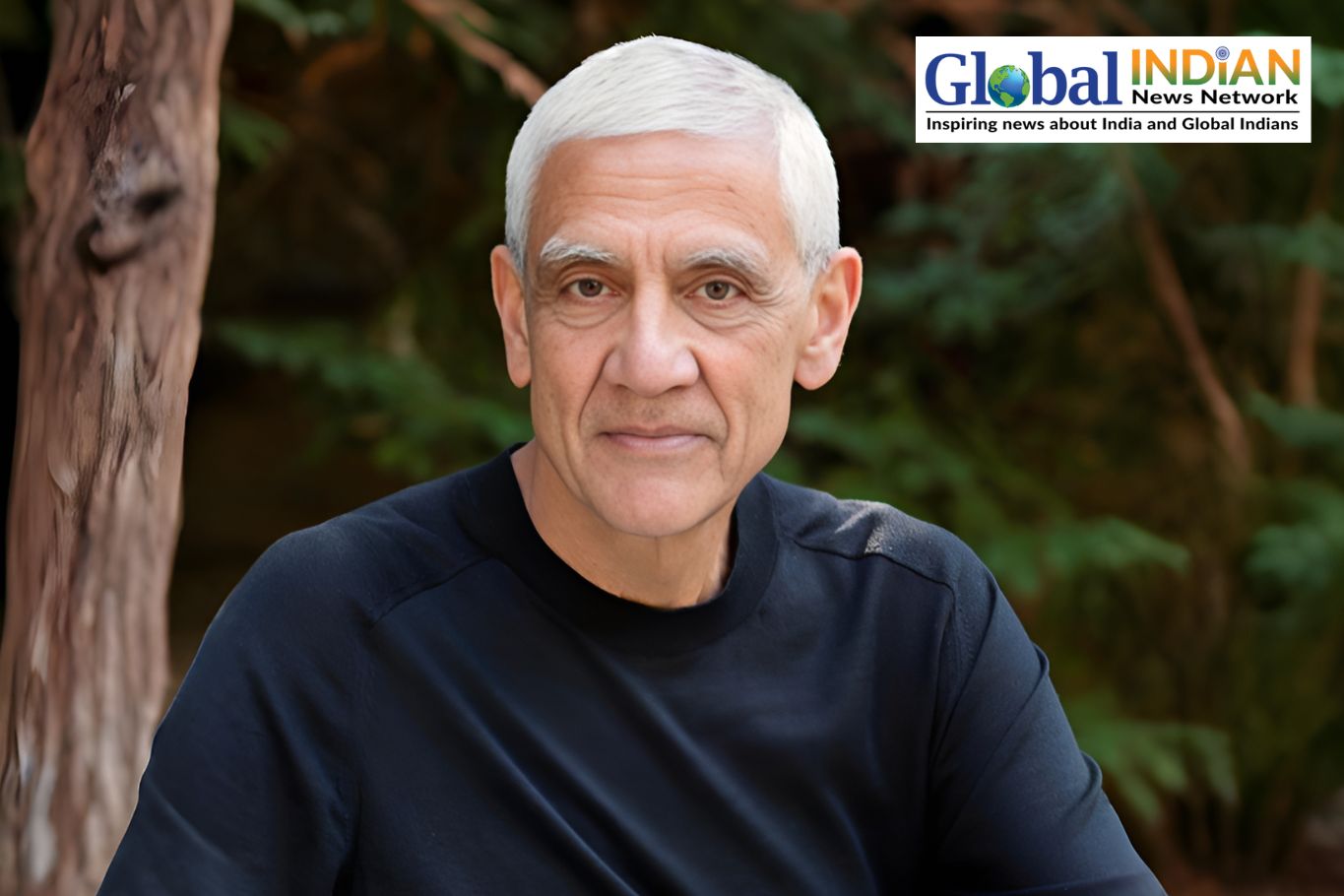
The Life and Career of Vinod Khosla: Biographical Overview
Vinod Khosla was born on January 28, 1955. As of 2026, he is 71 years old. A prominent figure in the global venture capital landscape and a pioneer in the technology sector, Khosla’s career spans over four decades, marking his evolutio...
Vinod Khosla was born on January 28, 1955. As of 2026, he is 71 years old. A prominent figure in the global venture capital landscape and a pioneer in the technology sector, Khosla’s career spans over four decades, marking his evolution from an engineer to a co-founder of Sun Microsystems and eventually a influential lead partner at Khosla Ventures.
Contents
Early Life and Educational Foundations
Born in Delhi, India, Vinod Khosla’s upbringing was centered on academic rigor and a curiosity for engineering. He attended the Indian Institute of Technology (IIT) Delhi, where he earned a bachelor's degree in electrical engineering. This foundation was critical to his later successes, as it instilled in him a systems-based approach to problem-solving.
Following his graduation in India, Khosla moved to the United States to further his education. He obtained a master’s degree in biomedical engineering from Carnegie Mellon University, followed by an MBA from the Stanford Graduate School of Business. These formative years at elite institutions provided him not only with technical expertise but also with access to the growing entrepreneurial ecosystem of Silicon Valley, which was beginning to emerge in the late 1970s.
The Sun Microsystems Era
Perhaps the most defining moment in Khosla's early career occurred in 1982 when he co-founded Sun Microsystems alongside Scott McNealy, Andy Bechtolsheim, and Bill Joy. The company played a pivotal role in the development of the workstation market, providing the high-performance computing power necessary for the burgeoning internet and engineering sectors.
Khosla served as the first CEO of Sun Microsystems. His leadership during these early years established a blueprint for "open systems," which prioritized modularity and hardware compatibility. This philosophy was a significant departure from the proprietary, closed-loop systems common among competitors of that era. By the time he left Sun in the mid-1980s, the company had established itself as a cornerstone of the technology industry, a position it held until it was eventually acquired by Oracle Corporation.
Transition to Venture Capital: Kleiner Perkins
After leaving Sun, Khosla joined the legendary venture capital firm Kleiner Perkins Caufield & Byers (KPCB) in 1986. During his tenure there, he solidified his reputation as a high-conviction investor. He was instrumental in the funding of numerous transformative companies, particularly in the networking, telecommunications, and internet infrastructure spaces.
His investment thesis at Kleiner Perkins focused on "finding the next big thing" through a mix of deep-tech research and an assessment of market readiness. He was known for his rigorous due diligence and his willingness to engage in long-term bets that others in the venture capital community initially viewed with skepticism.
The Establishment of Khosla Ventures
In 2004, Khosla transitioned from KPCB to launch his own firm, Khosla Ventures. Unlike traditional venture capital firms that often follow safe, established market paths, Khosla Ventures was built with a mandate to pursue "impact-oriented" investments. The firm famously focuses on early-stage, high-risk, high-reward projects, often in sectors that require significant capital and time to develop.
The firm's portfolio has historically leaned toward:
- Sustainability and Clean Tech: Investing in renewable energy, synthetic biology, and food technology.
- Healthcare and Biopharma: Prioritizing breakthroughs in genomics and precision medicine.
- AI and Robotics: Early support for machine learning infrastructures that have since become industry standards.
Khosla’s investment style is frequently described as "active." He is known for providing not just financial capital, but also significant operational guidance and engineering-level critique to the founders in his portfolio. This hands-on approach has made him a polarizing but undeniably successful figure in the venture world.
Notable Achievements and Industry Impact
Throughout his career, Khosla has been at the forefront of several technological shifts. His impact is measurable not only by the companies he has supported but also by the market standards his firms have set. The following table illustrates the progression of his career and his areas of influence.
| Era | Primary Role | Major Focus Area | Key Contribution |
|---|---|---|---|
| Early 1980s | Co-Founder, Sun Microsystems | Workstation Hardware | Pioneered Open Systems |
| 1986–2004 | General Partner, Kleiner Perkins | Networking & Internet | Scalable Infrastructure |
| 2004–Present | Founder, Khosla Ventures | Deep Tech & Bio-Health | High-Risk Impact Investing |
Philosophical Approach to Innovation
Khosla’s approach to innovation is rooted in the belief that "radical change" only comes from ventures that have a high probability of failure but a massive potential impact if they succeed. He often speaks about the "black swan" theory of venture capital, where the outliers (the very few companies that dominate an entire industry) provide the vast majority of returns for a portfolio.
His public commentary on climate change and artificial intelligence often highlights the importance of science-led entrepreneurship. He is a proponent of moving beyond incremental product updates and instead focusing on systemic problems, such as the carbon footprint of the global energy grid or the inefficiencies in modern healthcare diagnostics.
Frequently Asked Questions
How did Vinod Khosla start his career?
Khosla began his career as a systems engineer before co-founding Sun Microsystems in 1982. His academic background in electrical and biomedical engineering allowed him to bridge the gap between complex hardware development and business scaling.
What is the investment focus of Khosla Ventures?
The firm focuses on "impact-oriented" startups. This includes high-tech, high-risk sectors such as synthetic biology, artificial intelligence, clean energy, and healthcare, where the goal is to solve major global challenges rather than simply creating consumer software.
Is Vinod Khosla still active in the venture capital industry?
Yes. As of 2026, Vinod Khosla remains highly active as the head of Khosla Ventures. He continues to lead investment rounds, mentor founders, and actively participate in the public discourse regarding the ethics and future of emerging technologies.
Why is Vinod Khosla considered a "contrarian" investor?
He earned this reputation by investing in sectors that many other VCs avoided, such as clean tech in the late 2000s when the market was considered too risky. His willingness to back projects with very long gestation periods distinguishes him from investors who seek quick exits or IPOs.
Does Vinod Khosla focus only on software?
No. While he has supported significant software companies, he is well-known for his interest in "atoms-based" startups—companies dealing with tangible, physical technologies like fusion energy, lab-grown proteins, and medical hardware, rather than just digital applications.
Conclusion and Future Outlook
As Vinod Khosla continues his career into his 70s, his influence remains a dominant force in venture capital. For entrepreneurs seeking funding or individuals studying the history of Silicon Valley, Khosla represents a bridge between the foundational era of computing and the current age of deep-tech disruption. His career serves as a case study for the value of combining rigorous technical education with a willingness to challenge established market dogmas. Moving forward, his focus on the intersection of artificial intelligence and physical science is expected to remain a bellwether for where the next generation of venture capital will flow.
Image Gallery