Understanding the Career of Judd Hirsch: Stages, Breakthroughs, and Legacy
Judd Hirsch stands as one of the most durable and respected figures in American performance, building a multi-decade career across theater, network television, and feature films. Best known for his definitive television role as Alex Re...
Judd Hirsch stands as one of the most durable and respected figures in American performance, building a multi-decade career across theater, network television, and feature films. Best known for his definitive television role as Alex Reiger on Taxi and his Oscar-nominated film performances in Ordinary People and The Fabelmans, Hirsch’s career illustrates a rare mastery of dramatic naturalism, comedic timing, and stage technique.
Contents
From Physics to the Stage: Early Life and Training
Born on March 15, 1935, in The Bronx, New York, Judd Hirsch did not initially pursue acting. After serving in the United States Army, he earned a degree in physics from the City College of New York (CCNY) in 1960. He briefly worked as a engineer and technician before shifting his focus toward dramatic arts, studying at the HB Studio and the American Academy of Dramatic Arts in New York City.
This analytical background in science and engineering strongly informed Hirsch's approach to acting. Rather than relying purely on instinct or melodrama, he developed an analytical, precise approach to character work, script structure, and dialogue pacing.
During the late 1960s and 1970s, Hirsch established his reputation on stage, working in off-Broadway and regional theater before gaining national Broadway recognition. His early theatrical successes established key pillars of his craft:
- Intellectual clarity: An ability to break down complex monologues into conversational, realistic beats.
- Vulnerability: A willingness to portray emotionally grounded, flawed, and deeply relatable men.
- Stage presence: Command of live acoustic spaces and direct audience engagement, developed over years of repertory theater work.
His stage career reached an early peak with Lanford Wilson's play Talley's Folly (1979–1980), where Hirsch played Matt Friedman. His performance earned him his first Tony Award for Best Actor in a Play in 1980. He earned a second Tony Award in 1986 for his performance as Nat Moyer in Herb Gardner's I'm Not Rappaport, cementing his position as one of Broadway's leading theatrical actors.
Taxi and the Golden Age of Ensemble Television
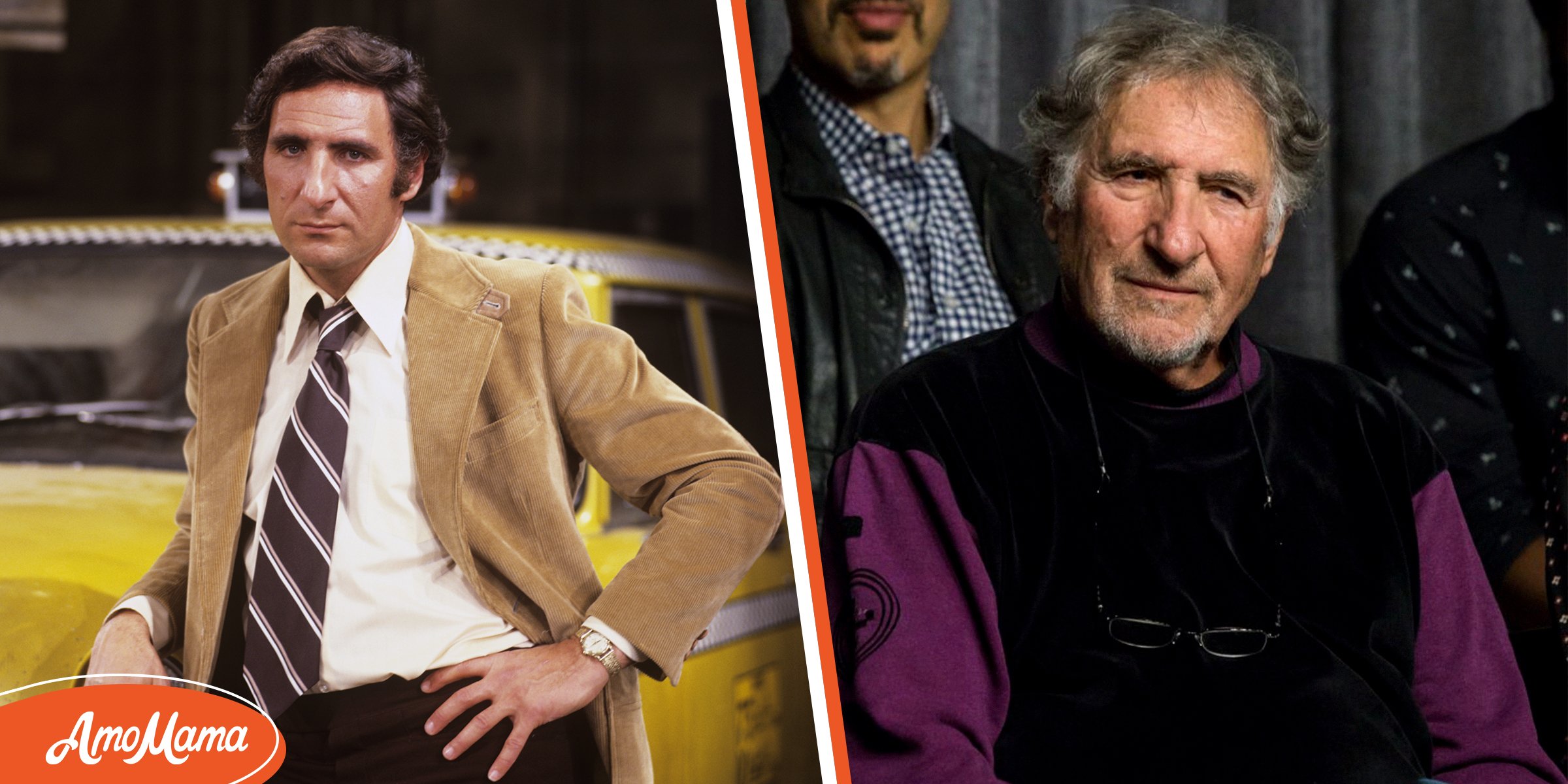
While Hirsch was establishing himself on stage, television producers recognized his appeal as a relatable lead actor. In 1978, he was cast as Alex Reiger in the television series Taxi, created by James L. Brooks, Stan Daniels, David Davis, and Ed. Weinberger.
Ensemble Dynamic in 'Taxi':
- Alex Reiger (Hirsch) — Pragmatic Anchor / Voice of Reason
- Jim Ignatowski (Christopher Lloyd)
- Louie De Palma
- Elaine & Bobby (Marilu Henner & Jeff Conaway)
Taxi featured an eccentric cast of characters working for the Sunshine Cab Company in Manhattan. Hirsch played Alex Reiger, the sole driver who accepted driving a cab as his full-time profession rather than a temporary side job. Alex served as the emotional center and voice of reason for the surrounding characters, balancing the outrageous comedic antics of Christopher Lloyd, Danny DeVito, Andy Kaufman, and Carol Kane.
Hirsch’s work on Taxi defined the archetype of the grounded, pragmatic lead in an ensemble sitcom. His realistic, low-key performance style grounded the show's humor in genuine human drama, earning him two Primetime Emmy Awards for Outstanding Lead Actor in a Comedy Series (1981 and 1983).
Dramatic Depth in Cinema: Ordinary People to The Fabelmans
Hirsch made an immediate impact in cinema by choosing project-driven dramatic roles that showcased his range beyond television comedy.
- 1980: Academy Award Nomination — Ordinary People (Dr. Berger)
- 42-Year Record Gap
- 2022: Academy Award Nomination — The Fabelmans (Uncle Boris)
Ordinary People (1980)
Directed by Robert Redford, Ordinary People explored a suburban family unraveling after the accidental death of their eldest son. Hirsch played Dr. Tyrone Berger, an empathetic psychiatrist helping the surviving younger son, Conrad (played by Timothy Hutton), navigate severe trauma and guilt.
Rather than portraying a distant or overly formal clinician, Hirsch brought warmth, unconventional humor, and directness to the role. His performance earned an Academy Award nomination for Best Supporting Actor, establishing him as a dramatic film actor of the highest order.
Running on Empty (1988)
Directed by Sidney Lumet, this drama featured Hirsch alongside Christine Lahti as 1960s anti-war activists living underground and continuously relocating their family to evade federal authorities. Hirsch delivered a complex portrayal of a father torn between his political convictions and the practical well-being of his talented son (played by River Phoenix).
Blockbuster and Character Work
Throughout the 1990s and 2000s, Hirsch demonstrated his adaptability by appearing in major studio productions across multiple genres:
- ** Independence Day (1996):** Played Julius Levinson, bringing comedic warmth, practical skepticism, and paternal devotion to a sci-fi blockbuster. He reprised the role in the 2016 sequel, Independence Day: Resurgence.
- ** A Beautiful Mind (2001):** Portrayed Mr. Helinger, head of the math department at Princeton, providing a steady dramatic anchor in Ron Howard's Oscar-winning film.
- ** Uncut Gems (2019):** Appeared as Gooey, the wealthy father-in-law of Adam Sandler's protagonist, demonstrating his natural fit in fast-paced modern crime dramas.
Historic Achievement in The Fabelmans (2022)
In Steven Spielberg's semi-autobiographical film The Fabelmans, Hirsch made a brief appearance as Uncle Boris, an eccentric former circus performer and silent film worker. Delivering an intense monologue on the fundamental conflict between artistic devotion and family commitment, Hirsch dominated his screen time.
His performance earned him an Academy Award nomination for Best Supporting Actor at the 95th Academy Awards. This nomination set a record for the longest gap between Oscar nominations in acting history—42 years between his 1980 nomination for Ordinary People and his 2022 nomination for The Fabelmans.
Mid-Career Television and Sustained Screen Presence
Following Taxi, Hirsch remained a constant presence on American television for decades, moving seamlessly between starring roles, long-running series, and high-profile guest appearances.
Dear John (1988–1992)
Hirsch returned to network television as the star of Dear John, playing John Lacey, a soft-spoken high school teacher adjusting to single life after an abrupt divorce. The show highlighted Hirsch's ability to anchor a comedy series centered on middle-aged romance, vulnerability, and self-discovery. His performance earned him a Golden Globe Award for Best Actor in a Television Series – Comedy or Musical in 1989.
Numb3rs (2005–2010)
In the CBS procedural drama Numb3rs, Hirsch played Alan Eppes, a retired city planner and father to two adult sons—an FBI agent (Rob Morrow) and a mathematical genius (David Krumholtz). Over six seasons and 118 episodes, Hirsch served as the series' emotional foundation, bridging the show's complex technical concepts with familial heart and practical wisdom.
Notable Guest Roles and Television Work
Hirsch's later television work demonstrated his broad appeal across multi-camera sitcoms and prestige dramas, including:
- ** The Big Bang Theory:** Guest-starred as Dr. Alfred Hofstadter, the anthropologist father of Leonard Hofstadter (Johnny Galecki).
- ** Superior Donuts (2017–2018):** Starred as Arthur Przybyszewski, a stubborn donut shop owner in Chicago.
- ** Damages, The Goldbergs, and Blue Bloods:** Guest appearances displaying his range across serialized thrillers, nostalgia comedies, and police dramas.
Key Career Milestones and Recognized Works
The following table summarizes Judd Hirsch's defining projects across theater, television, and film:
| Era / Year | Project Title | Medium | Key Role | Notable Awards & Recognition | Strategic Career Impact |
|---|---|---|---|---|---|
| 1978–1983 | Taxi | Television | Alex Reiger | 2 Primetime Emmy Awards | Established national fame as a leading television actor. |
| 1979–1980 | Talley's Folly | Stage | Matt Friedman | Tony Award (Best Actor in a Play) | Confirmed elite standing in American live theater. |
| 1980 | Ordinary People | Film | Dr. Tyrone Berger | Academy Award Nomination | Established dramatic credibility in high-profile feature films. |
| 1985–1986 | I'm Not Rappaport | Stage | Nat Moyer | Tony Award (Best Actor in a Play) | Demonstrated rare comic and dramatic longevity on Broadway. |
| 1988–1992 | Dear John | Television | John Lacey | Golden Globe Award | Proved ability to lead a successful prime-time comedy series. |
| 1996 | Independence Day | Film | Julius Levinson | Major Box Office Success | Expanded film presence into global sci-fi blockbusters. |
| 2005–2010 | Numb3rs | Television | Alan Eppes | 6 Seasons (118 Episodes) | Provided steady dramatic presence on broadcast network TV. |
| 2022 | The Fabelmans | Film | Uncle Boris | Academy Award Nomination | Set historic 42-year record between Oscar nominations. |
Signature Acting Style and Technical Craft
Analyzing Judd Hirsch's career reveals distinct technical elements that define his acting style:
Analytical Precision and Text Mastery
Drawing from his academic background in physics, Hirsch approaches scripts with structural rigor. He analyzes dialogue not just for emotional resonance, but for rhythm, logical progression, and conversational accuracy. This allows him to deliver complex monologues naturally, making scripted dialogue sound spontaneous.
Unsentimental Warmth
Hirsch rarely relies on overt sentimentality to gain audience empathy. Whether playing a therapist (Ordinary People), a cab driver (Taxi), or an estranged relative (The Fabelmans), he projects authenticity through dry wit, direct eye contact, and grounded physical presence.
Naturalism Across Mediums
While many stage actors struggle to tone down their performances for close-up camera work—and many screen actors lack the projection needed for theater—Hirsch adapts effortlessly. On stage, his voice carries effortless authority; on film, a subtle shift in posture or expression conveys complex internal thought.
Hirsch's Performance Balance:
- Technical Precision
- Stage Projection (Vocal command, physical authority)
- Screen Subtlety (Calculated eye contact, conversational pacing)
- Authentic Naturalism
Frequently Asked Questions
What role made Judd Hirsch famous?
Judd Hirsch achieved widespread national fame playing Alex Reiger on the hit ensemble television comedy Taxi (1978–1983). His role as the sensible, compassionate cab driver earned him two Primetime Emmy Awards and made him a household name.
How many Academy Award nominations has Judd Hirsch received?
Judd Hirsch has received two Academy Award nominations for Best Supporting Actor: first in 1980 for his role as Dr. Tyrone Berger in Ordinary People, and second in 2022 for his role as Uncle Boris in Steven Spielberg's The Fabelmans.
Did Judd Hirsch win Tony Awards for his stage work?
Yes. Judd Hirsch is a two-time Tony Award winner for Best Actor in a Play. He won his first Tony in 1980 for Talley's Folly and his second in 1986 for I'm Not Rappaport.
What historic Oscar record did Judd Hirsch set in 2022?
With his nomination for The Fabelmans at the 95th Academy Awards, Hirsch set the record for the longest gap between Academy Award nominations in acting history—42 years between his nominations in 1980 and 2022.
What was Judd Hirsch's career before becoming an actor?
Before committing to full-time acting, Hirsch earned a degree in physics from the City College of New York (CCNY) in 1960 and worked briefly as an engineer and technician. He also served in the United States Army before pursuing dramatic training at HB Studio and the American Academy of Dramatic Arts.
Summary Perspective
Understanding Judd Hirsch's career requires recognizing his identity as an actor's actor—a performer who prioritizes character integrity and craft over Hollywood stardom. Across stage, television, and film, Hirsch has built a legacy defined by consistency, broad artistic range, and sustained performance quality. For students of acting and film history alike, his body of work offers a masterclass in naturalism, vocal discipline, and enduring talent.
Image Gallery