The Traitors Latest Banishment Explained: Rules, Round Table Strategy, and Voting Mechanics
In The Traitors, the nightly Banishment ceremony at the Round Table is the central mechanism by which contestants attempt to eliminate hidden Traitors from their midst. Every episode, players debate, accuse, defend, and cast individual...
In The Traitors, the nightly Banishment ceremony at the Round Table is the central mechanism by which contestants attempt to eliminate hidden Traitors from their midst. Every episode, players debate, accuse, defend, and cast individual votes on slate boards. The contestant receiving the majority of votes is banished immediately from the castle, revealing their true role—Faithful or Traitor—before leaving the game.
Contents
Understanding how a Banishment unfolds requires looking at both the strict rules governing the Round Table and the psychological strategy driving the players' votes. Whether you are analyzing recent episodes from the US, UK, or international versions of the show, every Banishment follows a tactical rhythm determined by voting alliances, strategic betrayals, and post-banishment game shifts.
Understanding the Banishment Process in The Traitors
The Banishment ceremony represents the only opportunity for Faithful contestants to actively defend themselves and eliminate Traitors. Unlike the nighttime "Murder," which takes place in secret and is controlled entirely by the Traitors, the Banishment is a public process involving every surviving member of the cast.
Daily Game Cycle Flow:
- Morning Breakfast
- Mission / Shield Challenge
- Round Table Banishment
- Nighttime Murder
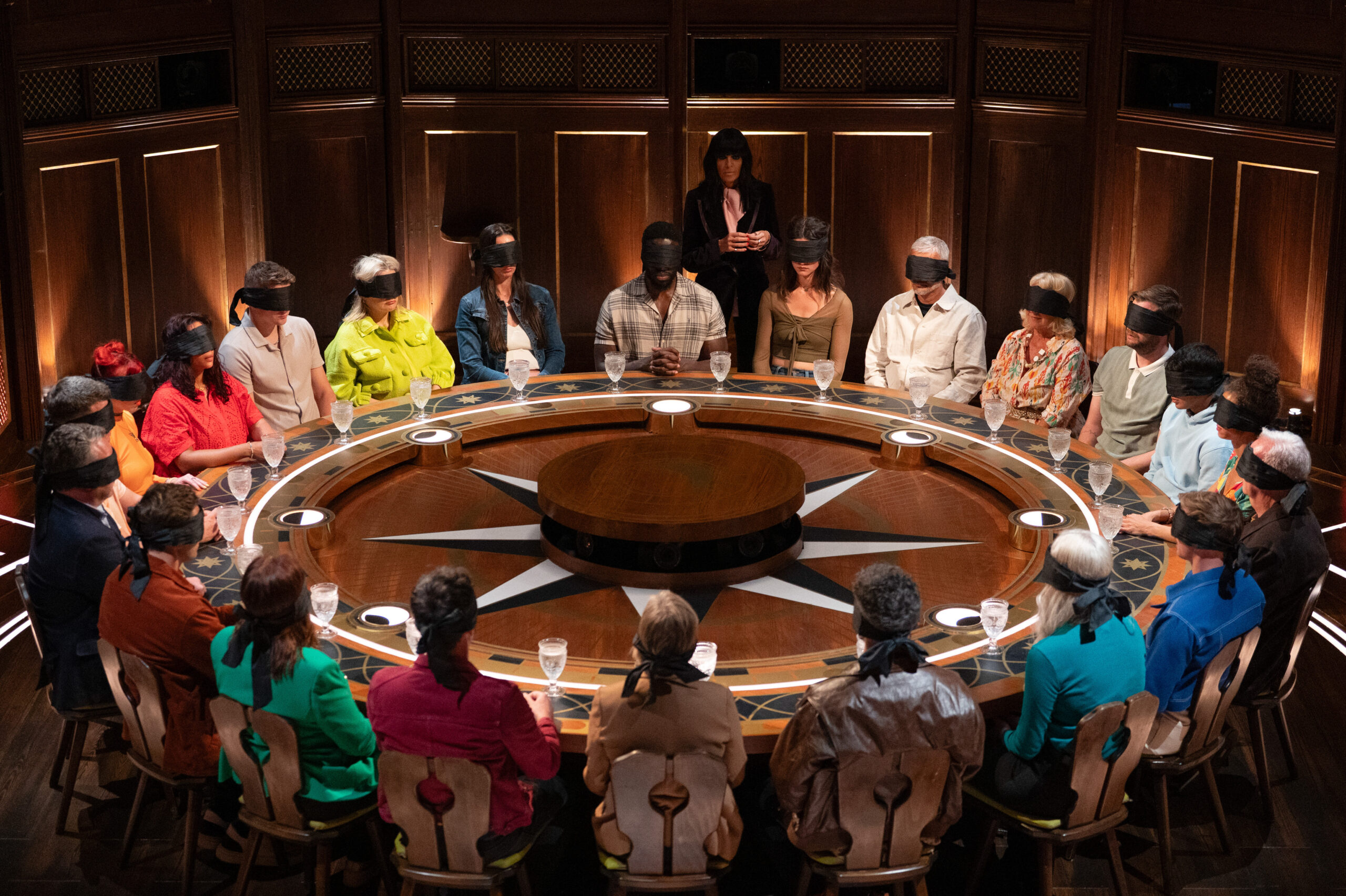
The ceremony takes place in the castle's iconic Round Table room, designed specifically to foster high tension and visibility among contestants.
1. The Pre-Vote Deliberation
Before any votes are cast, the host opens the floor for open debate. Players present arguments, highlight suspicious behavior, point out logical fallacies in previous voting records, and cross-examine fellow contestants. This phase can last from several minutes to hours in real-time before being condensed for broadcast.
2. The Slate Voting Phase
Once deliberations conclude, each player writes the name of their chosen nominee on an individual slate or chalkboard. Voting is mandatory, secret until revealed, and cannot be changed once written.
3. The Vote Reveal
The host calls on players one by one to turn over their slates and explain the reasoning behind their vote. This sequential reveal creates immense psychological pressure, as players frequently adjust their verbal explanations based on how preceding votes have landed.
4. The Identity Confession
The player who receives the highest total number of votes is officially banished. Before exiting the castle grounds forever, the banished player must stand in the center of the room—often on the Circle of Truth—and deliver the signature phrase revealing whether they were a Faithful or a Traitor.
Strategic Drivers Behind Round Table Banishments
Banishments are rarely simple matters of unanimous agreement. Instead, they are the product of complex social dynamics, strategic misdirection, and game theory.
Round Table Voting Dynamics:
- Traitor Betrayal ("Throwing under the bus")
- Faithful Paranoia (Suspicion of quiet/defensive)
- Voting Records (Bandwagoning on visible targets)
Traitor Betrayal ("Throwing Under the Bus")
One of the most effective tactics for a Traitor is sacrificing a fellow Traitor during a Banishment vote. When suspicion mounts against a specific Traitor, their co-conspirators must decide whether to defend them or join the crusade against them.
By actively leading or supporting the vote against a fellow Traitor, a remaining Traitor establishes substantial "Faithful credibility." Other players often reason that no Traitor would so aggressively target another Traitor, giving the betrayer temporary immunity from suspicion in subsequent episodes.
Defensive Slip-ups and Paranoia
Faithful players are often banished due to emotional instability, over-defensiveness, or aggressive behavior rather than actual guilt. When a player reacts defensively to light questioning, the group often interprets that distress as a sign of deceit. This creates a self-fulfilling loop where innocent Faithfuls become increasingly anxious, further raising suspicion among their peers.
Voting Record Bandwagoning
As votes are revealed around the table, undecided players often jump onto established momentum to avoid casting a isolated vote. Throwing a "rogue vote" on someone outside the primary consensus makes a player look detached from the group or protective of a Traitor, putting them at risk for the next Banishment.
The Shield Factor
During daily missions, players frequently have the opportunity to win a Shield, protecting them from being Murdered at night. However, a Shield offers zero protection against Round Table Banishment. If a player holding a Shield behaves suspiciously or tries to hide their protected status, fellow contestants may target them at the Round Table specifically because they know the player cannot be eliminated during the night.
Comparing Banishment vs. Murder Mechanics
To understand how Banishments shape overall game momentum, it helps to analyze how Banishment differs technically and strategically from the nighttime Murder mechanism.
| Game Aspect | Round Table Banishment | Nighttime Murder |
|---|---|---|
| Execution Timing | Evening / End of Day Cycle | Late Night / Early Morning |
| Decision Makers | All active contestants (Faithfuls & Traitors) | Traitors exclusively in the Conclave |
| Eligibility | All active players (Shields offer NO safety) | Non-Shield holders only (Traitors immune) |
| Information Revealed | True identity (Faithful or Traitor) confirmed | Victim identity revealed at breakfast; true role confirmed |
| Primary Objective | Faithfuls seek Traitors; Traitors blend in | Traitors eliminate strong/smart Faithfuls |
| Public Debate | Mandatory open dialogue before voting | Secret deliberation behind closed doors |
What Happens Immediately After a Traitor Is Banished?
When the Round Table successfully banishes a Traitor, the structure of the game changes instantly behind the scenes. Banishing a Traitor does not automatically reduce the threat to the Faithfuls; in many cases, it makes the remaining Traitors more dangerous.
The Ultimatum and Recruitment Rules
When a Traitor is banished, the remaining Traitor count drops below the production threshold (typically two or three remaining). Under game rules, the remaining Traitors are granted the power to Recruit a Faithful player into their ranks during the night.
Recruitment usually takes one of two formats:
- Standard Invitation: The selected Faithful can choose to accept the offer and become a Traitor, or decline and remain a Faithful.
- Blackmail / Ultimatum: Used when only one or two Traitors remain. The targeted Faithful must either accept the recruitment to become a Traitor immediately or face immediate Murder.
Because of recruitment, whenever the group celebrates banishing a Traitor, a new Traitor may be inducted that very night. This keeps the game balanced, ensuring the Traitors maintain strategic leverage throughout the season.
Shifts in Faithful Voting Patterns
Banishing a Traitor can lead to a psychological trap known as "false confirmation bias." Faithfuls who led the successful vote often assume that everyone who voted alongside them must be a Faithful. Smart Traitors capitalize on this by eagerly voting out their own partners, using that victory to establish long-term trust within the dominant voting bloc.
Tie-Breakers and Edge Cases at the Round Table
While most Round Table votes end in a clear majority, ties do occur. Show rules govern tied votes strictly to ensure a definitive outcome.
Tie-Breaker Procedure:
Initial Vote Ends in a Tie
Revote: Only Tied Nominees Eligible (Tied players do NOT vote)
- Clear Majority Achieved
- Player Banished
- Identity Revealed
- Still Tied After Revote
- Sudden Death / Host Intervention
- Clear Majority Achieved
The Revote: If two or more players receive an equal number of top votes, the host pauses proceedings and announces a revote.
Restricted Options: During the revote, non-tied players can only vote for one of the tied nominees. The tied nominees themselves are typically stripped of their vote during the tie-breaker round.
Deadlock Resolution: If the revote results in a second tie, rules vary by regional format. In some versions, the remaining group must come to a verbal consensus, or a random draw / sudden-death mechanism is triggered to determine who is banished.
How to Analyze Banishments Like a Strategic Viewer
If you are following ongoing seasons of The Traitors, analyzing Banishment votes requires looking beyond the emotional arguments at the table. To predict who will be banished next, focus on three primary metrics:
- Voting Record Alignment: Keep track of who votes with whom. Traitors often form quiet voting pacts with influential Faithfuls to guide group consensus without appearing controlling.
- The "Quiet Floater" Trait: Players who avoid taking firm stands during Banishments often survive deep into the game, but they become prime targets in the late game when remaining players demand clear evidence of loyalty.
- Reaction to Identity Reveals: Watch how players react the moment a banished player reveals they were a Faithful. Players who look genuinely shocked or defeated are often Faithfuls, while Traitors must actively fake surprise or over-emphasize relief.
Frequently Asked Questions
What happens if a tie vote occurs during a Round Table Banishment?
If a vote ends in a tie, a revote takes place immediately. Only the tied contestants are eligible to be voted for, and non-tied players must cast their vote for one of those candidates. The tied players usually do not vote in the tie-breaker.
Can a contestant choose to abstain or refuse to vote at Banishment?
No. Voting is mandatory for all eligible players at every Round Table Banishment. Abstaining, casting a blank slate, or writing down an ineligible name is strictly prohibited by game rules.
Can a player use a Shield to protect themselves from Banishment?
No. A Shield only protects a player from being Murdered by the Traitors during the night phase. It provides no protection or immunity whatsoever against a Round Table Banishment vote.
What happens when a Traitor is banished near the end of the season?
If a Traitor is banished in the late stage of the game (such as the final days), Traitors may lose the ability to recruit new members depending on the format rules. This forces the remaining Traitors to survive purely on their social game without bringing in fresh reinforcements.
Does banishing a Traitor end the game immediately?
No. The game continues through its scheduled duration or until the final endgame phase. Even if all original Traitors are banished, recruitment rules typically ensure that new Traitors enter the fold to maintain game balance until the final fire pit or table confrontation.
Strategic Summary for Viewers
The Round Table Banishment is the decisive strategic arena in The Traitors. Faithfuls win by identifying behavioral inconsistencies and tracking voting records, while Traitors win by managing suspicion, creating scapegoats, and willingly sacrificing their own when necessary. To understand any Banishment outcome, look at who organized the voting momentum, who pivoted during the reveal, and how the remaining players adjust their strategy ahead of the next night's Murder.
Image Gallery