The 1976 Johnson 70 HP Outboard Motor: Specs, Maintenance, and Troubleshooting
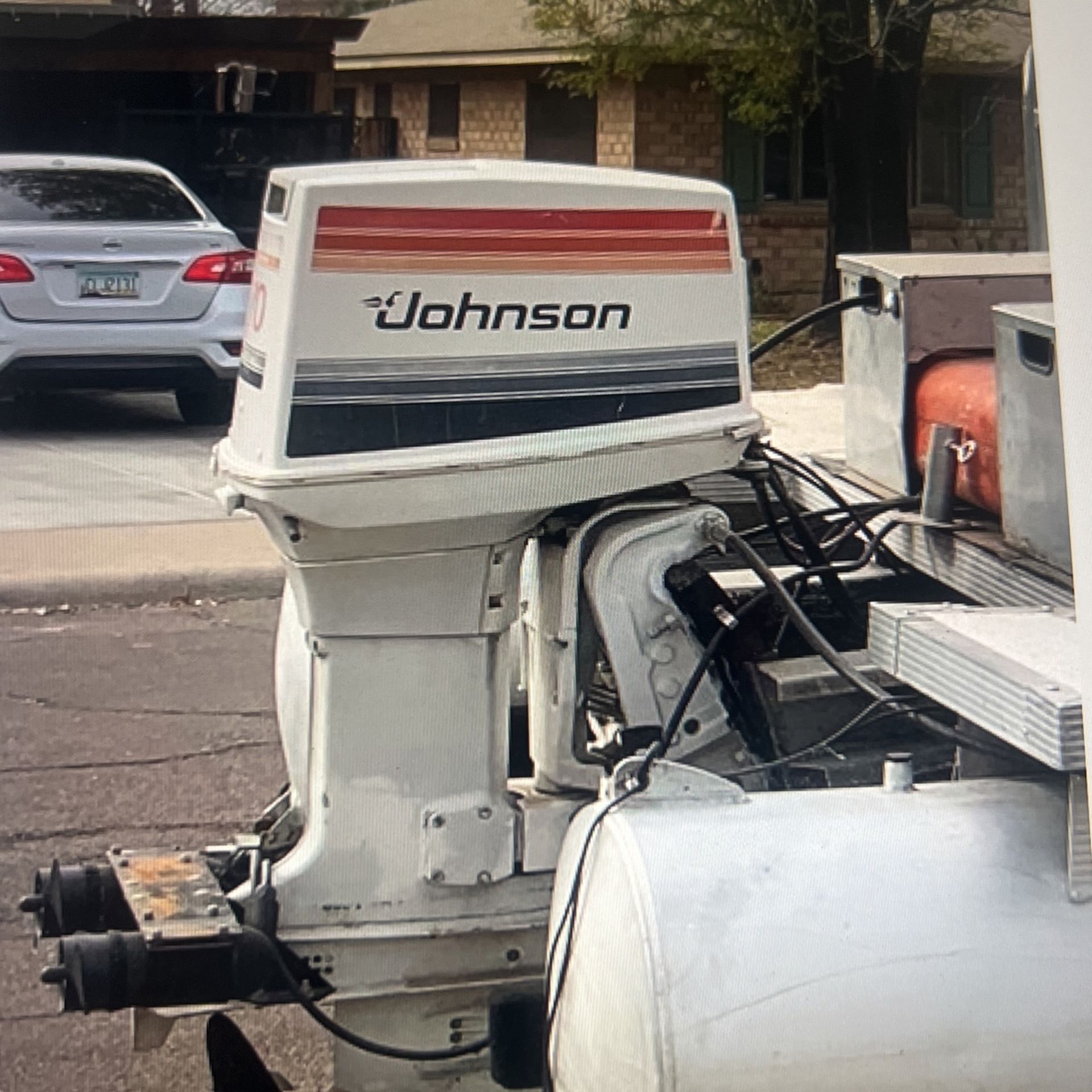
The 1976 Johnson 70 HP outboard motor is a three-cylinder, two-stroke marine engine developed by the Outboard Marine Corporation (OMC). Celebrated for introducing loop-charged induction to mid-range outboards, this model delivers a hig...
The 1976 Johnson 70 HP outboard motor is a three-cylinder, two-stroke marine engine developed by the Outboard Marine Corporation (OMC). Celebrated for introducing loop-charged induction to mid-range outboards, this model delivers a high power-to-weight ratio, crisp throttle response, and remarkable mechanical durability. Running on a standard 50:1 fuel-to-oil premix ratio, it remains a popular choice for classic boat restorations and light utility craft.
Contents
Technical Specifications and Architectural Overview
OMC designed the 1976 Johnson 70 HP (alongside its twin, the Evinrude 70 HP) around a 49.7-cubic-inch (814 cc) inline three-cylinder powerhead. This architecture represented a significant evolutionary leap over older cross-scavenged two-stroke designs.
- Triple Carburetors
- Crankcase Reed Valves
- Loop-Charged Cylinder Ports
- Flat-Top Piston / Combustion
- Exhaust Tuning Chest
Loop-Charged Induction System
Unlike traditional cross-flow two-stroke engines that used a raised deflector on the piston crown to direct incoming fuel-air mixture toward the spark plug, the 1976 Johnson 70 HP utilizes loop scavenging. Incoming fuel-air charges enter the cylinder through angled transfer ports that direct the flow upward along the rear cylinder wall, meeting at the cylinder dome and looping back down toward the exhaust port.
This loop design offers several engineering advantages:
- Flat-Top Pistons: Allows the use of lighter, flatter piston crowns, reducing moving mass, piston thermal expansion, and mechanical wear on cylinder walls.
- Improved Thermal Efficiency: Cooler piston tops reduce hot spots, minimizing the risk of pre-ignition or detonation under heavy loads.
- Enhanced Scavenging: Flushes burned exhaust gases out of the combustion chamber more thoroughly, improving fuel economy and power output per cubic inch.
Fuel Delivery and Carburetion
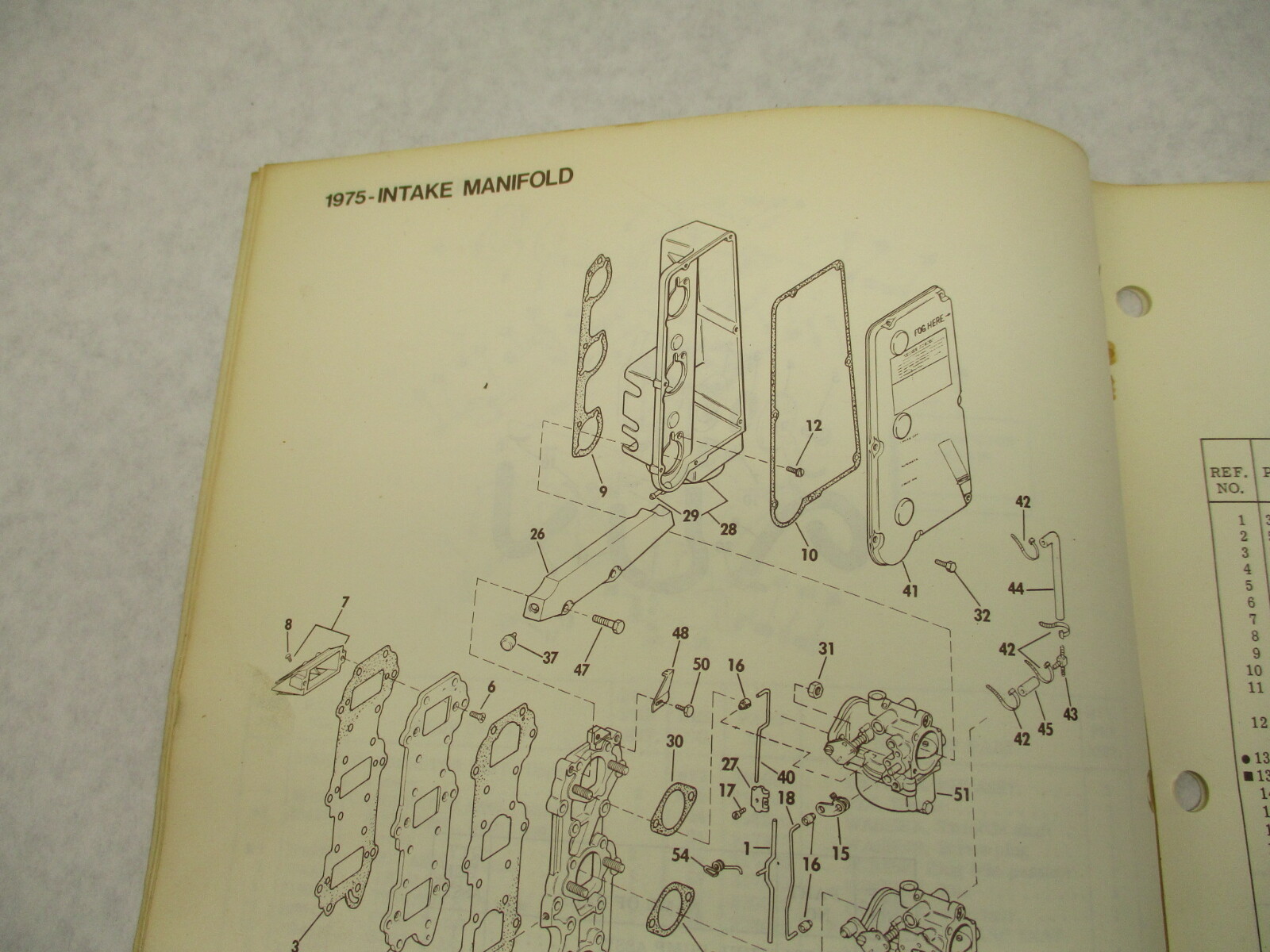
The engine features three individual single-barrel OMC side-draft carburetors, each feeding a dedicated cylinder through a reed valve bank mounted on the crankcase. The individual carburetor setup allows precise fuel metering across all three cylinders, preventing the lean-running issues often seen in single-carburetor multi-cylinder engines. A mechanical linkage synchronizes the throttle plates with the ignition timing advance base.
Solid-State Ignition System
The 1976 model uses OMC’s PowerCD solid-state capacitor discharge ignition (CDI). This system eliminates traditional breaker points and condenser maintenance in favor of:
- A flywheel-mounted stator assembly generating high AC voltage.
- A timer base fitted with sensor coils that trigger the ignition timing.
- An electronic CD power pack module that stores electrical energy and discharges it to three individual ignition coils (one per spark plug).
This high-voltage system delivers a fast-rising spark voltage capable of firing fouled or oil-wet spark plugs, ensuring reliable starting and smooth operation up to the engine’s maximum rated full-throttle range of 4500 to 5500 RPM.
1976 Johnson 70 HP Technical Specifications
| Feature / Parameter | Factory Specification |
|---|---|
| Engine Type | Inline 3-Cylinder, 2-Stroke Loop-Charged |
| Displacement | 49.7 cu. in. (814 cc) |
| Bore x Stroke | 3.00 in x 2.34 in (76.2 mm x 59.4 mm) |
| Horsepower Rating | 70 HP @ 5000 RPM (propeller shaft rated per vintage standards) |
| Operating RPM Range | 4500 – 5500 RPM |
| Fuel/Oil Ratio | 50:1 (50 parts gas to 1 part TC-W3 2-stroke oil) |
| Fuel System | 3 Single-Barrel Carburetors with Mechanical Choke |
| Ignition Type | OMC PowerCD Capacitor Discharge Ignition |
| Spark Plug Type | Champion QL77JC4 or L77JC4 |
| Spark Plug Gap | 0.030 in (0.76 mm) |
| Gear Ratio | 2.42:1 (12:29 gear set) |
| Lower Unit Lubricant | OMC Hi-Vis Marine Gear Lube (or API GL-5 80W-90 Marine Lube) |
| Trim/Tilt | Manual Tilt with Assist Pin (Power Trim/Tilt optional) |
| Dry Weight | Approx. 235 lbs (106.6 kg) for long-shaft (20-inch) models |
Operating Requirements: Fuel, Oil, and Electrical Setup
Operating a vintage 1976 Johnson 70 HP requires strict adherence to correct fluid ratios, electrical supplies, and modern fuel considerations.
| 50:1 Fuel Mix Formula |
|---|
| 6 Gallons Gasoline (22.7 L) + 16 oz. TC-W3 2-Stroke Oil (473ml) |
Fuel Selection and Premix Ratio
The 1976 Johnson 70 HP does not feature an integrated VRO (Variable Ratio Oiling) oil injection system; oil mixing was built manually by the operator.
- Fuel Ratio: Mix 50 parts gasoline to 1 part National Marine Manufacturers Association (NMMA) certified TC-W3 two-stroke marine engine oil. Mixing 16 ounces of oil into 6 gallons of gasoline provides the exact 50:1 ratio.
- Octane Rating: Use minimum 87-octane unleaded gasoline.
- Ethanol Precautions: Modern E10 ethanol-blended gasoline degrades vintage rubber fuel lines, fuel pump diaphragms, and carburetor float needles. Ethanol also absorbs atmospheric moisture (phase separation), which starves two-stroke engines of vital lubrication. Use ethanol-free fuel whenever possible. If ethanol fuel must be used, install an inline 10-micron water-separating fuel filter kit and add a marine fuel stabilizer during every fill-up.
Spark Plugs and Ignition Setup
The factory-recommended spark plug for normal operating conditions is the Champion QL77JC4 (an inductive noise-suppression plug) or Champion L77JC4, gapped precisely to 0.030 inches (0.76 mm). Resistor-style spark plugs not approved by OMC should be avoided, as improper internal resistance can disrupt the PowerCD module’s pulse timing and reduce spark intensity.
Battery and Electrical Requirements
The electric-start model requires a 12-volt marine crank battery rated for a minimum of 360 Cold Cranking Amps (CCA) or 460 Marine Cranking Amps (MCA). Ensure all battery cable connections use non-corrosive stainless steel locknuts rather than wingnuts; loose wingnuts cause voltage spikes that can instantly destroy the electronic CDI power pack.
Common Mechanical Issues and Troubleshooting
Understanding common failure points on the 1976 Johnson 70 HP allows for quick diagnosis and field repair.
1. No Spark or Intermittent Ignition Output
If the engine cranks but fails to start, test for spark across all three cylinders using an adjustable spark gap tester set to 7/16 inch (11 mm).
- No spark on any cylinder: Check the main red 20-amp inline fuse inside the engine wiring harness, verify that the ignition kill switch (if installed) is closed, and inspect the stator under the flywheel for melted black potting compound, which indicates severe overheating.
- No spark on one specific cylinder: Test the individual ignition coil serving that cylinder by swapping it with a working coil. If the fault stays with the cylinder rather than moving with the coil, the issue lies in that output lead of the PowerCD power pack or the corresponding timer base trigger coil.
- DVA (Direct Voltage Adapter) Testing: Using a multimeter equipped with a DVA adapter, measure the output voltage of the stator charge coil (minimum 150V DVA during cranking) and timer base sensor coils (minimum 0.6V DVA during cranking).
2. Overheating and Low Water Pressure
A weak or missing water indicator stream ("tell-tale") indicates cooling system failure.
- Impeller Degradation: The rubber water pump impeller inside the lower unit degrades over time. If run dry even briefly, the flexible vanes shear off and clog internal cooling passages.
- Thermostat and Relief Valve: The thermostat housing, located at the top rear of the cylinder head, contains a 143°F (62°C) thermostat and pressure relief valves. Mineral buildup or salt corrosion can freeze the thermostat closed, causing localized overheating in the upper cylinder heads despite clear water intake ports.
3. Carburetor Synchronization ("Link and Sync")
Because the engine uses three individual carburetors, uneven throttle plate movement starves individual cylinders of air, fuel, and lubricating oil, leading to rough idle, stall upon acceleration, or cylinder scoring.
Step 1: Disconnect Throttle Linkage
Step 2: Fully Close All Three Throttle Plates
Step 3: Adjust Inter-Carb Couplers (Zero Play)
Step 4: Align Throttle Cam Roller with Cam Pick-Up Mark
Step 5: Set Idle Air Mixture Screws (1.5 Turns Out, Fine-Tune in Water)
Disconnect the main throttle cable and loosen the adjustment screws on the throttle shaft interconnecting linkages between the three carburetors.
Verify complete closure of all three throttle plates inside the carburetor throats.
Tighten the linkage coupler clamps while maintaining all throttle plates in the fully closed position, ensuring simultaneous butterfly opening when the throttle arm moves.
Adjust the throttle cam pickup point so the throttle roller contacts the timing cam mark precisely as the ignition timer base reaches its designated pickup timing point.
Set idle air mixture screws to an initial baseline of 1.5 turns out from light seat seating, fine-tuning in gear in the water for smooth idling.
Maintenance Schedule and Procedures
To keep a 1976 Johnson 70 HP running at peak performance, perform routine preventive maintenance based on operating hours and seasonal storage needs.
| Regular Servicing Timeline |
|---|
| Every 50 Hours / Seasonally:- Replace Lower Unit Gear Oil- Inspect Spark Plugs & Clean Carbon- Grease Swivel Bracket & Control Links |
| Every 100 Hours / Annually:- Replace Water Pump Impeller- Replace Fuel Line Filter Element- Perform Compression Test |
Replacing the Water Pump Impeller
- Disconnect the negative battery cable and shift the motor into Neutral.
- Remove the shift rod disconnect bolt located under the bottom carburetor cowl.
- Remove the four lower unit mounting bolts and the hidden rear bolt beneath the trim tab anode.
- Carefully lower the gearcase down and away from the midsection housing.
- Remove the four stainless steel screws securing the water pump housing to the gearcase.
- Slide the housing, rubber impeller, stainless wear plate, and drive key off the driveshaft.
- Install the new impeller using fresh marine grease on the inner housing, rotating the driveshaft clockwise to orient the impeller vanes correctly. Reassemble in reverse order.
Changing Lower Unit Gear Lubricant
- Trim the motor to a completely vertical position.
- Place a drain pan underneath the lower unit and remove the Lower Drain Plug first, followed by the Upper Vent Plug.
- Allow the gear oil to drain completely. Inspect the magnetic tip of the lower drain plug for metal shavings. Fine metallic dust is normal; large metal chips indicate gear or bearing failure. Milky, opaque oil indicates water intrusion requiring lower unit seal replacement.
- Insert a standard lower unit pump bottle nozzle into the Lower Drain Hole. Pump fresh marine gear lube into the lower hole until fluid emerges from the upper vent hole without air bubbles.
- Install the upper vent plug securely to create a vacuum seal, remove the pump nozzle, and quickly replace the lower drain plug with a fresh sealing washer.
Off-Season Winterization Protocol
- Stabilize Fuel: Add marine stabilizer to the fuel tank and run the engine in fresh water for 15 minutes to distribute stabilized fuel throughout the carburetors.
- Fog Engine Cylinders: With the motor running at idle, spray two-stroke engine fogging oil directly into the air intake throats of all three carburetors until the engine smokes heavily, then choke the motor to stall it out.
- Drain Cooling Passages: Store the motor vertically so all residual cooling water drains out of the powerhead and midsection to prevent freeze cracking.
- Inspect Spark Cylinders: Remove spark plugs, spray fogging oil directly into each spark plug hole, and manually turn the flywheel over two full revolutions before reinstalling spark plugs.
Compression Testing and Diagnostic Benchmarks
Before purchasing or rebuilding a vintage 1976 Johnson 70 HP, conduct a mechanical compression test to evaluate the internal health of the powerhead.
Compression Test Checklist:
- Warm engine to normal operating temperature if possible.
- Remove all three spark plugs.
- Ground spark plug wires to prevent ignition pack damage.
- Hold throttle wide open.
- Crank engine through 4-5 compression strokes per cylinder.
Compression Reading Benchmarks
- Optimal Compression: 110 to 125 PSI per cylinder (readings may vary slightly depending on gauge calibration and starter cranking speed).
- Maximum Allowable Variance: All three cylinders must read within 10% variance of each other. For example, if Cylinder 1 reads 120 PSI, no cylinder should drop below 108 PSI.
- Low Compression Causes: A low reading in a single cylinder (e.g., 120-120-60) typically indicates a blown head gasket, stuck piston rings due to carbon accumulation, or cylinder wall scoring caused by localized overheating or fuel starvation.
Evaluating Performance and Parts Compatibility Today
Decades after its production run, the 1976 Johnson 70 HP remains viable for modern boaters due to strong aftermarket support and straightforward mechanical systems.
| Component Availability Profile |
|---|
| High Availability (Aftermarket / Sierra):- Water Pump Impellers, Gaskets, Seals- Ignition Coils, Stators, CDI Modules- Carburetor Rebuild Kits & Fuel Pumps |
| Moderate / Specialized Sourcing (NOS / Used):- Lower Unit Gears & Shafts- Recoil & Electric Starter Assemblies- Original Trim Tab & Midsection Castings |
Advantages
- Simple Maintenance: No electronic engine control units (ECUs), sensor networks, or high-pressure common rail systems. Basic mechanical tools are sufficient for servicing.
- High Power-to-Weight: At roughly 235 lbs, it is considerably lighter than modern four-stroke outboards of equivalent 70 HP output, making it an excellent replacement engine for older hulls sensitive to transom weight.
- Robust Component Supply: Essential wear items such as water pump kits, ignition coils, carb rebuild kits, and head gaskets are actively manufactured by aftermarket suppliers like Sierra Marine and CDI Electronics.
Disadvantages
- Higher Fuel Consumption: Uses significantly more fuel per hour at wide-open throttle compared to modern direct-injection or four-stroke outboards.
- Exhaust Emissions: Two-stroke oil burn produces characteristic smoke and higher hydrocarbon emissions that may restrict its use on regulated inland lakes.
- Manual Fuel Premixing: Requires manual pre-mixing of fuel and oil at every fill-up.
Frequently Asked Questions
What is the exact oil-to-gas ratio for a 1976 Johnson 70 HP outboard?
The correct ratio is 50:1. Use 1 pint (16 fl oz) of NMMA-certified TC-W3 2-stroke oil for every 6 gallons of 87-octane unleaded gasoline.
Can I run modern ethanol fuel in this 1976 outboard?
While the engine can run on E10 fuel, ethanol degrades vintage rubber fuel lines, fuel pump diaphragms, and carburetor seals over time. It is best to use ethanol-free marine gasoline. If ethanol fuel is unavoidable, install an inline 10-micron water-separating fuel filter and use a fuel stabilizer.
What spark plug should I use, and what is the correct gap?
Use Champion QL77JC4 or Champion L77JC4 spark plugs. Set the electrode gap to 0.030 inches (0.76 mm).
Why is my 1976 Johnson 70 HP bogging down when I apply full throttle?
Full-throttle bogging is typically caused by dirty carburetor high-speed jets, improper carburetor link-and-sync timing, a failing fuel pump diaphragm, or air entering the fuel pickup line.
How much lower unit oil does the 1976 Johnson 70 HP require?
The lower gearcase holds approximately 22.5 fluid ounces (665 ml) of marine gear lubricant. Always refill the unit from the lower drain plug hole until oil flows smoothly out of the upper vent hole.
Summary and Next Actions
The 1976 Johnson 70 HP outboard motor stands as a prime example of OMC's engineering success with three-cylinder loop-charged two-stroke technology. Its combination of low weight, reliable solid-state ignition, and straightforward carburetion makes it a practical power option for vintage watercraft restoration.
For optimal reliability:
- Conduct a cylinder compression test to verify baseline powerhead health.
- Replace the water pump impeller and lower unit gear oil annually.
- Clean and synchronize all three carburetors to prevent lean fuel conditions in individual cylinders.
- Run high-grade 50:1 TC-W3 oil premix with ethanol-free gasoline.
With basic seasonal preventive maintenance and prompt attention to ignition or cooling issues, this classic 70 HP outboard will continue to deliver strong performance on the water.
Image Gallery