Tommie Copper Shirts for Back Pain: Types, Benefits, and What the Science Says
Tommie Copper shirts offer back support primarily through targeted compression paneling that improves postural alignment and enhances proprioception—your body’s internal sense of spatial awareness. While the proprietary copper-infused...
Tommie Copper shirts offer back support primarily through targeted compression paneling that improves postural alignment and enhances proprioception—your body’s internal sense of spatial awareness. While the proprietary copper-infused fabric delivers anti-odor and moisture-wicking benefits, physical relief from minor back strain and muscular fatigue stems directly from elastic compression rather than copper absorption.
Contents
Medical Disclaimer: This article provides educational information and analysis of support apparel. It is not a substitute for professional medical advice, diagnosis, or treatment. Always consult a qualified healthcare provider regarding back pain, spinal conditions, or persistent discomfort.
Understanding How Tommie Copper Shirts Address Back Pain
Compression garments have transitioned from specialized athletic gear to mainstream wellness apparel. Tommie Copper designed its line of compression tops around the concept of daily, comfortable wear. To evaluate their effectiveness for back discomfort, it is essential to separate fabric technology from structural biomechanics.
- Tommie Copper Back Support Mechanism
- Fabric Technology (Copper Znergy)
- Anti-odor performance
- UPF 50+ sun protection
- Moisture management
- Biomechanical Compression
- Tactile feedback (Proprioception)
- Reduced muscle oscillation
- Gentle postural cueing
- Fabric Technology (Copper Znergy)
The Role of Proprioception and Tactile Feedback
The human nervous system relies on sensory receptors in the skin, muscles, and joints to maintain balance and posture. When you wear a form-fitting compression shirt, constant tactile contact against the skin heightens proprioception.
This sensory feedback creates a subtle cueing effect. When your shoulders begin to round forward or your lower spine slumps, the tension in the shirt’s elastane panels tightens against your skin. This alerts your brain to adjust back into an anatomically neutral posture before muscle strain sets in.
Reduced Muscle Oscillation and Fatigue
During daily movement, walking, or physical exertion, soft tissues experience micro-vibrations known as muscle oscillation. Over several hours, these minor vibrations contribute to muscular fatigue in the erector spinae (the muscles running along your spine) and upper back stabilizers.
Targeted elastic compression stabilizes soft tissue, minimizing excess movement and mitigating localized fatigue. By supporting overworked postural muscles, compression tops can decrease the dull ache associated with long periods of sitting or standing.
Fabric Technology vs. Pain Relief
Tommie Copper highlights its Copper Znergy® fabric technology, which permanently bonds copper and zinc ions to synthetic fiber blends (typically polyester and elastane).
It is important to understand the actual function of this feature:
- Antimicrobial and Anti-Odor: Copper ions naturally inhibit the growth of odor-causing bacteria, keeping the garment fresh over extended wear.
- Skin Comfort: The fabric manages moisture and offers UPF 50+ sun protection.
- No Direct Analgesic Effect: Transdermal absorption of copper from apparel does not reduce joint or spine inflammation. The structural support and compression properties provide all physical pain-mitigation mechanisms.
Key Tommie Copper Shirt Models for Back and Posture Support
Tommie Copper produces multiple variations of compression tops. Selecting the right shirt depends on whether your pain originates in the upper back and shoulders or the lumbar region.
- Shoulder Centric Shirt
- Upper Back Support Panels
- Lower Back Compression Base Layer
- Lumbar Core Compression
1. Shoulder Centric Support Shirts
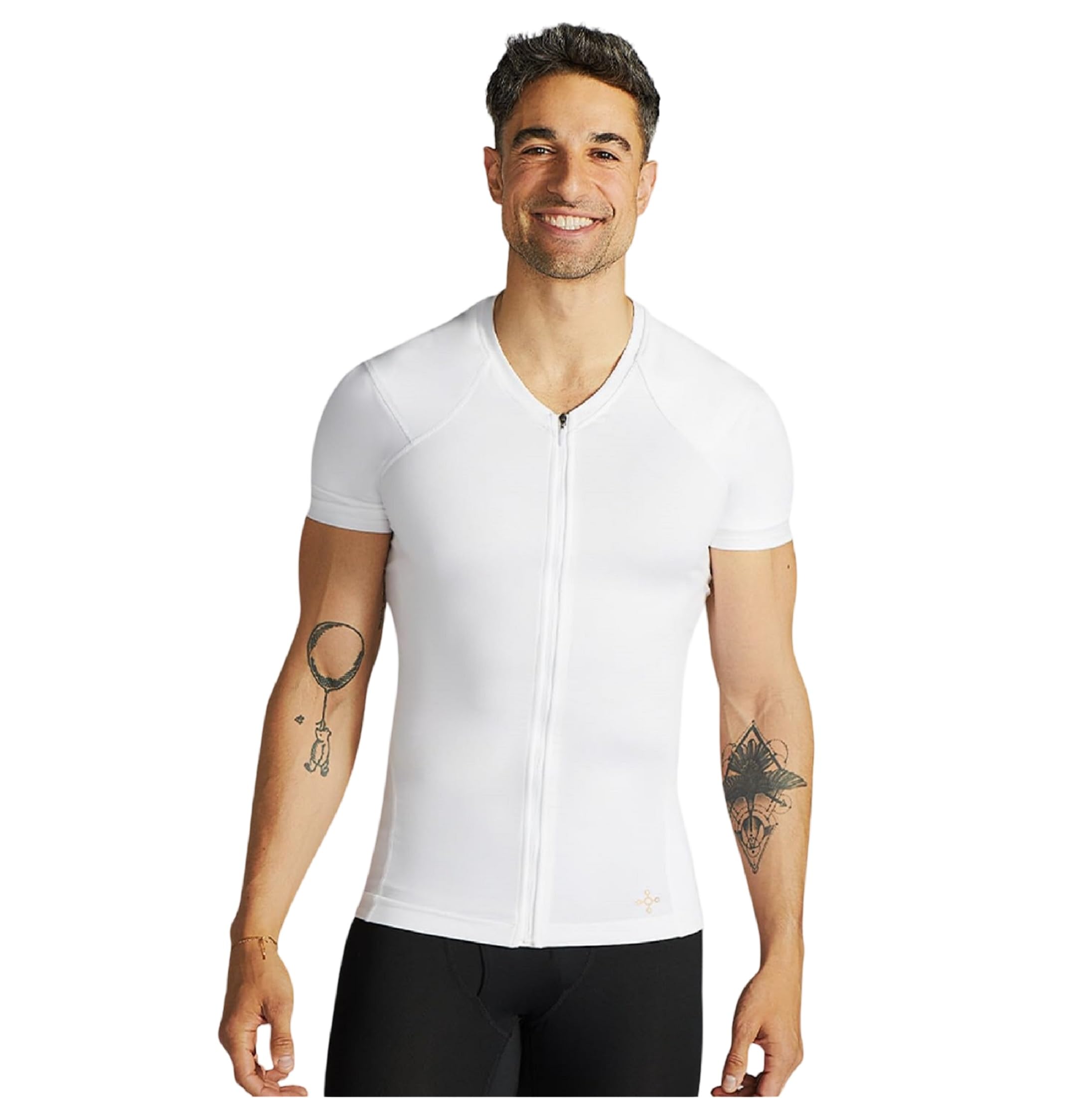
Designed specifically for upper back discomfort, neck tension, and shoulder slumping, the Shoulder Centric line features heavy-gauge compression panels woven across the upper back and shoulder blades.
- Target Area: Upper back, rhomboids, trapezius, and posterior deltoids.
- Mechanism: Ergonomic bands exert backward tension on the shoulders, opposing the forward slump common during computer work or driving.
- Best Used For: Upper back strain, desk-worker posture correction, and shoulder blade discomfort.
2. Lower Back & Core Compression Tops
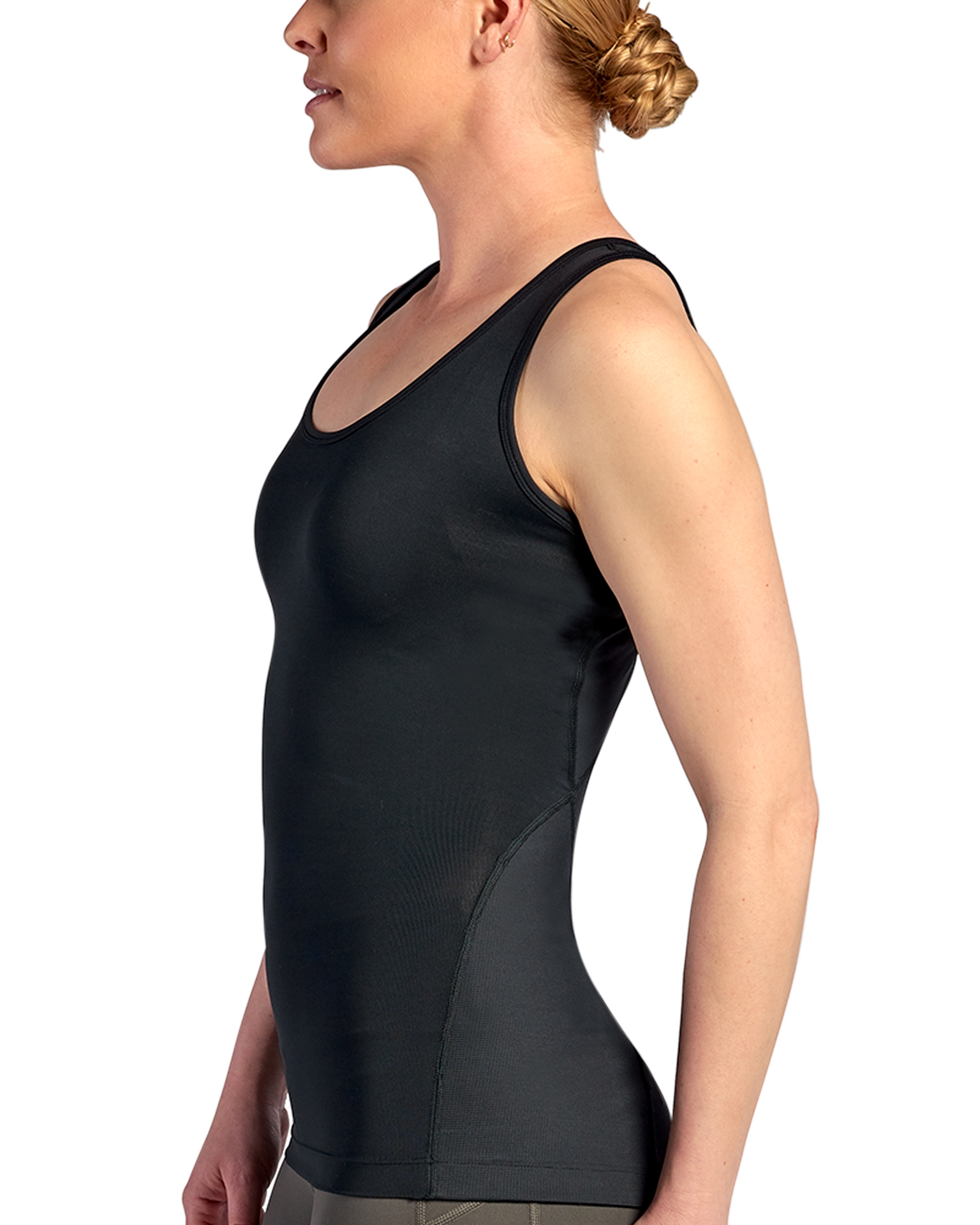
Lower back discomfort often stems from inadequate core engagement and pelvic tilting. Tommie Copper offers full-length compression shirts and tank tops engineered with extra midsection tension to support the lumbar spine.
- Target Area: Lumbar spine, abdominal core, and lower erector spinae.
- Mechanism: 360-degree mid-torso compression increases intra-abdominal pressure slightly, offering light structural support around the waist.
- Best Used For: Mild lumbar stiffness, fatigue from prolonged standing, and lower back tension during lifting.
3. Everyday Light Compression Tops (Base Layers)
For individuals seeking generalized support without restrictive paneling, standard short-sleeve and long-sleeve crewnecks provide uniform, light compression throughout the torso.
- Target Area: Whole torso coverage.
- Mechanism: Moderate, uniform compression that fits smoothly under dress shirts or athletic wear.
- Best Used For: Daily wear, mild generalized soreness, and baseline postural awareness.
What Science Says About Compression Wear and Back Pain
To set realistic expectations, it helps to examine independent biomechanical research alongside the regulatory history of copper-infused apparel.
Scientific Evidence for Compression Apparel
Clinical studies on upper-body compression garments show positive outcomes for specific performance and posture metrics:
- Posture Awareness: Research published in sports biomechanics journals demonstrates that posture-cueing garments significantly reduce forward head tilt and shoulder protracted angles during extended sitting.
- Fatigue Recovery: Studies indicate that graduated compression speeds up localized blood circulation, aiding metabolic waste clearance after physical exertion and reducing delayed onset muscle soreness (DOMS).
- Proprioceptive Control: Dynamic stability tests confirm that sensory input from tight-fitting elastic materials helps wearers maintain joint position awareness better than loose clothing.
However, compression shirts do not structural realign spine deformities, fix herniated discs, or eliminate nerve compression like sciatica.
Regulatory Context and Marketing Claims
In 2015, the U.S. Federal Trade Commission (FTC) reached a settlement with Tommie Copper regarding early advertising claims that suggested its copper-infused garments could replace medical treatments or relieve severe disease-related pain.
Current product descriptions reflect appropriate standards: Tommie Copper shirts are sold as non-invasive, daily support garments that promote comfort, aid posture, reduce muscle fatigue, and provide antimicrobial fabric benefits.
Comparison: Tommie Copper Shirts vs. Alternative Back Support Options
Selecting the appropriate intervention requires balancing support strength, daily comfort, and mobility restrictions.
| Feature / Metric | Tommie Copper Support Shirts | Rigid Medical Back Braces | Standard Athletic Compression Tops |
|---|---|---|---|
| Primary Mechanism | Proprioceptive cueing & mild elastic support | Mechanical immobilisation & lumbar unloading | General uniform elastic squeeze |
| Support Level | Light to Moderate | High to Extreme | Light |
| Mobility | Full range of motion preserved | Highly restricted motion | Full range of motion preserved |
| Comfort for All-Day Wear | High (Breathable, moisture-wicking) | Low (Bulky, stiff, warm) | High (Varies by fabric) |
| Posture Cueing | High (Targeted upper/lower panels) | Passive (Forces position mechanically) | Low to Moderate |
| Under-Garment Stealth | Invisible under everyday clothing | Visibly bulky under clothes | Invisible under everyday clothing |
| Anti-Odor Integration | High (Copper Znergy treatment) | Low | Standard synthetic (Varies) |
| Best Primary Use Case | Postural habits, mild ache, daily wear | Acute injury, post-surgery, heavy lifting | General gym workouts, mild fatigue |
How to Choose the Right Size and Get the Correct Fit
A compression shirt must fit properly to offer back support benefits. If it is too loose, it fails to engage proprioceptive cues; if it is too tight, it restricts breathing and causes skin chafing.
| Chest Size | Tension Level | Goal |
|---|---|---|
| Small | Light | Everyday Comfort |
| Medium | Target | Posture Correction |
| Large | Stiff | Maximum Cueing |
Measuring for Back Support Tops
- Measure Your Chest: Wrap a soft tape measure around the fullest part of your chest, keeping the tape horizontal under your arms.
- Consult the Manufacturer Size Chart: Choose your precise size according to your chest measurement rather than your typical t-shirt size.
- Decide Between Support Levels:
- For Posture Cueing: Stick to your exact measured size for optimal panel tension.
- For All-Day Layering/Mild Support: If you sit between sizes, sizing up provides comfortable continuous wear.
- Do Not Size Down Excessively: Sizing down excessively compresses the ribcage, restricts full diaphragmatic breathing, and rolls up at the hem line.
Caring for Your Garment
Proper care preserves the elastane fibers responsible for compression tension and maintains the copper-zinc fabric coating:
- Wash in cold water on a gentle cycle with like colors.
- Avoid using fabric softeners or bleach, as softeners coat synthetic fibers and degrade both moisture-wicking capabilities and elastic tension.
- Tumble dry on low heat or line dry in the shade to protect elastane longevity.
Who Should (and Shouldn't) Use Tommie Copper Back Support Shirts?
While support shirts offer safe, non-invasive assistance for most adults, they suit specific scenarios better than others.
- Is a Support Shirt Right?
- Recommended For
- Desk workers with slouching
- Daily standing fatigue
- Mild muscular strain
- Active postural awareness
- Consult Doctor
- Severe disc herniations
- Sharp shooting sciatic pain
- Unexplained spinal pain
- Post-surgical recovery
- Recommended For
Recommended For:
- Office & Remote Workers: Individuals sitting at computer desks who experience upper back fatigue and tendency to slouch forward.
- Active Professionals: Workers on their feet all day (nurses, retail staff, tradespeople) who need baseline lower back support without bulky braces.
- Athletic Recovery: Athletes seeking reduced muscle soreness and enhanced torso stability during recovery phases.
Not Recommended For (Without Medical Supervision):
- Acute Lumbar Injuries: Fresh muscle tears, severe disc herniations, or vertebral fractures require medical bracing and clinical care.
- Sciatica and Neurological Symptoms: Numbness, tingling, or shooting leg pain indicates nerve root compression that regular compression clothing cannot relieve.
- Circulatory or Respiratory Conditions: Individuals with severe peripheral vascular disease or compromised lung function should consult their physician before using continuous compression apparel around the chest.
Frequently Asked Questions
Can I sleep in a Tommie Copper back support shirt?
While light compression shirts are generally safe for overnight wear, sleeping in targeted posture-support shirts is usually unnecessary. Posture-cueing panels rely on active movement and gravity to provide biofeedback. For rest, loose, unrestrictive sleepwear allows full muscle relaxation and unrestricted breathing.
How long does the copper anti-odor feature last?
Tommie Copper’s Copper Znergy treatment is permanently bonded to the fabric fibers. Unlike topical sprays, the antimicrobial properties persist throughout the functional lifespan of the shirt, provided you follow proper washing instructions and avoid fabric softeners.
Will wearing a compression shirt weaken my core and back muscles?
Unlike rigid medical braces that fully immobilize joints and can lead to muscle atrophy over time, compression shirts allow full movement. They act as a tactile reminder for your active muscles to engage, rather than taking over the structural load entirely.
How quickly will I notice improvements in my back discomfort?
Sensory posture awareness occurs immediately upon putting on a properly fitted shirt. Relief from muscular fatigue typically becomes noticeable over the course of a normal workday, as the shirt helps prevent the deep slumping that strains back tissues over time.
Recommendations and Next Steps
If you are considering a Tommie Copper shirt to help manage back strain and support your posture, follow these practical steps to get the best result:
- Identify Your Primary Target Area: Select the Shoulder Centric line if your pain stems from slumping, shoulder strain, or upper back tension. Choose a Core Compression top if your main concern is lower back stiffness and midsection alignment.
- Confirm Your Measurements: Take accurate chest measurements before ordering. Proper compression relies on exact sizing rather than your standard street clothing size.
- Combine Apparel with Active Ergonomics: Treat compression shirts as one element of a complete back health routine. Pair your garment with regular postural adjustments, ergonomic desk setups, core-strengthening exercises, and frequent movement breaks.
- Consult a Healthcare Provider for Persistent Pain: If your back pain is severe, persists for more than two weeks, or radiates into your legs, schedule an evaluation with a physical therapist or medical specialist to address the underlying cause.
Image Gallery