Understanding the Popeye Game for Nintendo: History, Gameplay, and Collecting
The Popeye game for the Nintendo Entertainment System (NES) is a classic 1983 arcade conversion developed and published by Nintendo. It tasks players with controlling the iconic sailor to collect items dropped by Olive Oyl while avoidi...
The Popeye game for the Nintendo Entertainment System (NES) is a classic 1983 arcade conversion developed and published by Nintendo. It tasks players with controlling the iconic sailor to collect items dropped by Olive Oyl while avoiding Bluto and obstacles. Mastering the game requires precise timing, movement patterns, and an understanding of the game's distinct, repeating level structures.
Contents
The Origins and Development of the Popeye Game
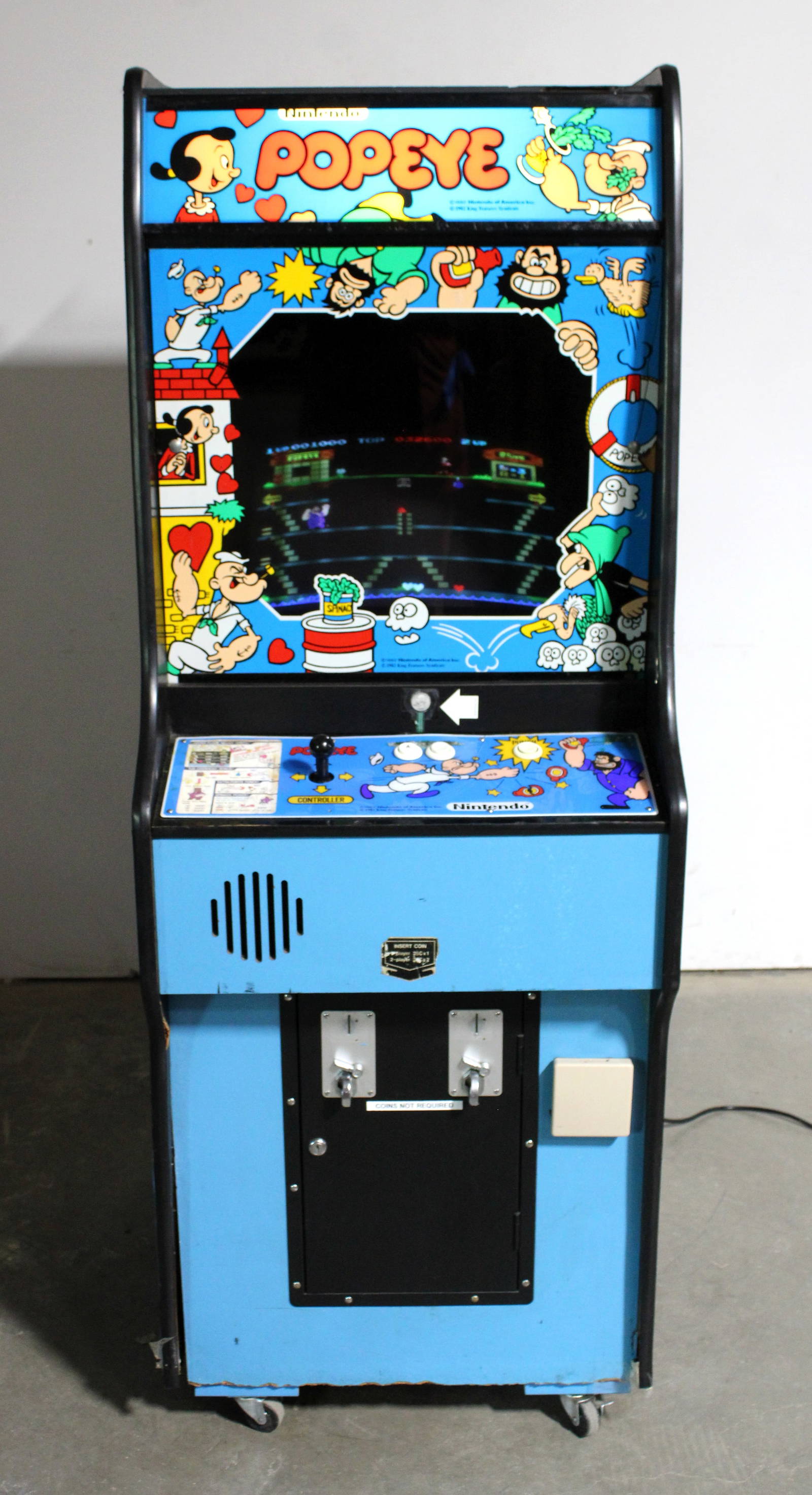
Released during the golden age of arcade gaming, Popeye holds a unique place in Nintendo’s history. Originally appearing as an arcade cabinet in 1982, the game was ported to the Family Computer (Famicom) in Japan in 1983 and subsequently to the Nintendo Entertainment System (NES) in North America in 1986. Unlike later, more complex titles, this game is a single-screen platformer that relies on high-score competition rather than narrative progression.
The game is notable for being one of the earlier examples of a licensed property adapted into a dedicated video game format. It was designed by Genyo Takeda and Shigeru Miyamoto, two key figures in Nintendo's internal development. Their design choices—such as the lack of a jump button—create a unique gameplay challenge compared to the industry standard Donkey Kong or Super Mario Bros.
Core Gameplay Mechanics and Objectives
The objective in Popeye is simple but demanding: the player must collect a set number of items (hearts, notes, or letters, depending on the level) that Olive Oyl tosses from the top of the screen. Failing to catch an item before it hits the bottom of the screen results in a lost life. Players must navigate three distinct stages that cycle with increasing difficulty.
- Stage 1: The Docks. This is the introductory level, featuring a multi-platform layout. The player must collect hearts.
- Stage 2: The Street. This stage introduces a "see-saw" mechanic that allows players to reach higher platforms. The goal is to collect musical notes.
- Stage 3: The Ship. The final stage, set on a ship with a more vertical layout, requires the player to collect letters to spell "HELP."
Throughout these stages, Bluto serves as the primary antagonist, constantly tracking the player's movement. If Bluto touches the player, a life is lost. However, the player can find a "Spinach" icon in each stage. Consuming the spinach makes the player invincible for a short duration, allowing them to knock Bluto off the screen, providing a crucial window to collect items safely.
Technical Challenges and Strategy
Because Popeye lacks a jump mechanic, the player's movement is limited to walking and climbing ladders. This restriction forces players to plan their routes carefully. In later levels, the speed at which items fall increases, and Bluto’s movement patterns become more aggressive.
One critical strategic element is the management of the spinach. Using it too early can leave the player vulnerable during the final, most difficult moments of a stage. Players should prioritize gathering items near the top of the screen first, as falling items move toward the bottom, where they are eventually lost if not collected.
Comparing Versions: Arcade vs. NES
While the core gameplay remains largely identical, there are differences between the original 1982 arcade version and the 1986 NES port.
| Feature | Arcade Version | NES (Home) Version |
|---|---|---|
| Graphics | High-fidelity sprites | Simplified 8-bit aesthetic |
| Audio | Multi-channel arcade sound | Limited NES sound chip |
| Difficulty | Escalating (Quarters required) | Fixed difficulty levels |
| Stage Loop | Continuous | Infinite until life loss |
Collecting and Hardware Compatibility in 2026
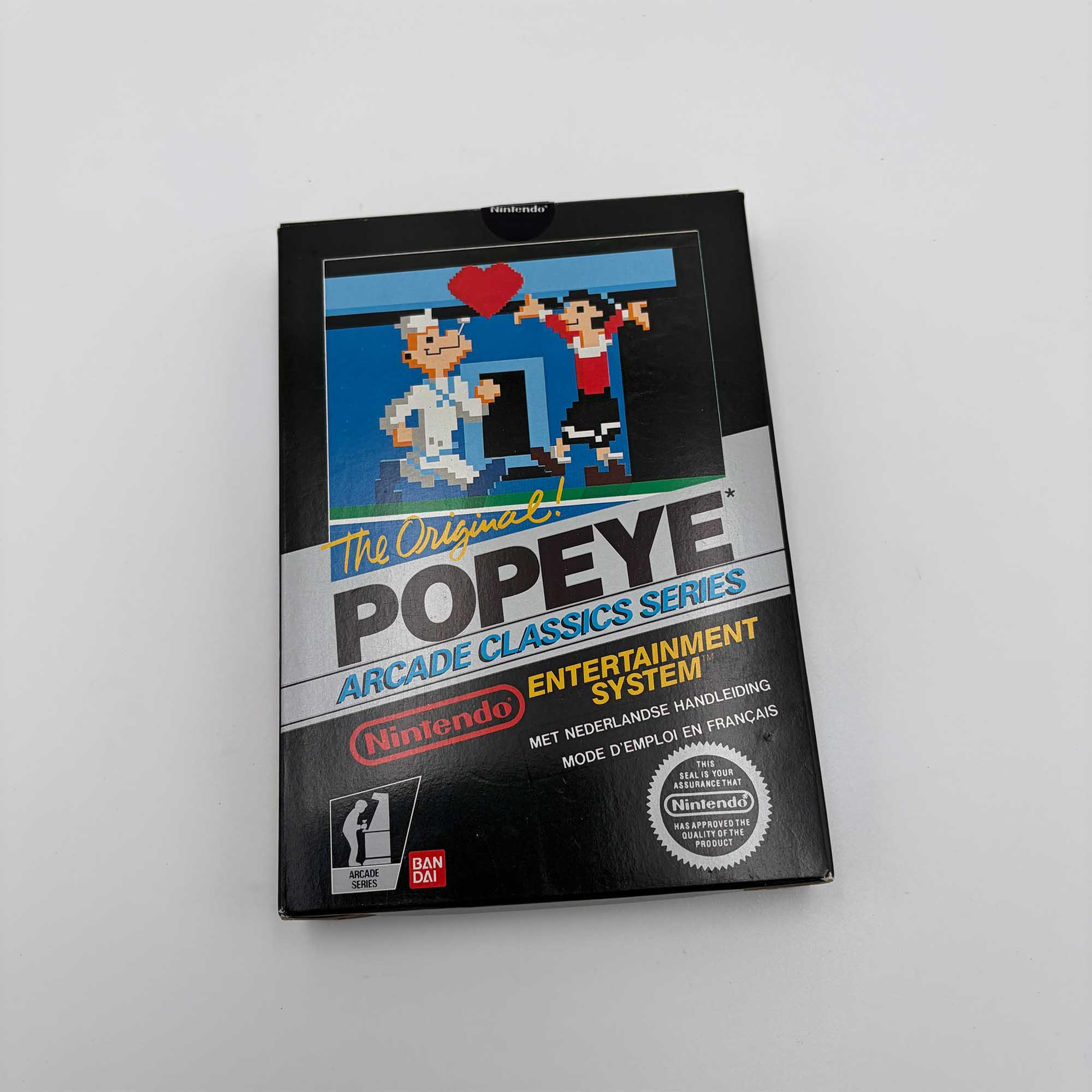
In 2026, the Popeye NES cartridge remains a staple for collectors of early Nintendo history. Because the game was an early production title, it was released in the "black box" series, characterized by simple, iconic cover art.
When seeking to play the game today, enthusiasts should be aware of several factors:
- Hardware Requirements: The original game requires a functional NES console or a compatible front-loader/top-loader system. If using modern hardware like an analog NT or FPGA-based emulation consoles, ensure the cartridge pins are clean.
- Pin Cleaning: NES cartridges often suffer from oxidation on the contact pins. Using a high-percentage isopropyl alcohol solution and a soft swab is the standard maintenance procedure to ensure the game boots correctly.
- Region Locks: The NES had different regional lockout chips (Lockout Chip/CIC). A North American (NTSC) cartridge will not play on a Japanese (Famicom) console without a converter or a modified lockout mechanism.
Common Troubleshooting and Performance Issues
If your Popeye game fails to start, it is almost never a fault of the game software itself, as ROM cartridges are highly durable.
- The "Blinking" Screen: This is a hallmark of the original NES hardware due to a dirty or misaligned 72-pin connector. Repeatedly pressing the cartridge down or using a "Game Genie" as a bridge can sometimes mitigate this.
- Glitching Sprites: If the game displays garbled graphics, power off the system immediately. Clean the cartridge contacts once more, as this indicates a partial connection where only some data bits are being read.
- Save Data: Popeye does not use an onboard battery for save files, as it is a pure arcade-style game with no campaign progression. Therefore, you do not need to worry about battery corrosion or save-data loss, which is a common concern for titles like The Legend of Zelda.
Frequently Asked Questions
Is there a jump button in the Popeye NES game? No, there is no jump button. This design choice is intentional and serves to make the game a test of spatial navigation rather than platforming precision. Players must rely entirely on ladders and movement paths.
Can you kill Bluto permanently? No. Consuming the spinach only allows you to knock Bluto off the screen temporarily. He will always return after a few seconds, requiring the player to remain vigilant for the rest of the stage.
What is the "perfect" score in Popeye? There is no "perfect" score, as the game loops infinitely. High scores are limited only by the player's ability to survive the increasing speed of the game's hazards. Records are often tracked by arcade-style score thresholds.
Are there sequels to the Popeye game? Yes, Nintendo released Popeye no Eigo Asobi (Popeye’s English Game) and Popeye-san on the Famicom, though these were localized differently or remained Japan-exclusive. The 1983 arcade title is the most recognizable version in the West.
Final Recommendation for Enthusiasts
If you are looking to experience Popeye on original hardware, prioritize finding a cartridge with a clean, undamaged label. Given the game’s age, most copies on the secondary market in 2026 will show some signs of wear. Focus on the condition of the contact pins rather than the plastic shell. For those interested in competitive play, the game is best enjoyed with an original NES controller, as the precise D-pad movement is essential for navigating the ladders while Bluto is in pursuit.
Image Gallery