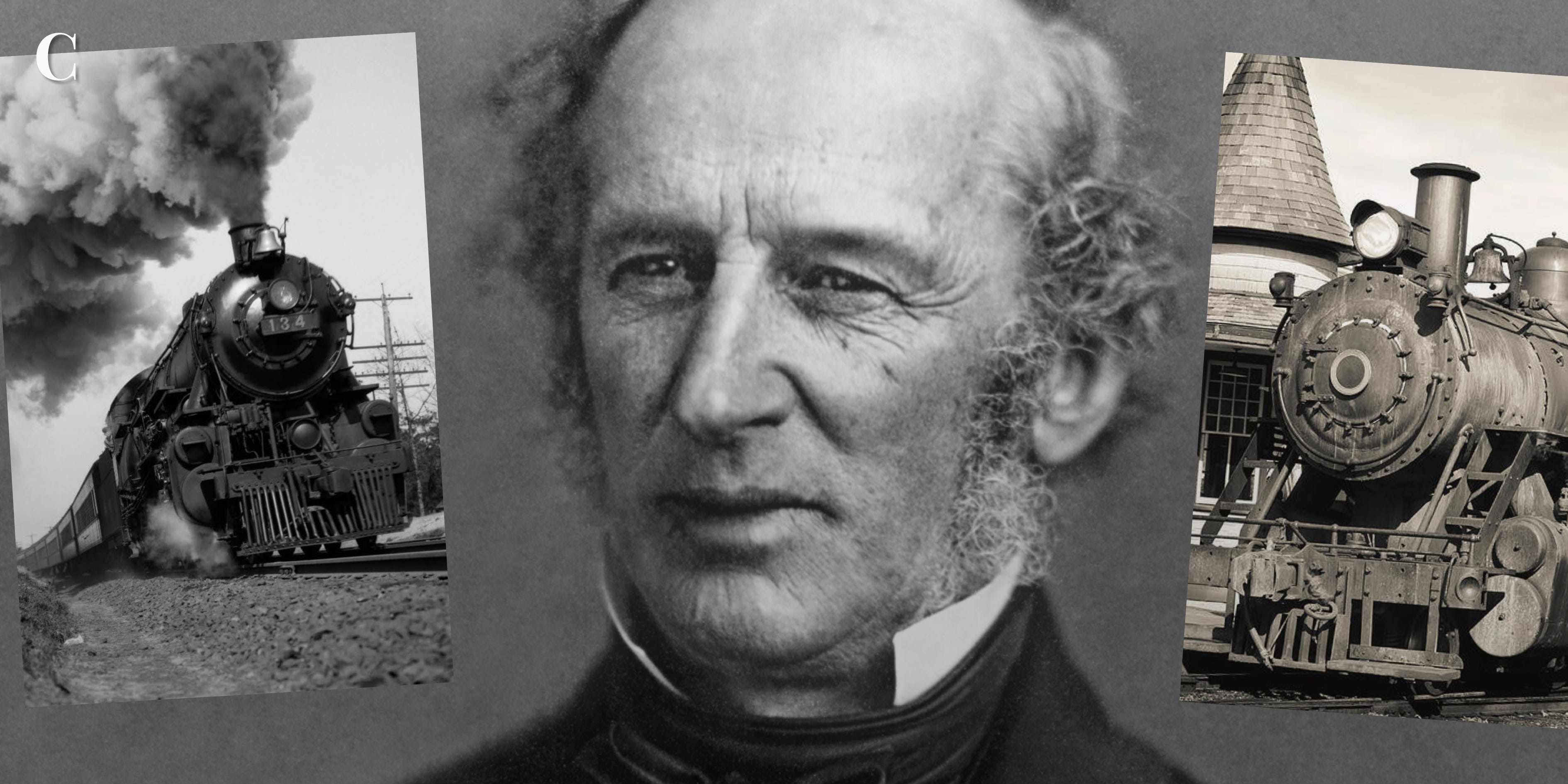
What Industry Did Cornelius Vanderbilt Control?
Cornelius Vanderbilt controlled the transportation industry during the nineteenth century, establishing dominance first over the American steamboat and shipping industry and later forging an unprecedented monopoly over the railroad ind...
Cornelius Vanderbilt controlled the transportation industry during the nineteenth century, establishing dominance first over the American steamboat and shipping industry and later forging an unprecedented monopoly over the railroad industry. Known as "The Commodore," Vanderbilt reorganized regional transit networks into integrated infrastructure systems, creating the foundation for modern American corporate capitalism.
Contents
The Early Empire: Dominating the Steamboat and Shipping Industry
Before he became America’s preeminent railroad tycoon, Cornelius Vanderbilt built his vast fortune on the water. His commercial career began in 1810 at age 16 when he purchased a small two-masted boat, known as a periauger, to ferry passengers and freight between Staten Island and Manhattan. By offering lower rates and faster service than competitors, Vanderbilt quickly captured market share in New York Harbor.
During the 1820s, Vanderbilt expanded his operations into steamboats. At the time, Aaron Ogden and Robert Livingston held a state-sanctioned monopoly on steamboat navigation in New York waters. Vanderbilt worked closely with steamboat captain Thomas Gibbons to challenge this monopoly. Their legal battle culminated in the landmark U.S. Supreme Court case Gibbons v. Ogden (1824), which ruled that interstate commerce was governed exclusively by the federal government under the Commerce Clause. This decision dismantled state-chartered monopolies and opened American waterways to free competition—an environment in which Vanderbilt excelled.
Vanderbilt's Transportation Evolution:
- 1810s–1840s: Coastal Steamboats & Regional Ferries
- 1850s: Ocean Steamships & Gold Rush Transit
- 1860s–1870s: Consolidated Rail Networks (NYC to Chicago Mainline)
By the 1830s, Vanderbilt operated dozens of steamboats along the Hudson River, Long Island Sound, and coastal routes between New York, New England, and Philadelphia. His strategy was straightforward: run high-speed vessels, undercut competitors' fares by up to 80 percent, and force rivals to buy out his lines or face bankruptcy.
Ocean Transit and the California Gold Rush
When the California Gold Rush began in 1849, passenger demand to travel between the East Coast and San Francisco surged. Rather than following competitors who routed passengers across the Isthmus of Panama, Vanderbilt established the Accessory Transit Company through Nicaragua.
- Shorter Transit Distance: The Nicaraguan route cut approximately 500 miles off the trip compared to the Panama route.
- Streamlined Intermodal Travel: Vanderbilt designed custom shallow-draft steamboats to navigate the San Juan River and Lake Nicaragua, combined with a macadamized road for the final overland stretch to the Pacific Ocean.
- Price Competition: By slashing steamship fares by half, Vanderbilt captured the majority of the passenger traffic between New York and California, earning millions in annual profits throughout the 1850s.
During the same decade, he launched the Vanderbilt European Line, competing directly with the British Cunard Line and the American Collins Line in ocean-going transatlantic passenger and mail transport. By the outbreak of the American Civil War in 1861, Vanderbilt was one of the wealthiest individuals in the United States, having accumulated a maritime empire built entirely on low-cost, high-efficiency shipping.
The Pivot to Rail: Constructing a Transcontinental Monopoly
In the early 1860s, as Vanderbilt approached his 70s, he recognized that steam railways were superseding water transportation as the primary driver of American economic expansion. He sold off his shipping fleets and systematically reinvested his capital into regional railroad stocks.
Unlike previous investors who treated individual rail lines as localized ventures, Vanderbilt envisioned a unified rail network connecting major Atlantic ports directly to Midwestern agricultural and manufacturing centers.
- New York Central Railroad
- Hudson River Railroad (Manhattan to Albany)
- Harlem Railroad (Manhattan Entry)
- Lake Shore & Michigan Southern (Albany to Chicago)
Key Railroad Acquisitions and Integration
- New York and Harlem Railroad (1863): Vanderbilt acquired controlling interest in this line, which held the exclusive franchise to run rail tracks directly into lower Manhattan.
- Hudson River Railroad (1864): Running along the east bank of the Hudson River from New York City to Albany, this line gave Vanderbilt absolute control over the southern terminal corridor connecting the river valley to coastal shipping docks.
- New York Central Railroad (1867): Extending from Albany west to Buffalo, the New York Central was the primary east-west trunk line across upstate New York. Vanderbilt executed a hostile takeover to merge it with his existing lines, creating the New York Central & Hudson River Railroad.
- Lake Shore and Michigan Southern Railway (1869–1873): By acquiring control of lines extending from Buffalo through Cleveland and Toledo to Chicago, Vanderbilt completed an unbroken rail corridor connecting New York City to the agricultural heartland of the Midwest.
By consolidating these lines, Vanderbilt eliminated transit delays, standardizing double-track systems and operating procedures across more than 4,500 track miles. His network controlled the movement of grain, timber, livestock, and manufactured goods between Chicago and the Atlantic seaboard.
Business Tactics and Monopoly Power
Vanderbilt’s dominance over the transportation sector stemmed from aggressively pragmatic business strategies. He identified structural bottlenecks in trade networks and leveraged them to extract concessions from competitors and regional authorities.
The Albany Bridge Blockade (1867)
One of the most notable displays of Vanderbilt's monopoly power occurred in the winter of 1867. The directors of the New York Central Railroad refused to accept terms for a operational merger with Vanderbilt's Hudson River Railroad and Harlem lines.
In response, Vanderbilt ordered his trains to stop at the eastern bank of the Hudson River at Rensselaer, opposite Albany. He refused to allow Hudson River Railroad trains to cross the Albany bridge or accept freight and passengers from the New York Central.
Because the Hudson River was frozen solid, winter freight could not be transferred by riverboats. Goods piled up in upstate warehouses, and agricultural products bound for New York Harbor spoiled. The stock of the New York Central crashed within days, allowing Vanderbilt and his associates to purchase a controlling interest at depressed prices and force a complete merger on his terms.
The Erie Railroad War (1868)
Vanderbilt did not win every battle. In 1868, he attempted to acquire controlling interest in the Erie Railroad, a major competitor operating south of the New York Central main line.
The Erie was managed by Jay Gould, Jim Fisk, and Daniel Drew. To prevent Vanderbilt from buying a majority of stock, Gould and Fisk illegally printed 50,000 new shares of unissued stock—a tactic known as "stock watering."
The Erie War (1868):
- Vanderbilt Group (Capital Accumulator): Tries to buy Erie Railroad (Gould, Fisk, Drew).
- Erie Railroad: Issues 50,000 fake shares (watered stock).
- Outcome: Parties settle out of court.
Vanderbilt spent millions purchasing this newly minted stock before realizing the supply was virtually unlimited. After legal battles and bribes paid to New York state legislators by both factions, Vanderbilt withdrew from the takeover attempt. He negotiated an out-of-court settlement that recovered millions of his invested capital while leaving the Erie Railroad financially depleted.
Quantitative Breakdown of Vanderbilt’s Holdings
To understand the scope of Vanderbilt's industry control, it is helpful to compare the two distinct eras of his business operations:
| Metric / Dimension | Steamboat & Maritime Shipping Era (1810–1862) | Railroad Dominance Era (1862–1877) |
|---|---|---|
| Primary Geographic Scope | New York Harbor, Hudson River, Long Island Sound, Nicaragua, North Atlantic | New York City, Upstate New York, Ohio, Indiana, Illinois (Chicago) |
| Key Assets Owned | Over 100 steamboats, ocean liners (e.g., Vanderbilt, North Star), transit concessions | NY & Harlem RR, Hudson River RR, NY Central RR, Lake Shore & Michigan Southern |
| Market Share / Position | Dominant regional carrier; leading passenger transport on California route | Virtual monopoly on rail traffic into Manhattan; primary freight trunk line to the Midwest |
| Strategic Advantage | Fare-cutting wars, high-speed vessels, ownership of key transit rights | Control of NYC urban entry, double-track standardized infrastructure, volume efficiency |
| Peak Value of Enterprise | Estimated $15–$20 million in vessel capital | Estimated $100 million at death in 1877 (~$2.8+ billion equivalent historical scale) |
Economic Legacy and Impact on Industrial Infrastructure
Vanderbilt’s management of transportation networks directly shaped the industrial structure of the United States. Prior to his consolidation of regional rail systems, American transport was fragmented into hundreds of short-line railroads operating on incompatible track gauges, maintaining conflicting schedules, and using different rolling stock.
- Fragmented System (Pre-Consolidation):
- Rail Line A
- Cargo Transfer to Rail Line B
- Cargo Transfer to Rail Line C
- Vanderbilt Integrated Network:
- Manhattan Terminal
- Continuous Double Track to Chicago
Institutional Innovations
- Gauge Standardization: Vanderbilt led the adoption of standard track gauge (4 feet, 8.5 inches) across his network, allowing freight cars to run continuously from Lake Michigan to New York Harbor without offloading.
- Infrastructure Capitalization: He financed the construction of four-track trunk lines, separating fast passenger trains from heavy freight transit to avoid scheduling bottlenecks.
- Grand Central Depot: In 1871, Vanderbilt opened Grand Central Depot in Manhattan, bringing the Harlem, Hudson River, and New Haven rail lines into a single centralized terminal, streamlining urban mass transport.
- Corporate Scale: The New York Central became one of the largest corporate employers in North America, helping pioneer modern corporate management structures, dedicated administrative departments, and systematic accounting standards.
When Vanderbilt died in 1877, his net worth was estimated at over $100 million. The vast majority of this fortune was tied up in the shares and bonds of his integrated rail companies, demonstrating the sheer scale of wealth concentrated in the transportation sector during the Gilded Age.
Frequently Asked Questions
Did Cornelius Vanderbilt control any industries other than shipping and railroads?
No. Vanderbilt focused almost exclusively on transportation and transit infrastructure. While he held substantial cash reserves, real estate, and government bonds, he avoided heavy investments in manufacturing, banking, or mining, preferring to control the transport networks that carried products for those industries.
What was the difference between Vanderbilt's business model and later tycoons like Rockefeller or Carnegie?
Vanderbilt controlled transportation infrastructure, whereas industrial figures like John D. Rockefeller (Standard Oil) and Andrew Carnegie (Carnegie Steel) controlled commodity extraction, refining, and manufacturing. Vanderbilt provided the underlying shipping networks that industrial producers depended on to move raw materials and finished goods.
How did the Supreme Court case Gibbons v. Ogden help Vanderbilt?
The 1824 ruling struck down New York State's monopoly on steamboat navigation, declaring that state laws could not interfere with federal authority over interstate commerce. This opened American rivers and coastal waters to open competition, allowing Vanderbilt to establish competitive steamboat services without government restrictions.
Why did Vanderbilt sell his steamboats to invest in railways late in life?
By the late 1850s, Vanderbilt recognized that iron rails offered faster, all-weather, year-round transport compared to rivers and canals, which froze in winter. Realizing that railways would become the primary backbone of American commerce, he liquidated his maritime assets and deployed his capital into regional rail stocks.
What was Grand Central Depot and why was it significant?
Grand Central Depot (opened in 1871 and later rebuilt as Grand Central Terminal) was constructed by Vanderbilt to consolidate the Manhattan passenger terminals of his Harlem, Hudson River, and New Haven rail lines. It eliminated steam locomotives running on Manhattan street level and established New York City as the nation's premier rail hub.
Summary of Vanderbilt's Industrial Supremacy
Cornelius Vanderbilt established absolute control over the nineteenth-century transportation industry. By dominating first maritime steamboat traffic and subsequently railroad trunk lines, he integrated disjointed transport routes into efficient national networks. Investors and historians seeking to understand the rise of modern American infrastructure can trace the origins of consolidated transit systems, corporate management, and interstate regulatory law directly to Vanderbilt’s commercial expansion.
EDITORIAL CATEGORY METADATA:
TOPIC METADATA:
Image Gallery