Mastering Minecraft Automatic Systems: A Comprehensive Guide to Efficiency in 2026
Minecraft automatic systems allow players to transition from manual resource gathering to high-efficiency production by utilizing Redstone logic, game engine mechanics, and entity AI. To master automation, you must understand Redstone...
Minecraft automatic systems allow players to transition from manual resource gathering to high-efficiency production by utilizing Redstone logic, game engine mechanics, and entity AI. To master automation, you must understand Redstone signal strength, game ticks, and the specific spawning or growth requirements of various in-game resources and mobs.
Contents
In the world of Minecraft, "automatic" refers to the creation of self-sustaining loops that perform tasks without player intervention. As of 2026, the complexity of these systems has reached an all-time high, moving beyond simple piston-powered crop harvesters into the realm of wireless Redstone via Sculk sensors, high-throughput item sorters, and industrial-scale mob grinders. Whether you are playing on a technical survival server or a private world, understanding how to automate your environment is the primary difference between struggling for basic materials and having an infinite supply of the game's most valuable assets.
The Foundations of Redstone Automation
Before building complex machines, a fundamental understanding of Redstone logic is required. Redstone is effectively the electricity of Minecraft, and automation is the application of that electricity to manipulate the world.
Signals and Power Sources
A Redstone signal has a maximum strength of 15 blocks. This decay necessitates the use of Redstone Repeaters to "boost" the signal for long-distance transmissions. However, automation often requires more than just a continuous signal; it requires logic. Components such as Redstone Torches act as inverters (NOT gates), while Comparators allow for the detection of "fullness" in containers like chests or hoppers.
The Concept of Game Ticks
The Minecraft engine operates on a cycle known as "ticks." There are 20 game ticks per second. Redstone components operate on "Redstone ticks," where one Redstone tick equals two game ticks. Precise automation, especially in high-speed item elevators or flying machines, requires a frame-perfect understanding of these delays. If a piston fires one tick too early, it can break a machine or cause block spitting, where a sticky piston leaves its block behind instead of pulling it back.
The Role of Observers
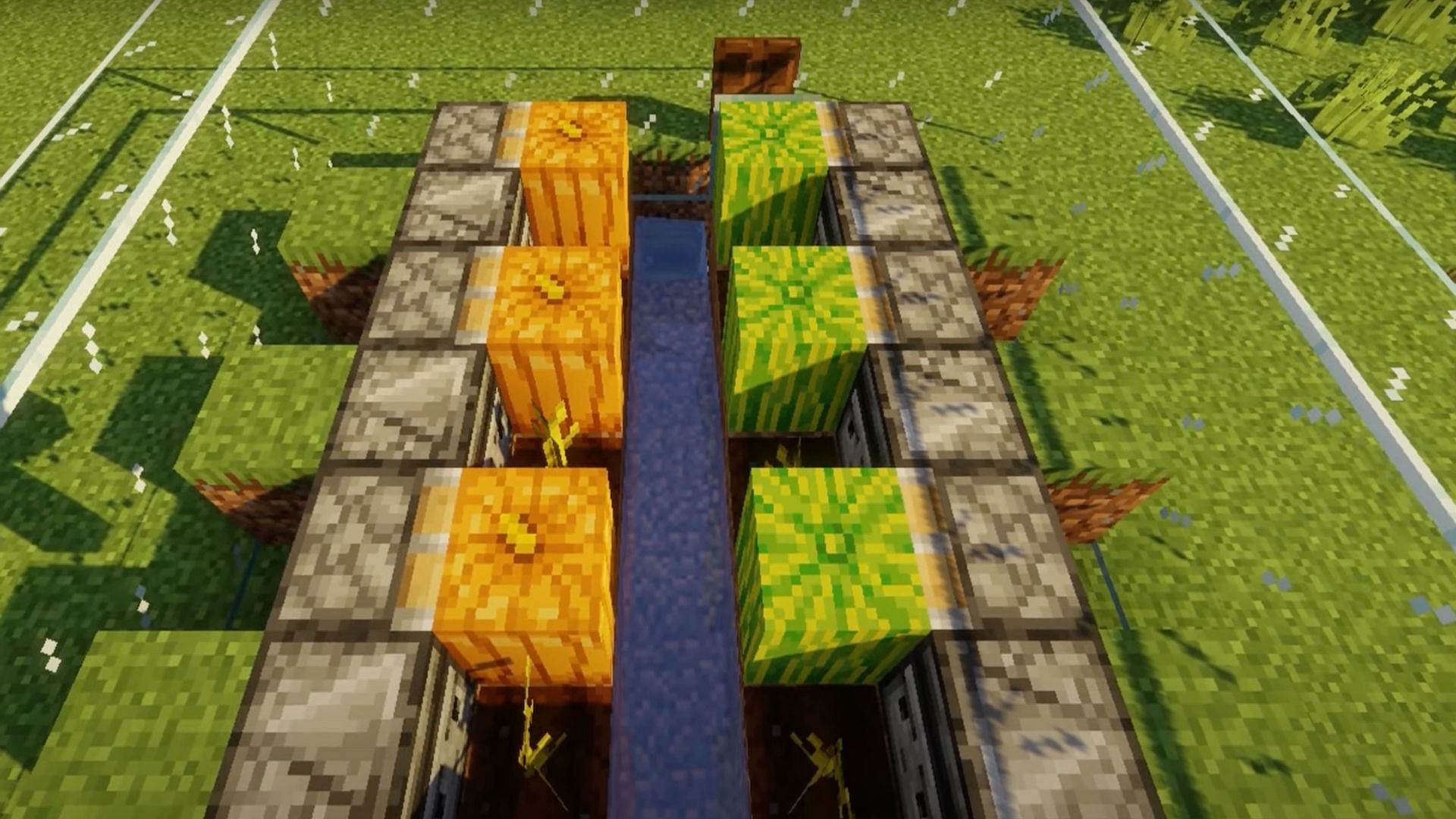
Introduced years ago but now the backbone of 2026 automation, the Observer block detects "block updates" in the space directly in front of it. When a crop grows, a door opens, or a Redstone wire changes state, the Observer emits a short pulse. This allows for incredibly compact designs, as the Observer can sense a change and trigger a reaction (like a piston harvesting a plant) without the need for complex wiring.
Essential Categories of Automated Farms
To build a truly automatic base, you must categorize your needs into resource harvesting, material processing, and item management. Each of these requires a different mechanical approach.
1. Resource Harvesting (Crops and Plants)
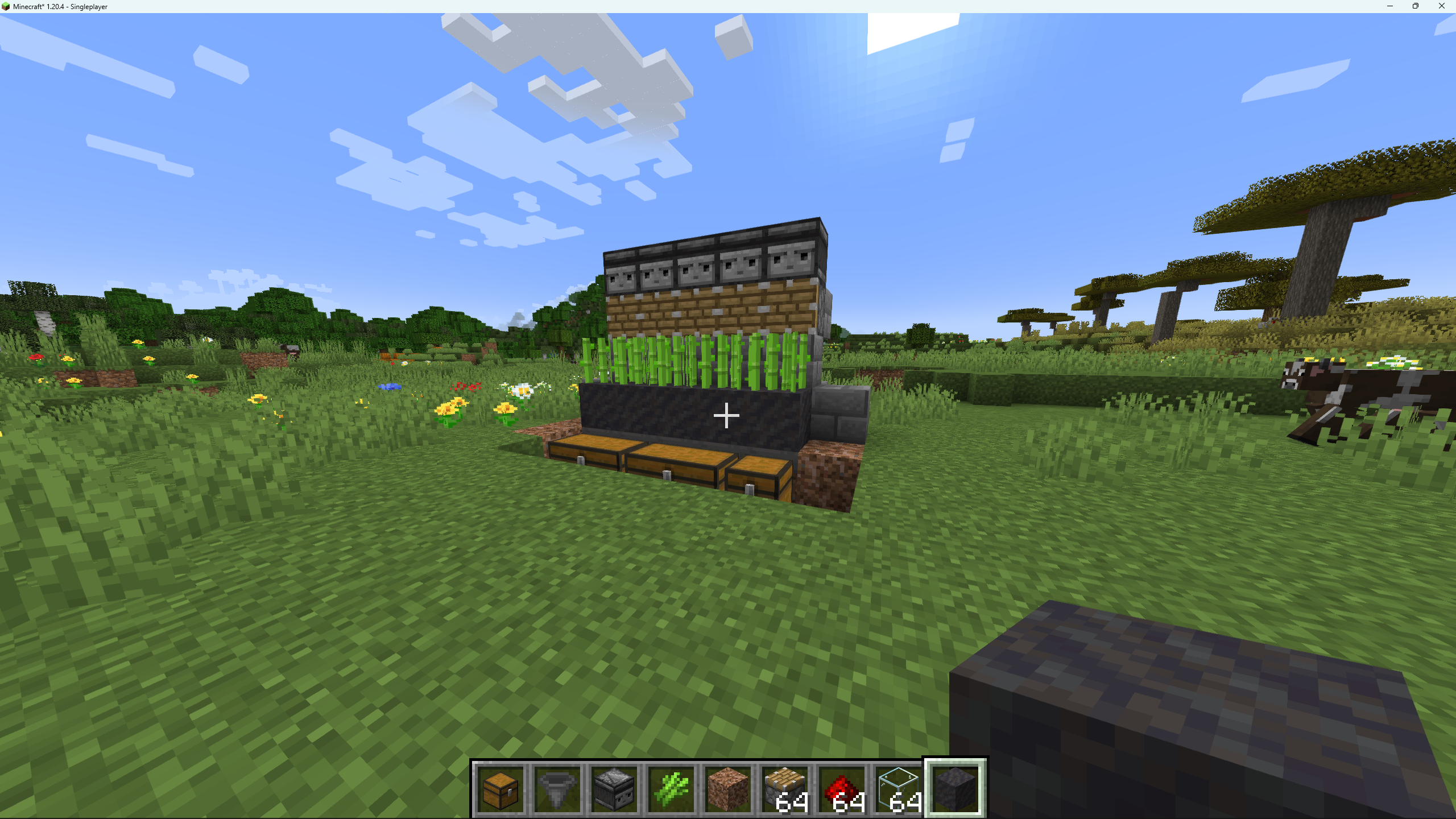
Automating plants like Sugarcane, Bamboo, and Kelp is the most common entry point into Minecraft automatic systems. These plants grow to a certain height, at which point an Observer detects the growth and triggers a Piston to break the stalk. The broken item then falls into a collection system—usually a Hopper Minecart running beneath the dirt blocks—to be transported to a central storage unit.
2. Mob-Based Automation (Iron, Gold, and Mob Drops)
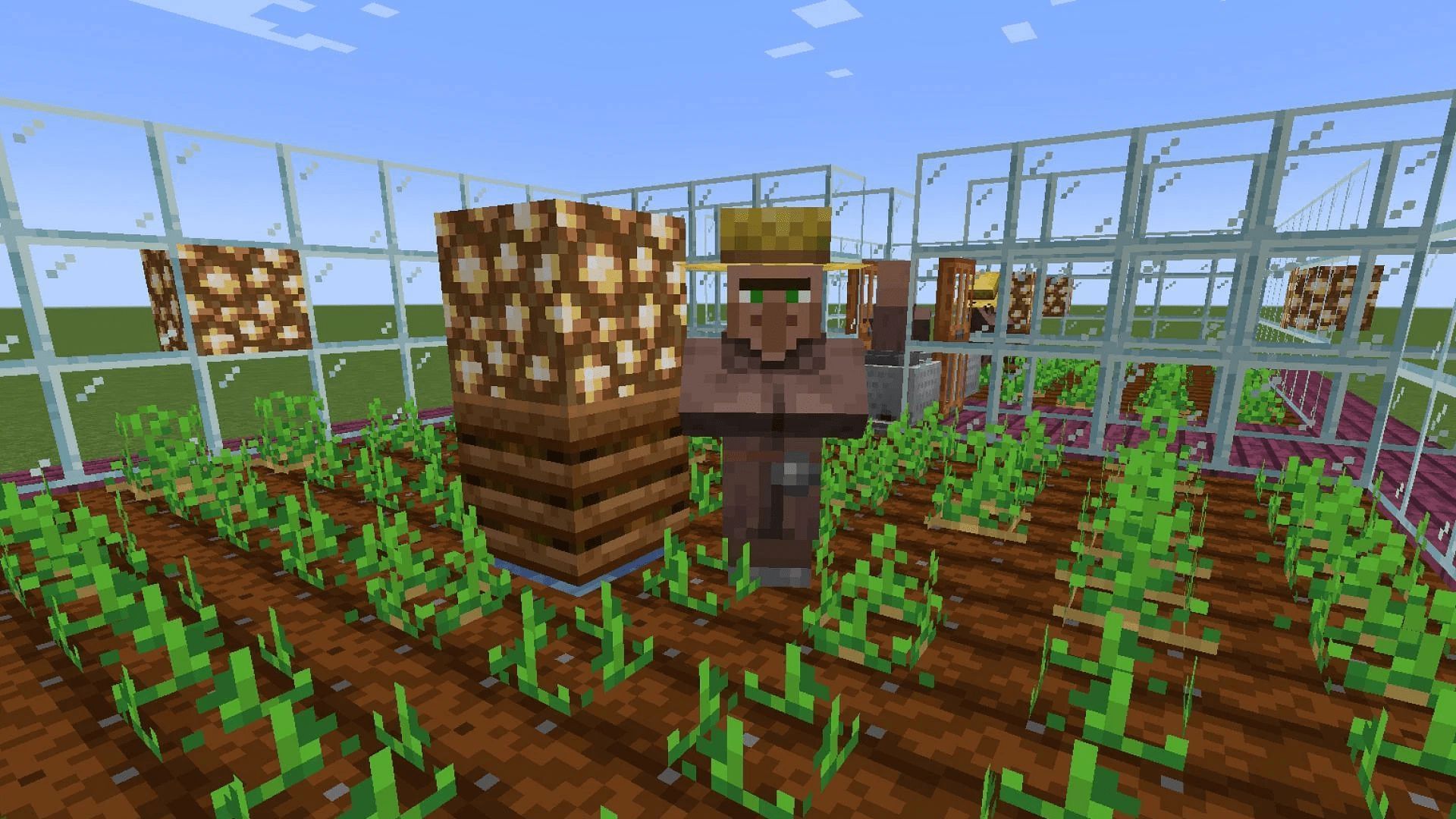
Mob farms utilize the game’s spawning algorithms. For example, an Iron Golem Farm exploits the "villager panic" mechanic. By placing villagers in proximity to a zombie (with line-of-sight periodically broken), the villagers attempt to spawn an Iron Golem for protection. The Golem is then funneled into lava, and the resulting Iron Ingots are collected.
Gold farms, often built in the Nether, utilize Piglin Aggro mechanics or portal-based spawning. In 2026, these are frequently optimized using "looting" cycles, where a player or a specific mechanic applies the Looting III enchantment effect to automated kills to maximize output.
3. Material Processing (The "Super Smelter")
Smelting stacks of ore or sand manually is time-consuming. A "Super Smelter" automates this by using a series of hoppers and minecarts to distribute raw materials and fuel across dozens of furnaces simultaneously. This reduces the time required to process a chest of materials from hours to minutes.
Technical Specifications of Automated Systems
When designing an automatic system, efficiency is measured in items per hour (IPH). The following table compares the typical output and technical difficulty of standard automated builds used in 2026.
| Farm Type | Key Mechanism | Technical Difficulty | Items Per Hour (Average) |
|---|---|---|---|
| Sugarcane/Bamboo | Observer + Piston | Low | 150 - 400 |
| Iron Golem Farm | Villager Panic Logic | Medium | 300 - 800 |
| Gold (Nether Roof) | Piglin Aggro/Lava | High | 10,000+ |
| Raid Farm | Bad Omen Stacking | Very High | 5,000 - 15,000 |
| Bartering Farm | Piglin Gold Trading | Medium | 1,200 (Randomized) |
Item Management and Automatic Sorting
Once your farms are running, you will quickly face the problem of "item overflow." A manual chest room cannot handle the thousands of items produced by a high-efficiency raid or gold farm. This is where Automatic Item Sorters become essential.
The standard item filter works on the principle of Redstone Comparators detecting the signal strength of a hopper. By filling a hopper with 41 of a specific item and 4 "filter" items (items renamed in an anvil so they don't stack with anything else), you create a balance. When a 42nd item of the same type enters the hopper, the signal strength increases, triggering a Redstone torch to release exactly one item into the chest below.
Advanced sorting in 2026 now includes "Multi-Item Sorters" (MIS), which use complex timing circuits to allow multiple different items to be stored in the same chest without clogging the system. These are crucial for base organization where space is at a premium.
Optimizing Performance: Lag and TPS Management
A common mistake in Minecraft automation is building without considering server or client performance. Every active Redstone component and entity (like dropped items or mobs) consumes CPU resources. To keep your "Ticks Per Second" (TPS) at a stable 20, follow these optimization guidelines:
- Composters on Hoppers: Placing a Composter on top of a Hopper prevents the hopper from constantly checking the space above it for dropped items, significantly reducing "Hopper Lag."
- Light Updates: Redstone torches and lamps changing states create light updates, which are taxing on the engine. Encasing Redstone machinery in solid blocks or using light-neutral components can mitigate this.
- Chunk Loading: Automatic farms only work if the "chunk" they are in is loaded. For large-scale industrial areas, players often use "Chunk Loaders"—devices that send entities (like items) back and forth through a Nether portal to keep the surrounding area active even when the player is far away.
Troubleshooting Common Automation Issues
Even the most well-designed automatic machine can fail. Usually, failure stems from one of three sources:
- Redstone Burnout: If a Redstone torch is toggled too quickly (usually by a rapid clock circuit), it will "burn out" and cease functioning for several seconds.
- Directional/Locational Inconsistency: Some Redstone builds behave differently depending on whether they face North or South, or if they are built on a "chunk boundary." Always check if your machine crosses a boundary using the F3+G overlay.
- Entity Cramming: If too many mobs are pushed into a small space, the game will automatically kill them to save performance. Most automated grinders must be designed to kill or move mobs before they reach the 24-entity limit.
Frequently Asked Questions
Can you automate mining in Minecraft?
While you cannot "mine" in the traditional sense automatically in vanilla Minecraft, you can build TNT World Eaters. These are massive flying machines that drop TNT in a timed sequence to clear out large perimeters. In 2026, these are standard for players needing vast open spaces for technical builds or searching for rare ores at the bottom of the world.
Do automated farms work while I am offline?
In single-player, farms stop when you exit the world. On a server, farms only work if a player is nearby or if a Chunk Loader is active. Mobs specifically require a player within 128 blocks to spawn, so most mob-based automation requires a player to be present (AFK) to function, regardless of chunk loaders.
What is the most efficient fuel for automated smelters?
Bamboo is the most popular choice for "infinite" fuel because it can be fully automated with ease. However, for sheer efficiency in a high-throughput smelter, Lava Buckets or Blaze Rods (from an automated Blaze farm) provide longer burn times per slot. In 2026, many players use "Carpet Duplicators" to feed fuel into smelters, though this is often considered an exploit rather than a standard mechanic.
How do Sculk Sensors change automation?
Sculk Sensors allow for Wireless Redstone. They detect vibrations (steps, blocks breaking, pistons firing) and emit a signal. This allows players to trigger machines from a distance without physical wire connections. By using "Vibration Frequencies," you can even filter what specific action triggers your machine, such as only responding to a player opening a chest.
Future-Proofing Your Automatic Builds
As Minecraft continues to evolve, the "Technical Minecraft" community remains at the forefront of discovery. Automation is no longer just about survival; it is about creative engineering. To stay ahead, focus on modular designs—build your storage systems and farms in a way that allows them to be expanded or updated when new blocks and mechanics are introduced.
The ultimate goal of Minecraft automation is to remove the "grind" from the game, allowing you to focus on large-scale builds and complex projects with an infinite supply of materials. By mastering the concepts of game ticks, entity logic, and Redstone circuitry, you turn the sandbox into a programmable machine.
Image Gallery