Why Men vs Women Auto Insurance Rates Matter for Your 2026 Budget
Gender remains a pivotal factor in determining auto insurance premiums in many jurisdictions because actuarial data consistently shows differing risk profiles between male and female drivers. Men, particularly those under 25, statistic...
Gender remains a pivotal factor in determining auto insurance premiums in many jurisdictions because actuarial data consistently shows differing risk profiles between male and female drivers. Men, particularly those under 25, statistically engage in higher-risk driving behaviors, leading to more frequent and severe accidents. Consequently, understanding these demographic pricing structures is essential for accurate household budgeting and identifying opportunities for premium reduction through telematics or regional exemptions.
Contents
The Actuarial Science: Why Gender Influences Insurance Risk
Insurance is fundamentally a business of predicting the future based on the past. Actuaries use vast datasets to determine the likelihood of a policyholder filing a claim and the potential cost of that claim. In the 2026 insurance market, while artificial intelligence has refined these predictions, the historical correlation between gender and driving behavior remains a cornerstone of traditional underwriting in many U.S. states and global regions.
Statistically, men tend to drive more miles annually than women. According to long-term data from organizations like the National Highway Traffic Safety Administration (NHTSA), increased time on the road directly correlates with a higher probability of being involved in an accident. Furthermore, the nature of these accidents differs. Men are more likely to be involved in high-speed crashes, driving under the influence (DUI) incidents, and accidents resulting in "total loss" claims.
Women, conversely, are statistically more prone to low-speed collisions, such as parking lot mishaps or minor rear-end accidents. While these "fender benders" occur frequently, the financial severity—the amount the insurance company must pay out—is significantly lower than the high-impact collisions more commonly associated with male drivers. This disparity in "loss severity" is why many insurance companies continue to view male drivers as a higher financial risk, necessitating higher premiums to offset potential payouts.
The Age Factor: When the Gender Gap is Most Pronounced
The impact of gender on your 2026 budget is most aggressive during the first decade of driving. For teenagers and young adults, the premium gap between men and women can be startling. Insurance companies view young, inexperienced drivers as high-risk by default, but young men face a "double whammy" of inexperience combined with biological and social tendencies toward risk-taking.
Between the ages of 16 and 25, male drivers can expect to pay anywhere from 15% to 30% more than their female counterparts for the same level of coverage. This is often referred to as the "youthful driver surcharge." For a family budget, this can mean an additional $500 to $1,500 per year just to insure a teenage son versus a teenage daughter.
However, as drivers age, this gap begins to narrow. By age 35, the statistical differences in driving behavior between genders often stabilize. In some demographics, particularly drivers between ages 40 and 60, women may actually see slightly higher rates than men in certain ZIP codes, though the difference is rarely as dramatic as it is for younger drivers. As drivers enter their senior years (70+), rates for both genders tend to rise as cognitive and physical reaction times change, often equalizing once more.
Legal Landscapes: States That Ban Gender-Based Pricing
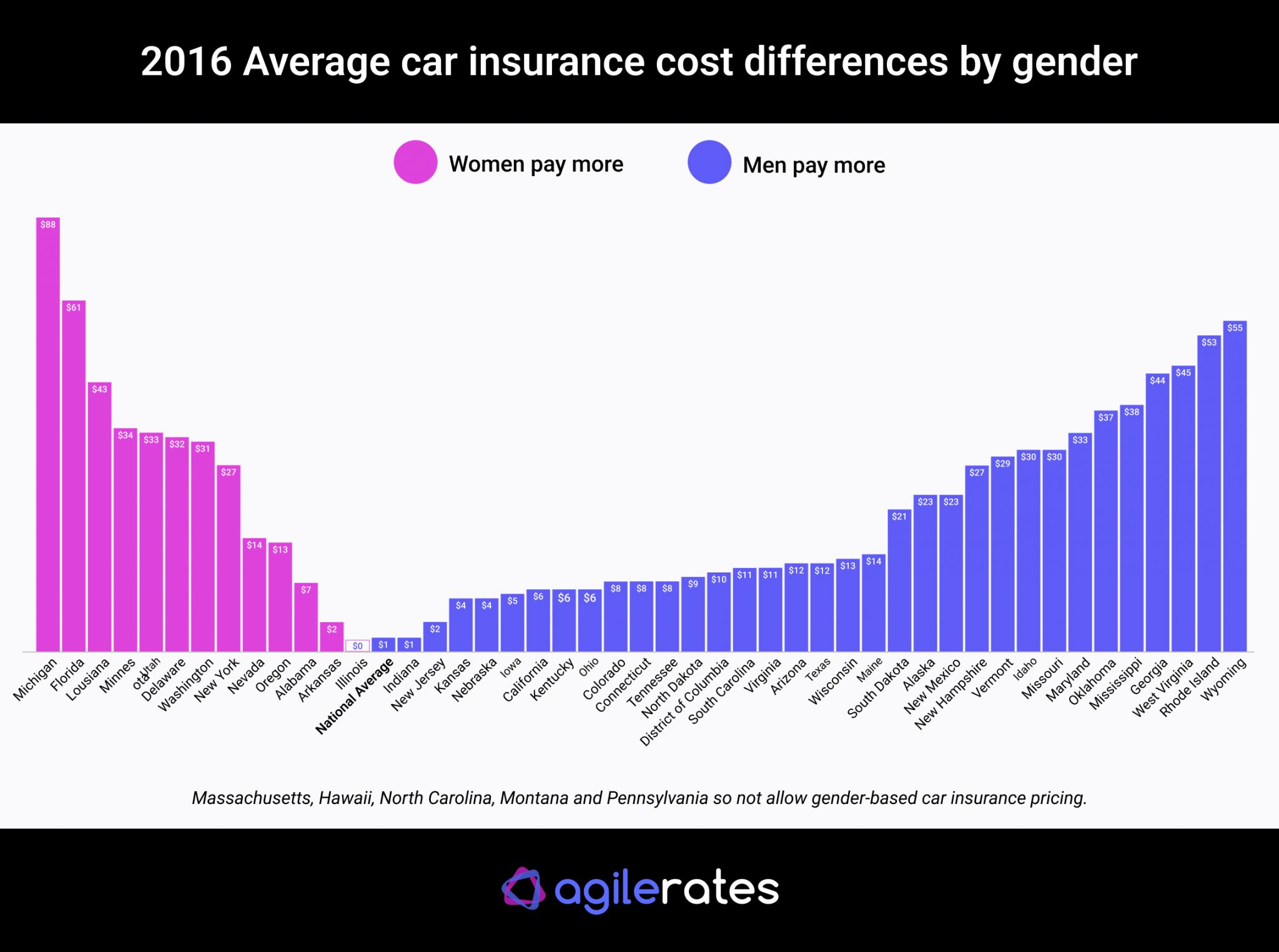
As of 2026, the legal environment regarding gender-based insurance rating is a patchwork of regulations. For those budgeting for a move or evaluating their current expenses, it is vital to know if your state allows gender to be used as a rating factor at all.
Several U.S. states have prohibited insurance companies from using gender to determine auto insurance rates, arguing that it is discriminatory to charge individuals based on a demographic category they cannot control. In these "gender-neutral" states, insurance companies must rely more heavily on other factors such as driving record, credit-based insurance scores, and annual mileage.
States with gender-based pricing bans currently include:
- California: One of the earliest adopters of gender-neutral rating.
- Hawaii: Maintains strict regulations on what factors can influence premiums.
- Massachusetts: Prohibits gender as a factor in its highly regulated market.
- Michigan: Included gender bans as part of broader insurance reforms.
- Montana: Has long-standing protections against gender-based rate disparities.
- North Carolina: Uses a unique state-run facility that limits demographic pricing.
- Pennsylvania: Prohibits gender-based rates under its casualty insurance laws.
In the European Union, a landmark ruling by the European Court of Justice in 2012 (the Test-Achats ruling) effectively banned gender-based pricing for all insurance products across member states. If you are budgeting for international relocation or comparing global insurance trends, the "gender premium" is a non-issue in most of Europe, where rates are strictly based on individual merit and vehicle risk.
The Rise of Telematics: Moving from Demographics to Behavior
The most significant shift in the 2026 insurance market is the transition from "proxy" data (like gender) to "real-time" data through telematics. Usage-Based Insurance (UBI) programs allow drivers to install a device in their vehicle or use a smartphone app to track their actual driving habits.
For men who feel penalized by their demographic category, telematics offers a way to "prove" they are low-risk drivers. These programs typically track:
- Braking Events: Frequent hard braking suggests tailgating or distracted driving.
- Acceleration: Rapid acceleration can indicate aggressive driving.
- Time of Day: Driving during "high-risk" hours (such as 12:00 AM to 4:00 AM) increases premiums.
- Cornering: High-speed turns indicate a lack of vehicle control.
- Speeding: Consistently exceeding the speed limit is the primary predictor of accidents.
By opting into a telematics program, a safe male driver can often secure discounts of 10% to 40%, effectively neutralizing the "gender surcharge" applied by traditional underwriting models. For budgeting purposes, this represents the most effective way to lower fixed monthly costs without sacrificing coverage limits.
2026 Estimated Annual Premium Comparison
The following table illustrates the average annual premium differences across various demographics and state regulatory environments. Note: Figures are estimates for a standard 2024–2026 mid-sized sedan with full coverage and a clean driving record.
| Demographic Profile | State Allowing Gender Rating | State Banning Gender Rating |
|---|---|---|
| Male (Age 18) | $4,200 | $3,500 |
| Female (Age 18) | $3,400 | $3,500 |
| Male (Age 35) | $1,850 | $1,800 |
| Female (Age 35) | $1,750 | $1,800 |
| Male (Age 65) | $1,600 | $1,650 |
| Female (Age 65) | $1,650 | $1,650 |
Strategic Budgeting for Men: Overcoming Higher Rates
If you reside in a state where gender-based pricing is permitted, there are several strategic actions you can take to mitigate the impact on your household budget.
1. Leverage Multi-Policy Discounts
Bundling auto insurance with homeowners or renters insurance is often the most effective way to reduce the "base" rate. Most carriers offer a 10% to 25% discount for multiple policies. If the male driver in the household is the primary on a high-premium vehicle, placing that vehicle on a bundled policy can significantly soften the blow.
2. Vehicle Selection and "The Logic of the Car"
Insurance companies don't just look at the driver; they look at the vehicle's history in the hands of that driver's demographic. High-performance sports cars driven by young men carry the highest premiums in the industry. For a more budget-friendly approach, choosing a vehicle with high safety ratings and lower repair costs—such as a compact SUV or a mid-sized hybrid—can lower the risk profile assigned by the insurer.
3. Adjusting Deductibles
For men facing high premiums, increasing the deductible from $500 to $1,000 or even $2,500 can lower the monthly premium by 15% to 30%. However, this requires a disciplined budgeting approach: you must have that deductible amount saved in an emergency fund to ensure you can cover your portion of a claim should an accident occur.
4. Professional and Academic Discounts
Many insurers offer "Good Student" discounts for drivers under 25 who maintain a 3.0 GPA or higher. Additionally, certain professions (engineers, teachers, first responders) may qualify for "affinity" discounts. These reductions are often applied regardless of gender and can help bridge the pricing gap.
Why Women Should Monitor Their Rates
While women generally enjoy lower premiums in their youth, they should not be complacent in their insurance budgeting. Because the gap closes in middle age, women may find that their "loyalty" to an insurer results in "price optimization." This is a practice where insurers slowly raise rates on long-term customers who they believe are unlikely to shop around.
Women should also be aware that in 2026, many insurance companies are placing a higher weight on credit scores than on gender. In some states, a female driver with a "fair" credit score will pay more than a male driver with an "excellent" credit score, regardless of their respective driving records. Regularly checking credit health is as important for insurance budgeting as maintaining a clean driving record.
Frequently Asked Questions
Does my gender affect my insurance more than my driving record?
No. While gender is a significant factor, your individual driving record—including speeding tickets, at-fault accidents, and DUIs—carries much more weight. A woman with a history of accidents will almost always pay significantly more than a man with a clean record. Gender is essentially a "baseline" modifier that is applied before your personal history is factored in.
Why do some older women pay more than older men?
Actuarial data sometimes shows that older women may be involved in more frequent, though minor, accidents compared to men of the same age. Additionally, insurers may account for the fact that older women, statistically, live longer and may continue driving later into their senior years. However, these differences are usually minor compared to the gaps seen in younger demographics.
Can I change my gender on my insurance policy to save money?
Most insurance companies require your policy information to match your legal identification and driver's license. In states that recognize non-binary or "X" gender markers, insurers have had to adapt their rating systems. Some studies have shown that non-binary drivers may see rates closer to the female average or, in some cases, a unique rate based on limited available data for that category.
If I move to a gender-neutral state, will my rates automatically drop?
Not necessarily. While the "gender surcharge" disappears, insurers in those states often compensate by increasing the weight of other factors, such as ZIP code, credit score, or annual mileage. Your rate might stay the same or even increase if you move from a low-traffic rural area to a high-traffic urban center in a gender-neutral state.
Is gender-based pricing considered discriminatory?
From a legal standpoint, this depends entirely on the jurisdiction. In states like California and Michigan, it is legally viewed as discriminatory. In other states, it is viewed as a "fairly discriminatory" actuarial practice, meaning it is based on statistically verifiable risk rather than arbitrary prejudice.
Final Recommendation for 2026 Drivers
To optimize your auto insurance budget in 2026, do not rely on demographic assumptions. If you are a male driver in a state that allows gender-based pricing, your most effective tool for lowering costs is Telematics (Usage-Based Insurance). By allowing the insurer to monitor your actual driving habits, you move from being a "statistical risk" to a "proven driver," which is the fastest path to significant savings. Regardless of gender, shopping your policy every 12 months and maintaining a high credit-based insurance score remain the most reliable methods to ensure your premium reflects your actual risk rather than your demographic profile.
Image Gallery