Attorney General Ken Paxton’s Uvalde Response: A Comprehensive Timeline and Legal Analysis
Texas Attorney General Ken Paxton’s response to the 2022 Robb Elementary School shooting in Uvalde has been defined by a dual strategy of advocating for "hardened" school security while simultaneously utilizing the Office of the Attorn...
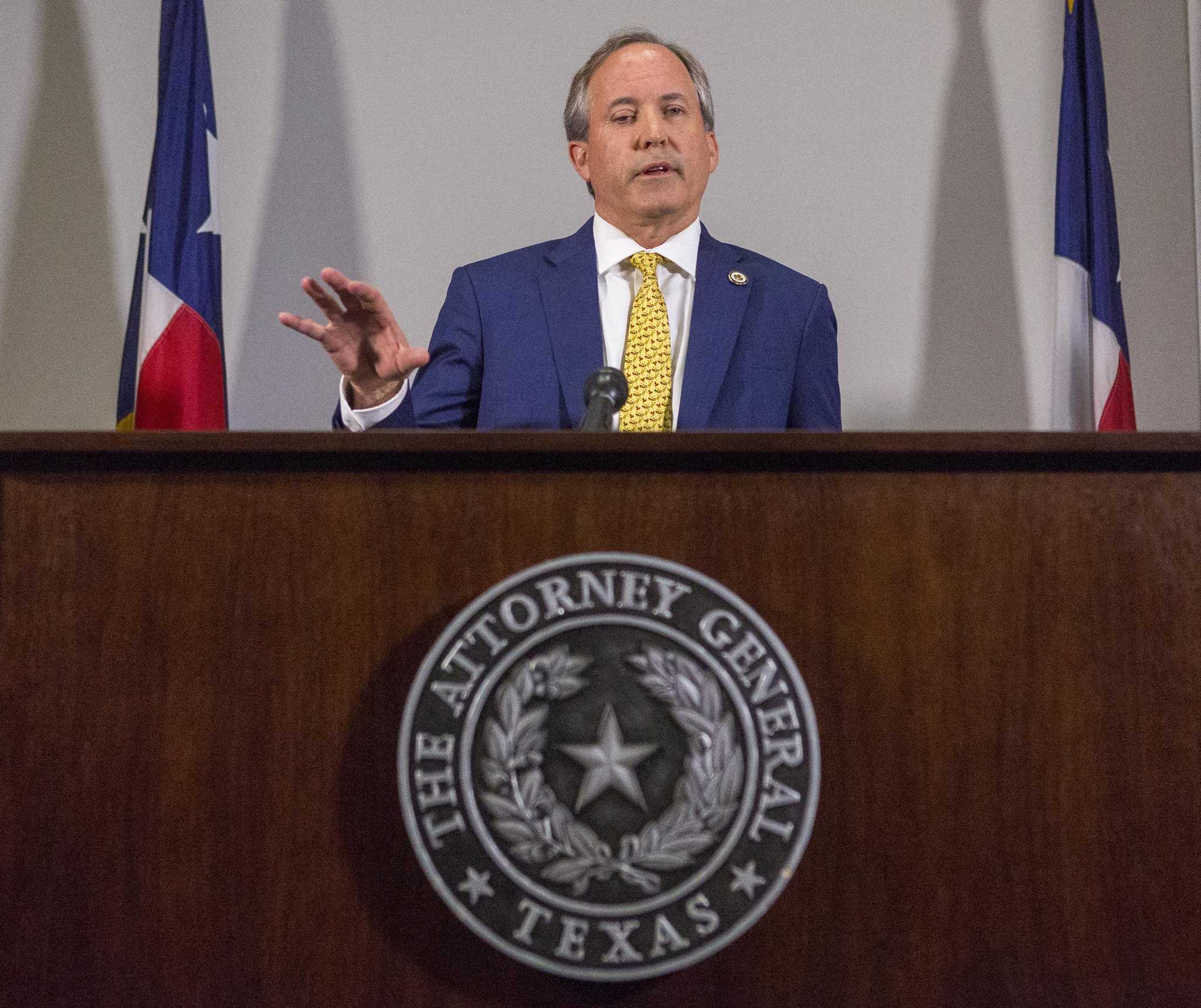
Texas Attorney General Ken Paxton’s response to the 2022 Robb Elementary School shooting in Uvalde has been defined by a dual strategy of advocating for "hardened" school security while simultaneously utilizing the Office of the Attorney General (OAG) to restrict the public release of investigative records, citing legal exemptions to protect ongoing law enforcement inquiries.
Contents
The tragedy at Robb Elementary School on May 24, 2022, which resulted in the deaths of 19 children and two teachers, triggered a multi-year legal and political firestorm in Texas. As the state’s chief legal officer, Ken Paxton’s role was pivotal, not only in the immediate aftermath but also in the long-term management of transparency and public accountability. From 2022 through 2026, the OAG’s involvement has been a point of significant contention, balancing the state's interest in investigative integrity against the public’s right to know.
Immediate Post-Incident Stance and Policy Advocacy
In the hours and days following the Uvalde massacre, Attorney General Paxton’s public response focused heavily on the prevention of future attacks through increased school security rather than legislative changes to firearm access. In various media appearances, Paxton argued that the most effective deterrent to "active shooter" scenarios was the presence of armed personnel within school buildings.
Paxton advocated for the expansion of the School Marshal Program and the Guardian Plan, which allow trained teachers and staff to carry concealed weapons on campus. His office emphasized that "hardening" schools—reducing entry points and increasing the number of armed responders—was the primary solution to school violence. This stance aligned with the broader Republican leadership in Texas, which prioritized school safety funding over red-flag laws or age-restricted rifle purchases.
By late 2022, the OAG had released several guidance documents for school districts, clarifying the legal framework for arming staff. These guidelines provided a roadmap for districts to navigate Texas Education Code requirements, ensuring that local boards could implement security measures without fear of state-level legal repercussions.
The Battle Over Public Records and Transparency
The most enduring and controversial aspect of Ken Paxton’s Uvalde response has been his office’s role in managing Public Information Act (PIA) requests. Following the shooting, numerous media organizations, including the Texas Tribune and ProPublica, filed requests for bodycam footage, 911 calls, and communications between law enforcement agencies.
The OAG, under Paxton’s direction, consistently issued rulings that allowed the Texas Department of Public Safety (DPS) and the Uvalde District Attorney’s office to withhold these records. The legal justification centered on Section 552.108 of the Texas Government Code, often referred to as the "law enforcement exception."
The Law Enforcement Exception (Section 552.108)
The OAG argued that releasing records while the Uvalde County District Attorney was still conducting a criminal investigation could "interfere with the detection, investigation, or prosecution of crime." This position was maintained even as the "dead suspect loophole"—a provision that allowed police to withhold records if a suspect died in custody—came under intense legislative scrutiny.
While Paxton did not personally draft the statutes, his office’s interpretation of them served as the primary barrier for families seeking answers. The OAG’s rulings essentially deferred to local prosecutors, creating a "black box" of information that lasted for years.
Legal Challenges and Judicial Rulings
The OAG’s refusal to mandate the release of Uvalde-related records led to a series of high-profile lawsuits. In 2023 and 2024, a coalition of news organizations sued the Texas DPS, seeking the release of investigative materials. Because the OAG had sided with the DPS, the legal battle effectively became a challenge to Paxton’s interpretation of state transparency laws.
In December 2023, a state district judge in Austin, Janice Mullinax, ruled that the DPS must release a significant portion of the Uvalde records, rejecting the argument that a blanket withholding was justified. However, the OAG played a role in the subsequent appellate process, maintaining the stance that premature disclosure could compromise future prosecutions.
As of 2026, the legal precedent established during these battles has significantly influenced how Texas handles "mass casualty" records. The tension between the OAG’s protective stance and the judiciary’s push for transparency has led to new standards for what constitutes a "closed" investigation in the state of Texas.
Institutional Impact: The Office of the Attorney General’s Guidance
Beyond the courtroom, Paxton’s Uvalde response involved significant administrative work. The OAG’s Open Records Division (ORD) processed hundreds of requests related to the shooting. Each ruling issued by the ORD serves as a "mini-law" that guides how local cities and counties handle similar requests.
The OAG’s Uvalde rulings reinforced a culture of secrecy among law enforcement agencies. By allowing the withholding of records for years, the OAG provided a template for other agencies to avoid public scrutiny during controversial incidents. This has had a lasting impact on the relationship between Texas law enforcement and the press.
Comparison of State and Federal Responses
While Ken Paxton’s office focused on maintaining the confidentiality of the state investigation, the U.S. Department of Justice (DOJ) took a different approach. In January 2024, the DOJ released its "Critical Incident Review" of the Uvalde shooting, which provided a scathing 600-page assessment of the law enforcement failures. The DOJ’s transparency stood in stark contrast to the OAG’s ongoing efforts to keep state records under seal, highlighting a fundamental disagreement between state and federal authorities on the necessity of public disclosure.
Key Milestones in Paxton’s Uvalde-Related Actions
The following table summarizes the primary actions and legal positions taken by Attorney General Ken Paxton and the OAG regarding the Uvalde incident.
| Date Period | Action/Event | OAG Position / Result |
|---|---|---|
| May 2022 | Immediate Response | Advocated for arming teachers and "hardening" school infrastructure. |
| June 2022 | First PIA Rulings | Ruled that DPS could withhold bodycam and 911 audio under Sec. 552.108. |
| 2023 | Media Litigation | Defended the state’s right to keep investigative files confidential during appeals. |
| Jan 2024 | DOJ Report Release | Remained silent on federal findings while maintaining state-level record holds. |
| 2024-2025 | Legislative Reform | Navigated changes to the "dead suspect loophole" passed by the Texas Legislature. |
| 2026 | Current Status | OAG continues to issue guidance on school safety compliance and records management. |
Legislative Context and the "Dead Suspect Loophole"
One of the most significant outcomes of the Uvalde response was the legislative movement to close the "dead suspect loophole." Prior to Uvalde, Texas law allowed police to permanently withhold records if a suspect was never convicted—a common occurrence if the suspect died during the incident.
While the OAG under Paxton initially utilized this loophole to support law enforcement agencies, the immense public pressure following Uvalde led to legislative changes. By the 2025 legislative session, new rules were codified that limited the OAG’s ability to use the "dead suspect" exception in cases involving public interest or officer-involved shootings. This shift represented a rare instance where the OAG's traditional interpretation of the law was overridden by the Texas Legislature in direct response to the Uvalde tragedy.
FAQs: Attorney General Ken Paxton’s Uvalde Response
Did Ken Paxton support gun control measures after the Uvalde shooting?
No. Ken Paxton consistently opposed measures such as universal background checks, "red flag" laws, or raising the age to purchase semi-automatic rifles. Instead, his response focused entirely on school security and the "Guardian" program, which empowers school staff to carry firearms.
Why did the OAG block the release of 911 calls from the shooting?
The OAG issued rulings stating that the release of 911 calls and bodycam footage could interfere with the Uvalde District Attorney’s criminal investigation. Under Texas law, the OAG often defers to local prosecutors if they claim that making evidence public would hinder their ability to prosecute potential accomplices or negligence cases.
What is the "dead suspect loophole" and how did Paxton use it?
The loophole refers to Section 552.108(a)(2) of the Texas Government Code, which protects records in cases that do not result in a conviction or deferred adjudication. Since the Uvalde shooter died at the scene, law enforcement used this to argue that no records ever had to be released. Paxton’s OAG upheld this interpretation in numerous early rulings.
Has the OAG ever been forced to release the Uvalde records?
Yes. Following several lawsuits from news organizations, state courts eventually ordered the release of various records. While the OAG often defended the state's initial refusal, the judicial system ultimately mandated a higher degree of transparency, particularly for records that did not directly impact the ongoing criminal probe.
How did the OAG’s response differ from the DOJ’s Uvalde report?
The OAG’s response was primarily legalistic and focused on protecting the integrity of state law enforcement investigations. In contrast, the Department of Justice’s response was an administrative review focused on identifying systemic failures and providing a public account of the events, prioritizing transparency over investigative secrecy.
Conclusion and Next Actions
The response of Attorney General Ken Paxton to the Uvalde tragedy serves as a landmark case in Texas law regarding the balance of power between the state, law enforcement, and the public's right to information. For those seeking to understand the current legal landscape in 2026, it is clear that while the OAG remains a staunch defender of law enforcement exceptions, the legislative and judicial corrections post-Uvalde have created a more rigorous standard for transparency.
For those interested in the specific legal rulings issued by the OAG, the Texas Public Information Act Handbook (2026 edition) provides the most updated guidance on how Section 552.108 is currently applied to mass casualty events. Researchers and journalists should also monitor the Texas Department of Public Safety's public records portal for any remaining materials that have been unsealed by court order.
Image Gallery