Major Causes of Recent Ship Capsizes and Maritime Stability Failures
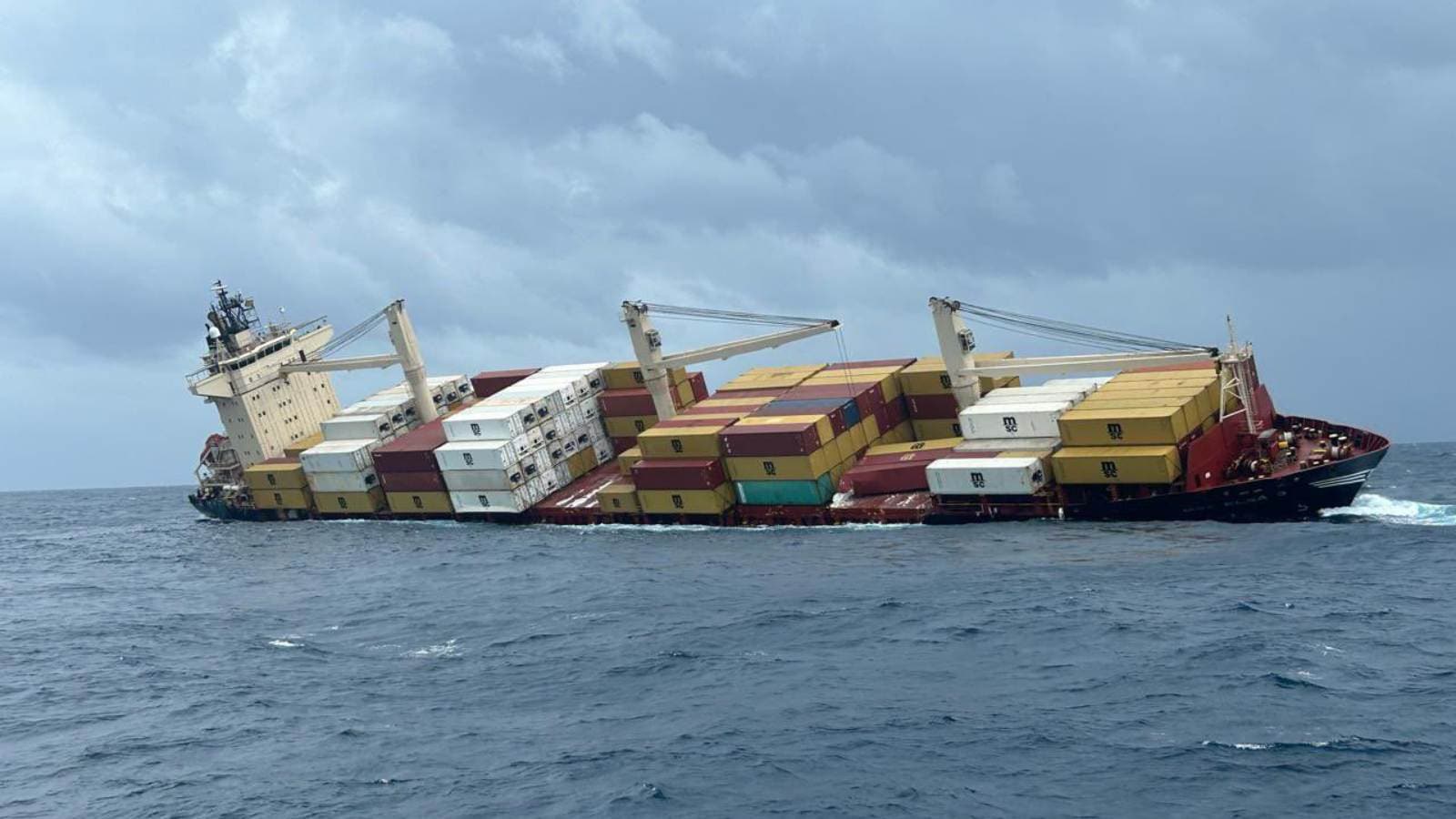
Ship capsizes in recent years are primarily caused by inaccurate stability calculations, improperly secured cargo, extreme weather conditions, and mechanical failures that leave vessels vulnerable to heavy seas. While modern technology...
Ship capsizes in recent years are primarily caused by inaccurate stability calculations, improperly secured cargo, extreme weather conditions, and mechanical failures that leave vessels vulnerable to heavy seas. While modern technology has improved navigation, human error in ballasting and failure to account for the "free surface effect" remain leading technical triggers for these maritime disasters.
Contents
Understanding why massive vessels, engineered for resilience, occasionally roll over requires a look at the intersection of physics, human judgment, and environmental forces. Between 2020 and 2026, several high-profile incidents have highlighted that even with advanced hull designs, the margin for error in maintaining a ship's center of gravity is remarkably slim.
The Physics of Stability: Why Ships Capsize
To understand the causes of recent capsizes, one must first understand the concept of Metacentric Height (GM). A ship stays upright because of the relationship between its center of gravity (where the weight pushes down) and its center of buoyancy (where the water pushes up). When a ship heels (tilts) to one side, the center of buoyancy shifts.
If the ship is designed and loaded correctly, the interaction between these two forces creates a "righting arm" (GZ) that pulls the ship back to an upright position. A capsize occurs when the center of gravity is too high—often due to improper loading or liquid shifting—causing the righting arm to disappear. In this state, once the ship tilts past a certain point (the angle of vanishing stability), gravity takes over and pulls the vessel upside down.
The Free Surface Effect
A recurring factor in recent maritime accidents is the free surface effect. This occurs when liquids (bilge water, fuel, or liquid cargo) or "fluid-like" solid cargo (such as grain or iron ore fines) are allowed to move freely in partially filled tanks or holds. As the ship heels, the liquid shifts to the low side, moving the center of gravity and drastically reducing the ship’s stability. This was a critical factor in several smaller vessel capsizes and near-misses involving bulk carriers in the early 2020s.
Case Study: The Golden Ray (Technical Failure in Stability Management)
One of the most significant capsizing events in recent memory was the MV Golden Ray, a massive Ro-Ro (Roll-on/Roll-off) car carrier that capsized in St. Simons Sound, Georgia. Although the initial incident occurred in late 2019, the comprehensive federal investigations and salvage operations concluded in the early 2020s, providing a blueprint for understanding modern capsizes.
The National Transportation Safety Board (NTSB) determined that the primary cause was an error in stability calculations. The ship’s chief officer entered incorrect data into the ship’s stability computer regarding the amount of ballast water in the tanks. Consequently, the vessel took on a top-heavy configuration. When the ship made a sharp turn to exit the sound, the centrifugal force combined with the high center of gravity caused the vessel to heel over and capsize.
This incident highlighted a major vulnerability in modern shipping: the reliance on automated systems that are only as accurate as the human data provided to them. It also underscored the unique risks associated with Ro-Ro vessels, which have high profiles and large open decks that can quickly destabilize if the weight distribution is off by even a small percentage.
Extreme Weather and the Lu Peng Yuan Yu 028
In May 2023, the Chinese deep-sea fishing vessel Lu Peng Yuan Yu 028 capsized in the central Indian Ocean. This incident, which resulted in the loss of all 39 crew members, serves as a stark reminder of the power of environmental factors.
The primary cause was identified as extreme weather associated with Cyclone Fabien. While large commercial vessels are often able to route around major storms, smaller deep-sea fishing vessels can find themselves trapped. In heavy seas, "broaching" can occur—where a ship is caught parallel to the waves. If a wave is large enough to lift the hull and the ship has a compromised righting arm due to the weight of the catch or equipment on deck, the vessel can be rolled over in seconds.
Common Technical Drivers of Maritime Accidents (2020–2026)
The maritime industry has identified several recurring themes in recent capsizing investigations. These factors often act in concert; rarely is a capsize the result of a single isolated failure.
1. Liquefaction of Solid Bulk Cargo
Bulk carriers remain at risk from cargo liquefaction. Certain ores, such as nickel ore or bauxite fines, can appear solid when loaded but contain significant moisture. The vibrations of the ship's engine and the motion of the sea can cause the cargo to behave like a liquid. When this "slurry" shifts to one side of the hold, it creates a permanent list (tilt) that frequently leads to a rapid capsize. Organizations like the International Maritime Organization (IMO) have tightened the International Maritime Solid Bulk Cargoes (IMSBC) Code to combat this, but enforcement in remote ports remains a challenge.
2. Improperly Secured Cargo
In the Ro-Ro and container sectors, cargo shifting is a frequent precursor to capsizing. If vehicles or containers are not lashed according to the Cargo Securing Manual (CSM), a single heavy roll can snap the lashings. The resulting "domino effect" of shifting weight can overwhelm the ship's stability reserves instantly.
3. Engine Failure in Heavy Seas
A ship without power is a ship at the mercy of the waves. Recent incidents have shown that mechanical failures—often caused by contaminated fuel or poor maintenance—lead to a "dead ship" scenario. Without steerage, the ship naturally turns beam-to-the-sea (sideways to the waves), significantly increasing the risk of a roll-over capsize.
Summary of Major Capsizing Incidents and Causes
The following table summarizes key incidents from the recent decade that have shaped current maritime safety protocols.
| Vessel Name | Year of Incident | Primary Cause | Type of Vessel |
|---|---|---|---|
| Golden Ray | 2019/2020 | Human error in stability data entry | Ro-Ro Car Carrier |
| Stellar Banner | 2020 | Grounding leading to structural failure | VLOC (Ore Carrier) |
| Al Salmy 6 | 2022 | Severe weather/rough seas | Ro-Ro Passenger |
| Lu Peng Yuan Yu 028 | 2023 | Cyclonic weather (Cyclone Fabien) | Fishing Vessel |
| Haithabu | 2024 | Cargo shift in heavy weather | General Cargo |
Safety Protocols and Regulatory Responses
In response to these disasters, maritime authorities have implemented more rigorous checks. The NTSB and the Maritime and Coastguard Agency (MCA) have pushed for:
- Improved Stability Training: Enhanced simulator training for officers to recognize the early signs of a "tender" ship (one with a low GM).
- Automated Ballast Monitoring: Moving away from manual entry to integrated sensors that feed real-time displacement data into stability computers.
- Enhanced Weather Routing: Better integration of AI-driven weather forecasting to ensure vessels maintain a wider safety margin from developing tropical cyclones.
For legal and insurance purposes, the cause of a capsize determines liability. If the cause is "unseaworthiness" (such as a known mechanical fault or improper loading), the shipowner may be held liable for all losses. If the cause is a "peril of the sea" (an unforeseeable extreme storm), liability may be limited under the Hague-Visby Rules.
Preventive Measures for Future Maritime Safety
Preventing a capsize begins long before a ship leaves the dock. Operators must prioritize the following actions:
- Verification of Cargo Weight: Discrepancies between declared and actual weight can lead to catastrophic stability errors. Verified Gross Mass (VGM) requirements for containers must be strictly enforced.
- Maintaining Watertight Integrity: Recent investigations often find that open watertight doors or poorly maintained seals allowed "progressive flooding," which exacerbated a list and led to a final capsize.
- Regular Stability Audits: Periodic "inclining experiments" should be performed to verify the lightship weight and center of gravity, especially after a vessel undergoes dry-docking or structural modifications.
Frequently Asked Questions
What is the most common reason a ship capsizes? The most common reason is a loss of stability caused by a high center of gravity. This is usually the result of human error in loading cargo or managing ballast water tanks, which prevents the ship from righting itself after it heels.
Can a large ship be un-capsized? Technically, yes, through a process called "parbuckling" (using cables and pulleys to rotate the hull) or by refloating it with air. However, for large modern vessels, a capsize is often a total constructive loss because the cost of salvage and the damage to the machinery and interior far exceed the vessel's value.
How does weather cause a ship to capsize if it is designed for the ocean? Even the best-designed ships have limits. If a ship loses power during a storm and is hit by a "rogue wave" or sustained high-amplitude waves from the side (beam-to-sea), the force of the water can exceed the ship's maximum righting moment, flipping it over.
What is the "angle of vanishing stability"? This is the specific degree of tilt (heel) at which a ship can no longer return to an upright position. Once a vessel leans past this point, the force of gravity begins to assist the capsizing process rather than the hull's buoyancy resisting it.
Are Ro-Ro ships more dangerous than other vessels? Ro-Ro (Roll-on/Roll-off) ships have a different risk profile because of their large, open car decks. If water enters these decks or if the vehicles shift, the "free surface effect" can be massive and immediate, leading to a faster capsize than on a container ship with subdivided holds.
Final Recommendation
If you are involved in maritime logistics or vessel operations, ensure that your Stability Management Plan is updated to include secondary verification of all ballast data. Do not rely solely on automated sensors; manual soundings of tanks should be cross-referenced with computer outputs before every departure. For those following maritime safety trends in 2026, the focus has shifted toward Predictive Stability Analytics, which uses real-time sea state data to warn crews of potential resonance or stability loss before it occurs.
Image Gallery