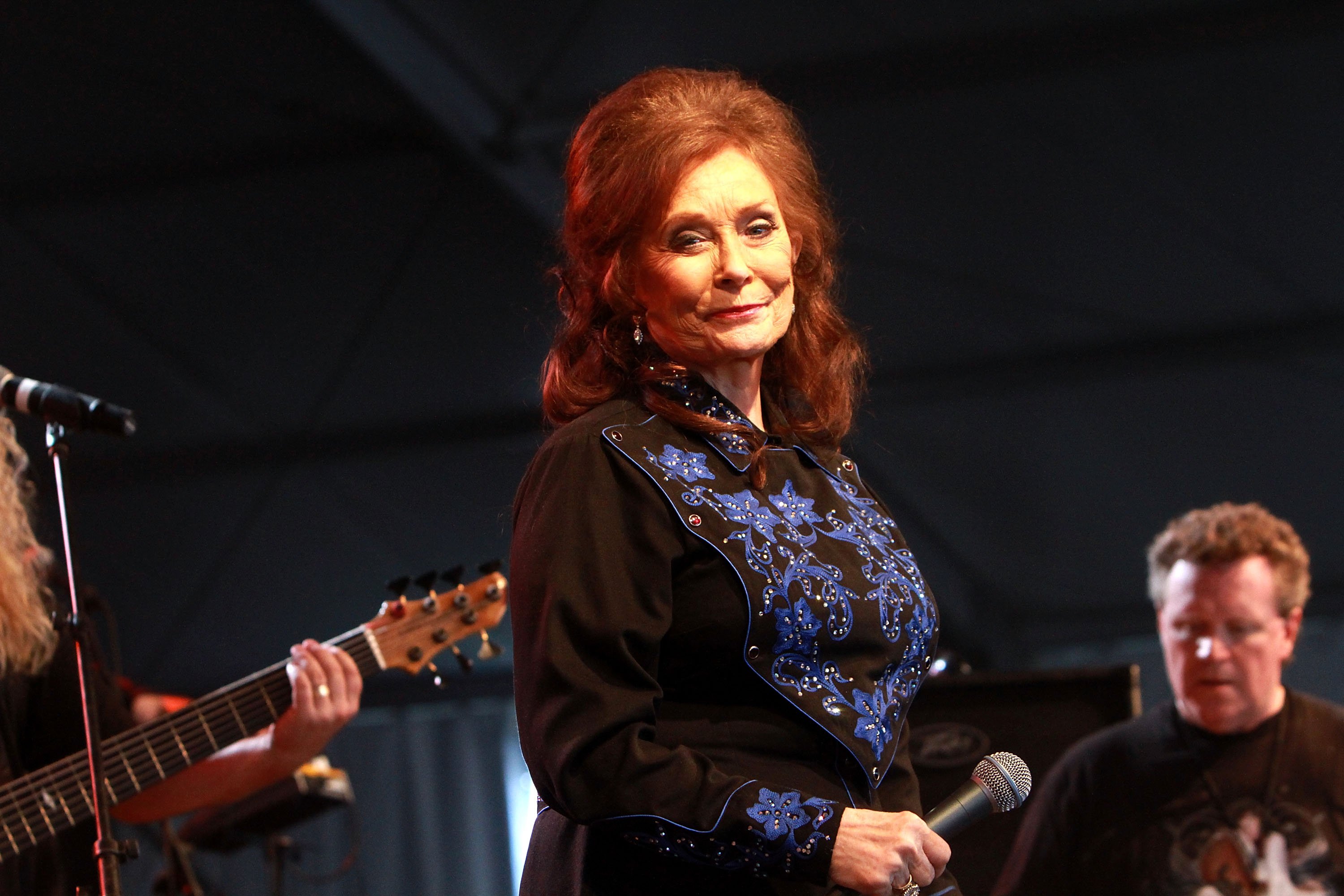
Loretta Lynn: The Enduring Legacy of the Coal Miner’s Daughter
Loretta Lynn was the definitive voice of rural working-class women, bridging the gap between traditional honky-tonk and modern social commentary. Her career spanned six decades, earning her status as the most awarded female country rec...
Loretta Lynn was the definitive voice of rural working-class women, bridging the gap between traditional honky-tonk and modern social commentary. Her career spanned six decades, earning her status as the most awarded female country recording artist in history and leaving an indelible mark on the landscape of American music and culture.
Contents
Loretta Lynn’s journey from the poverty-stricken hills of Kentucky to the pinnacle of Nashville royalty is more than a rags-to-riches story; it is a testament to the power of raw, honest storytelling. Known for her distinctive Appalachian twang and her refusal to shy away from controversial subjects, Lynn redefined what a female country singer could be. She didn't just sing about heartbreak; she sang about birth control, double standards, and the gritty reality of domestic life. As we look back from the perspective of 2026, her influence remains foundational for artists across genres who prioritize authenticity over artifice.
The Roots of Butcher Hollow: Shaping a Legend
Loretta Webb was born on April 14, 1932, in Butcher Hollow, Kentucky, a small coal-mining community near Van Lear. The second of eight children born to Melvin "Ted" Webb and Clara Marie Ramey, her upbringing was defined by the economic hardships of the Great Depression. This environment provided the primary source material for her most famous work, "Coal Miner's Daughter."
The technical depth of Lynn's early life is crucial to understanding her musical phrasing and lyrical content. The isolation of the Appalachian Mountains preserved a specific type of folk music and vocal delivery—often called the "high lonesome sound"—which Lynn naturally integrated into the honky-tonk style of the 1960s. At age 15, she married Oliver "Doolittle" Lynn, a veteran whose complex relationship with Loretta would become the catalyst for many of her greatest hits.
In the late 1940s, the couple moved to Custer, Washington, to seek better economic opportunities. It was here, far from the Nashville establishment, that Doolittle bought Loretta her first guitar—a $17 Harmony model—and encouraged her to perform at local grange halls and clubs. This period of "woodshedding" allowed Lynn to develop her songwriting voice without the immediate pressure of industry trends.
The Nashville Breakthrough and the Decca Years
Loretta Lynn's entry into the professional music scene began with the 1960 release of "I'm a Honky Tonk Girl" on Zero Records. To promote the single, Loretta and Doolittle drove across the country, stopping at every country radio station they could find to hand-deliver the record. This grassroots effort paid off when the song reached the Billboard Country Chart, leading to an invitation to perform at the Grand Ole Opry.
By 1961, she had signed with Decca Records and began a legendary partnership with producer Owen Bradley. Bradley, known for creating the "Nashville Sound," recognized that Lynn’s voice was best served by a more traditional, "hard country" arrangement rather than the polished, string-heavy productions common at the time.
The Influence of Patsy Cline
One of the most significant events in Lynn’s early career was her friendship with Patsy Cline. Cline, already an established star, took Lynn under her wing, teaching her how to dress, carry herself on stage, and navigate the male-dominated industry. After Cline’s tragic death in 1963, Lynn continued to carry the torch for female soloists, eventually releasing a tribute album, I Remember Patsy, in 1977.
A Voice for the Voiceless: Songwriting as Social Commentary
What set Loretta Lynn apart from her contemporaries was her willingness to write from her own perspective as a woman, wife, and mother. In the 1960s and 70s, country music was largely dominated by male perspectives. Lynn changed the narrative by introducing themes that were previously considered taboo.
Breaking Barriers with "The Pill"
In 1975, Lynn released "The Pill," a song celebrating the reproductive freedom granted by oral contraceptives. The song was banned by over 60 radio stations across the United States. Despite—or perhaps because of—the controversy, it became one of her most famous crossover hits. For rural women who had previously lacked a public voice on such matters, Lynn was more than a singer; she was a champion of their lived experiences.
Addressing Domestic Realities
Songs like "Don't Come Home A-Drinkin' (With Lovin' on Your Mind)" and "Rated X" addressed the double standards and domestic struggles of the era. Lynn’s lyrics were sharp, direct, and often humorous, providing a counterpoint to the "stand by your man" trope. She spoke to women who were tired of being mistreated, and her music provided a sense of solidarity that resonated deeply with the American working class.
The Cultural Phenomenon of "Coal Miner's Daughter"
While Lynn had numerous hits, "Coal Miner's Daughter" (1970) remains her signature achievement. The song’s autobiographical narrative detailed the pride and struggle of her Kentucky upbringing, striking a chord with a nation undergoing rapid social and economic change.
The song’s success eventually led to the 1976 autobiography of the same name and the 1980 film adaptation starring Sissy Spacek. Spacek, who insisted on singing the vocals herself, won an Academy Award for her portrayal of Lynn. The film’s success cemented Lynn’s status as a cross-media icon, introducing her life story to a global audience far beyond the reach of country radio.
| Significant Milestone | Year | Description |
|---|---|---|
| First Charted Single | 1960 | "I'm a Honky Tonk Girl" reached #14 on the Country charts. |
| Grand Ole Opry Membership | 1962 | Became an official member, a status she held until her death. |
| First Female CMA Entertainer of the Year | 1972 | The first woman ever to win the Country Music Association's highest honor. |
| Coal Miner's Daughter Film | 1980 | Biopic released, winning critical acclaim and an Oscar for Sissy Spacek. |
| Country Music Hall of Fame | 1988 | Inducted for her revolutionary contributions to the genre. |
| Presidential Medal of Freedom | 2013 | Awarded by President Barack Obama for her cultural impact. |
Later Career and the Jack White Collaboration
In the late 20th century, Lynn’s commercial radio presence faded as the industry shifted toward a more pop-oriented sound. However, her artistic relevance saw a massive resurgence in 2004 with the release of Van Lear Rose. Produced by Jack White of The White Stripes, the album was a critical and commercial triumph.
White’s production stripped away the polish of modern Nashville, placing Lynn’s raw, powerful vocals at the center of a garage-rock-influenced country sound. The album won two Grammy Awards, including Best Country Album, and proved that Lynn’s songwriting remained potent and relevant to a younger, alternative audience. This collaboration served as a bridge, introducing the "Coal Miner's Daughter" to the "Indie Rock" generation.
Legacy and Influence into 2026
Loretta Lynn passed away on October 4, 2022, at her home in Hurricane Mills, Tennessee, at the age of 90. As of 2026, her estate and family continue to maintain the Loretta Lynn Ranch as a major destination for fans and country music historians. The ranch serves not only as a museum of her life but as a venue for motocross events and music festivals, reflecting the diverse interests she fostered during her lifetime.
Her influence is visible in the careers of modern stars like Miranda Lambert, Kacey Musgraves, and Maren Morris, who all cite Lynn’s honesty and independence as a blueprint for their own careers. Lynn’s ability to remain "pure country" while simultaneously pushing social boundaries is a feat few have replicated.
Frequently Asked Questions
What was Loretta Lynn's relationship with her husband, Doolittle Lynn?
Loretta and Oliver "Doolittle" Lynn were married for 48 years until his death in 1996. Their relationship was famously tumultuous, marked by his struggles with alcoholism and infidelity, which Loretta frequently used as inspiration for her songs. Despite the hardships, she remained fiercely loyal to him, often stating that he was the reason she became a star because he pushed her to perform.
Why was "The Pill" so controversial in 1975?
The song was controversial because it openly discussed birth control, a topic that was still considered a private, often religious matter in many parts of the United States. Rural radio stations feared backlash from conservative listeners. However, Lynn defended the song, noting that many female fans thanked her for speaking about something that had profoundly changed their lives for the better.
Did Loretta Lynn write her own songs?
Yes, Lynn was one of the first female country artists to write her own material. This was a critical component of her success, as it allowed her to present an authentic female perspective. While she did record songs by other writers, her most impactful hits—such as "Coal Miner's Daughter," "You Ain't Woman Enough," and "Fist City"—were her own compositions.
What is the significance of Hurricane Mills?
Hurricane Mills is the name of the town and the ranch that Loretta Lynn purchased in the 1960s. It became her primary residence and a centerpiece of her brand. Today, it operates as a tourist attraction, featuring a replica of her childhood home in Butcher Hollow, a museum of her career, and a large campground. It stands as one of the most visited artist-owned properties in the southern United States.
How many Grammy Awards did Loretta Lynn win?
During her career, Loretta Lynn won three Grammy Awards from 18 nominations. Her wins include Best Country Vocal Performance by a Duo or Group for "After the Fire Is Gone" (with Conway Twitty) and two awards for the Van Lear Rose album. She was also honored with a Grammy Lifetime Achievement Award in 2010.
Future Recommendations for Fans and Researchers
For those looking to explore the life and music of Loretta Lynn more deeply, the following steps are recommended:
- Listen to the "Decca Masters": To understand her technical vocal development, listen to her recordings from 1961 to 1970, focusing on the production work of Owen Bradley.
- Visit the Loretta Lynn Ranch: Located in Tennessee, the ranch offers a tactile history of her life and the development of the Nashville music industry.
- Read Coal Miner's Daughter: Her 1976 autobiography provides context that the film and songs only touch upon, particularly regarding the socio-economic conditions of Kentucky coal country.
- Explore the Duets: Her work with Conway Twitty represents some of the finest examples of vocal harmony and chemistry in the history of the country genre.
Loretta Lynn was more than a country singer; she was a cultural chronicler who gave a voice to the complexities of womanhood in the 20th century. Her legacy remains a vital part of the American musical canon in 2026.
Image Gallery