The 1999 Honda Valkyrie Horsepower Story: Engineering a Performance Icon
The 1999 Honda Valkyrie (GL1500C) delivers a factory-rated 100 horsepower at 6,000 RPM and 96 lb-ft of torque at 5,000 RPM. By equipping the flat-six engine with six individual 28mm Keihin carburetors and aggressive camshaft profiles,...
The 1999 Honda Valkyrie (GL1500C) delivers a factory-rated 100 horsepower at 6,000 RPM and 96 lb-ft of torque at 5,000 RPM. By equipping the flat-six engine with six individual 28mm Keihin carburetors and aggressive camshaft profiles, Honda transformed a touring motor into a high-performance muscle cruiser capable of sub-13-second quarter-mile times.
Contents
The Genesis of the GL1500C Powerhouse
To understand the 1999 Honda Valkyrie horsepower story, one must look back at the early 1990s. At the time, the "cruiser" market was dominated by V-twin engines that prioritized aesthetic and "thumping" exhaust notes over raw mechanical efficiency. Honda decided to disrupt this segment by utilizing its most sophisticated powerplant: the 1,520cc horizontally opposed six-cylinder engine from the Goldwing GL1500.
However, the Goldwing engine, while reliable, was tuned for quiet, long-distance touring. It utilized a single carburetor and mild cam timing to maximize fuel efficiency and smoothness. For the Valkyrie to succeed as a "power cruiser," Honda engineers in Marysville, Ohio, and Japan knew they needed to unlock the engine's latent potential. The project, led by project leader Mitsuyoshi Kohama, aimed to create a "Hot Rod" version of the Goldwing.
The transformation involved replacing the Goldwing's hydraulic lifters with solid lifters and installing a significantly more aggressive camshaft. This allowed the engine to breathe better at higher RPMs. The most iconic change, however, was the induction system. While the Goldwing made do with a single manifold, the Valkyrie featured six individual 28mm Keihin CV carburetors—one for each cylinder. This setup provided an immediate throttle response and a significant jump in peak power, moving the needle from the Goldwing’s approximately 80 crank horsepower to the Valkyrie’s legendary 100 horsepower.
Decoding the Horsepower: Crank vs. Rear Wheel
In the world of motorcycling, there is often a discrepancy between "brochure horsepower" and "real-world performance." The 1999 Honda Valkyrie is a prime example of this distinction. While Honda officially marketed the bike with 100 horsepower, this figure represents power measured at the crankshaft (brake horsepower).
In practice, power must travel through the transmission and the shaft-drive system before reaching the rear tire. Shaft drives are prized for their low maintenance and durability, especially on high-torque machines like the Valkyrie, but they are inherently less efficient than chain drives. Internal friction and the 90-degree change in direction required by the final drive gears result in "parasitic loss."
Independent dynamometer (dyno) testing of the 1999 models consistently showed:
- Crank Horsepower: 100 hp
- Rear-Wheel Horsepower: 82 to 85 hp
- Crank Torque: 96–100 lb-ft
- Rear-Wheel Torque: 84–87 lb-ft
Despite the loss between the crank and the pavement, the Valkyrie’s torque curve remained impressively flat. Unlike high-revving sportbikes of 1999 that required the rider to "scream" the engine to find power, the Valkyrie produced over 80% of its maximum torque starting as low as 2,000 RPM. This "wall of torque" is what defined the Valkyrie experience, allowing the heavy machine to accelerate with a deceptive, turbine-like smoothness that few V-twins could match.
The Mechanical Architecture: Why Six Carburetors Matter
The 1999 Valkyrie’s horsepower story is inextricably linked to its induction system. Using six carburetors on a production cruiser was an audacious engineering choice. Most manufacturers avoided this due to the complexity of synchronization and the physical space required.
Each 28mm Keihin carburetor was tuned to provide a precise air-fuel mixture to its respective cylinder. This eliminated the "starvation" issues sometimes seen in multi-cylinder engines sharing a single plenum, where the cylinders furthest from the carburetor might run leaner or hotter. Because each cylinder had its own dedicated fuel source, Honda could push the ignition timing and compression (9.8:1) more aggressively.
This setup also contributed to the Valkyrie's unique acoustic signature. While V-twins had a rhythmic "potato-potato" sound, the six-into-six (or six-into-two) exhaust of the Valkyrie produced a mechanical growl that many enthusiasts compared to a Porsche 911 or a Formula 1 car of a previous era. In 2026, these carburetors remain the primary focus for restorers. Maintaining the synchronization of six individual slides is essential for preserving that 100-hp rating; even a slight deviation in vacuum pressure between the banks can lead to a loss of several horsepower and increased vibration.
Comparing the 1999 Models: Standard, Tourer, and Interstate
By 1999, the Valkyrie lineup had expanded into three distinct models. While they all shared the same 1,520cc engine and 100-hp rating, their performance profiles differed due to weight and aerodynamics.
- The Standard (GL1500C): The lightest version, weighing approximately 680 lbs dry. This model offered the purest "muscle bike" performance, as it had the best power-to-weight ratio.
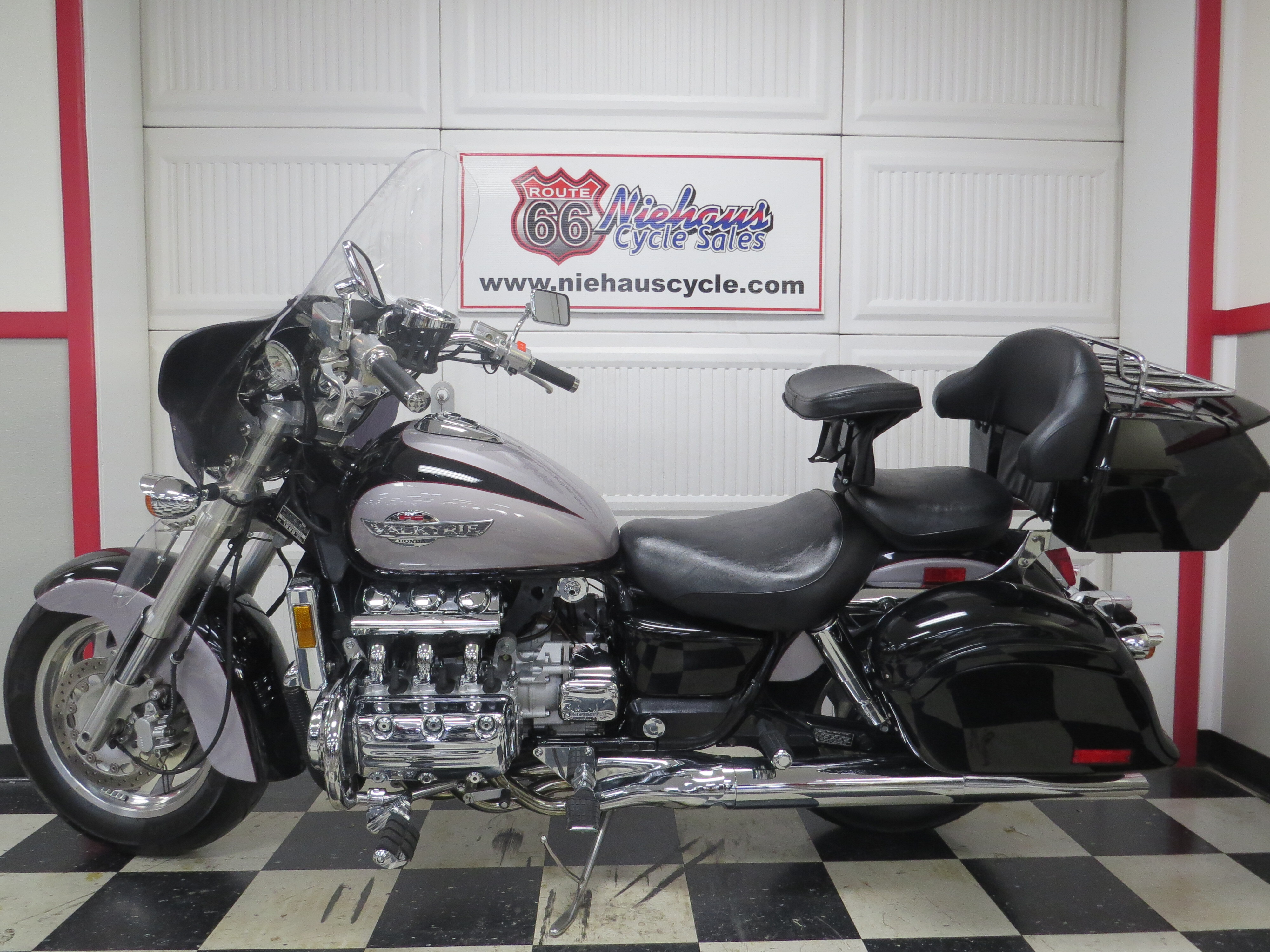
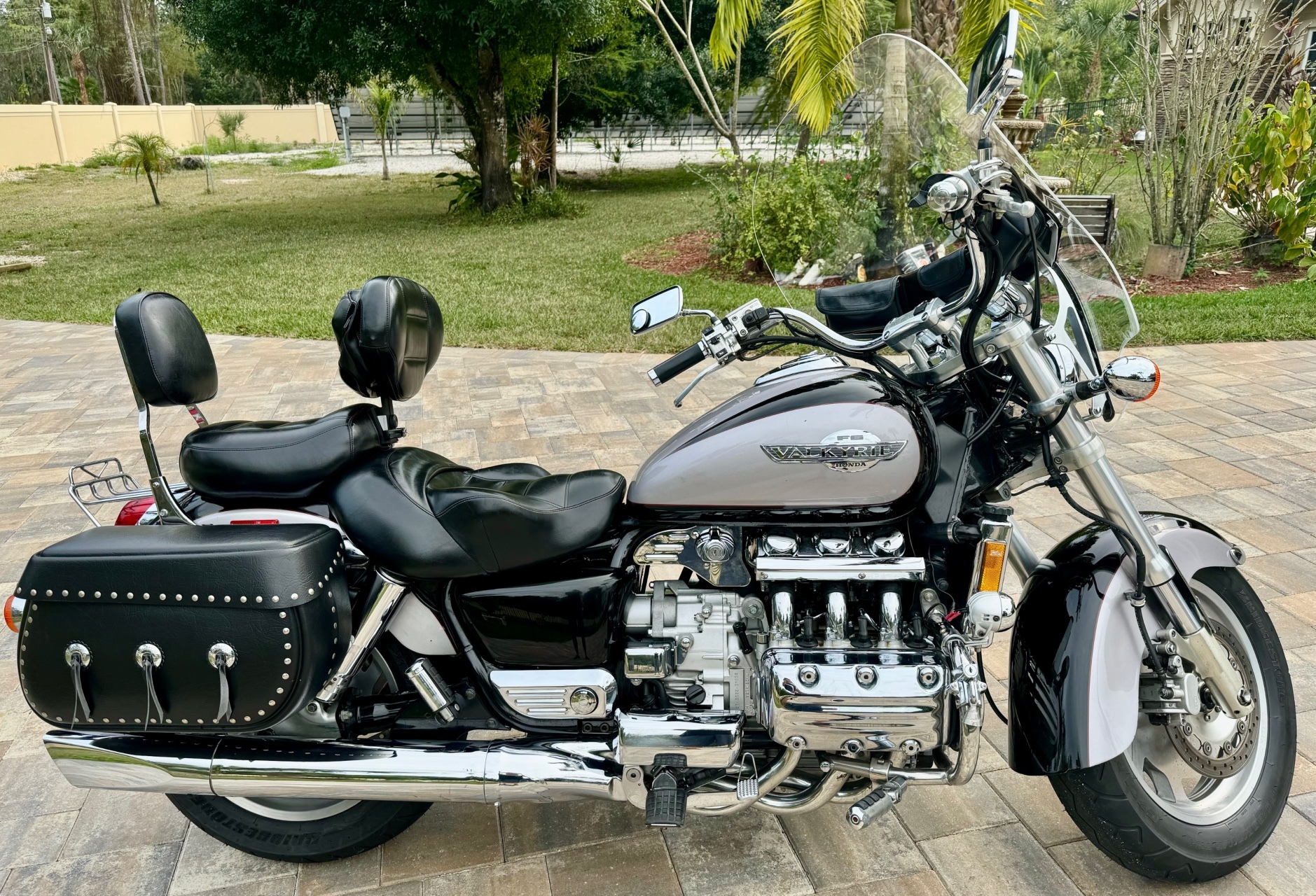
- The Tourer (GL1500CT): This version added a large windshield and hard saddlebags. While the engine output was identical, the added weight (roughly 710 lbs) and aerodynamic drag of the screen slightly lowered the top-end acceleration.
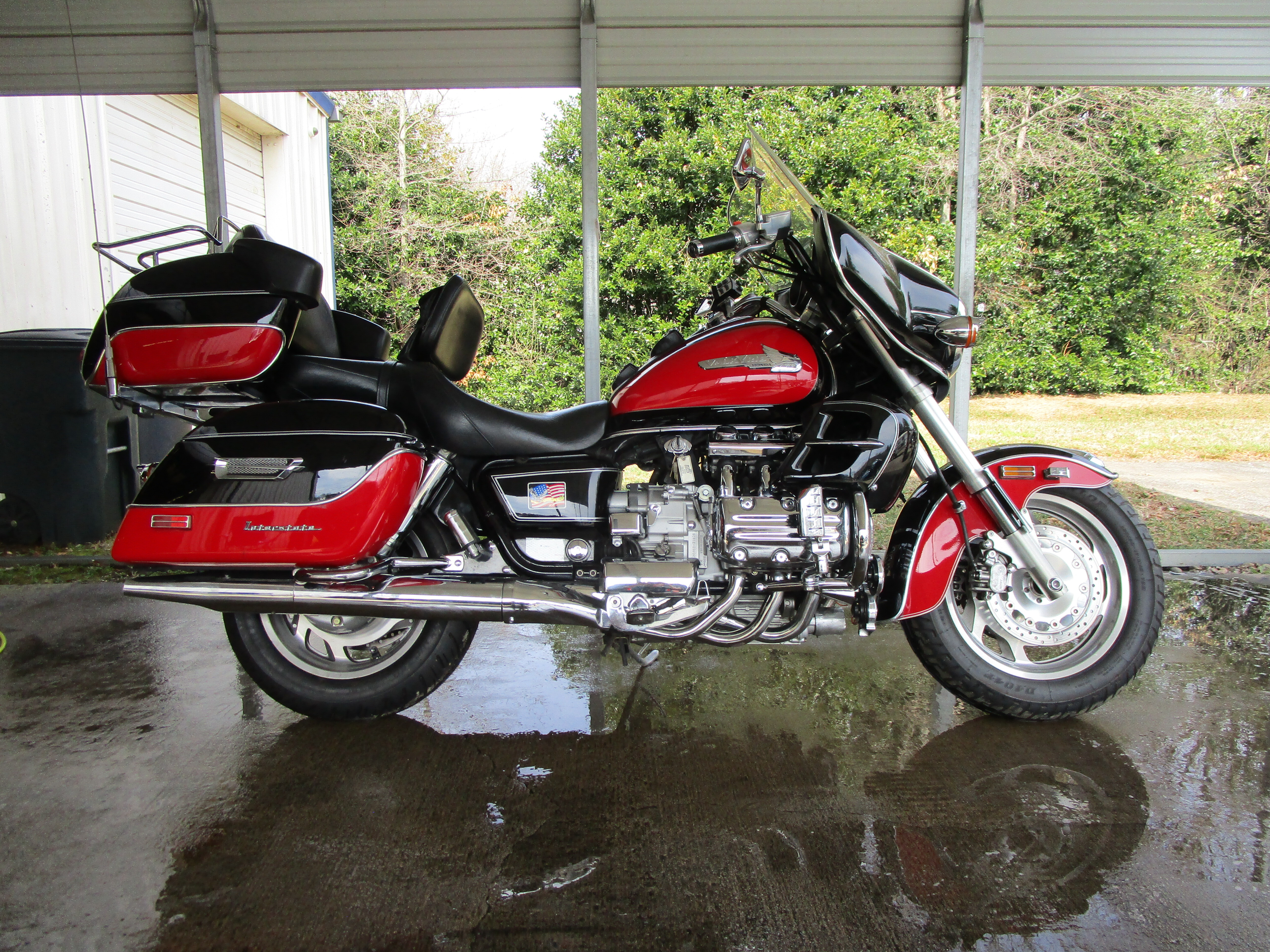
- The Interstate (GL1500CF): Introduced for the 1999 model year, the Interstate was a significant departure. It featured a fork-mounted fairing, a larger 6.9-gallon fuel tank (up from 5.3 gallons), and a rear trunk with integrated passenger seating.
The 1999 Interstate is a specific point of interest in the horsepower story. To accommodate the extra weight (nearly 800 lbs wet), some riders felt the engine was "working harder," though the internal specifications of the motor remained the same as the Standard. The Interstate’s larger frontal area meant that while it could still hit the 100-hp peak, its top speed was slightly lower than the stripped-down Standard model due to wind resistance.
1999 Honda Valkyrie Technical Specifications
| Feature | Specification (1999 Standard/Tourer) |
|---|---|
| Engine Type | 1520cc liquid-cooled horizontally opposed six-cylinder |
| Bore and Stroke | 71.0mm x 64.0mm |
| Compression Ratio | 9.8:1 |
| Valve Train | SOHC; two valves per cylinder |
| Carburetion | Six 28mm diaphragm-type CV |
| Claimed Horsepower | 100 bhp @ 6,000 RPM |
| Claimed Torque | 96 lb-ft @ 5,000 RPM |
| Drive Train | Five-speed; shaft final drive |
| Front Tire | 150/80R-17 |
| Rear Tire | 180/70R-16 |
| Dry Weight | 682 lbs (Standard) / 770 lbs (Interstate) |
Performance on the Road: Quarter-Mile and Top Speed
The 1999 Honda Valkyrie wasn't just powerful on paper; it set benchmarks for cruiser performance that lasted for years. In contemporary testing by publications like Cycle World and Motorcyclist, the 1999 Valkyrie Standard consistently posted quarter-mile times in the 12.1 to 12.5-second range at speeds of approximately 105 mph.
For context, in 1999, this allowed the Valkyrie to out-accelerate almost every other cruiser on the market, including the Harley-Davidson Fat Boy and the Yamaha Royal Star. Its top speed was electronically limited or aerodynamically capped at approximately 130 mph, a figure that was unheard of for a "feet-forward" cruiser at the time.
The "horsepower story" here is really about the delivery. Because the flat-six engine is inherently balanced (the primary and secondary forces cancel each other out), the Valkyrie could reach its 6,000 RPM redline without the bone-shaking vibration associated with large-displacement V-twins. This allowed riders to actually use all 100 horses comfortably, whereas, on rival bikes, the vibration often discouraged riding at the limit.
Legacy and Maintenance in 2026
As we look at the 1999 Honda Valkyrie from the perspective of 2026, the bike has transitioned from a used heavyweight to a bona fide modern classic. Its 100-hp rating, once considered astronomical for a cruiser, is still respectable today, even alongside modern performance cruisers like the Triumph Rocket 3 or the updated Honda Goldwing.
However, time has introduced challenges to maintaining that original performance. The "horsepower story" today is often one of restoration.
- Carburetor Degradation: Modern ethanol-blend fuels are notoriously hard on the 1999 Keihin carburetors. If the bike sits, the tiny jets clog, causing the engine to drop cylinders and lose significant power.
- Vacuum Leaks: With six carburetors comes a complex web of vacuum lines. Any crack in these lines results in a lean condition, reducing torque and causing the engine to run hot.
- Timing Belts: Unlike many cruisers with gear-driven or chain-driven cams, the GL1500 engine uses rubber timing belts. If these aren't changed every decade or 100,000 miles, a failure will result in catastrophic engine damage, as the Valkyrie is an interference engine design.
For collectors in 2026, a "documented 100-hp" Valkyrie—one that has been dyno-tested to show it hasn't lost its edge—commands a significant premium on the vintage market.
Frequently Asked Questions
Does the 1999 Valkyrie use the exact same engine as the Goldwing?
While the block and displacement are the same, the engines are not identical. The Valkyrie features a different camshaft profile, solid lifters instead of hydraulic ones, and six carburetors instead of one. These changes account for the roughly 20-horsepower increase over the same-year Goldwing GL1500.
Can I increase the horsepower of a 1999 Valkyrie?
Yes, though the gains are incremental. Common "Stage 1" mods include the "Trigger Wheel" (which advances ignition timing by 4 or 6 degrees) and aftermarket exhaust systems like the Cobra 6-into-6. These can push rear-wheel horsepower closer to 90, but the stock intake system is already very efficient.
Is the 1999 Interstate slower because of the extra weight?
In terms of top speed and 0-60 mph times, yes. The Interstate weighs nearly 120 pounds more than the Standard model. While it makes the same 100 hp at the crank, its power-to-weight ratio is lower, making it feel more like a traditional touring bike than a muscle cruiser.
How often do the six carburetors need to be synchronized?
For optimal performance and to maintain the full horsepower rating, synchronization should be checked every 12,000 miles or whenever the throttle response feels "mushy." A synchronized Valkyrie should be smooth enough that a nickel can stand on edge on the engine block while it idles.
What is the fuel economy of a 100-hp Valkyrie?
Power comes at a price. The 1999 Valkyrie is known for relatively high fuel consumption, typically averaging between 30 and 35 MPG. High-speed cruising or aggressive use of the 100 horsepower can drop that figure into the mid-20s.
Final Recommendation for Owners and Buyers
If you are looking to experience the 1999 Honda Valkyrie horsepower story firsthand in 2026, prioritize mechanical health over cosmetic perfection. Ensure the timing belts have been replaced recently and that the six-carburetor array has been professionally cleaned and synchronized. A well-maintained Valkyrie still offers a unique combination of 100-hp muscle and "electric-motor" smoothness that remains unmatched in the cruiser world. For those seeking the quickest version, the 1999 Standard model remains the peak expression of this legendary flat-six performance.
Image Gallery