The Surprising Roots of Ruby Bridges Early Life
Ruby Bridges was born on September 8, 1954, in Tylertown, Mississippi, during a pivotal year in American history marked by the Brown v. Board of Education decision. Her early life was shaped by a family lineage of sharecropping, a stra...
Ruby Bridges was born on September 8, 1954, in Tylertown, Mississippi, during a pivotal year in American history marked by the Brown v. Board of Education decision. Her early life was shaped by a family lineage of sharecropping, a strategic move to New Orleans for economic opportunity, and a rigorous academic selection process that led to her becoming a primary symbol of the Civil Rights Movement at age six.
Contents
Born Into a Turning Point: The Mississippi Context
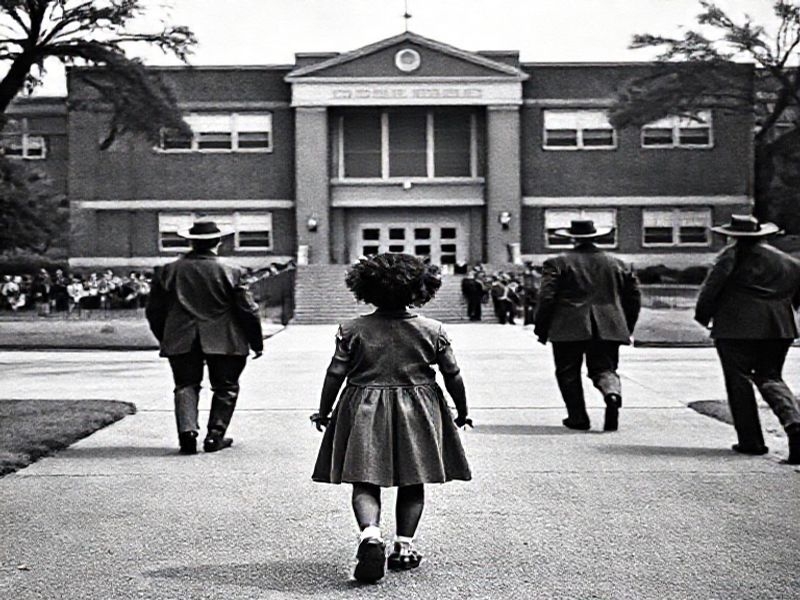
The story of Ruby Bridges often begins with her walk into William Frantz Elementary School in 1960, but her "surprising roots" are firmly planted in the soil of Tylertown, Mississippi. Born into the height of the Jim Crow era, Ruby’s arrival coincided exactly with the year the Supreme Court declared state laws establishing separate public schools for Black and white students to be unconstitutional. This historical synchronicity is more than a coincidence; it frames her entire childhood as a living embodiment of a legal theory put into practice.
Ruby was the eldest of five children born to Abon and Lucille Bridges. At the time of her birth, the Bridges family existed within the sharecropping system—a labor structure that often trapped Black families in a cycle of debt and poverty. The "surprising" depth of this root lies in the sheer distance Ruby traveled, not just geographically, but socially. Her grandparents were tenant farmers who worked land they did not own, yet within six years, their granddaughter would be escorted by U.S. Marshals to claim an education that had been systematically denied to her ancestors for centuries.
The rural upbringing in Mississippi provided Ruby with a foundational sense of community and faith. Her parents were members of a tight-knit Black community where survival depended on mutual support. This environment instilled in Ruby a quiet resilience. While the world would later see her as a victim of a mob, her early years were defined by the strength of a family that prioritized dignity over comfort.
The Great Migration and the Move to New Orleans
In 1958, when Ruby was four years old, the family joined the tail end of the Great Migration, moving from Mississippi to New Orleans, Louisiana. This move was driven by Abon Bridges' desire for better employment and a safer environment for his children. In New Orleans, Abon found work as a service station attendant, and Lucille took various jobs to support the household.
New Orleans in the late 1950s was a city of deep contradictions. It was more cosmopolitan than rural Mississippi, yet it was a primary battleground for segregationists who were determined to resist the federal mandate of school integration. The Bridges family settled into a life that was modest and focused on the church and family. They were not political activists by trade; they were parents seeking a standard of living that included better schooling for their children.
The "surprising" element of this transition was how quickly the Bridges family became the focal point of a national crisis. They did not move to New Orleans with the intention of leading a revolution. Instead, they were "ordinary" people who were thrust into an "extraordinary" situation when the N.A.A.C.P. (National Association for the Advancement of Colored People) began looking for families willing to challenge the segregated school system.
The Academic Catalyst: Passing the Entrance Test
One of the most overlooked aspects of Ruby Bridges' early life is the academic and psychological rigor she faced before ever stepping foot in William Frantz Elementary. In 1960, the New Orleans School Board, under federal pressure to integrate, devised a test for Black students to determine if they were "eligible" to attend all-white schools.
This test was not a standard entrance exam; it was designed to be intentionally difficult, intended to discourage or disqualify as many Black children as possible. The board hoped that by setting an impossibly high bar, they could maintain segregation through a veneer of "meritocracy."
Out of the many Black children who took the test, Ruby Bridges was one of only six who passed. This achievement highlights a root of intellectual capability that is often overshadowed by the narrative of her physical bravery. To be six years old and possess the cognitive and emotional stability to pass a test designed for failure is a testament to the home environment Lucille and Abon Bridges had created.
The test results meant that Ruby was assigned to William Frantz Elementary, a school just five blocks from her home, while the other five children were assigned to the McDonogh No. 19 school or chose not to attend. This effectively left Ruby as the sole Black student in an entire elementary school building.
A Family Divided: The Decision to Integrate
The decision to send Ruby to William Frantz was not a simple one for the Bridges family. It created a significant rift between her parents, reflecting the broader tensions within the Black community at the time.
- Lucille Bridges (The Proponent): Lucille was the driving force behind Ruby’s integration. Having been denied a quality education in Mississippi, she was adamant that her children should have opportunities she never had. She viewed the move as a religious and civic duty, believing that if Ruby paved the way, it would benefit all Black children in New Orleans.
- Abon Bridges (The Skeptic): Abon was deeply concerned about the safety of his daughter and the economic security of his family. He understood the potential for violent retaliation and was hesitant to put his six-year-old child in the crosshairs of a racial war. He eventually relented, acknowledging that the move was necessary for Ruby’s future.
This internal family dynamic is a crucial "root" because it underscores the human cost of the Civil Rights Movement. The "surprising" reality is that the heroes of history are often families who are terrified, yet choose to move forward regardless of their fear.
Historical Timeline of Ruby Bridges' Formative Years
The following table outlines the critical milestones that defined Ruby Bridges' early life and the immediate aftermath of her historic walk.
| Year | Event | Significance |
|---|---|---|
| 1954 | Birth in Tylertown, MS | Occurred the same year as Brown v. Board of Education. |
| 1958 | Move to New Orleans | Part of the Great Migration seeking economic and educational bettermen. |
| 1960 | The Entrance Test | Ruby is one of six children to pass a test designed to block integration. |
| 1960 | Nov 14: First Day | Ruby enters William Frantz Elementary escorted by U.S. Marshals. |
| 1960 | Economic Retaliation | Abon Bridges is fired from his job; grandparents are evicted from their land. |
| 1961 | Conclusion of First Grade | Ruby completes the year as the only student in Barbara Henry’s class. |
| 1962 | School Normalization | Other Black students begin to enroll; white families slowly return. |
The Influence of Barbara Henry and Robert Coles
As we examine Ruby’s early life in 2026, we must recognize two pivotal figures who entered her life during her first year of school: Barbara Henry and Dr. Robert Coles.
Barbara Henry was a teacher from Boston who was the only staff member willing to teach a Black child. For an entire year, she taught Ruby in a classroom where all the other seats were empty, as white parents had pulled their children out of the school. The bond between the white teacher from the North and the Black child from the South is a fundamental root of Ruby’s story. Henry didn’t just teach Ruby the alphabet; she provided a safe emotional harbor in a sea of hatred.
Simultaneously, Dr. Robert Coles, a child psychiatrist, began meeting with Ruby weekly. He was fascinated by how a six-year-old could maintain such composure while being screamed at by a mob of adults (known as the "Cheerleaders") every morning. His observations, later published in various psychological studies and books, highlighted Ruby’s use of prayer as a coping mechanism. She famously stopped to pray for the mob, a behavior rooted in the deep spiritual traditions of her Mississippi ancestors.
The Economic and Social Cost of Courage
The "roots" of Ruby’s early life were nearly severed by the backlash her family faced. The integration was not a victimless victory. Shortly after Ruby started at William Frantz:
- Job Loss: Abon Bridges was fired from his job at the service station.
- Housing Instability: The family struggled to pay rent, relying on the support of the local community and the N.A.A.C.P.
- Grandparent Eviction: In a particularly cruel move, Ruby’s grandparents in Mississippi were forced off the land they had sharecropped for 25 years because of their granddaughter’s "troublemaking" in New Orleans.
Despite these hardships, the community rallied. Neighbors helped watch the house, and volunteers walked behind the federal marshals' car to ensure the family's safety. This community support is an essential, if often overlooked, root of the Ruby Bridges story.
FAQ: Understanding Ruby Bridges' Origins
Why was Ruby Bridges chosen to integrate the school?
Ruby was not "chosen" by a committee but rather qualified by passing a series of difficult academic and psychological tests administered by the New Orleans School Board. She was one of only six Black children in the city to pass, and because her local school (William Frantz) was one of the targets for integration, she was assigned there.
Did Ruby Bridges have siblings?
Yes, Ruby was the oldest of five children. Her siblings also grew up under the shadow of the 1960 events, though Ruby remained the primary public figure. Her family’s collective resilience was a key factor in her ability to endure the first year of integrated schooling.
Who was the teacher that taught Ruby Bridges?
Her teacher was Barbara Henry, a native of Boston. Mrs. Henry was the only teacher at William Frantz Elementary who agreed to teach Ruby. For the entire 1960-1961 school year, they worked together in a classroom of one, as the school’s white students were boycotted by their parents.
What happened to Ruby Bridges' father after she integrated the school?
Abon Bridges was fired from his job as a service station attendant as a direct result of his daughter’s enrollment at the all-white school. This caused significant financial strain on the family, which was only mitigated by donations from across the country and local community support.
Is Ruby Bridges still active in civil rights today?
As of 2026, Ruby Bridges remains a prominent activist and author. She established the Ruby Bridges Foundation to promote the values of tolerance, respect, and appreciation of all differences. She continues to speak to students and educators about the importance of education and the ongoing struggle for equality.
Recommended Next Steps for Educators and Researchers
To fully grasp the "surprising roots" of Ruby Bridges, it is recommended to look beyond the iconic Norman Rockwell painting "The Problem We All Live With" and examine the primary source documents from the New Orleans School Crisis of 1960.
- Review the N.A.A.C.P. Archives: The Library of Congress holds extensive records on the legal and social strategies used to support the Bridges family.
- Study the Psychology of Resilience: Read the works of Dr. Robert Coles, specifically The Moral Life of Children, to understand the psychological roots of Ruby's endurance.
- Visit Tylertown, Mississippi: Understanding the geography of her birth provides context for the sharecropping system that her family escaped.
- Explore the Ruby Bridges Foundation: For modern educational resources and curriculum guides, the foundation offers materials that connect her early life to contemporary social justice issues.
By examining the rural Mississippi origins, the academic excellence required to pass the board's tests, and the internal family dynamics, we gain a more complete picture of why Ruby Bridges was uniquely equipped to change the course of American history.
Image Gallery