Understanding Dimension and Fact Tables in a Data Warehouse
Dimension and fact tables form the structural foundation of a relational data warehouse, functioning as the primary mechanism for organizing complex business data into a queryable format. Fact tables contain quantitative metrics and fo...
Dimension and fact tables form the structural foundation of a relational data warehouse, functioning as the primary mechanism for organizing complex business data into a queryable format. Fact tables contain quantitative metrics and foreign keys linked to dimensions, while dimension tables hold descriptive, qualitative attributes used to slice, filter, and categorize those metrics during analysis.
Contents
The Role of Data Modeling in Analytical Systems
In a professional data warehouse environment, raw data—often sourced from disparate operational systems—is rarely suitable for immediate business intelligence (BI) consumption. It is typically disorganized, normalized to a high degree for transactional integrity, and difficult to query for longitudinal trends. Dimensional modeling, a technique popularized by Ralph Kimball, addresses this by transforming data into a structure optimized for reading, reporting, and filtering.
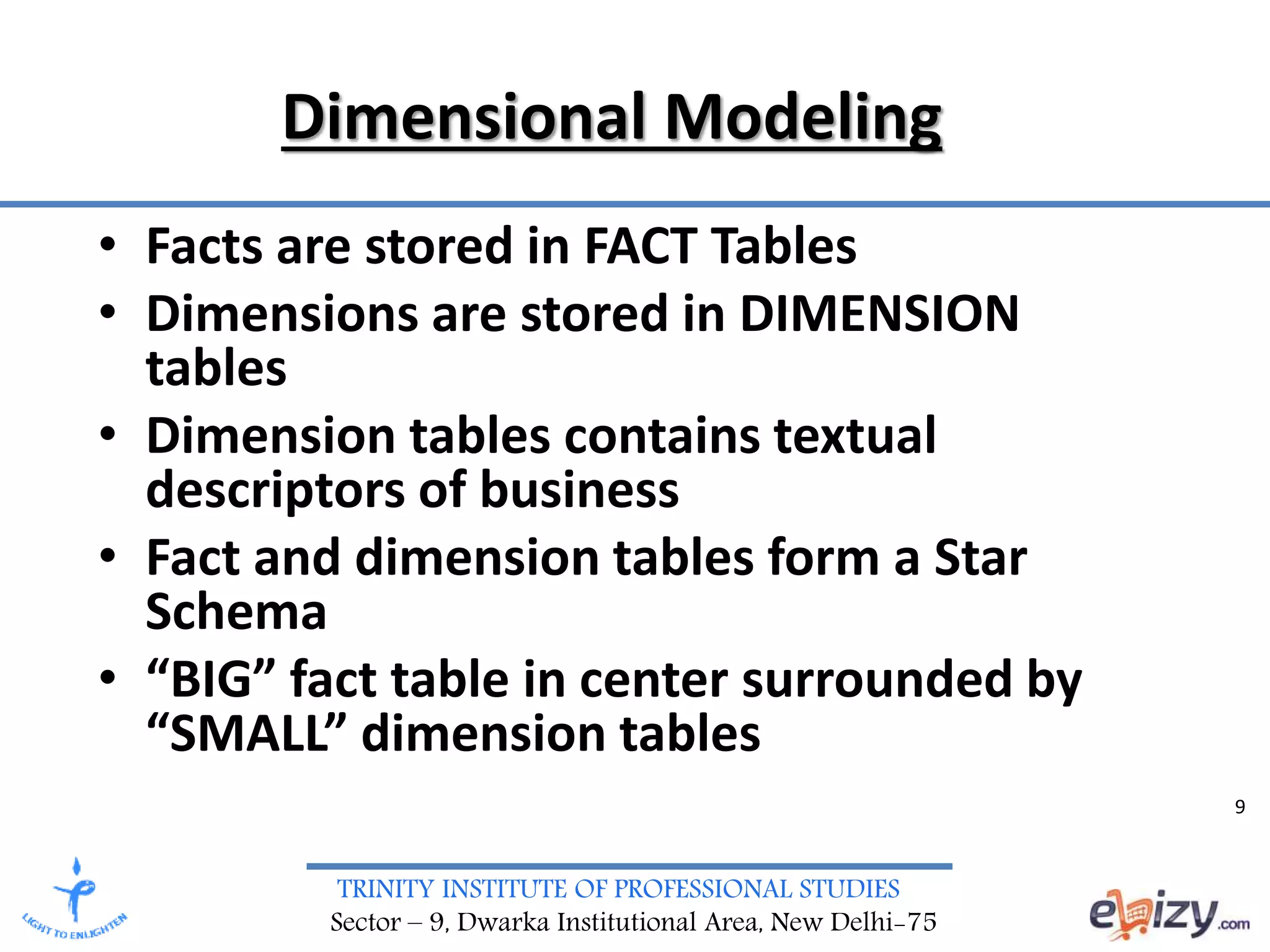
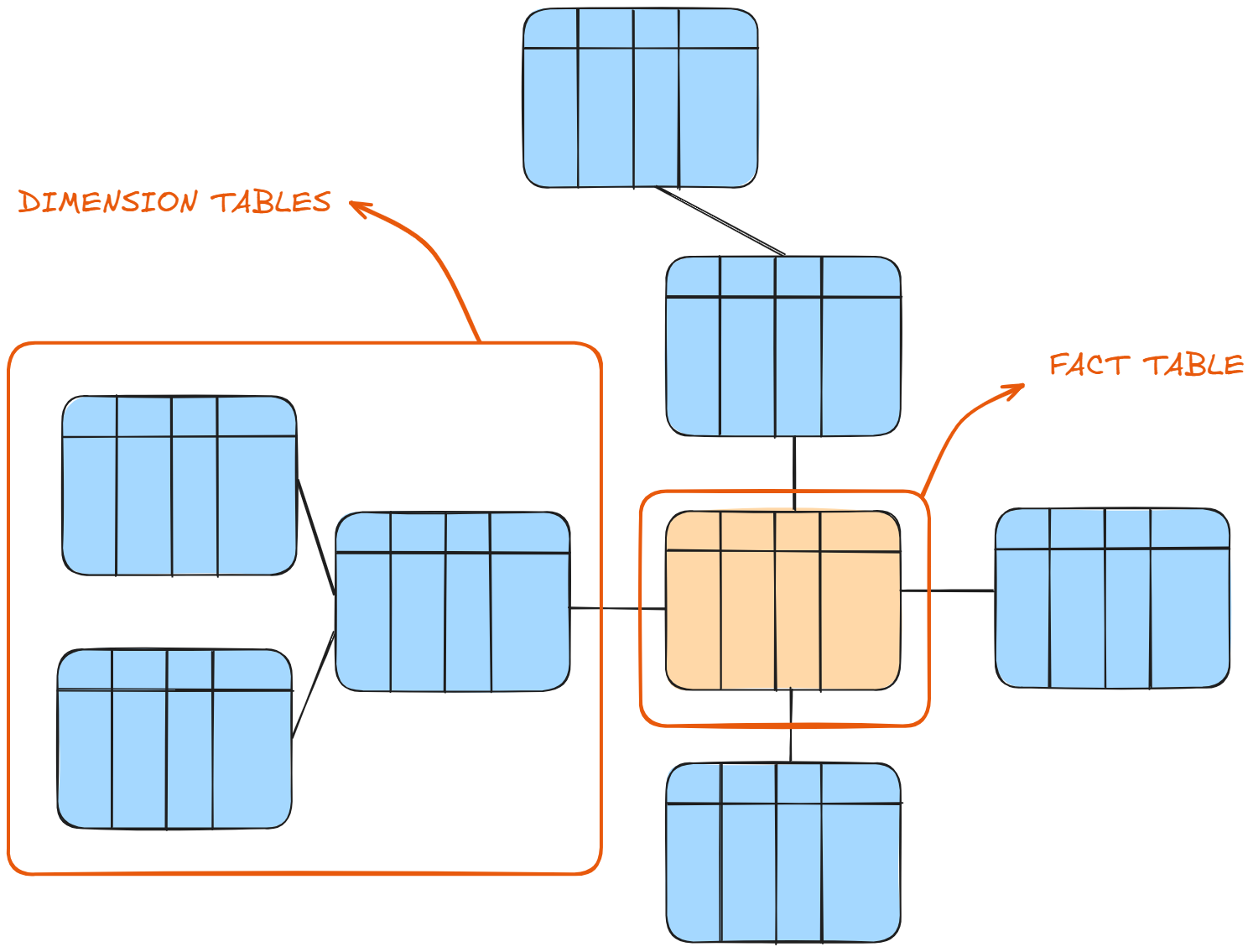
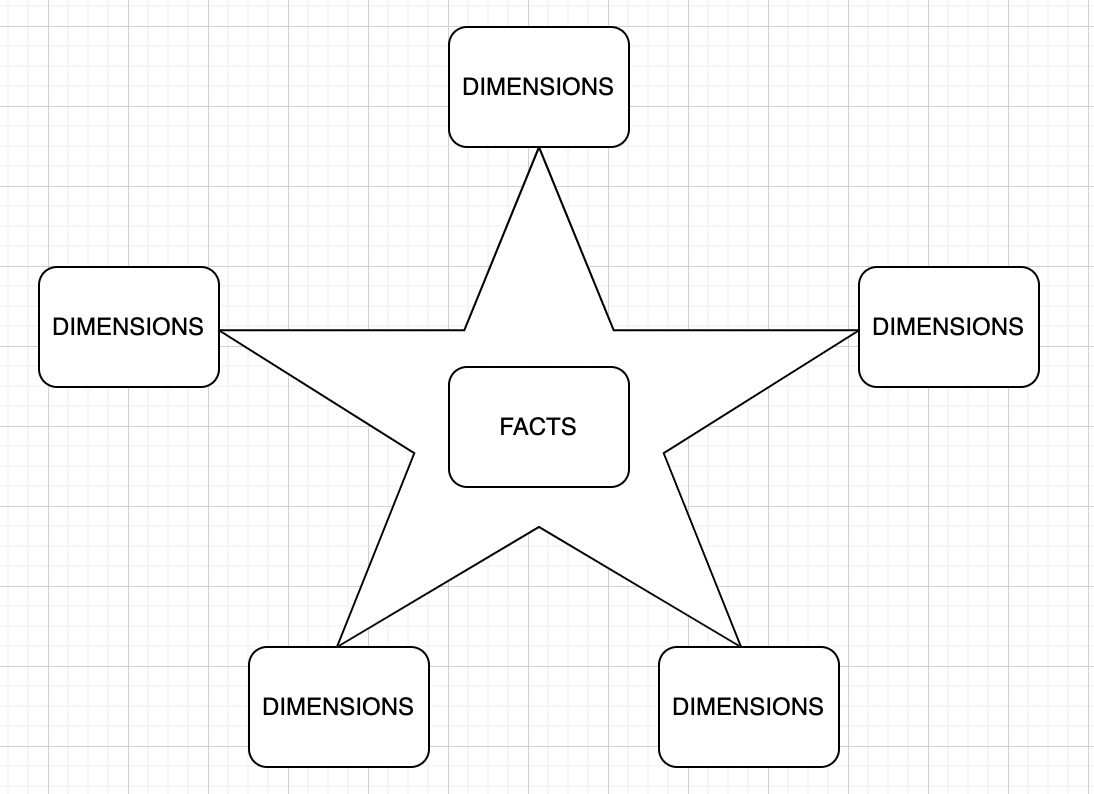
The heart of this approach is the star schema, which relies on the strict separation of data into two specific types of tables: facts and dimensions. By maintaining this separation, data engineers ensure that performance remains high even when processing millions or billions of rows of data, as the engine can join lightweight dimension tables to a central fact table efficiently.
Anatomy of a Fact Table
A fact table represents a business process or event. It is the repository for the numerical data that a business wants to measure, such as the total dollar amount of a sale, the duration of a customer support call, or the number of units shipped.
Key characteristics of a fact table include:
- Quantitative Data (Measures): These are the additive or non-additive numeric values, such as "revenue," "discount amount," or "quantity sold."
- Foreign Keys: These columns link the fact table to the primary keys of the associated dimension tables. A row in a fact table is essentially an intersection point where various dimensions (time, product, store, customer) converge.
- Degenerate Dimensions: Occasionally, a fact table contains a value that does not warrant a full dimension table of its own—such as an invoice number—but is necessary for unique identification.
Because fact tables grow monotonically as new business events occur, they often become the largest tables in the warehouse. Managing their size—through partitioning by date or using columnar storage engines—is a standard task for modern data engineering teams in 2026.
Anatomy of a Dimension Table
While facts provide the "what" and "how much," dimension tables provide the "who," "where," and "when." A dimension table contains the descriptive context necessary for users to understand the metrics within a fact table.
Key characteristics of a dimension table include:
- Descriptive Attributes: These are textual fields such as product names, store locations, customer demographics, or calendar hierarchies. These attributes are what business analysts use to group or "slice" data.
- Primary Key: Every dimension table must have a primary key, often a surrogate key (an integer created specifically for the data warehouse, independent of the source system's original key).
- Denormalization: Unlike transactional databases, dimension tables are intentionally denormalized. A "Product" dimension might contain product names, category names, and brand names in a single table, even if those details would be stored in separate tables in an operational source system. This reduces the number of joins required to generate a report, thereby accelerating query performance.
Comparing Fact and Dimension Tables
| Feature | Fact Table | Dimension Table |
|---|---|---|
| Content | Quantitative metrics (measures) | Qualitative descriptions (attributes) |
| Size | Very large (millions to billions of rows) | Generally smaller |
| Growth | Continuous and rapid | Slow-changing |
| Key Type | Foreign keys to dimensions | Primary key (usually surrogate) |
| Primary Use | Mathematical aggregation | Filtering, grouping, and labeling |
Common Implementation Patterns
Slowly Changing Dimensions (SCDs)
Business entities often change over time—for example, a customer changes their mailing address or a product is moved to a new category. Data warehouses handle this using SCD techniques. The most common is Type 2, where a new row is inserted into the dimension table to capture the change, using a start and end date to track the historical validity of the attribute. This allows the data warehouse to report on historical facts according to the state of the dimension at the time the event occurred.
Star Schema vs. Snowflake Schema
The star schema is the simplest and most common design, where dimension tables are directly connected to the fact table. However, if a dimension is normalized further—for example, by separating "Product" into "Product," "Category," and "Brand" tables—the design becomes a "snowflake." While snowflakes reduce redundancy, they often require more complex queries and can introduce performance latency in modern analytical platforms. In 2026, the star schema remains the preferred standard for most BI applications due to its simplicity and high performance.
Practical Challenges and Troubleshooting
The most frequent error in data warehouse design is the "grain" mismatch. The grain refers to the level of detail at which a fact is recorded. For instance, a fact table might record sales at the individual transaction level, while another might store daily summary totals. Attempting to mix these grains in a single fact table leads to double-counting errors and inconsistent reporting.
Another critical requirement is consistency across dimensions. If the "Time" dimension is defined differently in the marketing data mart versus the finance data mart, the business cannot achieve a "single version of the truth." Data architects must enforce shared or "conformed" dimensions across all subject areas.
Frequently Asked Questions
What happens if a fact is not numerical? While facts are typically numeric, they can also include qualitative status indicators (e.g., "Flag" values). However, these are often better served as attributes in a dimension table or converted into numeric values that can be counted, such as 0 or 1.
Why use surrogate keys instead of natural keys? Natural keys (like an email address or serial number) can change in the source system or be reused. A surrogate key is a system-generated integer that ensures the integrity of the data warehouse regardless of changes in the operational business logic.
How do I determine the grain of my fact table? You determine the grain by asking what a single row represents. If the row represents one specific item scan at a specific register at a specific second, the grain is "atomic transaction." Documenting this grain in your metadata is essential for preventing calculation errors.
Can a table be both a fact and a dimension? Very rarely. In advanced scenarios, an "outrigger" dimension might be linked to another dimension, but mixing the core roles of fact and dimension tables violates the fundamental principles of dimensional modeling and complicates report generation.
Are there alternatives to the star schema in 2026? While data lakehouses and wide-table approaches (where all data is denormalized into one massive table) are popular for machine learning, the star schema remains the gold standard for structured, performant, and user-friendly business intelligence reporting.
Next Steps for Implementation
To begin building your data warehouse, start by identifying your primary business processes. Do not attempt to model everything at once. Focus on one process—such as "Sales"—and map out the necessary measures (revenue, cost) and the dimensions (Date, Product, Store). Ensure your ETL (Extract, Transform, Load) pipelines consistently populate these tables with clean data, as the value of any warehouse is entirely dependent on the quality of its input.
Image Gallery