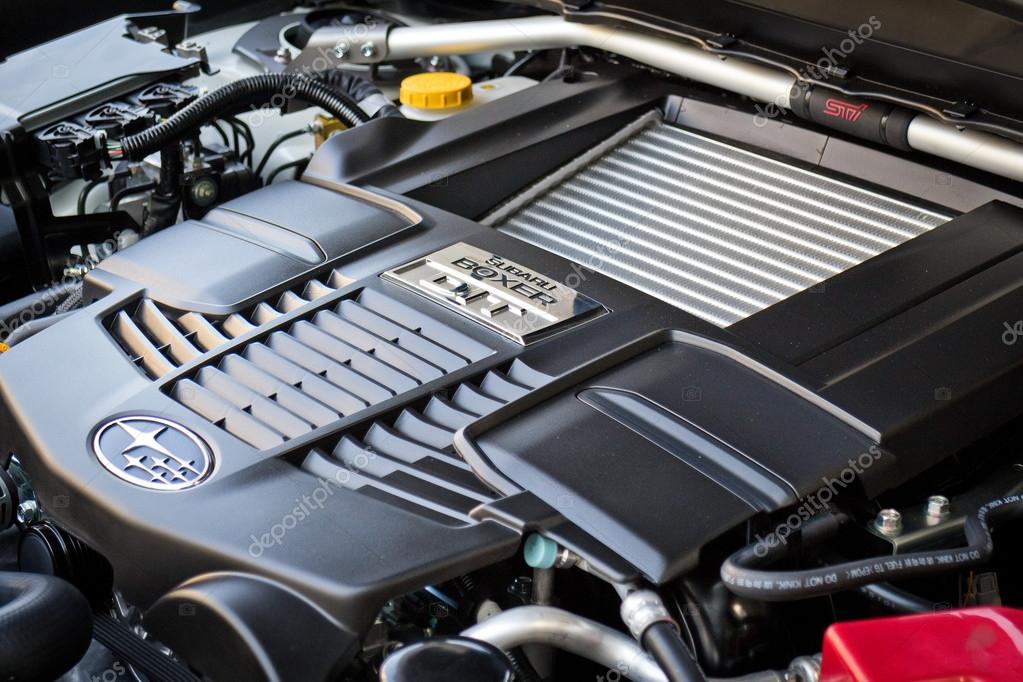
2015 Subaru Forester Engine Options and Trade-offs
The 2015 Subaru Forester offers two distinct engine configurations: the 2.5-liter FB25 naturally aspirated boxer engine and the 2.0-liter FA20DIT turbocharged direct-injection engine. Choosing between them requires balancing the 2.5L’s...
The 2015 Subaru Forester offers two distinct engine configurations: the 2.5-liter FB25 naturally aspirated boxer engine and the 2.0-liter FA20DIT turbocharged direct-injection engine. Choosing between them requires balancing the 2.5L’s lower ownership costs and available manual transmission against the 2.0XT’s significantly higher performance, though the latter demands premium fuel and more complex long-term maintenance.
Contents
The 2015 model year represents a stable point in the Forester's fourth generation (SJ). By this time, Subaru had addressed several early-production issues while maintaining the utility that made the platform a segment leader. As these vehicles move further into their second decade of service in 2026, understanding the mechanical nuances of each power plant is essential for both current owners and used-market buyers.
The 2.5L FB25: The Efficiency-First Daily Driver
The majority of 2015 Foresters on the road are equipped with the 2.5-liter FB25 engine. This naturally aspirated, dual-overhead-cam (DOHC) four-cylinder produces 170 horsepower and 174 lb-ft of torque. It was designed primarily for fuel efficiency and "adequate" power for suburban and highway commuting.
Technical Profile and Drivability
The FB25 utilizes a timing chain rather than a belt, which reduced long-term maintenance anxiety compared to older EJ-series engines. In the 2015 Forester, this engine is paired with either a six-speed manual transmission (available on Base and Premium trims) or a Lineartronic Continuously Variable Transmission (CVT).
From a driving perspective, the 2.5i is functional but uninspired. The 0–60 mph sprint takes approximately 9.0 seconds. While this is sufficient for merging onto most highways, the engine can feel strained when the vehicle is fully loaded with passengers and cargo, or when climbing steep mountain passes. The trade-off is impressive fuel economy for a permanent All-Wheel Drive (AWD) vehicle, with EPA ratings of 24 mpg city and 32 mpg highway for CVT models.
Trade-offs of the 2.5L
The primary trade-off for the FB25 is the power-to-weight ratio. Because the Forester’s AWD system incurs a parasitic power loss and adds weight, the 170-hp engine often works harder than a comparable front-wheel-drive competitor's engine. This can lead to a "droning" sensation under heavy acceleration as the CVT holds the engine at high RPMs to find peak torque.
The 2.0L FA20DIT: The Performance-Oriented Turbo
For drivers who found the base engine lethargic, Subaru offered the Forester 2.0XT. This trim features a 2.0-liter turbocharged, direct-injection boxer engine (FA20DIT) producing 250 horsepower and 258 lb-ft of torque.
The High-Torque CVT and SI-Drive
The 2.0XT is not just an engine upgrade; it is a total powertrain recalibration. It exclusively uses a "High-Torque" version of the Lineartronic CVT designed to handle the increased output. It also includes Subaru’s SI-Drive (Subaru Intelligent Drive) system, which allows the driver to toggle between Intelligent (I), Sport (S), and Sport Sharp (S#) modes.
In S# mode, the CVT simulates an eight-speed automatic, providing crisp "shifts" that eliminate the rubber-band feel common in standard CVTs. This allows the 2.0XT to reach 60 mph in roughly 6.2 to 6.4 seconds, placing it in a different performance category than the base model.
Trade-offs of the 2.0L Turbo
Performance comes at a literal price. The 2.0XT requires 91 octane premium fuel to achieve its rated power and maintain engine health. Using 87 octane is possible in emergencies but results in reduced power and potential "knocking" under load. Furthermore, the 2.0XT sees a significant drop in fuel efficiency, rated at 23 mpg city and 28 mpg highway. In 2026, with fluctuating fuel prices, the 20–25% increase in annual fuel costs is a material consideration.
2015 Forester Engine Specifications Comparison
The following table highlights the technical differences between the two engine options available for the 2015 model year.
| Feature | 2.5i (FB25) | 2.0XT (FA20DIT) |
|---|---|---|
| Engine Type | 2.5L Naturally Aspirated Boxer | 2.0L Turbocharged Direct Injection |
| Horsepower | 170 hp @ 5,800 rpm | 250 hp @ 5,600 rpm |
| Torque | 174 lb-ft @ 4,100 rpm | 258 lb-ft @ 2,000–4,800 rpm |
| Transmission | 6-speed Manual or CVT | High-Torque CVT Only |
| Fuel Requirement | 87 Octane (Regular) | 91 Octane (Premium) |
| 0–60 MPH | ~9.0 Seconds | ~6.3 Seconds |
| EPA MPG (City/Hwy) | 24 / 32 (CVT) | 23 / 28 |
| Valvetrain | Chain Driven DOHC | Chain Driven DOHC |
Reliability and Maintenance Considerations in 2026
As of 2026, most 2015 Foresters have exceeded 100,000 miles. At this stage of the vehicle’s lifecycle, the trade-offs between the engines shift from performance toward durability and repair costs.
Oil Consumption Issues
The FB25 engine in the 2015 Forester was part of a broader conversation regarding excessive oil consumption. While Subaru improved the piston ring design for the 2015 model year compared to 2011–2013 versions, some units still exhibit consumption. Owners should check oil levels every 1,000 to 1,500 miles. Ignoring this can lead to low oil pressure and catastrophic engine failure.
Carbon Buildup (2.0XT Only)
Because the 2.0XT uses direct injection (DI), fuel does not wash over the intake valves. Over time, carbon deposits can accumulate on the valves, leading to rough idling, reduced fuel economy, and power loss. By 2026, a 2.0XT that has not had a walnut blasting or a professional intake cleaning service may feel sluggish. This is a maintenance requirement that the 2.5i, which uses port injection, simply does not share.
CVT Longevity
Both engines rely on CVTs (unless you find a rare 2.5i manual). Subaru extended the warranty on these transmissions to 10 years or 100,000 miles via a service program, but for most 2015 models in 2026, this coverage has expired. The 2.0XT’s high-torque CVT is robust but more expensive to replace. Prospective buyers should look for a history of CVT fluid exchanges, even though Subaru originally marketed the fluid as "lifetime."
Cooling and Turbo Health
The 2.0XT introduces more heat into the engine bay due to the turbocharger. This can lead to faster degradation of rubber hoses, gaskets, and plastic components. At 11 years of age, a 2.0XT should be inspected for turbo shaft play and oil leaks around the turbo feed lines, which are non-issues on the simpler 2.5i.
Real-World Utility: Towing and AWD Systems
While both engines are rated for a 1,500-lb towing capacity in the United States, their performance while towing differs greatly. The 2.5i struggles significantly with a trailer, particularly on inclines. The 2.0XT’s flat torque curve, which peaks at just 2,000 RPM, makes it much more capable of pulling a light utility trailer or small teardrop camper without the engine feeling overtaxed.
There is also a subtle difference in the AWD systems. The 2.5i with the CVT uses an Active Torque Split system that defaults to a 60/40 front-to-rear split. The 2.0XT uses a more sophisticated version of this logic, often incorporating "VTD" (Variable Torque Distribution) characteristics in certain drive modes to provide a more rear-biased, sporty feel. Both trims features X-Mode (on CVT-equipped Premium and higher trims), which optimizes the engine, transmission, and brakes for low-traction off-road scenarios.
FAQs
Is the 2015 Forester 2.0XT faster than the 2.5i?
Yes, significantly. The 2.0XT provides 80 more horsepower and 84 more lb-ft of torque. In real-world driving, the 2.0XT feels much more responsive, especially during highway passing maneuvers where the 2.5i can feel underpowered.
Does the 2015 Forester have a timing belt or chain?
Both the 2.5L FB25 and the 2.0L FA20DIT engines use timing chains. Unlike the timing belts found in older Subaru models, these chains are designed to last the life of the engine and do not require periodic replacement, provided the engine is well-lubricated.
Can I use regular gas in the Forester Turbo?
Subaru recommends 91 octane premium fuel for the 2.0XT. While the engine's ECU can retard timing to prevent damage if you use 87 octane, doing so regularly can lead to decreased performance and potentially harmful engine knock over time. For the 2.5i engine, 87 octane regular fuel is the standard and recommended choice.
Which 2015 Forester engine is more reliable long-term?
Generally, the 2.5L FB25 is considered more reliable for high-mileage ownership. It lacks the complexity of a turbocharger and the carbon buildup issues associated with direct injection. However, it is more prone to the specific oil consumption issues that plagued early FB engines.
Is the manual transmission available on all 2015 Foresters?
No. The six-speed manual transmission was only available with the 2.5i engine on the Base and Premium trim levels. The 2.0XT and the Limited/Touring trims of the 2.5i were exclusively paired with the Lineartronic CVT.
Final Verdict: Which Engine Should You Choose?
In 2026, the choice between the 2015 Forester’s engine options depends on your priority as a high-mileage vehicle owner.
Choose the 2.5L FB25 if your goal is low-cost operation and simplicity. It is the ideal choice for students, commuters, or those who view a vehicle strictly as a tool. If you can find a well-maintained manual version, you also bypass the potential risks associated with an aging CVT.
Choose the 2.0L FA20DIT (XT) if you live in mountainous terrain, plan on light towing, or simply enjoy a more spirited driving experience. Be prepared for the "premium" tax at the fuel pump and budget for specialized maintenance like intake valve cleaning. Regardless of the engine, ensure any 2015 Forester you consider has a documented history of frequent oil changes, as lubrication is the single most critical factor for Boxer engine longevity.
For more information on vehicle safety and historical recall data for the 2015 Forester, visit the NHTSA website. Detailed fuel economy comparisons can be verified at FuelEconomy.gov.
Image Gallery