Do You Have to Go to Court for a Virginia Workers' Compensation Claim?
In Virginia, most injured workers do not have to go to court for a workers' compensation claim. If your employer and their insurance carrier accept your claim, your benefits are formalised through written agreement forms approved by th...
In Virginia, most injured workers do not have to go to court for a workers' compensation claim. If your employer and their insurance carrier accept your claim, your benefits are formalised through written agreement forms approved by the Virginia Workers' Compensation Commission without a hearing. You only go to a court-like hearing if the insurer denies your claim, disputes your medical treatment, or tries to terminate your existing benefits.
Contents
While a workers' compensation proceeding is not held in a standard circuit court, contested cases are heard in formal administrative courtrooms by a Deputy Commissioner. Understanding how the Virginia Workers' Compensation Commission (VWC) resolves disputes can help you prepare whether your case resolves through an agreement, mediation, or a trial-like evidentiary hearing.
Administrative Hearings vs. Traditional Civil Court
A common misconception among injured employees is that a workers' compensation dispute involves a trial in front of a jury in a local circuit court. Workers' compensation in Virginia operates under a no-fault administrative system governed by the Virginia Workers' Compensation Act (Code of Virginia Title 65.2).
Instead of traditional courts, disputes fall under the exclusive jurisdiction of the Virginia Workers' Compensation Commission (VWC).
While the VWC is an administrative tribunal rather than a judicial court, its formal proceedings are legally binding and function very similarly to bench trials. There is no jury. Instead, a single judge known as a Deputy Commissioner presides over the hearing, evaluates testimony, reviews medical records, applies Virginia statutory law, and issues a written opinion deciding the case.
Virginia Workers' Comp Pathway
- Injury Occurs at Work
- Notice Given to Employer (30 Days)
- File Claim with VWC (2 Years)
- Claim Status:
- Claim Accepted
- VWC Agreement Forms
- Award Order Issued (No Court Hearing Required)
- Claim Denied / Disputed
- Alternative Dispute Resolution (Mediation)
- Settlement
- Award / Compromise Agreement
- Unresolved
- Evidentiary Hearing (Deputy Commissioner)
- Settlement
- Alternative Dispute Resolution (Mediation)
- Claim Accepted
When You Do NOT Have to Go to Court
The vast majority of workers' compensation claims in Virginia are resolved without ever setting foot in a hearing room. You generally will not have to attend a hearing under the following circumstances:
1. Your Claim Is Accepted Without Dispute
If your employer's insurance company accepts that your injury arose out of and in the course of your employment, they will issue formal VWC agreement forms (such as an Agreement After Injury or Claimant's Agreement for Temporary Total Disability). Once both you and the insurer sign these forms and the VWC approves them, the Commission issues an Award Order. This order legally protects your right to lost wage compensation and lifetime medical care for the injured body parts without requiring a court appearance.
2. You Reach a Voluntary Compromise Settlement
At any stage of your claim, you and the insurance carrier may negotiate a full and final settlement—known in Virginia as a Compromise Settlement. In this arrangement, the insurer pays a negotiated lump sum of money in exchange for closing part or all of your claim. Compromise settlements are submitted on paper to the Commission for review. A Deputy Commissioner reviews the settlement documents to ensure the agreement is fair and in your best interest. If approved, an order is issued, and no hearing is required.
3. Disputes Are Resolved Through Informal Mediation
The VWC offers an active Alternative Dispute Resolution (ADR) department. Mediation is a voluntary, informal process where an impartial mediator (often an experienced VWC staff attorney or Deputy Commissioner) helps both sides negotiate an agreement. Mediations can take place in person, over the phone, or via video conference. If mediation is successful, the terms are written down, signed, and submitted for Commission approval, eliminating the need for a formal trial.
When You MUST Go to Court (Evidentiary Hearing)
You will be required to attend a formal hearing if there is a legal or factual dispute that cannot be resolved informally. Either the injured worker or the insurance carrier can request a hearing by filing the appropriate paperwork with the VWC.
Common scenarios that require a formal court hearing include:
- Initial Claim Denial: The insurance company denies your claim entirely, arguing that the injury was not work-related, did not happen by an identifiable accident, was caused by a pre-existing condition, or that notice was not provided within the 30-day statutory window.
- Disputed Medical Treatment: The treating physician recommends surgery, physical therapy, or specialized testing (like an MRI), but the insurer's utilization review panel refuses to authorize or pay for the treatment.
- Termination or Suspension of Benefits: If you are already under an Award Order, the insurance company cannot simply stop paying you. They must file an Employer’s Application for Hearing alleging that you have been released to full-duty work, refused light-duty work, or failed to cooperate with medical treatment or vocational rehabilitation.
- Change in Condition: You file a claim requesting additional temporary total disability benefits because your condition worsened, or you request permanent partial disability (PPD) benefits for loss of use of a body part, and the insurer disagrees.
Comparison of Resolution Methods in Virginia Workers' Compensation
The pathway your case takes determines whether you must present testimony and evidence before a judge. Below is an overview of how different resolution methods compare:
| Resolution Method | Requires Formal Appearance? | Presiding Authority | Key Outcomes | Primary Benefit |
|---|---|---|---|---|
| Voluntary Award Order | No | VWC Claims Examiner | Binding Award Order for wages/medical care | Fast, non-adversarial, establishes legal rights |
| Compromise Settlement | No (Paper review only) | Deputy Commissioner | Lump-sum payment; claim closed or modified | Certainty of payout without trial risk |
| VWC Mediation (ADR) | Informal (In-person or Virtual) | VWC Mediator | Voluntary settlement agreement | Confidential, collaborative, avoids formal trial |
| Evidentiary Hearing | Yes (Formal court proceeding) | Deputy Commissioner | Written Judicial Opinion (Award or Denial) | Binding resolution of contested legal disputes |
| Full Commission Appeal | No (Oral argument optional) | Three-Commissioner Panel | Affirms, reverses, or remands hearing decision | Corrects legal or factual errors from hearing |
What Happens During a Virginia Workers' Comp Hearing?
If your case proceeds to a formal Evidentiary Hearing, it is essential to understand that this is a legally binding judicial proceeding. The rules of evidence apply, witnesses testify under oath, and a official transcript is taken by a court reporter.
Location of the Hearing
Hearings are typically held in the city or county where the accident occurred, or in an adjacent locality. The VWC maintains regional offices in Richmond, Roanoke, Virginia Beach, Manassas, Harrisonburg, and Bristol, while also holding hearings in local municipal courthouses throughout the Commonwealth. Additionally, the VWC frequently conducts hearings via secure web-based video conferencing platforms.
The Hearing Structure
A standard evidentiary hearing generally lasts between 1 and 3 hours and follows a specific structure:
- Opening and Stipulations: The Deputy Commissioner identifies the parties, states the issues on the application (e.g., wage loss, medical bills), and records any facts both sides agree upon (such as average weekly wage or employment date).
- Claimant’s Testimony: You will take the witness stand, be sworn in under oath, and testify. Your direct examination will cover how the accident happened, what body parts were hurt, your medical treatment history, your current work status, and any job search efforts (if applicable).
- Cross-Examination: The defense attorney representing your employer and their insurer will cross-examine you. They may ask detailed questions regarding pre-existing medical issues, inconsistencies between your statements and emergency room records, or job search details.
- Witness Testimony: Eyewitnesses to the accident, co-workers, or medical experts may be called to testify. In most workers' comp cases, physician testimony is submitted through written medical records and depositions rather than live court appearances.
- Closing Statements: Both attorneys present brief oral arguments or request permission to file written post-hearing briefs summarizing why the law and evidence support their side.
After the hearing concludes, the Deputy Commissioner does not render an immediate decision. Instead, they take the case under advisement and issue a written Opinion within several weeks.
Appeals: What If You Lose at the Hearing?
If the Deputy Commissioner issues an Opinion that denies your claim or terminates your benefits, you do not immediately go to a traditional court of law, but you have the right to appeal.
1. Review by the Full Commission
Either party dissatisfied with the Deputy Commissioner's ruling can file a Request for Review within 30 days of the opinion date. The case is reviewed by a panel of three Commissioners at the VWC headquarters in Richmond. This stage rarely requires live testimony; the Full Commission reviews the transcript of the original hearing, the exhibits, and written legal briefs submitted by attorneys.
2. Court of Appeals of Virginia
If the Full Commission's decision is still unfavorable, the next step is an appeal to the Court of Appeals of Virginia. This is an actual appellate court within the Virginia state court system. At this stage, the court reviews the administrative record for legal errors made by the Commission.
3. Supreme Court of Virginia
In rare circumstances involving significant constitutional issues or statutory interpretations, a party may petition the Supreme Court of Virginia for ultimate review.
Essential Steps to Take If Your Case Is Scheduled for Court
Going to a formal hearing without adequate preparation can jeopardize your right to lifetime medical benefits and wage loss compensation. If your claim has been docketed for an evidentiary hearing, consider taking the following action steps:
- Obtain Your Complete Medical Records: In Virginia workers' comp hearings, medical evidence is paramount. The judge will rely heavily on written opinions from your treating doctors. Ensure all medical charts, diagnostic reports, and work status slips are properly indexed and filed with the Commission prior to evidentiary deadlines.
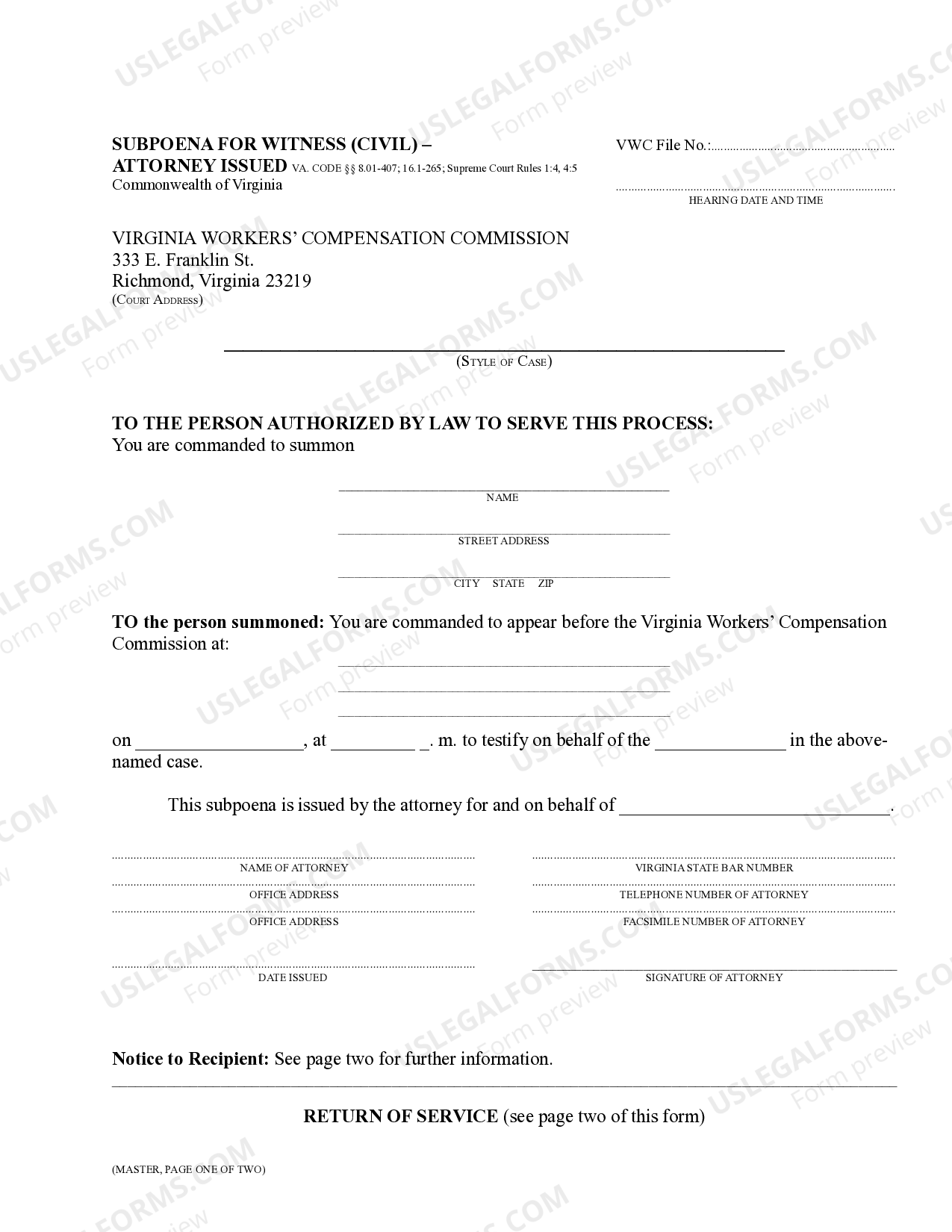
- Comply with Discovery Requests: The insurance attorney may send formal written questions (Interrogatories) or request documents. You are legally required to respond fully and truthfully within strict time frames.
- Document Your Job Search (Light Duty): If you are under light-duty work restrictions but your employer cannot accommodate you, Virginia law requires you to actively look for work (termed "duty to mitigate damages"). You must maintain detailed records of your job applications to present as evidence at the hearing.
- Consult a Virginia Workers' Compensation Attorney: Navigating cross-examination, deposition scheduling, and strict administrative rules of evidence is challenging for unrepresented individuals. An experienced attorney can organize your evidence, depose your treating physician, and represent you before the Deputy Commissioner.
Frequently Asked Questions
Do I have to go to court if the insurance company is paying my checks?
Even if the insurance company is currently paying your weekly benefit checks, you may still need an Award Order. If the insurer has not signed official VWC agreement forms, they can stop paying at any time. Securing a formal Award Order from the Commission ensures your protection without needing to go to court unless a dispute arises later.
Can I settle my Virginia workers' comp case without going to court?
Yes. A large percentage of workers' compensation claims end in a voluntary lump-sum Compromise Settlement. Once both parties reach an agreement on the terms, documents are submitted electronically to the VWC. If a Deputy Commissioner finds the agreement fair, it is approved on paper without requiring your physical attendance in court.
What happens if I miss my scheduled workers' compensation hearing?
If you fail to appear at your scheduled evidentiary hearing without receiving a formal continuance from the Deputy Commissioner, your claim may be dismissed "with prejudice." This means you could be permanently barred from recovering lost wages or medical benefits for your work injury.
Do I need a lawyer if I have to go to a VWC hearing?
While you have the legal right to represent yourself (pro se) at a VWC hearing, it is not recommended. Defense insurance companies are represented by experienced attorneys who understand the rules of evidence and cross-examination. A dedicated workers' compensation attorney can ensure your medical records are properly submitted and advocate on your behalf.
How long does it take to get a court date in Virginia workers' comp?
Once a formal Claim for Benefits or Application for Hearing is docketed by the VWC, it typically takes between 3 to 6 months to get an evidentiary hearing date, depending on the Commission's regional docket load and whether pre-hearing discovery is required.
Summary and Next Steps
You only have to go to court for a Virginia workers' compensation claim if your employer or their insurance carrier denies your claim, disputes your medical care, or seeks to terminate your benefits, and those issues cannot be resolved through voluntary agreements or mediation. If a hearing is required, it takes place before a Deputy Commissioner at the Virginia Workers' Compensation Commission.
If your claim has been denied, or if you have received a notice of hearing or an Employer’s Application to stop your benefits, evaluate your medical records immediately, strictly observe all VWC filing deadlines, and consult a qualified Virginia workers' compensation lawyer to protect your statutory rights.
Disclaimer: The information provided in this article is for educational purposes only and does not constitute formal legal advice. Workers' compensation laws and procedures in Virginia are subject to statutory amendments and administrative rule changes. Consult a licensed Virginia attorney for advice regarding your specific claim.
Image Gallery