What Is Communication in Your Own Words? Definitions, Models, and Practical Examples
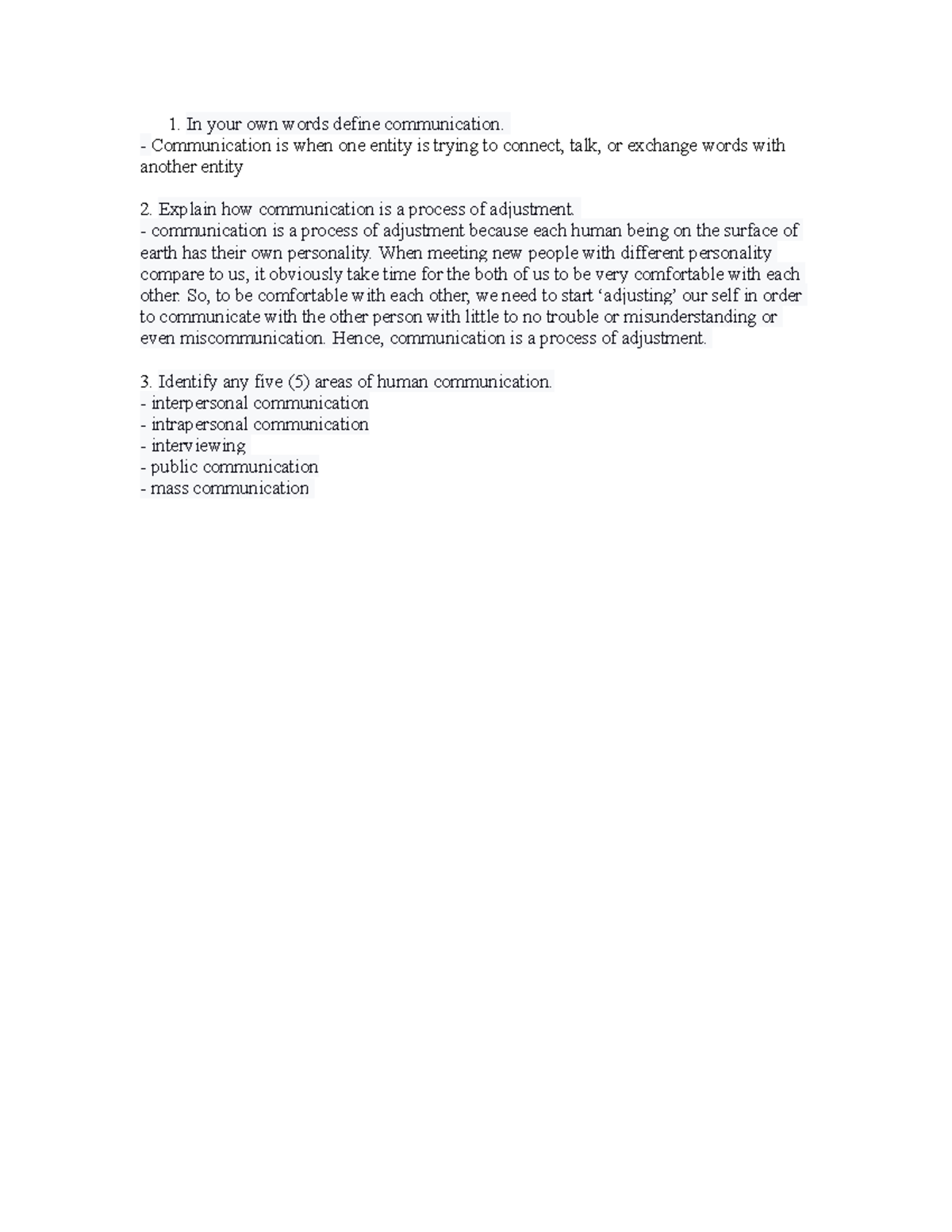
At its core, communication is the intentional exchange of information, thoughts, feelings, and meaning between two or more entities to establish shared understanding. Far more than merely speaking or sending messages, authentic communi...
At its core, communication is the intentional exchange of information, thoughts, feelings, and meaning between two or more entities to establish shared understanding. Far more than merely speaking or sending messages, authentic communication requires active listening, interpretation of nonverbal cues, contextual awareness, and continuous feedback to ensure the receiver understands the intended message.
Contents
Deconstructing Communication: What It Truly Means Beyond the Dictionary
While standard dictionary definitions describe communication as the act of transmitting information, defining communication in your own words requires looking at how human connection actually functions in practice. Transmitting words or data across a medium is only a mechanical delivery system; true communication occurs only when the receiving party accurately decodes and understands the underlying meaning intended by the sender.
At a human level, communication serves as the bridge between isolated minds. Every individual processes reality through a unique filter constructed from personal experiences, culture, values, vocabulary, and emotional state. When you communicate, you translate internal thoughts into signals—whether spoken words, written characters, gestures, or visual symbols—hoping the recipient can rebuild those signals into an equivalent mental concept.
Because human perception is inherently subjective, perfect alignment between sender intent and receiver interpretation is rare. Effective communication is therefore an ongoing, adaptive process rather than a static event. It demands ongoing calibration through real-time feedback, empathy, and active clarification. Whether in personal relationships, corporate leadership, or academic inquiry, the quality of communication determines the quality of collaboration, problem-solving, and trust.
The Core Elements of the Communication Process
To define communication accurately, it helps to analyze the mechanism that carries a message from thought to understanding. Human communication relies on six interconnected components. If any single component breaks down, misinterpretation or communication failure occurs.
- The Sender (Encoder): The individual or entity originating the message. The sender takes an abstract thought, feeling, or instruction and encodes it into symbols, words, or gestures.
- The Message: The physical or sensory representation of the idea being conveyed. This includes explicit verbal contents as well as implicit tone, pacing, emphasis, and body language.
- The Channel (Medium): the delivery vector used to transmit the message. Channels range from face-to-face vocal interactions and printed letters to digital emails, video conferences, and instant messaging tools.
- The Receiver (Decoder): The recipient who absorbs the incoming signals and translates (decodes) them into meaningful ideas based on their cognitive frameworks and experience.
- Feedback: The receiver’s response back to the sender. Feedback informs the sender whether the message was received, understood correctly, or misinterpreted, allowing for adjustments in real time.
- Noise (Interference): Any barrier that distorts or obscures the message during transmission or decoding. Noise can be physical (background sound), psychological (stress, bias), semantic (jargon, language barriers), or technical (unstable internet connections).
| Communication Element | Primary Function | Real-World Example | Potential Point of Failure |
|---|---|---|---|
| Sender (Encoder) | Formulates thought into structured signals | A manager outlining a project timeline | Using vague terms or unstated assumptions |
| Message | Represents the core content and intent | A project specification document | Ambiguous phrasing or conflicting details |
| Channel | Delivers the message across space/time | Enterprise messaging application (e.g., Slack) | Choosing written chat instead of a face-to-face talk for sensitive topics |
| Receiver (Decoder) | Interprets signals into internal meaning | A junior developer reading task notes | Skimming the text without reading context |
| Feedback | Confirms comprehension or requests clarity | A developer asking a clarifying question | Staying silent despite confusion |
| Noise / Barriers | Obstructs accurate signal transmission | Heavy office noise or cognitive burnout | Assuming silence indicates understanding |
The Four Major Dimensions of Communication
Communication extends far beyond vocalized words. Humans transmit and decode meaning continuously across four primary dimensions, often simultaneously.
1. Verbal Communication
Verbal communication encompasses spoken words used during conversation, speeches, phone calls, and video meetings. It relies heavily on linguistic precision, word choice, frame of reference, and conversational pacing. However, verbal message delivery is rarely evaluated in isolation; it works in tandem with tone, pitch, and vocal cadence (often categorized as paralanguage).
2. Nonverbal Communication
Research in social psychology indicates that a major portion of face-to-face interpersonal communication relies on nonverbal signals. This dimension includes body posture, facial expressions, eye contact, hand gestures, spatial proximity (proxemics), and physical touch (haptics). Nonverbal cues can reinforce verbal messages, contradict spoken words, or convey subtle emotional states that words alone cannot express.
3. Written Communication
Written communication involves recorded text, numbers, and symbols transmitted through emails, reports, documentation, policy manuals, and text messages. Unlike real-time vocal exchange, written communication lacks immediate nonverbal context, making clarity, organization, explicit tone control, and structural layout essential to prevent misunderstanding.
4. Visual Communication
Visual communication uses graphic elements—such as diagrams, flowcharts, data visualizations, icons, and interface design—to convey complex concepts quickly. In modern digital contexts, visual assets often support written or spoken communication to increase retention and clarify multi-step processes.
Theoretical Models That Shape How We View Communication
Scholars have developed distinct framework models over the past century to map how communication operates. Understanding these models provides deeper insight when articulating what communication means in professional and academic environments.
Linear Model (Shannon-Weaver, 1949): [Sender] ---> [Encoder] ---> (Channel + Noise) ---> [Decoder] ---> [Receiver] Interactive Model (Schramm, 1954): [Sender/Decoder] <--- (Message + Feedback) ---> [Receiver/Decoder] Transactional Model (Barnlund, 1970): [Communicator A] <=== (Simultaneous Encoding/Decoding in Shared Context) ===> [Communicator B]
The Linear Model (Shannon & Weaver, 1949)
Originally developed to optimize mathematical telecommunication transmission, the linear model views communication as a one-way street: a sender pushes a message through a channel to a receiver. While useful for radio broadcasts or published announcements, it fails to account for active audience interaction or real-time dialogue.
The Interactive Model (Schramm, 1954)
The interactive model introduced the concept of two-way communication and feedback loops. It emphasizes that both participants act as senders and receivers who alternate roles, continuously encoding and decoding messages within their overlapping fields of experience.
The Transactional Model (Barnlund, 1970)
The transactional model provides the most comprehensive representation of modern human interaction. It posits that people send and receive messages simultaneously rather than sequentially. In any conversation, while one person speaks, the other is constantly sending nonverbal feedback (nodding, frowning, looking away). Furthermore, this model emphasizes that communication takes place within broader cultural, relational, and physical contexts.
How to Answer "What Is Communication in Your Own Words?" in Interviews and Academic Settings
When an interviewer, professor, or leadership evaluator asks you to define communication in your own words, they are rarely looking for a memorized textbook formula. Instead, they want to assess your self-awareness, emotional intelligence, and practical understanding of interpersonal dynamics.
Key Principles for Framing Your Personal Definition
- Emphasize Two-Way Exchange: Avoid defining communication as merely "talking" or "giving directions." Stress that listening and feedback are equally vital.
- Highlight Shared Meaning: State clearly that the ultimate goal of communication is mutual understanding, not just message transmission.
- Acknowledge Nonverbal Factors: Note that tone, body language, and context frequently carry more weight than literal vocabulary.
- Focus on Outcome: Connect effective communication to concrete results, such as trust-building, conflict resolution, alignment, or goal achievement.
Tailored Response Templates by Professional Role
For Leadership and Management Roles
"To me, communication in leadership is the art of aligning people around a shared clarity. It is not just about cascading instructions down a chain of command; it is about actively listening to team feedback, framing complex goals into actionable context, and creating an open dialogue where ideas and concerns can be surfaced without friction."
For Technical and Analytical Positions
"In technical fields, I define communication as the process of bridging complex data and human understanding. It means translating technical specifications into clear, accessible insights for stakeholders, while ensuring that project requirements are decoded precisely without ambiguity or lost detail."
For Customer Service and Client Relations
"In my own words, communication is empathy in action. It means listening carefully not just to what a client says, but to what they need, validating their experience, and conveying solutions with clarity, responsiveness, and respect."
For General Academic or Interview Contexts
"I view communication as the continuous, two-way process of creating shared understanding. It involves choosing the right medium, reading nonverbal cues, speaking or writing with clarity, and listening actively to ensure that the message intended is truly the message received."
Common Misconceptions About Communication
Clarifying what communication is also requires dispelling common myths that lead to workplace friction and personal misunderstandings.
- Misconception 1: "More Communication Is Always Better."High volume does not equal high clarity. Flooding colleagues with endless emails, unnecessary meetings, or overly long reports often creates cognitive overload and increases noise, degrading actual comprehension.
- Misconception 2: "Speaking Clearly Guarantees Understanding."Sender clarity is only half the equation. If the receiver lacks context, is distracted, or interprets key terms differently, the message will fail. True communication requires checking for comprehension through feedback.
- Misconception 3: "Intent Matters More Than Impact."While sender intent is important, communication outcome is ultimately measured by receiver impact. If a comment comes across as offensive, confusing, or discouraging, saying "that is not what I meant" does not undo the breakdown; active recalibration is required.
- Misconception 4: "Listening Is a Passive Activity."Hearing is passive physiological sound perception; active listening is a deliberate cognitive effort. Active listening involves synthesizing input, observing nonverbal signals, withholding premature judgment, and reflecting key points back to the speaker.
Frequently Asked Questions
What is the simplest definition of communication in your own words?
The simplest definition is that communication is the process of sharing meaning between people through words, signals, and listening so that everyone involved understands the same reality.
Why is listening considered half of communication?
Without listening, communication becomes a monologue or broadcast. Active listening allows receivers to accurately decode messages and provide feedback, which enables senders to confirm that their true intent was received correctly.
What is the difference between hearing and listening in communication?
Hearing is the passive biological ability of the ears to perceive sound waves. Listening is an active psychological process that requires focus, interpretation, analysis, and emotional processing to derive meaning from those sounds.
What are the main barriers to effective communication?
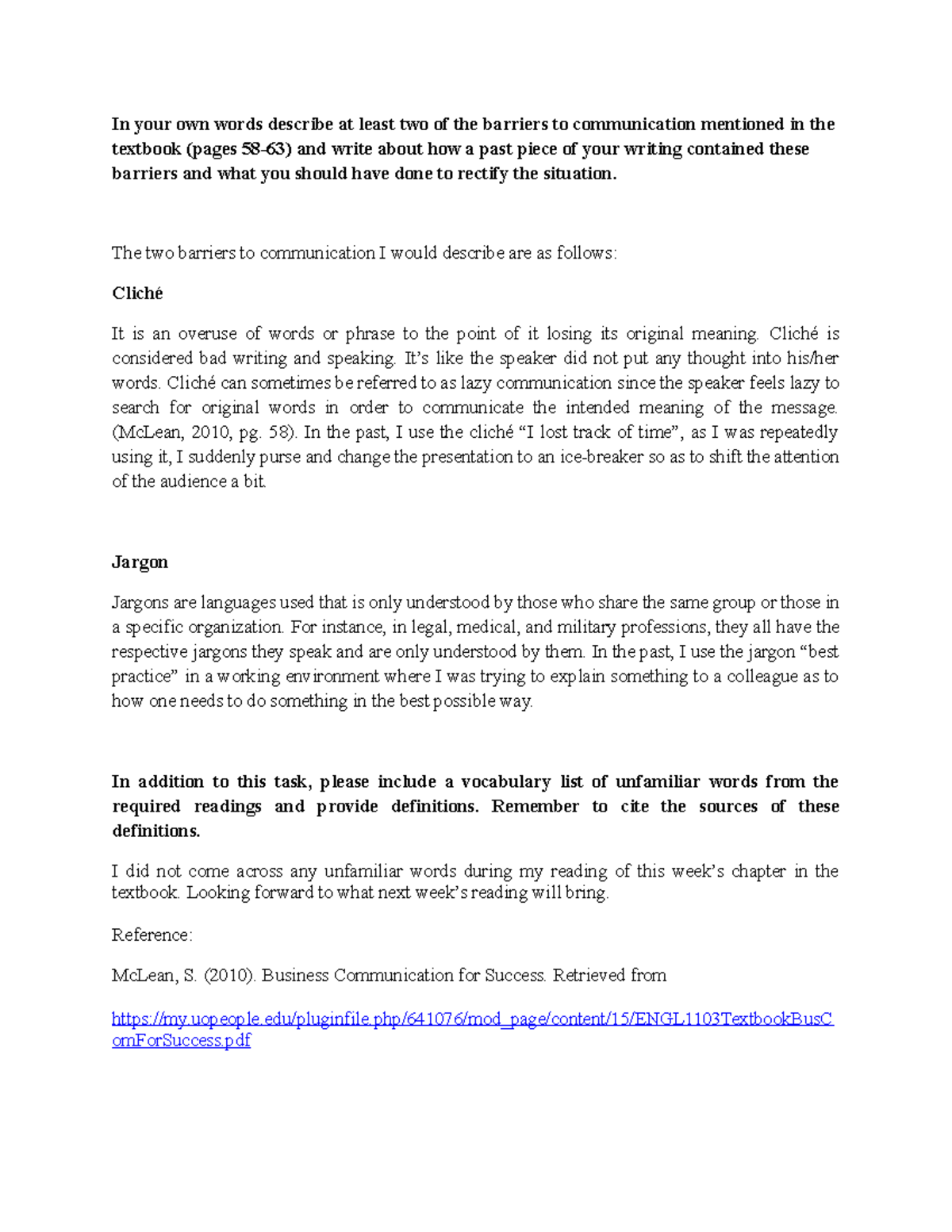
Primary barriers include physical noise, psychological stress or bias, semantic misunderstandings (such as jargon or language differences), choosing an inappropriate medium, and a lack of active listening or feedback loops.
How does nonverbal communication affect spoken messages?
Nonverbal cues—such as tone of voice, eye contact, and facial expressions—provide the emotional context for spoken words. When nonverbal cues contradict verbal statements (for example, saying "I'm fine" while frowning and crossing arms), people almost universally trust the nonverbal signals over the words.
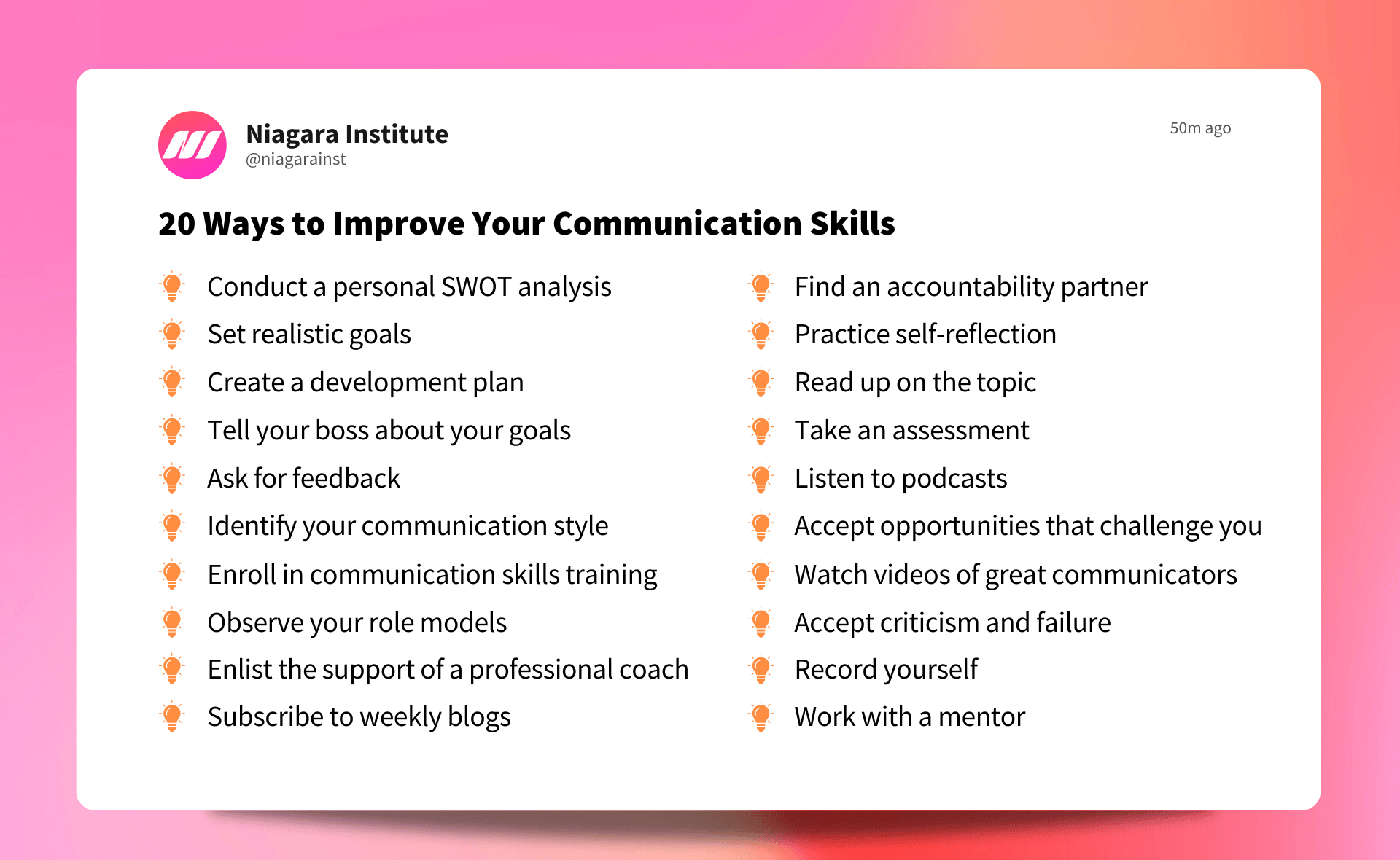
Next Steps for Improving Your Communication Skills
Understanding communication conceptually is the foundation for improving how you interact daily. To put these definitions into practice:
- Audit Your Primary Channels: Evaluate whether you are choosing the right medium for your messages. Use face-to-face or video conversations for nuanced, sensitive, or complex issues, and reserve written text for documentation and simple updates.
- Practice Active Feedback Loops: Never assume your message was fully understood. End important directions or discussions by asking open-ended questions like, "What are your thoughts on this approach?" or "Which parts of this process need further clarification?"
- Refine Nonverbal Awareness: Pay close attention to your posture, eye contact, tone, and pacing during key conversations to ensure your nonverbal signals match your intended verbal message.
Image Gallery